
Ресурсы
Изучайте широкий спектр ценных ресурсов ВГГ, чтобы углубить своё понимание и повысить эффективность исследований, просветительской деятельности, преподавания и обучения.
Найдено: 1,851
 General Policy Recommendation No. 15 of the European Commission against Racism and Intolerance: On Combating Hate Speech Год публикации: 2016 Организация-автор: Council of Europe | European Committee against Racism and Intolerance (ECRI) The file is the recommendations of the European Committee against Racism and Intolerance on combating hate speech for countries. The file contains statistics and criteria established by the Commission. There are 10 recommendations made by the committee. توصية السياسة العامة رقم 15 للجنة الأوروبية لمناهضة العنصرية والتعصب: بشأن مكافحة خطاب الكراهية Год публикации: 2016 Организация-автор: Council of Europe | European Committee against Racism and Intolerance (ECRI) الملف هو عبارة عن توصيات اللجنة الأوروبية لمناهضة العنصرية والتعصب بشأن مكافحة خطاب الكراهية للدول. يحتوي الملف على إحصائيات ومعايير وضعتها اللجنة. هناك 10 توصيات وضعتها اللجنة.
  Strategies to Counter Antisemitism: A Handbook for Educators Год публикации: 2025 Организация-автор: UNESCO Education is the first line of defence against hate and prejudice. By targeting the root causes of hate ideologies, deconstructing the stereotypes that underlie them from an early age, and promoting inclusive models, education is the keystone of a holistic approach to combating discrimination. Tackling antisemitism through education requires tailored content that addresses its complex, shifting and multilayered forms, both past and present.Acknowledging the topic’s complexity and the paucity of resources available to education stakeholders, this concise guide developed by UNESCO and funded by the European Commission aims to provide a roadmap for policymakers, curriculum developers and educators on current approaches and initiatives. It presents ten educational practices, each grounded in academic literature and illustrated by a promising educational initiative that operationalizes core pedagogical principles. The handbook is built around the three core learning domains which inform UNESCO’s approach to Global Citizenship Education: cognitive, socio-emotional, and behavioural learning.Conceived as an accessible operational guide for practitioners, this resource sets out to start a larger conversation about the needs of educators for tackling contemporary forms of antisemitism. It aims to encourage investments in high-quality empirical research that can pave the way for a better approach to combat antisemitism.
 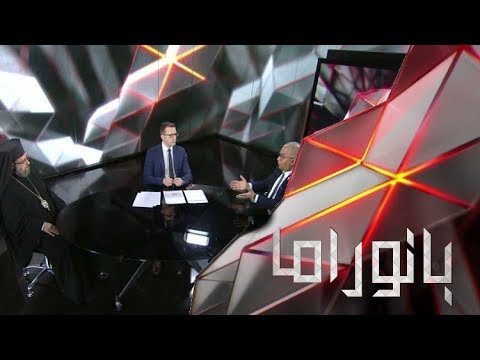 Interfaith Dialogue .. Dialogue of Life and Wise People Год публикации: 2019 Организация-автор: RT Arabic Online Through this program, RT channel provides a seminar by hosting speakers to discuss the importance of interfaith dialogue and coexistence between all people from different religions. حوار الأديان .. حوار الحياة وحوار العقلاء Год публикации: 2019 Организация-автор: RT Arabic Online تقدم قناة RT من خلال هذا البرنامج ندوة من خلال استضافة المتحدثين لمناقشة أهمية الحوار بين الأديان، والتعايش بين الجميع من مختلف الأديان.
  Consultation Paper on AI Regulation: Emerging Approaches Across the World Год публикации: 2024 Автор: Juan David Gutiérrez Организация-автор: UNESCO Since 2016, over thirty countries have passed laws explicitly mentioning AI, and in 2024, the discussion about AI bills in legislative bodies has increased globally. This policy brief aims to inform legislators about the different regulatory approaches to artificial intelligence (AI) being considered worldwide by legislative bodies. The brief explains nine emerging regulatory approaches, each illustrated with specific cases worldwide. The order in which the nine AI regulatory approaches are presented is deliberately structured to guide readers from less interventionist, light-touch regulatory measures to more coercive, demanding approaches. These regulatory approaches are not mutually exclusive and AI bills often combine two or more approaches:1. Principles-Based Approach2. Standards-Based Approach3. Agile and Experimentalist Approach4. Facilitating and Enabling Approach5. Adapting Existing Laws Approach6. Access to Information and Transparency Mandates Approach7. Risk-Based Approach8. Rights-Based Approach9. Liability Approach The policy brief suggests parliamentarians how they can address three key questions before adopting AI regulations:1. Why regulate? Determine whether regulation is needed to address public problems, fundamental and collective rights, or desirable futures.2. When to regulate? Reach a consensus on why regulation is needed, map available regulatory instruments, compare them with other policy instruments, and assess the feasibility of adopting the former.3. How to regulate? Identify a combination of AI regulatory approaches that are tailored to specific contexts.
  Quality Adult Education Benchmarks for Indigeneous Education Год публикации: 2011 Автор: Sandra L. Morrison | Timote Vaioleti Организация-автор: Asia South Pacific Association for Basic and Adult Education (ASPBAE) In November 2010, in Indonesia, Asia South Pacific Association for Basic and Adult Education(ASPBAE) brought together a number of educators from across its region to discuss benchmarking quality adult education for indigenous peoples. Educators came from across the ASPBAE region including the Philippines, India, Nepal, New Zealand, Australia, Thailand, Indonesia and Uzbekistan to share experiences and to build a collective understanding of what constitutes a good quality adult education program for indigenous peoples. Discussions were informed by a broader ASPBAE Quality Adult Education Framework, which had its origins in discussions held in 2009. The Core of the Framework is grounded on ASPBAE’s commitment to education as a right, adult education for transformation, and adult and basic education as integral and inter‐connected components of the vision of lifelong learning (Guevara, 2010). Other frameworks promoted by ASPBAE for education to be empowering, pro‐poor, gender just and sustainable were also important considerations. The 2010 gathering served as a nodal point to discuss the ASPBAE framework more deeply and to reaffirm or create a set of benchmarks for indigenous education which can be validated through a subsequent national and regional consultation process.
  UNESCO Women for Ethical AI: Outlook Study on Artificial Intelligence and Gender Год публикации: 2024 Организация-автор: UNESCO The gender chapter of the UNESCO Recommendation on the Ethics of AI is a concrete commitment by 194 Member States to advance gender equality in the AI ecosystem. To track progress in the implementation of the gender provisions of UNESCO’s Recommendation, and to assess the impacts of AI on gender equality, the UNESCO Women for Ethical AI (W4EAI) Platform has been established. This report advances the workstream through evidence-based insights in three critical areas: women’s participation in AI development and deployment, the inclusion of gender equality concerns in AI governance and the impact of AI on gender equality. It highlights the significant underrepresentation of women in AI, the lack of gender-disaggregated data, and the compounded challenges women face in the field. The report also addresses the neglect of gender dimensions in AI policy, the risks posed by AI systems to women, and the need for responsible and ethical AI governance to promote gender equality. Finally, it outlines actionable recommendations to enhance gender equality through and in AI, emphasizing the importance of comprehensive data collection, targeted interventions, and inclusive policy-making.
  Comprehensive Societal Integration of People with Disabilities in the Arab and Islamic Society (A Historical-original View) Год публикации: 2012 Автор: Ibrahim Alnuqythan Организация-автор: Gulf Society for Diability The file is a research paper that discusses the comprehensive integration of persons with disabilities in the Arab and Islamic world. The paper seeks to answer the following questions:- Did the disabled in the Arab-Islamic civilization have a comprehensive integration into society?What are the examples of this integration in the Arab-Islamic civilization?The paper discussed and touched on live models that show the reality of inclusion of persons with disabilities in society. الدمج المجتمعي الشامل لذوي الإعاقة في المجتمع العربي الإسلامي (نظرة تاريخية-تأصيلية) Год публикации: 2012 Автор: Ibrahim Alnuqythan Организация-автор: Gulf Society for Diability الملف عبارة عن ورقة بحثية تناقش الدمج الشامل للمعوقين في الوطن العربي والإسلامي. وتسعى الورقة للإجابة عن الأسئلة التالية:- هل كان للمعوقين في الحضارة العربية الإسلامية دمج شامل في المجتمع؟- ما النماذج على هذا الدمج في الحضارة العربية الإسلامية؟ولقد ناقشت الورقة وتطرقت لنماذج حية تظهر واقع ادماج المعوقين في المجتمع.