
Ресурсы
Изучайте широкий спектр ценных ресурсов ВГГ, чтобы углубить своё понимание и повысить эффективность исследований, просветительской деятельности, преподавания и обучения.
Найдено: 1,828
 La genèse de la catégorie de « réfugié LGBT » au sein du Haut-Commissariat des Nations Unies pour les réfugiés Год публикации: 2021 Автор: Ahmed Hamila Организация-автор: Alterstice Le système de protection international est régi par la Convention de Genève de 1951, complétée par le Protocole de New York de 1967. Ces conventions internationales énumèrent cinq motifs d’octroi du statut de réfugié : les persécutions du fait de la race, de la religion, de la nationalité, de l’appartenance à un certain groupe social et des opinions politiques. Ces instruments internationaux ne reconnaissent pas explicitement les persécutions du fait de l’orientation sexuelle et de l’identité de genre en tant que motifs d’octroi du statut de réfugié. Cependant, au cours des trois dernières décennies, le Haut-Commissariat des Nations Unies pour les réfugiés (HCR) a été amené à reconnaître ces persécutions en tant que motifs d’octroi de la protection internationale. Dans cet article, je m’intéresse à la genèse de la catégorie de « réfugié LGBT » au sein du HCR au début des années 2000. Je soutiens que l’émergence de cette nouvelle catégorie de réfugiés s’inscrit dans deux dynamiques parallèles, qui ont toutes les deux débouché sur l’élaboration des Principes directeurs du HCR, qui reconnaissent explicitement les persécutions du fait de l’orientation sexuelle en tant que motif d’octroi du statut de réfugié. D’une part, c’est dans le contexte d’une plus grande attention portée aux femmes réfugiées, et notamment aux persécutions liées au genre, qu’il est pour la première fois question des persécutions liées à l’orientation sexuelle. D’autre part, la catégorie de « réfugié LGBT » apparaît aussi dans le contexte de l’interprétation de la notion d’« appartenance à un certain groupe social ».
  “Racism, Sexism, Homophobia, Which Card do You Want?” The Post-Migration Experience of Northern LGBTQ People Global and Global South Год публикации: 2021 Автор: Barbara Andrade de Sousa | Line Chamberland Организация-автор: Alterstice This article examines the life stories of seven LGBTQ immigrants, from the Global North and South, who live in Montreal. The research on immigration has long been carried out according to a framework heteronormative, which sets aside a whole series of questions relating to the impact of sexual orientation and non-normative gender identity on the migratory experience. Societies impose distinct constraints on LGBTQ people. Once settled in the host society, these subjects can experience more sexual possibilities. However, their origin can become a marker that places them inside a relationship of power with the majority group. This article aims to shed light on how LGBTQ immigrants construct their life stories in a context where their experience is crossed by the interweaving of several aspects of identities such as sexual orientation, gender identity, ethnicity, and religion, to name a few. The intersectional approach makes it possible to identify the systems of binding powers which participants face daily. The thematic analysis gave us allowed to listen to individuals to know the categories of power and the systems of oppression they talk about — the goal being to position respondents as knowledgeable subjects, not mere study objects. Analysis of the interviews shows that LGBTQ individuals who express a diverse combination of identities face specific challenges linked to the migratory route. « Racisme, sexisme, homophobie, quelle carte tu veux ? » L’expérience post-migratoire des personnes LGBTQ du Nord global et du Sud global Год публикации: 2021 Автор: Barbara Andrade de Sousa | Line Chamberland Организация-автор: Alterstice Cet article examine l’histoire de vie de sept immigrants ou immigrantes LGBTQ, originaires du Nord et du Sud global, qui habitent à Montréal. Les recherches sur l’immigration ont longtemps été réalisées selon un cadrage hétéronormatif, ce qui met à l’écart toute une série de questions relatives à l’impact de l’orientation sexuelle et de l’identité de genre non normative sur l’expérience migratoire. Les sociétés imposent des contraintes distinctes vis-à-vis des personnes LGBTQ. Une fois installées dans la société d’accueil, ces sujets peuvent expérimenter plus de possibilités sur le plan sexuel ; néanmoins leur origine peut devenir un marqueur qui les place à l’intérieur d’un rapport de pouvoir avec le groupe majoritaire. Notre article vise à mettre en lumière la manière dont les immigrants LGBTQ construisent leurs histoires de vie dans un contexte où leur vécu est traversé par l’imbrication de plusieurs aspects identitaires comme l’orientation sexuelle, l’identité de genre, l’ethnicité et la religion, pour n’en nommer que quelques-uns. L’approche intersectionnelle rend possible l’identification des systèmes de pouvoirs contraignants auxquels les participants font face quotidiennement. L’analyse thématique nous a permis d’être à l’écoute des individus afin de connaître les catégories de pouvoir et les systèmes d’oppression dont ils parlent — le but étant de positionner les répondants comme des sujets connaissants, et non de simples objets d’étude. L’analyse des entrevues montre que les individus LGBTQ qui expriment une combinaison variée d’identités affrontent des défis spécifiques liés au parcours migratoire.
 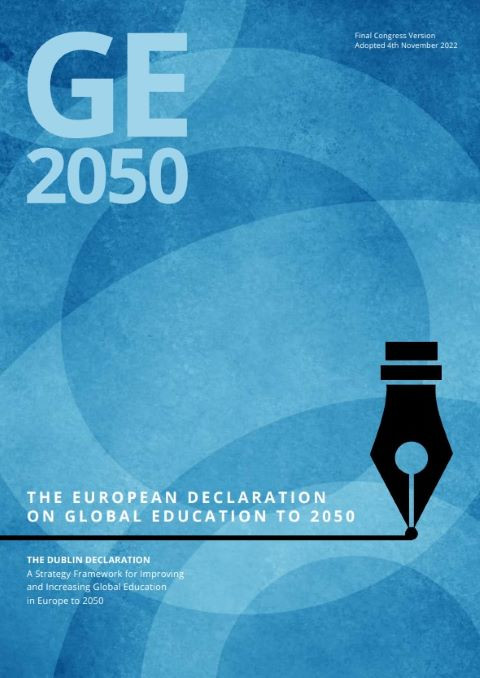 GE2050: The European Declaration on Global Education to 2050; The Dublin Declaration Год публикации: 2022 Организация-автор: Global Education Network Europe (GENE) A new European Declaration on Global Citizenship Education to 2050 has been adopted in Dublin, Ireland on the 20th anniversary of the Maastricht Declaration. The new strategy set out how education will encourage the public to act, individually and collectively, to help build a fairer, more tolerant and more sustainable world for all.
 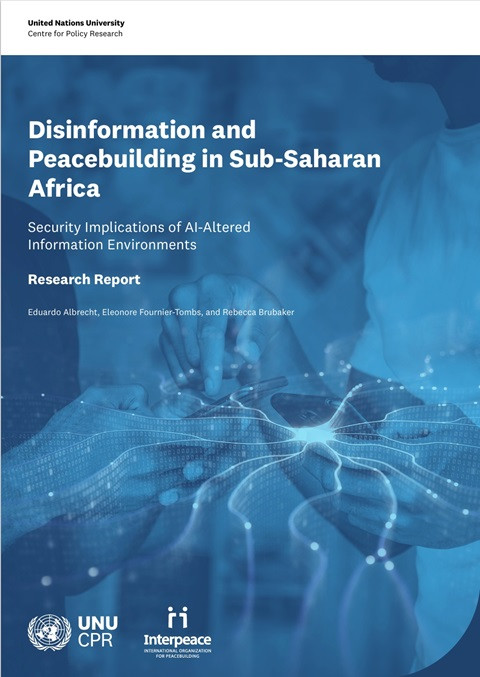 Disinformation and Peacebuilding in Sub-saharan Africa: Security Implications of AI-Altered Information Environments; Research Report Год публикации: 2024 Автор: Eduardo Albrecht | Eleonore Fournier-Tombs | Rebecca Brubaker Организация-автор: United Nations University | Interpeace This report aims to further explore the way in which AI technologies as they currently stand impact peace and conflict, and what methods might be used to mitigate their adverse effects - through the development of better tools and the inclusion of peace and conflict considerations in AI governance frameworks. The report proposes the following recommendations: 1. More funding and support should be provided to civil society organization efforts to expand media literacy and fact-checking initiatives using AI tools to enhance capabilities. 2. Governments need to work with civil society to develop and implement comprehensive, transparent legal frameworks combating disinformation. These legislative measures need to support digital and media literacy campaigns and fact-checking organizations. 3. Social media companies need to expand investment and research into understanding local information environments, so they can better identify and respond to instances of disinformation in all contexts in which they operate and enhance transparency. 4. Peacebuilding organizations need to carefully consider local media ecosystems and information environments when conducting conflict analyses, and factor these dynamics into their projects' frameworks.
 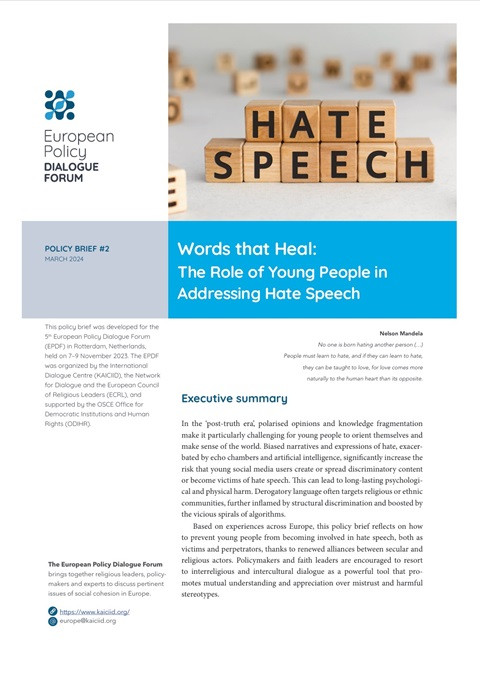 Words that Heal: The Role of Young People in Addressing Hate Speech (EPDF Policy Brief No. 2) Год публикации: 2024 Организация-автор: International Dialogue Centre (KAICIID) In the ‘post-truth era’, polarised opinions and knowledge fragmentation make it particularly challenging for young people to orient themselves and make sense of the world. Biased narratives and expressions of hate, exacerbated by echo chambers and artificial intelligence, significantly increase the risk that young social media users create or spread discriminatory content or become victims of hate speech. This can lead to long-lasting psychological and physical harm. Derogatory language often targets religious or ethnic communities, further inflamed by structural discrimination and boosted by the vicious spirals of algorithms. Based on experiences across Europe, this policy brief reflects on how to prevent young people from becoming involved in hate speech, both as victims and perpetrators, thanks to renewed alliances between secular and religious actors. Policymakers and faith leaders are encouraged to resort to interreligious and intercultural dialogue as a powerful tool that promotes mutual understanding and appreciation over mistrust and harmful stereotypes.
 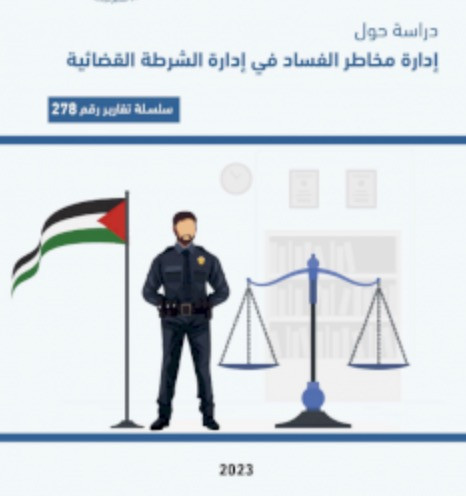 إدارة مخاطر الفساد في إدارة الشرطة القضائية Год публикации: 2023 Автор: Fadi Rabaya Организация-автор: Coalition for Integrity and Accountability (AMAN) تأتي هذه الدراسة في إطار التعاون المشترك بـين كلٍّ من جهاز الشرطة الفلسطيني والمنتدى المدني لتعزيز الحكم الرشيد في قطاع الأمن، وتسعى لرصد المخاطر التي لها تأثير فعّال على جودة الخدمات التي يقدمها جهاز الشرطة للمواطن في فلسيطن، ووضع الخطط الكفيلة بمواجهة هـذه المخاطر Managing Corruption Risks in the Judicial Police Administration Год публикации: 2023 Автор: Fadi Rabaya Организация-автор: Coalition for Integrity and Accountability (AMAN) This study is part of a collaborative effort between the Palestinian Police Service and the Civil Forum to enhance good governance in the security sector. It aims to identify risks that significantly affect the quality of services delivered by the Police Service to Palestinian citizens and to formulate strategies to address these risks.
  Artificial Intelligence and Democracy Год публикации: 2024 Автор: Daniel Innerarity Организация-автор: UNESCO Montevideo | Latin American Council of Social Sciences (CLACSO) UNESCO’s Recommendation on the Ethics of Artificial Intelligence, adopted by all Member States in November 2021, is the first global policy framework for artificial intelligence (AI) and outlines different aspects of this technology that directly impact political life. The initial considerations of the Recommendation outline the potential ramifications of AI across diverse domains, notably its implications for democracy. This report builds on these analyses and recommendations, aligning with the core values and principles outlined in the Recommendation. It delves into the current and potential impact of artificial intelligence on democracy and the benefits that both artificial intelligence and digitalization, in general, could bring to enhancing collective decision-making processes. This analysis is structured around four key topics:1. The democratic expectations and disappointments of digitization2. The new digital public space: the democratic conversation3. The democracy of data: the politics of Big Data4. Democracy as a form of political decision-making: algorithmic governance Finally, this report offers recommendations for the democratic governance of artificial intelligence aimed at mitigating neative impacts and fostering a more democratic approach to AI governance.
  بين تعليم المواطنة وممارستها -بحث في آليات تنشئة المواطن النشيط (vol.7, no.1 مجلة الناقد للدراسات السياسية) Год публикации: 2023 Автор: Yusuf Zadam Организация-автор: جامعة محمد خيضر بسكرة تقدم الدراسة بحثا في العلاقة بين المواطنة والتعليم، من خلال التساؤل عن الآليات الدقيقة لتنشئة المواطن النشيط. محاججا بأن تعليم المواطنة لا يكفي، بل يجب ممارسة الديمقراطية في مختلف مؤسسات وعمليات وسلوكيات الفاعلين في الوسط المدرسي. لذلك تضمنت الدراسة تدقيقا في طبيعة المواطن المرغوب والمواطنة المنشودة، مؤكدا على أن هناك فرق بين "المواطن النشيط" و"المتلقي السلبي". كما تضمنت آليات الانتقال من تعليم المواطنة إلى فهم الديمقراطية. توصلت الدراسة إلى أن المدرسة هي "مصنع" المواطنين النشطين والمتلقين السلبيين، وبالتالي فإن طبيعة العلاقة التي تحكم مختلف الفاعلين في البيئة المدرسية هي التي تحدد نوع المواطن.