
Ресурсы
Изучайте широкий спектр ценных ресурсов ВГГ, чтобы углубить своё понимание и повысить эффективность исследований, просветительской деятельности, преподавания и обучения.
Найдено: 3,451
 Guide rapide des indicateurs de l'éducation pour l'ODD 4 Год публикации: 2018 Организация-автор: UNESCO Institute for Statistics (UIS) Ce guide sert de référence rapide sur la manière de suivre les progrès accomplis vers la réalisation de l’Objectif de développement durable 4 (ODD 4) sur une éducation de qualité. Il fournit les explications essentielles sur les cibles de l’ODD 4, leurs indicateurs, le mode d’élaboration des indicateurs et où trouver les données nécessaires à ces indicateurs. Quick guide to education indicators for SDG 4 Год публикации: 2018 Организация-автор: UNESCO Institute for Statistics (UIS) This guide serves as a quick reference on how to monitor progress towards Sustainable Development Goal 4 (SDG 4) on quality education. It provides basic explanations of SDG 4 targets, their indicators, how they are created and where to find the information needed for these indicators. Guía abreviada de indicadores de educación para el ODS 4 Год публикации: 2018 Организация-автор: UNESCO Institute for Statistics (UIS) Esta guía sirve de referencia rápida sobre cómo monitorear el progreso en la consecución del Objetivo de Desarrollo Sostenible 4 (ODS 4) relativo a la educación de calidad. El texto ofrece explicaciones básicas acerca de las metas del ODS 4, sus indicadores, cómo se establecen y dónde encontrar la información necesaria para estos indicadores
  Improving early-grade performance for 2030: measurement and estimation options for innovative policy dialogue Год публикации: 2019 Автор: Helen Abadzi Организация-автор: UNESCO International Bureau of Education (IBE) Governments and donors are faced with the challenge of attaining the 2030 Sustainable Development Goals (SDGs). One of the challenges for education is to measure and set benchmarks that indicate whether people have developed sufficient core literacy and numeracy skills to function in the complex literate environments of the 21st century. Benchmark setting has proved difficult in education because stakeholders find it hard to define which variables really matter and how they can be measured. Measurement of skills particularly in grades 1‐3 is highly relevant for policy dialogue, because this is when many students fall behind. Donors use existing national, regional, and international assessments, for which longitudinal data are available. However, assessments require reading fluency and do not focus on the lowest literacy and numeracy levels, so they may overestimate or underestimate learners’ skills in grades 1‐3. Governments need specific feedback as soon as possible of likely student performance by 2030 so that they can take measures to improve performance by then. This monograph aims to publicize options for measuring early literacy and numeracy skills, using neuroscientific insights. These may help develop interventions that could accelerate early learning, facilitate monitoring and promote policy interventions to accelerate the achievement of the SDG 4.1 goals in various countries by 2030. The research evidence presented indicates that: Performance benchmarks can be set using reading and math fluency research;The performance of lower grades worldwide could be monitored through brief tests, measuring concepts that have high predictive validity, derived from cognitive science;If these test results were linked to international and national assessments, statistical models could be developing to estimate roughly how populations of various countries are likely to score in 2030;Clear feedback, along with recommendations for appropriate interventions, would allow countries and donors to engage in targeted policy dialogue to close the gap;Improved performance in grade 1 would improve performance in subsequent grades;With sufficient emphasis, funding, and space logistics, illiteracy among low‐income students could be eliminated in about 7 years and near‐universal and sustainable literacy could be attained by 2030.
 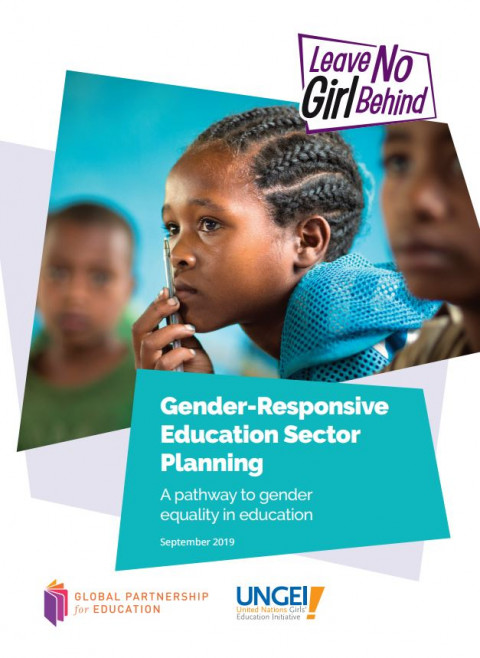 Gender-responsive education sector planning: A pathway to gender equality in education Год публикации: 2019 Организация-автор: Global Partnership for Education (GPE) | United Nations Girls' Education Initiative (UNGEI) Education transforms lives. It is the surest investment to break down social and economic differences between people, unravel inequalities based on gender and accelerate progress towards the entire vision of the 2030 Agenda for Sustainable Development. Yet, despite the world’s commitment to ensure every child completes 12 years of quality education, in low-income countries only 4% of the poorest finish upper secondary school, falling to 2% among marginalized girls.Sustainable Development Goal 4, inclusive and equitable quality education for all, is about much more than education access. It calls for education policies to look beyond gender parity in school enrollment in order to put gender equality at the heart of education through gender-sensitive plans and policies. Gender-responsive education sector planning is an essential tool for advancing gender equality in and through education.
 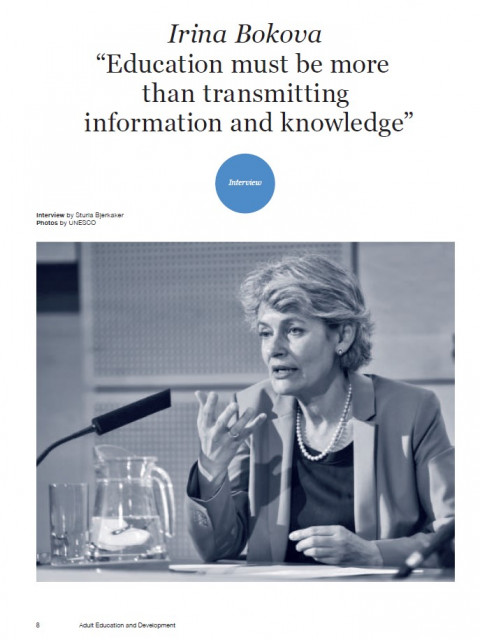 La educación no solo debería consistir en transmitir información y conocimientos Год публикации: 2015 Автор: Sturla Bjerkaker Организация-автор: UNESCO. Director-General, 2009-2017 (Bokova, I.G.) Irina Bokova ha sido Directora General de la UNESCO desde noviembre de 2009. Ha sido la primera mujer al frente de la institución. En el Gobierno de Bulgaria, la señora Bokova ha ocupado, entre otros cargos, el de Secretaria de Estado para la Integración Europea, Ministra de Asuntos Exteriores, embajadora en Francia y Mónaco, al igual que delegada permanente en la UNESCO. Ha participado activamente en las iniciativas internacionales destinadas a promover una educación de calidad para todos, la igualdad entre los géneros, los derechos humanos, el diálogo cultural y la cooperación científica. También es Secretaria General del Comité Directivo de la Iniciativa Mundial “La educación ante todo” del Secretario General de la ONU (Global Education First Initiative - GEFI). L’éducation doit faire plus que transmettre des informations et du savoir Год публикации: 2015 Автор: Sturla Bjerkaker Организация-автор: UNESCO. Director-General, 2009-2017 (Bokova, I.G.) Irina Bokova est Directrice générale de l’UNESCO depuis novembre 2009. Elle est la première femme à la tête de cette organisation. Auparavant, madame Bokova a, entre autres, été secrétaire d’État à l’Intégration européenne et ministre des Aff aires étrangères en Bulgarie, ambassadrice en France et à Monaco, et déléguée permanente auprès de l’UNESCO. Elle s’est engagée activement dans des eff orts internationaux pour faire progresser la qualité de l’éducation pour tous, l’égalité des sexes, les droits humains, le dialogue culturel et la coopération scientifi que. Elle est également secrétaire exécutive de l’Initiative mondiale du secrétaire général de l’ONU pour l’éducation avant tout.
  La citoyenneté dans tous ses états Год публикации: 2016 Автор: Remacle, Anne-Catherine Durant cette période que certains estiment en crise démocratique, les questions de démocratie et de citoyenneté occupent très souvent le devant de la scène. Des initiatives citoyennes et participatives éclosent un peu partout à l’échelle mondiale et notre petite Belgique n’est pas en reste. Il s’agit là notamment d’une dynamique réactivée à la suite de la diffusion du film Demain qui a réinsufflé un vent d’envie participative en évoquant des mouvements comme les villes en transition, les Incredible Edible (Incroyable Comestible), les initiatives de monnaies locales et autres filières courtes. Nous assistons sans nul doute à un réveil citoyen dans une démocratie représentative un peu essoufflée. Cette logique de participation citoyenne, ainsi que l’implication d’acteurs critiques et responsables, est également à la base du travail du Centre Permanent pour la Citoyenneté et la Participation (CPCP). Que ce soit dans ses groupes d’éducation permanente, durant ses formations et animations ou au travers de ses publications, le CPCP prône une citoyenneté active qui inclut une participation à la vie de notre société. Le travail du CPCP se situe donc intimement autour des notions de citoyen et de citoyenneté, deux termes aux acceptions très variées. Cette publication a pour but de défricher les différentes significations de la citoyenneté et de les développer selon plusieurs dimensions.
 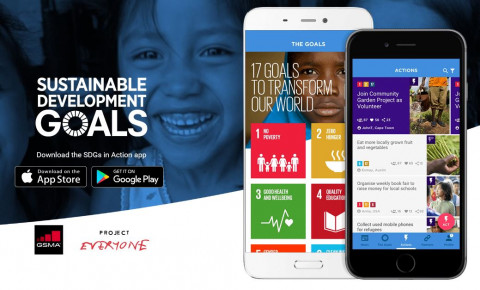 تطبيق منجزات أهداف التنمية المستدامة Год публикации: 2019 Организация-автор: SDG | GSMA ما المغزى من الحدث؟لمحة عامة تم تطوير تطبيق منجزات أهداف التنمية المستدامة لتسليط الأضواء على أهداف التنمية المستدامة - قائمة أعمال للعالم للقضاء على الفقر وتقليل عدم المساواة ومعالجة تغيير المناخ. تقدمه لك جي إس إم إي التي تمثل مصالح حوالي 800 شركة لتشغيل الهاتف الجوال حول العالم، Everyone Project هو حملة عالمية غير نفعية هدفها نشر رسالة أهداف التنمية المستدامة. مزايا التطبيقتعرف على أهداف التنمية المستدامة السبعة عشر واحصل على أخبار عن أهدافك المفضلة واكتشف ما يمكنك فعله لتحقيقها، وابتكر أحداثك الخاصة وادع الآخرين للانضمام إليك في الأعمال والأحداث المستدامة.مزايا تطبيق منجزات أهداف التنمية المستدامة•معلومات مفصلة عن كل من الأهداف السبعة عشر بما فيها الأهداف وفيديو تفسيري والحقائق والأرقام الرئيسية والاقتراحات عن كيفية المساعدة في تحقيقها.•آخر أخبار التطوير المستدام من حول العالم. اعرف كيف يساعد الابتكار على تحقيق الأهداف، وتواصل مع المواطنين العالميين حول العالم واعرف آخر الأخبار.•القدرة على اختيار أي أهداف تهمك وتلقي الإخطارات بخصوص ذلك الهدف.•الوصول إلى أكبر درس في العالم يشرح كلاً من أهداف التطوير المستدامة.•إيجاد الأعمال والأحداث بالقرب منك مما يتيح لك فرصة الانضمام إليها لدعم الأهداف.•القدرة على ابتكار أعمال تخطط لها في منطقتك ودعوة الآخرين للانضمام إليها. بخصوص أهداف التطوير المستدامةتم تبني خطة عمل الأمم المتحدة 2030 للتطوير المستدام التي تحتوي على الأهداف السبعة عشر من قبل قادة العالم أجمعين في قمة تاريخية للأمم المتحدة في أيلول/سبتمبر 2015. حيث عملت الحكومات على توفيق الأولويات الوطنية مع خطة عمل 2030 بالعمل مع القطاع الخاص والمجتمع المدني وبدأت تحشد الجهود للقضاء على الفقر وعدم المساواة ومعالجة تغيير المناخ بحلول 2030. SDGs in Action app Год публикации: 2019 Организация-автор: SDG | GSMA What's It All About? OVERVIEWThe SDGs in Action app has been developed to highlight the Sustainable Development Goals - the world’s to-do list to end poverty, reduce inequalities and tackle climate change. It is brought to you by the GSMA, which represents the interests of nearly 800 mobile operators worldwide, and Project Everyone, a non-profit global campaign to spread the messaging of the SDGs. APP FEATURESLearn about the 17 SDGs, get news on your favourite goals, find out what you can do to achieve them, create your own events and invite others to join you in sustainable actions and events.The SDGs in Action app features:•Detailed information about each of the 17 goals, including targets, explanatory videos, key facts and figures, and suggestions on how you can help achieve them take action.•The latest sustainable development news from around the world. See how innovation is helping to achieve the goals, interact with global citizens around the world and see the latest news.•The ability to choose what goals are important to you and receive notifications about that goal.•Access to the World’s Largest Lesson explaining each of the Sustainable Development Goals.•Find actions and events near you that you can join to support the goals.•The ability to create Actions you’re planning in your area, and invite others to join. ABOUT THE SUSTAINABLE DEVELOPMENT GOALSThe UN’s 2030 Agenda for Sustainable Development, featuring the 17 Sustainable Development Goals, was unanimously adopted by world leaders at a historic UN summit in September 2015. By aligning national priorities with the 2030 Agenda and working together with the private sector and civil society, governments have started mobilizing efforts to end poverty, address inequalities and tackle climate change by 2030.