
Ресурсы
Изучайте широкий спектр ценных ресурсов ВГГ, чтобы углубить своё понимание и повысить эффективность исследований, просветительской деятельности, преподавания и обучения.
Найдено: 1,477
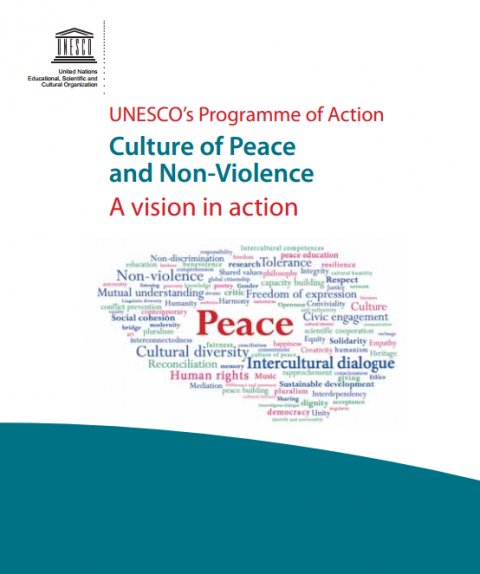 UNESCO's programme of action: culture of peace and non-violence, a vision in action Год публикации: 2013 Организация-автор: Organisation des Nations Unies pour l'éducation, la science et la culture (UNESCO) Ce document se fonde sur l'expérience et les ressources de la plate-forme intersectorielle pour une Culture de la Paix et la non-violence et a bénéficié de la contribution du Professeur Arjun Appadurai. Ce document montre la mission de l'UNESCO; Buidling Construire les défenses de la paix dans l'esprit des hommes et des femmes et la culture de la paix et de non-violence qui est des valeurs positives, les attitudes et les comportements pour la paix tous les jours. Ce document a souligné multiples crises d'aujourd'hui, et a ensuite présenté le programme d'action sur une culture de paix et de non-violence. Après les stratégies de l'UNESCO, les activités de paix de l'UNESCO ont été suivies.
  Thinkpiece on education and conflict Год публикации: 2009 Автор: Lynn Davies Организация-автор: UNESCO This paper looks first at the learning sites generally (violent schools, schools as a weapon of war, curriculum and textbooks). It then focuses on specific groups in conflict – gender, language, refugees, child soldiers. Thirdly it discusses education policy and donor intervention; and finally talks of the role of research. All these overlap hugely. This is not a prescription for how the Global Monitoring Report should be structured, but identification of themes and lessons learned that seem the most significant. Pensez pièce sur l'éducation et les conflits Год публикации: 2009 Автор: Lynn Davies Организация-автор: Organisation des Nations Unies pour l'éducation, la science et la culture (UNESCO) Ce document examine d'abord les sites d'apprentissage en général (écoles violentes, les écoles comme une arme de guerre, programmes et manuels). Elle se concentre ensuite sur des groupes spécifiques dans les conflits - le sexe, la langue, les réfugiés, les enfants soldats. Troisièmement, il discute de la politique de l'éducation et de l'intervention des bailleurs de fonds; et, enfin, parle du rôle de la recherche. Tous ces chevauchent énormément. Ce n'est pas une prescription pour la façon dont le rapport Suivi mondial devrait être structuré, mais l'identification des thèmes et des leçons apprises qui semblent les plus importants.
  Considerations on the follow-up of the United Nations International Year for the Rapprochement of Cultures with regard to implementation of the Kyiv Statement towards Mutual Understanding and Dialogue Год публикации: 2011 Организация-автор: UNESCO As one of the co-initiators of the International Year for the Rapprochement of Cultures, Ukraine proposed to initiate a general discussion regarding the protection of monuments and sites with religious or spiritual meaning (hereinafter referred to as religious2 and sacred3 properties) at the international level. This discussion was timely and in line with one of the four themes, selected to build an action plan for the Year in the fields of UNESCO’s competence, namely to promote reciprocal knowledge of cultural, ethnic, linguistic and religious diversity. 2. This initiative, having constituted one of the essential elements of the International Year of Rapprochement of Cultures, is aimed at enhancing protection and management of religious properties. It stems from the appeal of the Ukrainian authorities, launched at the 35th session of the UNESCO General Conference (2009), inviting all Member States to participate in the International Seminar “The Role of religious communities in the management of World Heritage properties” (2-5 November 2010). This announcement was welcomed by UNESCO within the framework of the Year. Numerous Member States expressing their support for the proposal designated representatives to participate in this Seminar. The elaboration of the Kyiv Statement (as one of the main outcomes of the Seminar) and its adoption in close cooperation with representatives of religious communities contributes to the creation of a culture of dialogue. Considérations sur le Suivi de l'Année Internationale du Rapprochement des Cultures Proclamée par les Nations Unies, Relatives à la mise en Oeuvre de la Déclaration de Kiev en vue de la Compréhension Mutuelle et du Dialogues Год публикации: 2011 Организация-автор: Organisation des Nations Unies pour l'éducation, la science et la culture (UNESCO) En tant que l’un des co-initiateurs de l’Année internationale du rapprochement des cultures, l’Ukraine a proposé d’engager un débat général sur la protection des monuments et des sites possédant une signification religieuse ou spirituelle (ci-après désignés comme biens religieux2 et sacrés3) au niveau international. Ce débat intervenait en temps opportun et correspondait à l’un des quatre thèmes retenus pour l’élaboration d’un plan d’action pour l’Année dans les domaines de compétence de l’UNESCO, à savoir la promotion d’une connaissance réciproque de la diversité culturelle, ethnique, linguistique et religieuse.
  The contribution of early childhood education to a sustainable society Год публикации: 2008 Организация-автор: UNESCO This report originates from the international workshop, ‘The Role of Early Childhood Education for a Sustainable Society’, jointly organized in Göteborg, Sweden, by Göteborg University, Chalmers University of Technology and the City of Göteborg, from 2 to 4 May 2007. It was attended by thirty-five participants from sixteen different countries (see ‘List of Participants’). The workshop was a follow-up to the international conference on education for sustainable development, ‘Learning to Change Our World’, held in May 2004, in Göteborg. It was one of four preparatory workshops leading to another international conference on education for sustainable development, to be organized in 2008 or 2009, in the same city. The aim of the four workshops is to discuss promoters and barriers related to learning for sustainability, and to propose recommendations for the upcoming international conference. The present workshop was conceived for the following reasons. First, our societies urgently require new kinds of education that can help prevent further degradation of our planet, and that foster caring and responsible citizens genuinely concerned with and capable of contributing to a just and peaceful world. Second, these new kinds of education must be available to all – not only a handful of people – and take place in various settings, including families and communities. Third, they must begin in early childhood, as the values, attitudes, behaviours and skills acquired in this period may have a long-lasting impact in later life. Thus, early childhood education clearly has an important place in the efforts to bring about sustainable development.
  ПЕРЕКЛИКАЮЩИЕСЯ ГОЛОСА: Десятая годовщина принятия Всеобщей декларации ЮНЕСКО о культурном разнообразии Год публикации: 2011 Организация-автор: Организация Объединенных Наций по вопросам образования, науки и культуры (UNESCO) This founding text was the first to acknowledge cultural diversity as “the common heritage of humanity”. It is with great pride that UNESCO is commemorating the 10th anniversary of the Declaration. Commemorate – from the Latin cum memorare – means quite literally “to remember together” or “to remember with”. This collection is compiled the voices of all those who have contributed to the heightening of human awareness by throwing into relief the inestimable value of cultural diversity. These excerpts from books, articles and statements by global intellectual and political leaders, artists and Nobel Prize-winners all call for the safeguarding of cultural diversity, which is inseparable from respect for human dignity. Their voices resound in bearing witness to the strength of cultural diversity and to its capacity to enlighten the minds of women and men. We are duty-bound to ensure that it is central to public policies and a resource for development and dialogue among nations. The United Nations was born of the determination of men and women “to save succeeding generations from the scourge of war...”. In accordance with that principle, UNESCO was established on a key idea, expressed at the very beginning of its Constitution: “... since wars begin in the minds of men, it is in the minds of men that the defences of peace must be constructed”. In the world today, globalized, connected and interdependent as never before, this mission is more vital than ever. The rapprochement of peoples and cultures requires a commensurately global awareness. Cultural diversity has always been at the heart of international relations. It is also, increasingly, a feature of the contemporary mixed and plural societies in which we live. In view of this reality, we must formulate appropriate public policies and rethink the mechanisms of social cohesion and civic participation. How can we build common ground on the basis of such diversity? How can we construct genuine moral and intellectual solidarity of humanity? Any new vision of humanism must be grounded itself in the dynamism and diversity of cultural heritage. It is a source of inspiration and knowledge to be shared and a means of broadening our horizons. The goal of the UNESCO Universal Declaration on Cultural Diversity is to provide keys and benchmarks for capitalizing on this wealth. There can be no sustainable governance if cultural diversity is not acknowledged. There can be no economic and social development if specific features of every culture are belittled and ignored.
 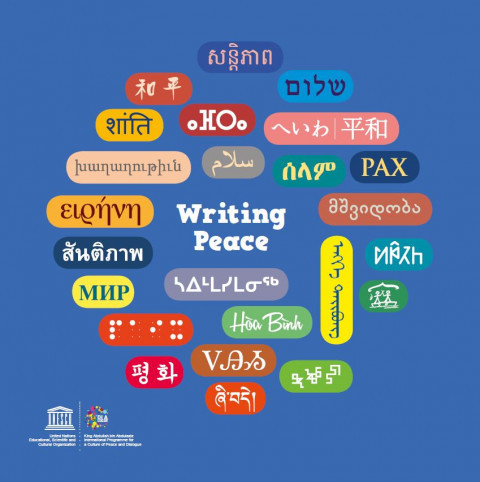 J'écris la paix Год публикации: 2017 Автор: Eric Cattelain Организация-автор: Organisation des Nations Unies pour l'éducation, la science et la culture (UNESCO) J’écris la Paix est un manuel qui invite le jeune public à découvrir les écritures contemporaines à travers un échantillon d’entre elles. Son but est de partir à la découverte du monde et de le rendre un peu plus proche, un peu plus familier. J’écris la Paix encourage les enfants (de 8 à 18 ans) à prendre conscience de l'interdépendance des cultures en se familiarisant avec les systèmes d'écriture contemporains, leur histoire et leurs emprunts mutuels.Le manuel contient 24 fiches d'activités. Chaque section présente les caractères d'un système d'écriture, un texte d'introduction et un contexte historique, le mot "paix" et le mot "bonjour", les langues associées au(x) système(s), et une activité dont les réponses apparaissent en fin de manuel.Six mille ans après l'avènement de l'écriture, que savons-nous des autres, de leurs systèmes de pensée et des transcriptions de leurs écritures? Comment les différents systèmes d'écriture peuvent-ils contribuer à une meilleure compréhension du monde et de la place que nous y occupons? En commençant par la découverte de ces scripts et de leur beauté fascinante, le manuel relie les enfants à la diversité, leur ouvrant ainsi les yeux sur le concept de paix et sur la conscience que nous en avons. Escribir la Paz Год публикации: 2017 Автор: Eric Cattelain Организация-автор: Organización de las Naciones Unidas para la Educación, la Ciencia y la Cultura (UNESCO) Escribir la Paz es un manual que invita a un público infantil y juvenil a descubrir las escrituras contemporáneas a través de una muestra de ellas. Tiene por objeto explorar el mundo, volviéndolo más cercano y más familiar. Escribir la Paz ayuda a niños y jóvenes de 8 a 18 años a tomar conciencia de la interdependencia de las culturas, familiarizándose con los sistemas de escritura contemporáneos, su historia y sus aportes mutuos. El manual incluye 24 fichas de actividades. Cada sección presenta los caracteres de un sistema de escritura, un texto introductorio y un contexto histórico, las palabras “Paz” y “Hola”, los idiomas asociados a las distintas escrituras, y una actividad cuyas respuestas se presentan al final del manual. Seis mil años después de la aparición de la escritura, ¿qué sabemos de los demás, de sus sistemas de pensamiento y la transcripción de sus escrituras? ¿De qué manera pueden los distintos sistemas de escritura contribuir a un mejor conocimiento del mundo y del lugar que ocupamos en él? Empezando por el descubrimiento de estas escrituras y su fascinante belleza, el manual conecta a los jóvenes con la diversidad y les sensibiliza al concepto de paz y a la conciencia que de él tenemos. أكتب السلام Год публикации: 2017 Автор: Eric Cattelain Организация-автор: منظمة الأمم المتحدة للتربية والعلم والثقافة (UNESCO) يدعو كتيب "أكتب السلام" فئة القراء الصغار إلى اكتشاف الكتابات الحديثة من خلال التعريف بلغات مختلفة. كما نسعى من خلال ذلك إلى التعايش مع الاختلاف ليبدو العالم أكثر قربا وحيوية. يشجع كتيب "أكتب السلام" الأطفال الذين تتراوح أعمارهم بين 8 ـ 14 سنة على الاطلاع على مختلف أشكال الترابط والتفاعل بين الثقافات من خلال تعريفهم بأنظمة الكتابة وتاريخها والاقتباسات المتبادلة بينها.يحتوي الكتيب على 24 ورقة نشاط حيث يعرض كل جزء حروف أحد أنظمة الكتابة المدرجة في الكتيب من جهة، ومن جهة أخرى، نصَا تعريفيّا بها وبخلفيتها التاريخية، إضافة إلى كلمة "السلام" وكلمة "مرحبا" واللغة أو اللغات المرتبطة بتلك الأنظمة. كما يحتوي كل جزء على نشاط معرفي تتوفر أجوبته في آخر الدليل.بعد مرور 6000 سنة على مجيء الكتابة، ما الذي نعرفه عن الآخرين، عن أنظمتهم الفكرية وعن كيفية تناقل أنظمتهم الخطيّة؟ كيف لهذه الأنظمة المختلفة أن تساهم في تقديم معرفة أفضل عن العالم وعن موقعنا فيه؟ نسعى من خلال افتتاحنا للكتاب بآليات التعلم حول تلك الأنظمة وجمالها الأخاذ ربط إدراك الأطفال بالتنوع والانفتاح على مفهوم السلام والوعي به.