
Ресурсы
Изучайте широкий спектр ценных ресурсов ВГГ, чтобы углубить своё понимание и повысить эффективность исследований, просветительской деятельности, преподавания и обучения.
Найдено: 3,385
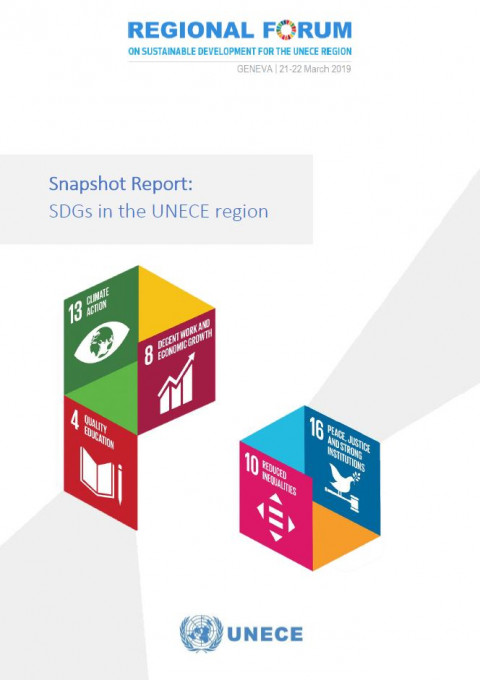 Snapshot Report: SDGs in the UNECE Region Год публикации: 2019 Организация-автор: United Nations Economic Commission for Europe (UNECE) This document provides a brief snapshot of some aspects of SDG performance in the UNECE region. It covers the SDGs that will be discussed at the 2019 Regional Forum on Sustainable Development for the UNECE region but it does not attempt to provide an exhaustive assessment. It only uses the available information in the UN SDG Global Database and the sources referenced there to illustrate a selected number of SDG issues. In a very few cases, when no data is available from this database and associated sources, information from other international organizations is used to provide some context to the discussions.
 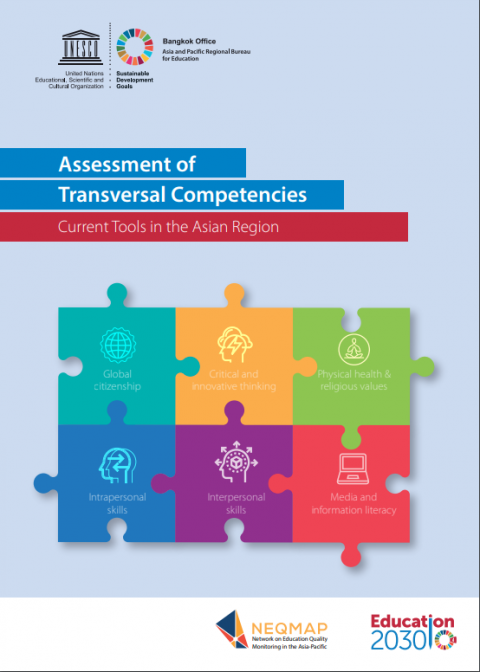 Assessment of Transversal Competencies: Current Tools in the Asian Region Год публикации: 2019 Автор: Esther Care | Alvin Vista | Helyn Kim Организация-автор: UNESCO Bangkok | Brookings Institution UNESCO’s Asia-Pacific Regional Bureau for Education has been working on education quality under the name of ‘transversal competencies’ (TVC) since 2013. Many of these competencies have been included in national education policy and curricula of countries in the region, but now the importance accorded them is increasingly gaining attention. As policy makers increasingly require their systems to provide evidence of 21st century skills acquired by their learners, implementation challenges highlight the need for a stronger alignment between curricula, pedagogy and learning assessments. UNESCO Bangkok’s Network on Education Quality Monitoring in the Asia Pacific (NEQMAP) undertook this regional study to examine components within countries’ learning assessments that show how these apply to and can measure transversal competencies. This report provides valuable information on how learning assessments are already capturing TVC and is useful for a broad range of education stakeholders, not only test developers, but also curriculum developers, teacher trainers and teachers. Particularly important is the need to align these skills and competencies across the entire education system.
  Policy on women and men in modern Kazakhstan (short version) Год публикации: 2016 Автор: Margarita A. Uskembaeva | Tatyana A. Rezvushkina | Aygul A. Beysenova The implementation of gender policy in modern Kazakhstan society is an important direction of state policy, when this area becomes an important resource for strengthening Kazakhstan's statehood and modernization of society. Gender policy implementation is one of the main factors for achieving democracy. As part of a gender study conducted by the Public Foundation “Institute for Equal Rights and Equal Opportunities of Kazakhstan” (Almaty) with the support of the Friedrich Ebert Foundation in Kazakhstan, Kazakhstan’s attitude to the main areas of gender policy implementation was studied. Политика в отношении женщин и мужчин в современном Казахстане (краткая версия) Год публикации: 2016 Автор: Margarita A. Uskembaeva | Tatyana A. Rezvushkina | Aygul A. Beysenova Реализация гендерной политики в современном казахстанском обществе является важным направлением государственной политики, когда данное направление становится важным ресурсом для укрепления казахстанской государственности и модернизации общества. Осуществление гендерной политики является одним из главных факторов достижения демократии. В рамках гендерного исследования, проведенного Общественным Фондом «Институт равных прав и равных возможностей Казахстана» (г. Алматы) при поддержке Представительства Фонда имени Фридриха Эберта в Казахстане было изучено отношение казахстанцев к основным направлениям реализации гендерной политики.
  Educational systems of Central Asian countries: challenges, risks and prospects for regional cooperation Год публикации: 2014 Автор: Nikolay A. Medushevskiy | Alisa R. Shishkina This article discusses the development of educational systems of Central Asian states after the collapse of the USSR and their independence. Each country has formed their own path of development of education - from orientation (sometimes not too thoughtful) on Western standards to a pronounced desire to limit external influence. The educational systems of the Central Asian countries need a serious reformation, aimed primarily at modernizing the technical base and textbooks, training modern personnel, introducing international mechanisms and standards. Образовательные системы стран Центральной Азии: вызовы, риски и перспективы регионального сотрудничества Год публикации: 2014 Автор: Nikolay A. Medushevskiy | Alisa R. Shishkina В данной статье рассматривается развитие образовательных систем центральноазиатских государств после распада СССР и обретения ими независимости. Каждая из стран сформироваласвой собственный путь развития образования – от ориентации(порой не слишком продуманной) на западные стандарты до выраженного стремления ограничить внешнее влияние. Образовательные системы центральноазиатских стран нуждаются в серьезной реформации, направленной прежде всего на модернизацию технической базы и учебной литературы, подготовку современных кадров, внедрение международных механизмов и стандартов
  Global Citizenship Education in Latin America and the Caribbean: Towards a World without Walls: Global Citizenship Education in the SDG 4 - E2030 Agenda Год публикации: 2018 Организация-автор: UNESCO Santiago The Latin America and the Caribbean Regional Network Meeting on Global Citizenship Education “Towards a World without Walls: Global Citizenship Education in SDG 4 – Agenda E2030”, was organized by the UNESCO Regional Bureau for Education in Latin America and the Caribbean (OREALC / UNESCO Santiago) and the Asia – Pacific Centre of Education for International Understanding (APCEIU), in collaboration with the Chilean Observatory of Educational Policies (OPECH) of the University of Chile. The event, held on October 23 and 24, 2017, in Santiago, Chile, brought together regional researchers, members of civil society organizations and activists, educational communities, social movements, government educational authorities and universities. The objective of the meeting was to promote dialogue on the concept of Global Citizenship Education (GCED), deepen the regional perspective on the topic and create a network that helps strengthen the implementation of GCED in the context of the Latin America and the Caribbean region. This document summarizes the main topics addressed and issues discussed at the meeting. Subsequently, the founding document of the Regional Global Citizenship Education Network for Latin America and the Caribbean, which was elaborated in light of the meeting’s discussions, is presented. Educación para la Ciudadanía Mundial en América Latina y el Caribe: Hacia un mundo sin muros: educación para la ciudadanía mundial en el ODS4 - Agenda E2030 Год публикации: 2018 Организация-автор: UNESCO Santiago La Reunión Regional para América Latina y el Caribe de la Red de Educación para la Ciudadanía Mundial “Hacia un mundo sin muros: educación para la ciudadanía mundial en el ODS 4 – Agenda E2030”, fue organizada por la Oficina Regional de Educación para América Latina y el Caribe (OREALC / UNESCO Santiago) y el Centro de Educación para la Comprensión Internacional de Asia-Pacífico (APCEIU), en colaboración con el Observatorio Chileno de Políticas Educativas de la Universidad de Chile (OPECH). La cita se desarrolló el 23 y 24 de octubre de 2017 en Santiago de Chile, y a ella fueron convocados pensadores y activistas de la región, provenientes de organizaciones de la sociedad civil, comunidades educativas, movimientos sociales, organismos gubernamentales y universidades. El objetivo de la reunión fue promover el diálogo sobre el concepto de Educación para la Ciudadanía Mundial (ECM) y profundizar en una mirada regional para propiciar la conformación de una red que permita fortalecer la implementación de la ECM, situada en el contexto de América Latina y el Caribe. Se presenta este documento como síntesis de las principales temáticas que fueron abordadas y discutidas en el encuentro. A continuación, se presenta el documento fundacional que establece la Red Regional de Educación para la Ciudadanía Mundial para América Latina y el Caribe, que fue elaborada a raíz de las discusiones.
  Transitions from School to Work: UNICEF Technical Note Год публикации: 2019 Организация-автор: United Nations Children's Fund (UNICEF) This report provides guidance on ways that UNICEF can support governments and partners to help adolescents to make a smooth transition from school to decent work. To prepare them for life, work, citizenship and life-long learning, UNICEF encourages governments and partners to expand access to learning and skills development for all children and adolescents – from pre-primary to upper-secondary age, and particularly for the most marginalized. UNICEF further advocates strengthening systems to enable them to develop a breadth of skills across the life course and through multiple learning pathways, such as formal, non-formal, on the job and community based.
  Context and Background: Regional Strategy for UNESCO’s Response to the Situation of People on the Move in Latin America and the Caribbean Год публикации: 2019 Организация-автор: UNESCO Santiago The UNESCO offices in Latin America and the Caribbean, under the coordination of the Regional Bureau for Education in Latin America and the Caribbean OREALC/UNESCO Santiago, have proposed the development of a regional strategy that provides a response from UNESCO based on the needs of the region’s countries for guaranteeing the right to education of migrants, refugees, asylum seekers and returnees. The purpose of this document is to present key information for the development of the regional strategy. It reviews a set of information that contextualizes human mobility in Latin America and the Caribbean, recognizing contemporary trends, identifying their driving factors and describing the main demographic qualities that characterize them.The authors then address the needs for protection of individuals in the context of mobility in the region, particularly those associated with the exercise of their fundamental rights and processes of inclusion in social protection systems in the destination society. They then present the right to education as a multiplier right in contexts of human mobility, reviewing the main obstacles faced by migrants, refugees, asylum seekers and returnees. Finally, the text presents a discussion of UNESCO’s role in this context based on the review of international regulatory instruments and frameworks, institutional frameworks, the work agenda at the regional level and the migratory institutional structure in Latin America and the Caribbean.