
Ресурсы
Изучайте широкий спектр ценных ресурсов ВГГ, чтобы углубить своё понимание и повысить эффективность исследований, просветительской деятельности, преподавания и обучения.
Найдено: 1,322
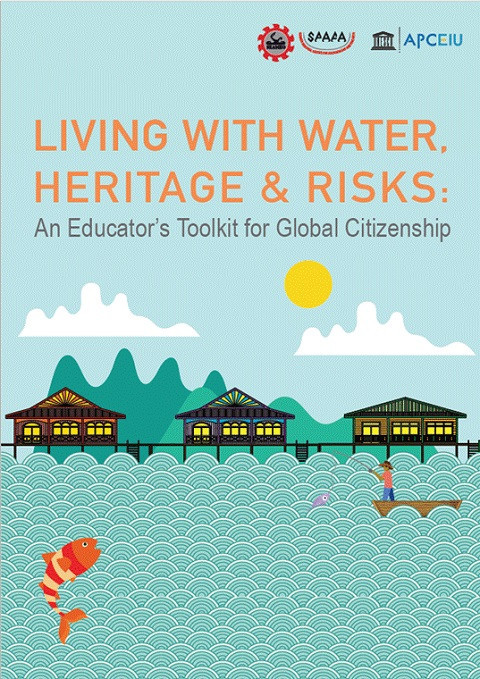 Living with Water, Heritage & Risks: An Educator’s Toolkit for Global Citizenship Год публикации: 2019 Организация-автор: APCEIU | SEAMEO. Regional Centre for Archeology and Fine Arts (SPAFA) Designed to help young global citizens gain an awareness of the culture-nature connection in heritage conservation, this toolkit provides visual learning aids and ideas to explore water heritage in Southeast Asia. It is composed of an Educator's Booklet, Activity Sheets, and Inquiry-Based and Self-Learning Photocards. Learners are encouraged to THINK, SHARE and ACT in ways that will enable them to become critical thinkers who can make compassionate and ethical decisions.
 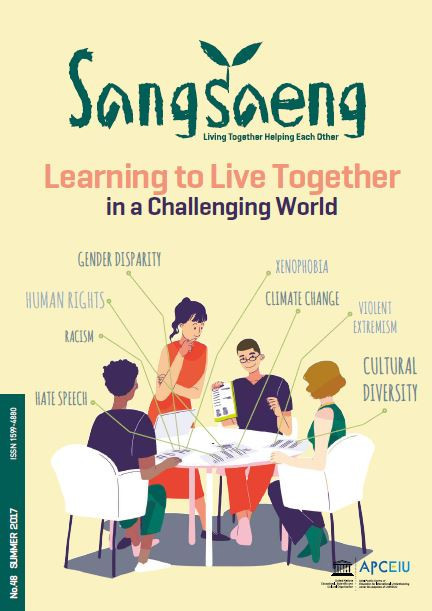 Learning to Live Together in a Challenging World (SangSaeng no. 48 summer 2017) Год публикации: 2017 Организация-автор: APCEIU The 48th issue of SangSaeng, “Learning to Live Together in a Challenging World,” has been published. With nationalism on the rise and support for populist perspectives, this edition of SangSaeng emphasizes the global community’s efforts for tolerance and learning to live together. It contains articles reminding us of the importance of empowering learners to assume active roles to face and resolve global challenges. 3 Director’s Message4 Special Column4 Education of Harmony, Peace and Happiness8 We Must Educate Global Citizens to Sustain Peace in the World11 Focus: Learning to Live Together in a Challenging World11 Access to Equitable Quality Education.14 How Business Helps People Learn to Live and Work Together17 Challenges in the Horn of Africa and Desire for Human Dignity20 Ethnic Identity in the Era of Minority Recognition 23 Special ReportShrinking Spaces: A Perspective from Iraq26 Best Practices26 Free2Choose-Create30 Strengthening Literacy Learning in Lesotho35 Youth NetworkGCED & Youth: An Open Forum in Jeju38 InterviewThe Power of Music: An Agent of Transformation42 Understanding the Asia-Pacific Region42 Naadam: A Celebration of Culture46 Bomena in Bhutan50 APCEIU in Action 더불어 살아가기 위한 교육이 직면한 도전 (상생 제48호 2017년 여름호) Год публикации: 2017 Организация-автор: 유네스코 아시아태평양 국제이해교육원 48호 <상생>이 “더불어 살아가기 위한 교육이 직면한 도전”이라는 주제로 발간되었다. 이번 호는 국가이기주의와 포퓰리즘 등 도전적인 상황 속에서 관용과 더불어 살아가기 위한 교육(Learning to Live Together)을 지켜나가는 국제사회의 노력을 살펴보고, 학습자들이 도전적인 상황을 직면하고 적극적인 역할을 수행하도록 역량을 키우는 것이 얼마나 중요한지 일깨워준다. 3 발간사4 스페셜 칼럼4 공존과 평화, 행복을 위한 교육8 우리는 세계평화를 지속시키기 위해 세계시민교육을 해야 한다11 포커스: 더불어 살아가기 위한 교육이 직면한 도전11 질적 교육에 평등하게 접근하기14 비즈니스가 함께 살고 일하도록 가르치는 방법17 아프리카 북동부 지역의 인간존엄을 향한 열망과 도전20 소수자 인정 시대의 종족 정체성 23 스페셜 리포트축소되는 공간: 이라크의 관점26 국제이해교육 모범사례26 안네프랑크하우스 Free2Choose-Create30 레소토 리터러시 교육 강화35 유스네트워크세계시민교육과 청년: 제주포럼38 인터뷰음악의 힘: 변혁의 주체42 아시아태평양 지역 이해하기42 나담: 축하의 문화46 부탄 보메나50 교육원 활동
 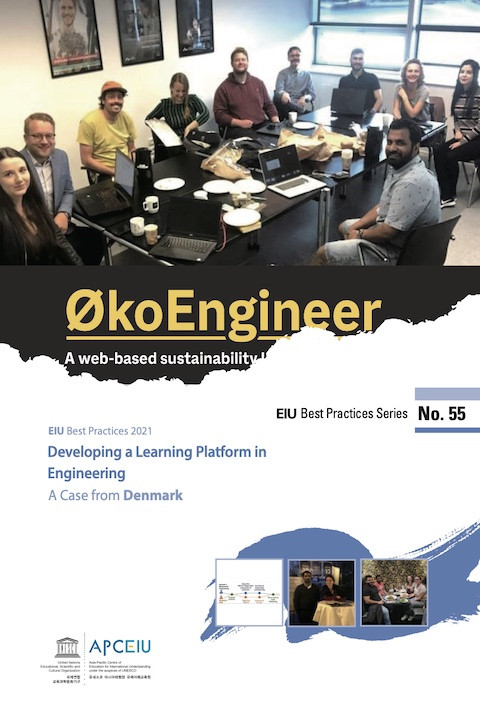 EIU Best Practices 2021: Developing a Learning Platform in Engineering; A Case from Denmark (EIU Best Practices Series; no.55) Год публикации: 2021 Автор: Serena Leka Организация-автор: APCEIU This monograph is one of APCEIU's EIU Best Practices Series, which aims to encourage educators, scholars, and activists to implement and share local initiatives on EIU. The Series No.55 introduces ‘ØkoEngineer’ which is a sustainability learning platform created to educate engineering students in Aarhus on sustainability concepts and how they couple with engineering design through the gamification of project-based learnings. The project aims to prepare the future engineers to play their crucial role in the significant global issues that we face. In response to the above challenges, future engineers, today's students are embracing initiatives that stimulate sustainability education. The students are motivated by the urge to relate sustainability with their domain-specific engineering theories. ØkoEngineer is a web-based game platform designed for integrating sustainability learning in engineering curricula.
 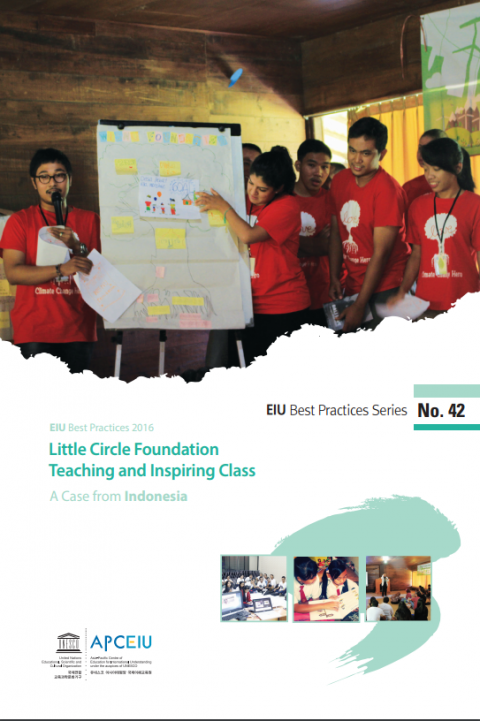 EIU Best Practices Series No. 42: Little Circle Foundation Teaching and Inspiring Class Год публикации: 2016 Организация-автор: APCEIU This monograph is one of APCEIU's EIU Best Practices Series, which aims to encourage educators, scholars, and activists to implement and share local initiatives on EIU. The Series No. 42 introduces a programme called “Little Circle Foundation Teaching and Inspiring Class”, a great example of young people taking action to improve the quality of education in their community in Bali, Indonesia. The activities presented in this case are solely organized by youth for youth themselves. This proves that young people are not only recipients of education, but also active participants and providers of education.
  한국 평화교육의 비판적 검토: 유네스코 평화교육의 관점에서 Год публикации: 2020 Автор: 앨런 스미스 | 강순원 | 오덕열 Организация-автор: 유네스코 아시아태평양 국제이해교육원 본 연구는 평화・자유・정의・연대・문화적 다양성・관용・지속가능 발전 등 보편적 가치를 토대로 한 유네스코 평화교육이 동북아시아의 특수성을 반영한 지역 평화교육의 토대로 작용할 수 있다는 가정에서 출발한다. 본 연구에서는 우선 유네스코 및 유럽평의회가 제2차 세계대전 이후, 특히 냉전과 탈냉전 시대를 통해 발전시킨 평화교육을 개괄적으로 소개하는 한편, ‘평화・통일교육’으로 일컬어지기도 하는 한국 평화교육을 광범위하고 심도 있게 분석하고 있다. 평화교육으로서의 통일교육이 어떻게 유네스코 평화교육에 접목하는 것, 현재 통일교육의 범주에서 이루어지고 있는 평화・통일교육의 현황을 중심으로 향후 평화교육 과제를 제시하는 것에 목적을 둔다.
 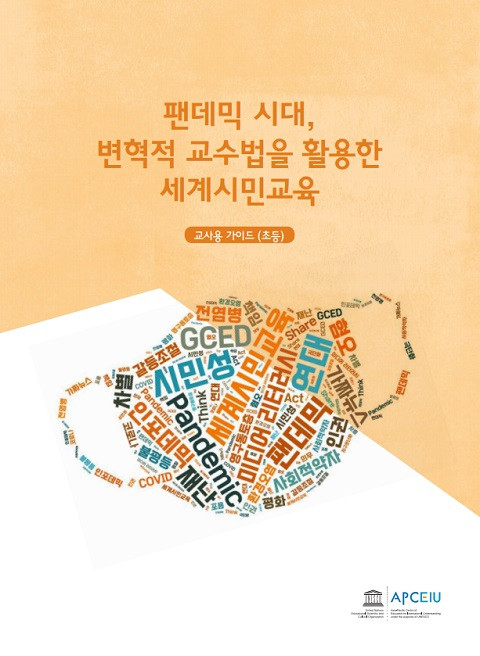 팬데믹 시대, 변혁적 교수법을 활용한 세계시민교육: 교사용 가이드 (초등·중등) Год публикации: 2020 Автор: 김화선 | 박재준 | 하승천 [초등 편] | 양철진 | 최인선 | 최윤경 [중등 편] Организация-автор: 유네스코 아시아태평양 국제이해교육원 본 교사용 가이드는 팬데믹과 관련된 다양한 세계시민교육 주제를 선정하여, 유네스코가 권장하는 변혁적 교수학습법(Transformative pedagogy)을 수업에 적용하여 실천해볼 수 있도록 구성하였다. 초등과 중등 수준에 맞춰 다양한 주제의 수업활동을 위한 교사용 팁과 교수학습자료도 포함하였다.
  Confronting Inequality through GCED: Toward Justice, Inclusion, and Transformation (SangSaeng; No.65, 2025) Год публикации: 2025 Организация-автор: APCEIU The 62nd issue of SangSaeng has been published with the theme of “Ethical AI and GCED: Exploring the Expanding Domain of Artificial Intelligence.”AI has never been as pervasive and influential as it is in today’s rapidly changing world. Despite the convenience and cutting-edge technology AI has offered us, it has the potential to pose a threat to humanity. This is where ethics for AI should come forward. In this regard, this issue will lead readers to the alarming side of AI as well as its future developments, focusing on the importance of GCED and AI ethics in tackling any potential problems.Contents03 Editor's Note 04 Special ColumnEmbracing Change to Cultivate Success — Integrating Global Citizenship Education into Tertiary Education / Dendev Badarch08 FOCUS Ethical AI and GCED: Exploring the Expanding Domain of Artificial IntelligenceRole of Ethics in the Era of AI — Protecting and Guiding AI Processes for Humanity to Flourish / Emma Ruttkamp-BloemPayingAttention to AI Ethics — An Avenue for a New Competitive Edge in Business / Myoungshin KimDriving Innovative Education — Balancing Future Possibilities and Ethical Concerns: How GCED Can be Used to Address AI Issues / Angelique Southern 20 Special ReportEmpowering a Climate Generation — From Classrooms to Climate Frontlines : The Transformative Role of Education highlighted at COP28 / Djian Sadadou 22 Best PracticesNavigating an AI Future — Ethical AI and the Importance of Critical Thought / Hannah GrantGLACE Brings the World to a City — Empowering Youth as Global Citizens: Lessons from Navotas City’s Project GLAC / Marco D. MedurandaLowering Eco-Anxiety — Teaching Climate Change Through Media and Information Literacy / Laetitia Legrand 33 GCED YOUTH NETWORKNew Wave of Youth Advocacy — Role of AI in Youth Advocacy and its Ethical Implications to Global Citizenship / Oshan M. Gunathilake and Diego Manrique36 Understanding the Asia Pacific RegionDiscovering Auroville — Where Boundaries Fade, Nature Thrives, and Global Minds Unite / Akanksha Arya 39 Peace in My MemoryHappiness without Violence — Mindanao Peace Forum Celebrates Building a Culture of Peace / Ludivina Borja-DekitPeace Scholar Passes Away Amidst Turbulent Times / Kwang-Hyun KIM 45 Story TimeThe Right Footing — My Life Has Purpose Thanks to Football / Hajar Abulfazl 48 LetterShared Challenges of Global Citizens / Natsuki Nagata 50 APCEIU in Action
 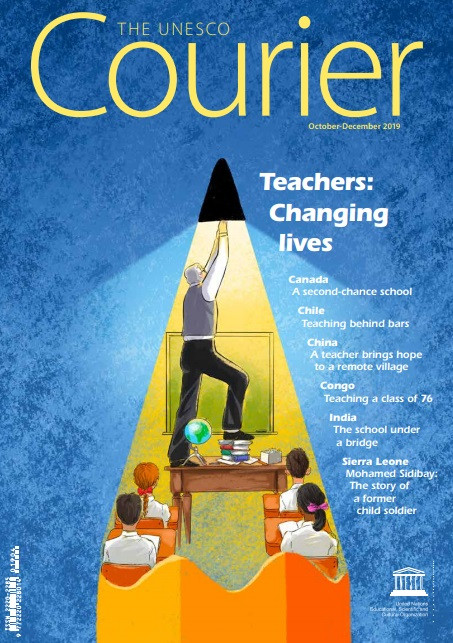 Teachers: changing lives (The UNESCO Courier no. 4, October-December 2019) Год публикации: 2019 Организация-автор: UNESCO Certainly, everyone recognizes the key role teachers play. On a personal level, we can all name at least one teacher who made a difference – sometimes to such an extent that it redirected our whole lives. At the international level, the United Nations Sustainable Development Goals (SDGs), Goal 4 in particular, recognize the importance of teachers in the implementation of the Sustainable Development Agenda by 2030. Yet, the profession is being undermined. The development of cognitive neuroscience and the many applications of new technologies in the field of education are forcing the profession to adapt and reinvent itself. Ces profs qui changent le monde (Le Courrier de l'UNESCO 4, octobre-décembre 2019) Год публикации: 2019 Организация-автор: UNESCO Certes, tout le monde reconnaît le rôle clé que jouent les enseignants. À titre personnel, chacun peut citer le nom d’au moins un professeur qui a compté, parfois au point de réorienter une vie entière. Sur le plan international, les Objectifs de développement durable (ODD) des Nations Unies, en particulier l’Objectif no 4, reconnaissent l’importance des enseignants dans la mise en œuvre du Programme de développement durable à l’horizon 2030. Pourtant, la profession est mise à mal. Le développement des neurosciences cognitives, les multiples applications des nouvelles technologies dans le domaine de l’éducation obligent la profession à s’adapter, se réinventer.