
Ресурсы
Изучайте широкий спектр ценных ресурсов ВГГ, чтобы углубить своё понимание и повысить эффективность исследований, просветительской деятельности, преподавания и обучения.
Найдено: 1,477
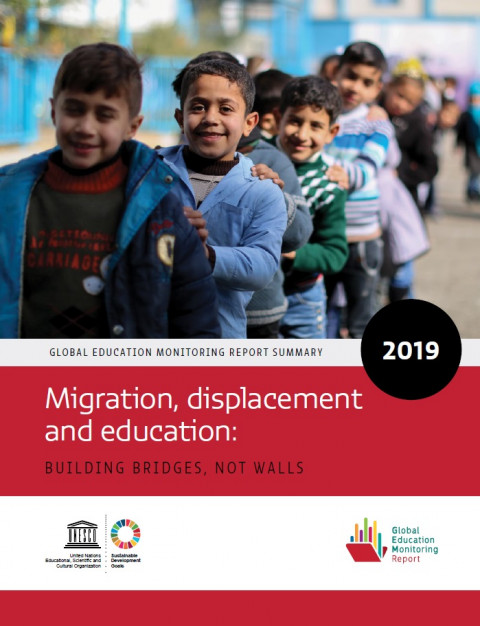 [Summary] Global Education Monitoring Report Summary 2019: Migration, Displacement and Education: Building Bridges, Not Walls Год публикации: 2018 Организация-автор: UNESCO | Global Education Monitoring Report Team This Report points directly to a major challenge: How can teachers be supported to practise inclusion? It offers us fascinating insights into humanity and the age-old phenomenon of migration. I invite you to consider its recommendations and to act on them. This report is a vital toolkit for these compacts. It covers policy issues that address seasonal migrants, rural school consolidation, intercultural curricula, refugee inclusion in national education systems and elimination of segregation, qualifications recognition, targeting of school funding, more effective humanitarian education aid and teacher preparedness for diverse classrooms in emergency, protracted and “new normal” contexts. This summary of the 2019 GEM Report calls on countries to see education as a tool to manage migration and displacement and an opportunity for those needing one.
 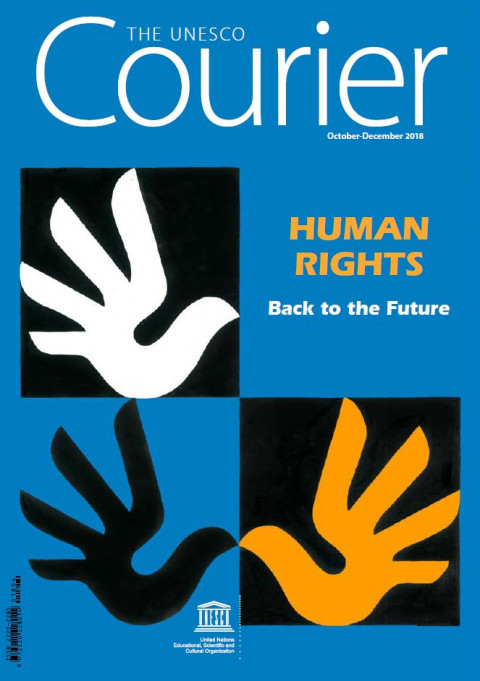 Human Rights: Back to the Future (The UNESCO Courier no. 4, October-December 2018) Год публикации: 2018 Организация-автор: UNESCO Benedetto Croce, Aldous Huxley, Humayun Kabir, Harold J. Laski, Lo Chung-Shu, Salvador de Madariaga, Jacques Maritain, F.S.C. Northrop, Arnold Schoenberg, Pierre Teilhard de Chardin – these are some of the contributors to this issue of the Courier. To mark the seventieth anniversary of the Universal Declaration on Human Rights, adopted on 10 December 1948, we decided to take a detour into the past to enable us to better orient ourselves in the future. This explains the title of this issue: “Back to the Future”. Travelling back to 1946, when the world was grappling with the aftermath of the Second World War, “what kind of moral statement could the international community make that would adequately express its collective outrage and hope, however utopian, for a better future?” Mark Goodale discusses this massive international effort in his introductory article for our Wide Angle section, which he also guest-edited. The series of articles in this section uncovers a hitherto little-known part of the history of the Universal Declaration on Human Rights – the inquiry into the origins and philosophic bases of human rights. This initiative was decided upon during the first UNESCO General Conference (November-December 1946) and launched the following year by the Organization’s first Director-General, Julian Huxley. It was coordinated by the young French philosopher, Jacques Havet. For this project, UNESCO brought together leading intellectual figures of the post-war world, thus making an essential contribution to the reflection on human rights at the time. It remains amazingly relevant today. Equally relevant today are the drawings of Our Guest, the Peruvian artist Fernando Bryce, who derives his inspiration from this historic period “when the idea of progress was genuinely linked to a whole new perspective”. His series, The Book of Needs – which takes pages of the Courier between 1948 and 1954 and transforms them into works of art – is featured as a supplement in this issue. Droits de l’homme : retour vers le futur (Le Courrier de l’UNESCO no. 4, octobre-décembre 2018) Год публикации: 2018 Организация-автор: Organisation des Nations Unies pour l'éducation, la science et la culture (UNESCO) Benedetto Croce, Aldous Huxley, Humayun Kabir, Harold J. Laski, Lo Chung-Shu, Jacques Maritain, F. S. C. Northrop, Arnold Schoenberg, Pierre Teilhard de Chardin : voici quelques-uns des contributeurs de ce numéro du Courrier. Pour marquer le soixante-dixième anniversaire de la Déclaration universelle des droits de l’homme, adoptée le 10 décembre 1948, nous avons décidé de faire un détour par le passé, afin de mieux nous orienter dans l’avenir. Ce qui explique le titre de ce numéro : « Retour vers le futur ». Nous sommes donc en 1946. Alors que le spectre de la guerre totale hante tous les esprits, « la communauté internationale a besoin de formuler un énoncé moral qui exprime adéquatement son indignation collective et son espoir (pour utopique qu'il fût) d'un avenir meilleur », explique Mark Goodale, auteur de l’article introductif et consultant pour Grand angle. Un dossier qui dévoile tout un pan méconnu de l’histoire de la Déclaration universelle des droits de l’homme : l’enquête mondiale sur les fondements philosophiques des droits de l’homme, décidée lors de la première Conférence générale de l’UNESCO (novembre-décembre 1946), lancée l’année suivante par le premier Directeur général, Julian Huxley, et coordonnée par le jeune philosophe français Jacques Havet. L’UNESCO a réuni autour de ce projet l’élite intellectuelle du monde de l'après-guerre et apporté ainsi une contribution essentielle à la réflexion sur les droits de l’homme. Elle demeure aujourd’hui d’une étonnante actualité. Tout aussi actuels sont les dessins de Notre invité, l’artiste péruvien Fernando Bryce qui puise son inspiration dans cette période historique « où l'idée de progrès ouvrait réellement de multiples perspectives ». Sa série The Book of Needs (Le livre des nécessités), qui transfigure en œuvres d’art des pages du Courrier des années 1948 - 1954, fait l’objet du supplément à ce numéro. Derechos humanos: regreso al futuro (El Correo de la UNESCO no. 4, Octubre-Diciembre 2018) Год публикации: 2018 Организация-автор: Organización de las Naciones Unidas para la Educación, la Ciencia y la Cultura (UNESCO) Benedetto Croce, Aldous Huxley, Humayun Kabir, Harold J. Laski, Lo Chung-Shu, Salvador de Madariaga, Jacques Maritain, F. S. C. Northrop, Arnold Schoenberg, Pierre Teilhard de Chardin: estos son algunos de los colaboradores de este número de El Correo. Para conmemorar el 70 aniversario de la Declaración universal de los derechos humanos, adoptada el 10 de diciembre de 1948, decidimos hacer un recorrido por el pasado para orientarnos mejor en el futuro, lo cual explica el título de este número: “Regreso al futuro”. Nos encontramos pues en 1946. Mientras el espectro de la guerra mundial atormenta todas las conciencias, “la comunidad internacional necesita formular un enunciado moral que exprese adecuadamente su indignación colectiva y su esperanza (por utópica que fuese) de un futuro mejor”, explica Mark Goodale, autor del artículo introductorio y consultor para nuestra sección Gran angular. Una sección que desvela toda una parte desconocida de la historia de la Declaración universal de los derechos humanos: la encuesta mundial sobre los fundamentos filosóficos de los derechos del hombre, decidida durante la primera Conferencia General de la UNESCO (noviembre-diciembre de 1946), enviada el año siguiente por el primer Director General, Julian Huxley, y coordinada por el joven filósofo francés Jacques Havet. La UNESCO reunió en torno a este proyecto a la élite intelectual del mundo de la posguerra y aportó así una contribución fundamental a la reflexión sobre los derechos humanos. Una encuesta que aún hoy resulta de sorprendente actualidad. Igual de actuales son los dibujos de Nuestro invitado, el artista peruano Fernando Bryce, que encuentra su inspiración en este período histórico “donde la idea de progreso abría realmente múltiples perspectivas”. Su serie The Book of Needs (El libro de las necesidades), que transfigura en obras de arte algunas páginas de El Correo de los años 1948 - 1954, es objeto del suplemento de este número.
  برنامج الملك عبد الله بن عبد العزيز الدولي لثقافة السلام والحوار: أهم منجَزات المرحلة الأولى Год публикации: 2016 Организация-автор: منظمة الأمم المتحدة للتربية والعلم والثقافة (UNESCO) انبثق برنامج الملك عبد الله بن عبد العزيز الدولي لثقافة السلام والحوار من الإطار المؤسسي لبرنامج اليونسكو لثقافة السلام واللاعنف.إن ثقافة السلام لا تقتصر على كونها مفهوماً بل تتعداه إلى كونها التزاماً بجعل السلام واقعاً ملموساً للجميع. فهي تعبِّ عن “مجموعة من القيم والمواقف والتقاليدوأنماط السلوك وأساليب الحياة تستند إلى [...] احترام الحياة وإنهاء العنف [... و] التمسك بمبادئ الحرية والعدل والديمقراطية والتسامح والتضامنوالتعاون والتعددية والتنوع الثقافي والحوار والتفاهم على مستويات المجتمع كافة وفيما بين الأمم” (المادة 1 من إعلان وبرنامج العمل بشأن ثقافة السلام،اليونسكو، 1999 ). وتثابر اليونسكو على العمل لغرس ثقافة السلام مع مراعاة اعتبارات التنمية، بمضافرة القوى مع أصحاب المصلحة الملتزمين فيمجال التربية والعلوم والثقافة، والاتصال والإعلام.
  Measuring Global Citizenship Education: A Collection of Practice and Tools Год публикации: 2017 Организация-автор: Center for Universal Education at Brookings | UNESCO | UN Global Education First Initiative - Youth Advocacy Group (YAG) The idea of global citizenship has existed for several millennia. In ancient Greece, Diogenes declared himself a citizen of the world,1 while the Mahaupanishads of ancient India spoke of the world as one family.2 Today, education for global citizenship is recognized in many countries as a strategy for helping children and youth prosper in their personal and professional lives and contribute to building a better world.This toolkit is intended to shed light on one aspect of operationalizing global citizenship education (GCED): how it can be measured. This toolkit is the result of the collective efforts of the Global Citizenship Education Working Group (GCED-WG), a collegium of 90 organizations and experts co-convened by the United Nations Educational, Scientific, and Cultural Organization (UNESCO), the Center for Universal Education (CUE) at the Brookings Institution, and the United Nations Secretary General’s Global Education First Initiative’s Youth Advocacy Group (GEFI-YAG). To gather the measurement tools in this collection, the working group surveyed GCED programs and initiatives that target youth (ages 15–24).3 For the purposes of this project, GCED was defined as any educational effort that aims to provide the skills, knowledge, and experiences and to encourage the behaviors, attitudes, and values that allow young persons to be agents of long-term, positive changes in their own lives and in the lives of people in their immediate and larger communities (with the community including the environment).This toolkit begins with a brief review of opinions on why GCED is important and the variety of definitions of GCED. We follow the report with a catalog of 50 profiles of assessment efforts, each describing practices and tools to measure GCED at the classroom, local, and national levels. Note that the survey does not represent an exhaustive list but may be regarded as a living document that will grow as the field of GCED itself grows around the world.Broadly speaking, the assessment efforts in this survey may be categorized across achieving three goals: (1) fostering the values/attitudes of being an agent of positive change; (2) building knowledge of where, why, and how to take action toward positive change; and (3) developing self-efficacy for taking effective actions toward positive change.Today, global challenges such as climate change, migration, and conflict will require people to do more than just think about solutions. They will require effective action, by both individuals and communities. Education for global citizenship is one means to help young people develop the knowledge, skills, behaviors, attitudes, and values to engage in effective individual and collective action at their local levels, with an eye toward a long-term, better future at the global level. We offer this toolkit to provide guidance for educators, policymakers, non-governmental organizations, civil society, and researchers, and to inform this conversation.
  UNESCO's Contribution to the Prevention of Violant Extremism Год публикации: 2016 Организация-автор: UNESCO This document provides a summary of recent efforts by UNESCO to step up its action to prevent violent extremism, in the context of the United Nations Secretary-General’s Plan of Action on Violent Extremism, launched in January 2016. Building on its mandate and existing activities, UNESCO has adopted an intersectoral approach, paying particular attention to the needs of young people particularly at risk of radicalization.
  Holocaust Education in a Global Context: Report Год публикации: 2013 Организация-автор: UNESCO Teaching and learning about the Holocaust, which until this point had largely been a matter of regional interest, for Europeans, as well as North Americans and Israelis, became officially an issue of universal concern. Other countries are now invited to teach about the Holocaust even if they do not have a direct link to the event. This raises many issues concerning the pedagogical implications of this global perspective on Holocaust education. Why and how is the Holocaust taught in countries that have no connections with the genocide and the history of the Jewish people? How does this history connect and resonate with the preoccupations of these countries? Generally speaking, what could be the purposes and the benefits of teaching about the Holocaust globally?In order to address these issues, UNESCO organized an experts-meeting on 27 April 2012, in partnership with the Topography of Terror Foundation (Berlin, Germany). The purpose was specifically to clarify the following questions: What are the current trends of Holocaust education worldwide? How can the Holocaust be studied in a comparative fashion in the classroom? In which ways does Holocaust education contribute to the prevention of genocide? Furthermore, how is it taught in a human rights education perspective? Can the Holocaust provide a suitable framework to address other traumatic events of the past?
 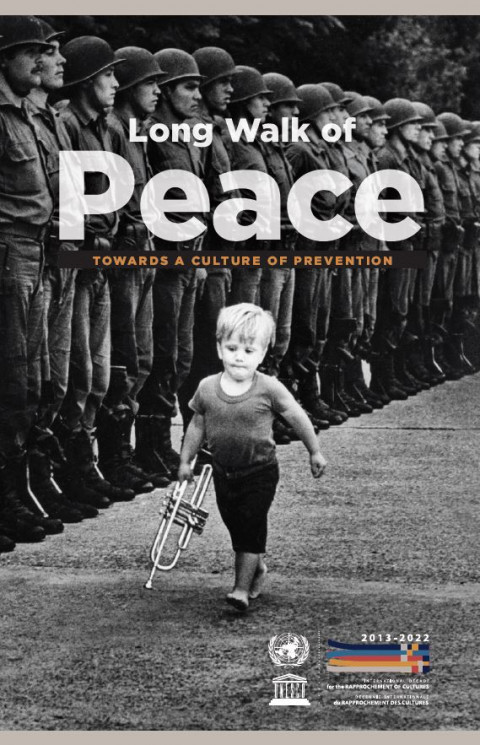 Long Walk of Peace: Towards a Culture of Prevention Год публикации: 2018 Организация-автор: UNESCO How can the United Nations best address the imperatives of peace? Long Walk of Peace presents a fresh review of the conceptual and practical approaches to peace since the creation of the UN. Through an in-depth theoretical analysis, combined with a presentation of innovative practices across 32 UN bodies, it explores the long, steady haul towards peace and provides inspiration for the way forward.This book represents the collaborative efforts of scholars, experts and UN staff from a wide range of backgrounds. Long Walk of Peace, through its conceptual history and robust analysis, shows that peace is a dynamic process and a continuous journey of discovery. Thereby, the book provides a unique understanding of the emerging priorities of ‘sustaining peace’ and promoting ‘a culture of prevention’.As such it is an expression of UNESCO’s mandate to serve as a laboratory of ideas and thereby help advance the imperatives underscored by Agenda 2030.
 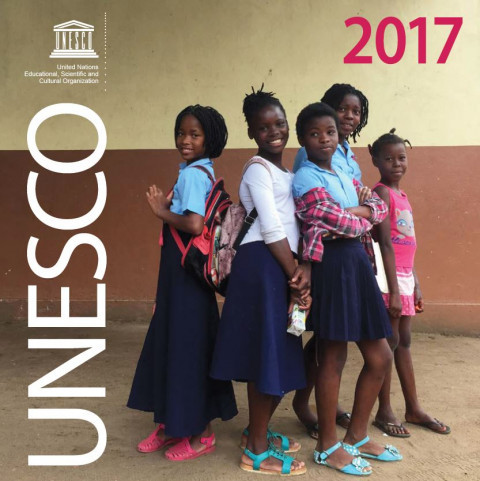 UNESCO 2017: Annual Report 2017 Год публикации: 2018 Организация-автор: UNESCO This Annual Report takes stock of these actions and many others, undertaken during the mandate of the former Director-General, Irina Bokova, to whom I wish to pay tribute. The Report also reflects the professionalism and expertise of the Organization’s staff working across the world, and translating the 2030 Agenda for Sustainable Development’s Goals into action. The Report features UNESCO’s commitment to provide a world of justice, peace and sustainable development.Guided by the ideals of peace and progress, UNESCO represents a powerful force for transformation in the face of today’s challenges. It is also well-placed to share our wide-ranging experience and formulate the innovative ideas that the world currently needs, bearing in mind specific conditions on the ground and the need to respect local history and culture.