
Ресурсы
Изучайте широкий спектр ценных ресурсов ВГГ, чтобы углубить своё понимание и повысить эффективность исследований, просветительской деятельности, преподавания и обучения.
Найдено: 1,444
 라운드 테이블 보고서: ‘교육의 실천적 역할에 인권을 넣어’ Год публикации: 2008 Организация-автор: 유네스코 본 간행물은 2008년 12월 2일부터 2009년 2월 27일까지 파리 유네스코 본부에서 개최 된 “인권 교육의 60년(60 years of Human Rights Education)”에서 다룬 주제를 토대로 한 주요 개념들과 그 행사의 특징들에 대한 하이라이트이다. 행사의 실질적인 개회와 폐회 세션 이외에도, 라운드 테이블은 네 개의 패널, 각각의 요약본(summary) 이 포함된 보고서, 소개, 사례 연구, 토론과 권고안들로 구성되어 있다. 이 간행물은 다양한 수준에서 읽기가 가능하다. 즉, 인권 교육에 대한 일종의 회고전으로, 현재의 바람직한 관례를 기념하기 위해, 그리고 그들에 대한 토론과 권고안들을 통해서 인권 교육이 나아갈 미래의 방향을 위한 지침 자료로 읽을 수 있다.
  The right to higher education and gender equality: briefing note compendium Год публикации: 2023 Организация-автор: UNESCO International Institute for Higher Education in Latin America and the Caribbean (IESALC) The right to higher education and gender equality Table of ContentsForeword ................................................................................................................................................................................4Introduction ..........................................................................................................................................................................5UNESCO and the right to higher education ..............................................................................................................5Aim of this compendium..................................................................................................................................................6Key findings...........................................................................................................................................................................7Gender equality in Higher Education - Maximising impacts– Gillian Cowell................................................8Gender equality and higher education: The Afghan case – Aisha Khurram............................................... 12An analysis of gender equality policies and practices in higher education institutions and their effectiveness in promoting gender equity – Angel Mbuthia........................................................ 14Gender identity and access to higher education – Martin Perea.................................................................... 16What can be done to ensure the right to higher education? – Bhavani Rao.............................................. 18Gender equality in higher education still a pending issue in Peru – Patricia Ruiz Bravo ....................... 22Gender equality in higher education: state of play and implications across OECD countries, and reflections on potential responses for policy and practice – François Staring.................................. 24
  Education in Africa: placing equity at the heart of policy; executive summary Год публикации: 2023 Организация-автор: UNESCO Dakar | Union Africaine This report follows the request made by the Member States of the African Union during the 2018 Pan-African High-Level Conference on Education. It aims to support the efforts undertaken by African countries to accelerate the achievement of the targets and strategic objectives set out in the 2030 Agenda and the Continental Education Strategy for Africa (CESA). This first report highlights the need to place equity at the heart of efforts to improve access to and the quality of education, without which efforts to improve access to and the quality of education could inadvertently widen existing inequalities. L’éducation en Afrique: Placer l’équité au cœur des politiques Год публикации: 2023 Организация-автор: UNESCO Dakar | Union Africaine Ce rapport fait suite à la demande formulée par les États membres de l'Union Africaine au cours de la Conférence panafricaine de haut niveau sur l’éducation de 2018. Il vise à soutenir les efforts entrepris par les pays africains afin d’accélérer la réalisation des cibles et des objectifs stratégiques fixés dans le Programme 2030 et la Stratégie continentale de l’éducation pour l’Afrique (CESA). Ce premier rapport met en lumière la nécessité d’accorder une place centrale à l’équité, sans laquelle les efforts d’amélioration de l’accès à l’éducation et de sa qualité pourraient involontairement creuser les inégalités existantes. This report follows the request made by the Member States of the African Union during the 2018 Pan-African High-Level Conference on Education. It aims to support the efforts undertaken by African countries to accelerate the achievement of the targets and strategic objectives set out in the 2030 Agenda and the Continental Education Strategy for Africa (CESA). This first report highlights the need to place equity at the heart of efforts to improve access to and the quality of education, without which efforts to improve access to and the quality of education could inadvertently widen existing inequalities. A Educação na África: colocar a igualdade no cerne da política; sumário executivo Год публикации: 2023 Организация-автор: UNESCO Dakar | Union Africaine Ce rapport fait suite à la demande formulée par les États membres de l'Union Africaine au cours de la Conférence panafricaine de haut niveau sur l’éducation de 2018. Il vise à soutenir les efforts entrepris par les pays africains afin d’accélérer la réalisation des cibles et des objectifs stratégiques fixés dans le Programme 2030 et la Stratégie continentale de l’éducation pour l’Afrique (CESA). Ce premier rapport met en lumière la nécessité d’accorder une place centrale à l’équité, sans laquelle les efforts d’amélioration de l’accès à l’éducation et de sa qualité pourraient involontairement creuser les inégalités existantes. This report follows the request made by the Member States of the African Union during the 2018 Pan-African High-Level Conference on Education. It aims to support the efforts undertaken by African countries to accelerate the achievement of the targets and strategic objectives set out in the 2030 Agenda and the Continental Education Strategy for Africa (CESA). This first report highlights the need to place equity at the heart of efforts to improve access to and the quality of education, without which efforts to improve access to and the quality of education could inadvertently widen existing inequalities. التعليم في أفريقيا: إدماج الإنصاف في صميم السياسات التعليمية; ملخص تنفيذي Год публикации: 2023 Организация-автор: UNESCO Dakar | Union Africaine Ce rapport fait suite à la demande formulée par les États membres de l'Union Africaine au cours de la Conférence panafricaine de haut niveau sur l’éducation de 2018. Il vise à soutenir les efforts entrepris par les pays africains afin d’accélérer la réalisation des cibles et des objectifs stratégiques fixés dans le Programme 2030 et la Stratégie continentale de l’éducation pour l’Afrique (CESA). Ce premier rapport met en lumière la nécessité d’accorder une place centrale à l’équité, sans laquelle les efforts d’amélioration de l’accès à l’éducation et de sa qualité pourraient involontairement creuser les inégalités existantes. This report follows the request made by the Member States of the African Union during the 2018 Pan-African High-Level Conference on Education. It aims to support the efforts undertaken by African countries to accelerate the achievement of the targets and strategic objectives set out in the 2030 Agenda and the Continental Education Strategy for Africa (CESA). This first report highlights the need to place equity at the heart of efforts to improve access to and the quality of education, without which efforts to improve access to and the quality of education could inadvertently widen existing inequalities.
  Together for Peace: Silent Manga Catalogue Год публикации: 2020 Автор: Walden Schertz | Jeremy Clay | Santibhap Ussavasodhi Организация-автор: UNESCO Bangkok | Coamix This Together for Peace Silent Manga Catalogue is a compilation of silent manga – manga stories told entirely through illustration without the use of dialogue. These works of art were selected from 274 entries submitted by artists in 117 countries worldwide to join SILENT MANGA AUDITION® Round 13 held under the theme Together for Peace, in collaboration with UNESCO Bangkok, the Asia and Pacific Regional Bureau for Education. Silent manga is a powerful medium of communication in the Asia-Pacific. Although the region is the most diverse in the world, it can be enjoyed by anyone regardless of their background. Silent manga has no language barrier. These works showcase different reflections of peace as expressed by artists around the world while conforming to the Japanese manga style.
 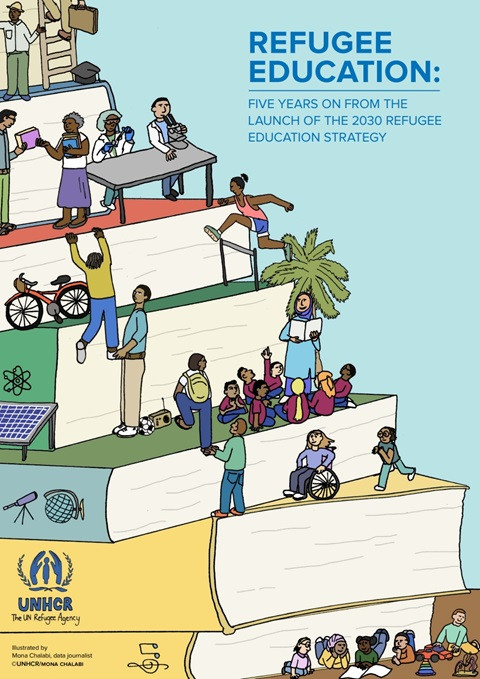 Refugee Education; Five Years on from the Launch of the 2030 Refugee Education Strategy Год публикации: 2024 Автор: Cirenia Chavez Villegas | Kate Bond Организация-автор: UN. Office of the United Nations High Commissioner for Refugees (UNHCR) The 2024 UNHCR Refugee Education Report draws on data from more than 65 countries worldwide to provide the most detailed picture yet of the state of refugee education and enrolment. The report reflects on the 2030 Refugee Education Strategy (launched in 2019) and where notable progress has been made as well as areas where greater investment and enhanced collaboration are needed to meet the strategic objectives of the Strategy. International Symposium on Cultivating Wisdom, Harvesting Peace: Educating for a Culture of Peace through Values, Virtues, and Spirituality of Diverse Cultures, Faiths, and Civilizations; Symposium Recommendations Год публикации: 2005 Организация-автор: Griffith University. Multi-Faith Centre On the 10-13th August 2005, over 120 delegates from 25 countries gathered at the International Symposium to share their inspirational insights and experiences on the theme of “Cultivating Wisdom, Harvesting Peace.” The Symposium was organized and hosted by the Multi-Faith Centre of Griffith University, Brisbane, Australia with the support of Pure Land Learning College, UNESCO and various UNESCO National Commissions, centres or offices, and numerous faith, interfaith, educational and civil society organizations and institutions. Reflecting a diversity of cultures, faiths and spirituality traditions, the delegates presented rich and empowering stories as well as critical analyses of how communities, institutions, civil society organizations, and international or global agencies have organized educational projects and programs to address the root causes of violence and conflicts and build a culture of peace at all levels of life. Over four intensive days of inter-faith and intra-faith dialogue, the Symposium participants engaged with humility and passion in sharing their wisdoms on ways to promote mutual understanding, solidarity, and cooperation across cultures and national boundaries. While recognizing that differences between faiths and cultures need to be understood, the dialogue also clearly showed that all faiths, cultures, and civilizations have, at their core, key values, virtues, and ethical principles that inspire and sustain peaceful relationships, communities and societies.The Symposium also highlighted the urgent need for exemplars and possibilities for transforming principles, values and visions into personal and social actions and practices in all the multiple dimensions of a culture of peace. In this first decade of the 21st century, it is clear that there are still many formidable challenges of building peace posed by prevailing realities of conflicts and violence in local, national, international and global contexts. The Symposium on “Cultivating Wisdom, Harvesting Peace” was therefore a most timely and relevant event, not only for promoting the urgent dialogue needed, but also most importantly in proposing constructive policies for educational transformation worldwide. This Summary of the Symposium Recommendations will hopefully be a very helpful document for the implementation of effective and creative strategies and practices of educating for wisdom towards a culture of peace. It is offered to government leaders, policy makers, educators, and leaders and members of diverse faith and interfaith institutions and communities in all societies and regions, in the hope that we will join our minds, hearts and spirit in solidarity to build a “one world” of peace, compassion, justice, love and diverse shared values for the well being of a common humanity and earth community Colloque international sur la culture de la sagesse, la récolte de la paix: l'éducation pour une culture de la paix à travers les valeurs, les vertus, et la spiritualité de diverses cultures, religions et civilisations; recommandations du symposium Год публикации: 2005 Организация-автор: Griffith University. Multi-Faith Centre Au 10-13 Août 2005, plus de 120 délégués de 25 pays se sont réunis lors du symposium international de partager leurs idées et expériences d'inspiration sur le thème «Cultiver la Sagesse, la récolte de la paix.» Le colloque a été organisé et accueilli par la Foi multi Centre de l'Université Griffith, Brisbane, Australie avec le soutien de la Terre pure College Learning, l'UNESCO et diverses commissions nationales pour l'UNESCO, des centres ou des bureaux, et de nombreux foi, interreligieux, les organisations et les institutions éducatives et la société civile. Reflétant la diversité des cultures, des religions et des traditions de spiritualité, les délégués ont présenté des histoires riches et l'autonomisation ainsi que des analyses critiques de la façon dont les collectivités, les institutions, les organisations de la société civile et des organismes internationaux ou mondiaux ont organisé des projets et des programmes éducatifs pour faire face aux causes profondes de la la violence et les conflits et construire une culture de paix à tous les niveaux de la vie. Plus de quatre jours intensifs de interconfessionnel et le dialogue intra-religieux, les participants au symposium engagés avec humilité et passion à partager leurs sagesses sur les moyens de promouvoir la compréhension mutuelle, la solidarité et la coopération entre les cultures et les frontières nationales. Tout en reconnaissant que les différences entre les religions et les cultures doivent être compris, le dialogue a également montré clairement que toutes les religions, les cultures et les civilisations ont, à leur base, les valeurs clés, les vertus et les principes éthiques qui inspirent et maintenir des relations pacifiques, les communautés et les sociétés . Le Symposium a également souligné le besoin urgent d'exemplaires et les possibilités de transformer les principes, les valeurs et les visions en actions et les pratiques personnelles et sociales dans tous les multiples dimensions d'une culture de la paix. Dans cette première décennie du 21e siècle, il est clair qu'il ya encore de nombreux défis formidables de consolidation de la paix que posent les réalités prévalant des conflits et de la violence dans des contextes locaux, nationaux, internationaux et mondiaux. Le Symposium sur "Sagesse Cultivant, récolte la paix» était donc un événement le plus opportun et pertinent, non seulement pour promouvoir le dialogue urgent besoin, mais aussi le plus important de proposer des politiques constructives pour la transformation de l'éducation dans le monde entier. Ce résumé des recommandations du Symposium, nous l'espérons être un document très utile pour la mise en œuvre des stratégies et des pratiques de l'éducation pour la sagesse vers une culture de la paix efficaces et créatives. Il est offert aux chefs de gouvernement, les décideurs, les éducateurs et les dirigeants et les membres des institutions et des communautés religieuses et interconfessionnelles diverses dans toutes les sociétés et les régions, dans l'espoir que nous nous joindrons nos esprits, les cœurs et l'esprit de solidarité pour construire un "one monde "de la paix, la compassion, la justice, l'amour et les valeurs partagées diverses pour le bien-être d'une communauté de l'humanité et de la terre commune.