
Ресурсы
Изучайте широкий спектр ценных ресурсов ВГГ, чтобы углубить своё понимание и повысить эффективность исследований, просветительской деятельности, преподавания и обучения.
Найдено: 1,180
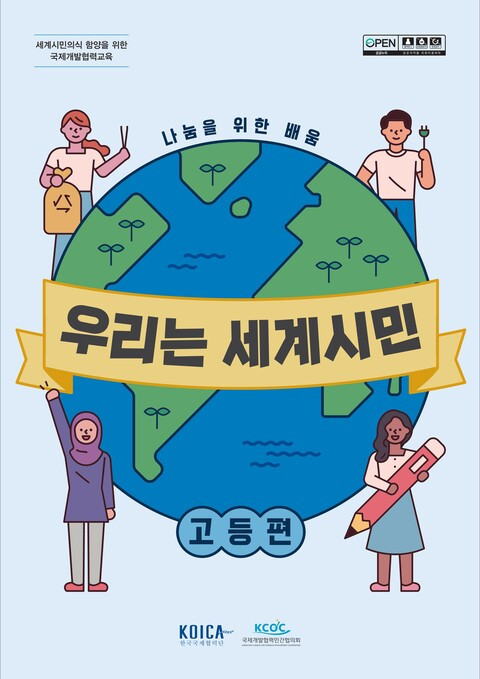 [개정판] 우리는 세계시민: 나눔을 위한 배움; 고등편 Год публикации: 2021 Организация-автор: 한국국제협력단 | 국제개발협력민간협의회 본 교재는 KOICA ODA 교육원의 연구용역으로 발간된 것으로 고등학생 대상의 세계시민과 개발교육을 위한 교안및 활용 가이드를 수록하였고 부록으로 교안 선택 활동과 교안 활용을 위한 교보재 등을 다루고 있다. 본 저작물은 국제개발협력민간협의회에서 2021년 작성하여 공공누리 제4유형으로 개방한 ‘우리는 세계시민: 고등편’을 이용하였으며 해당 저작물은 국제개발협력민간협의회 홈페이지 (www.ngokcoc.or.kr)에서 무료로 다운받으실 수 있습니다.
 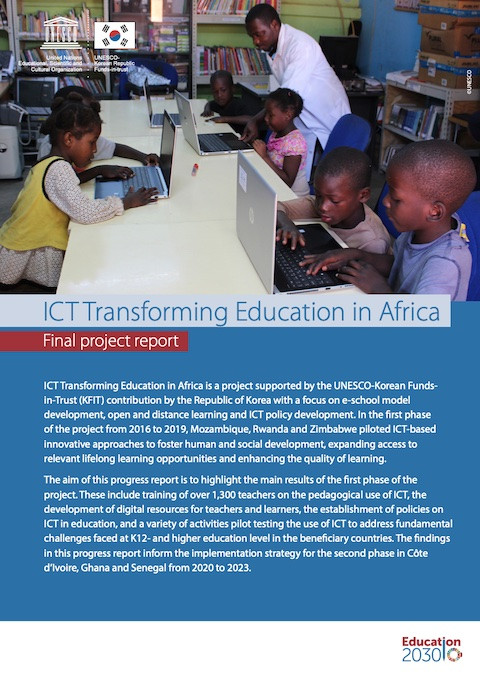 ICT Transforming Education in Africa: Final Project Report Год публикации: 2020 Организация-автор: UNESCO ICT Transforming Education in Africa is a project supported by the UNESCO-Korean Funds- in-Trust (KFIT) contribution by the Republic of Korea with a focus on e-school model development, open and distance learning and ICT policy development. In the first phase of the project from 2016 to 2019, Mozambique, Rwanda and Zimbabwe piloted ICT-based innovative approaches to foster human and social development, expanding access to relevant lifelong learning opportunities and enhancing the quality of learning.The aim of this progress report is to highlight the main results of the first phase of the project. These include training of over 1,300 teachers on the pedagogical use of ICT, the development of digital resources for teachers and learners, the establishment of policies on ICT in education, and a variety of activities pilot testing the use of ICT to address fundamental challenges faced at K12- and higher education level in the beneficiary countries. The findings in this progress report inform the implementation strategy for the second phase in Côte d’Ivoire, Ghana and Senegal from 2020 to 2023.
  Roadmap for Integrating Global Citizenship and Liberation History in Teaching and Learning in SADC Member States Год публикации: 2021 Организация-автор: UNESCO The Roadmap for integrating GCED and SALH in teaching and learning in SADC member states is grounded in two visions: Identify common values and learning outcomes that can be advanced by GCED and SALH, with a view of promoting the sense of belonging, solidarity, and regional identity and integration. Guide education planners and practitioners to mobilize the GCED and SALH contents to contribute to the SADC vision of reconciliation, social cohesion, resilience, peace, solidarity, development, and freedom for future generations through promoting an education that equips young people with skills, values, knowledge, behaviours, and attitudes that critically and creatively address today’s local, national, regional, and global challenges through an inclusive lens. The objectives of this Roadmap are to: Provide general guidance and steps for the integration of SALH and GCED in curricula and teaching and learning practices in SADC member states; Provide articulations between the regional and local philosophical concepts and the GCED core values, such as ubuntu, to support a contextualized teaching of GCED values; Support countries to identify priority topics and steps towards integrating GCED and SALH in education policies in a manner that highlights the regional dimensions of liberation history, as well as universal values; Propose learning outcomes and competencies as well as teaching and learning approaches for GCED and SALH; Provide guidance on integration of GCED and SALH in teacher education programmes, as well as possible assessment methods.
  5th UNESCO Forum on Transformative Education for Sustainable Development, Global Citizenship, Health and Well-being (Strand 3) Год публикации: 2021 Автор: Carmel Cefai | Dy Samsideth | Mieke van Ingelghem | Kiichi Oyasu Организация-автор: UNESCO | El Centro Asia Pacífico de Educación para el Entendimiento Internacional (APCEIU) Strand 3– What does progress in transformative education look like – the crucial role of teachers Plenary session 3Based on the findings of two global studies conducted by UNESCO and its partners, this session discussed what can be done to support teachers to feel more confident in their role and to effectively facilitate transformative education. Moderators: Ms Antonia Wulff, Director of Policy, Advocacy and Research, Education International, Mr Christophe Cornu, Senior Project Officer, Section of Education for Health and Well-being, UNESCOMr William Gaudelli, Dean, College of Education & Vice Provost for innovation in education, Lehigh University, USAMr Carmel Cefai, Professor, Department of Psychology, University of Malta, MaltaPanelists:Mr Anil Ramdewor, Ministry of Education, MauritiusMr Souphap Khounvixay, Advisor, Cabinet Office of the Minister for Education and Sports, Lao People's Democratic RepublicMs Miri Yemini, Professor, Department of Educational Policy and Administration, the Jaime and Joan Constantiner School of Education, Tel Aviv University, IsraelMr Bert Tuga, President, Philippines Normal University, PhilippinesMs Anh Duong Phuong, Teacher and youth activist for gender equality and girls’ rights, Viet NamMr Renato Jiménez Cabrera, teacher trainer, the Benemérita Escuela Nacional de Maestros, Mexico Concurrent sessions 3The session addressed key action areas in view of advancing the role and building the capacities of teachers to deliver ESD, GCED and education for health and well-being. Session 3.1 – Teacher preparednessModerator: Dr Jim Taylor, Research Associate, University of KwaZulu-Natal, South AfricaSpeakers:Dr Dy Samsideth, Deputy Director General for Education, Ministry of Education, Youth and Sport, CambodiaDr Mieke van Ingelghem, Lecturer, UC Leuven Limburg Teacher Education (UNESCO Associated Schools Network member), Belgium Session 3.2 – Teaching and learning resources and materialsModerator: Ms Yumiko Yokozeki, Director, UNESCO International Institute for Capacity Building in Africa (IICBA)Speakers:Mr Dennis Sinyolo, Director, Education International’s African Regional OfficeMs Mary Sichangi, Head of Department, Partnerships & Linkages, Centre for Mathematics, Science and Technology Education in Africa (CEMASTEA)Mr Temechegn Engida, Program Officer, UNESCO International Institute for Capacity Building in Africa (IICBA) Session 3.3 – School and community supportModerator: Mr Carlos Vargas, Chief of Section of Teacher Development, UNESCOMr Carlos Enrique Rodoriguez Rivas, Head, National Teacher Training Institute, Ministry of Education, El SalvadorDr James Williams, Professor, School of Education and Human Development at George Washington University, USAMr Kiichi Oyasu, Director, Education Cooperation Department of Asia-Pacific Cultural Centre for UNESCO (ACCU), Japan Links to Strand 1 / Strand 2 & Special Session / Strand 4
  5th UNESCO Forum on Transformative Education for Sustainable Development, Global Citizenship, Health and Well-being (Strand 4) Год публикации: 2021 Автор: Alexander Leicht | Nilantha Gunasekara | Aaron Benavot | Umair Mushtaq | Elena Diryugina | Libby Giles | Mónika Réti | Le Anh Vinh Организация-автор: 유네스코 | 유네스코 아시아태평양 국제이해교육원 Strand 4 – What does progress in transformative education look like – conclusions and next steps Plenary session 4The Strand assessed how to best capture progress including possible benchmarks and success indicators in addressing different aspects of transformative education and discussed the way forward.Moderator: Ms Vibeke Jensen, Director, Division of Peace and Sustainable Development, UNESCOPresentation of the key ideas for recommendation:Mr Alexander Leicht, Chief of Section of Education for Sustainable Development, UNESCODiscussants:Mr Nilantha Gunasekara, Deputy Director, School Health and Nutrition Branch, Ministry of Education, Sri LankaMs Chandrika Bahadur, Director, SDG AcademyMs Katarina Popovic, Professor, Department of Andragogy, University of Belgrade, Serbia & Secretary General, the International Council for Adult Education (ICAE)Mr Hyun Mook Lim, Director, APCEIUMr Aaron Benavot, Professor, University of Albany, USA Concurrent sessions 4In the concurrent sessions, concrete policy recommendations on advancing transformative education and creating enabling conditions were formulated by policymakers, practitioners and monitoring experts. Session 4.1 – Policy makersModerator: Mr Sam Loni, Programme Director, UN Sustainable Development Solutions Network, USASpeakers:Ms Catherine Matara, Assistant Director of Education, Ministry of Education, KenyaMs Sandra Allison Soria Mendoza, Head of the Environmental Education Unit and Environmental Education Specialist, Ministry of Education of PeruMs Saher Baig, Representative, Youth4Climate Session 4.2 – PractitionersModerator: Ms Monica Froehler, CEO, Ban Ki-moon Centre for Global CitizensSpeakers:Mr Umair Mushtaq, Project Manager, The Little Art, PakistanMs Elena Diryugina, Head of methodology and evaluation department, Investment to the Future, Russian FederationMs Libby Giles, Head of Global Citizenship, St Cuthbert’s College, Director, New Zealand Centre for Global Studies, New Zealand Session 4.3 – Monitoring experts on measurement frameworks, M&E, and dataModerator: Mr Ralph Carstens, Senior Research Advisor, International Association for the Evaluation of Educational Achievement (IEA)Speakers:Ms Mónika Réti, Representative of Hungary, UNECE working group on monitoring of the ESD strategyMr Le Anh Vinh, Deputy Director General, Viet Nam Institute of Educational Sciences (VNIES)Mr Hilaire Hounkpodoté, Coordinator of the Programme for the Analysis of Education Systems (PASEC), CONFEMENMr Guy-Roger Kaba, Coordinator of the Observatory on the Quality of Education, CONFEMEN Links to Strand 1 / Strand 2 & Special Session / Strand 3
  5th UNESCO Forum on Transformative Education for Sustainable Development, Global Citizenship, Health and Well-being (Strand 1) Год публикации: 2021 Автор: Shadreck Majwabe | Thomas Greiner | Taka Horio | Niveen Jouhar | Arjen Wals | Lynndina Essack | Didier Jourdan | James O’Higgins Norman | Bolorchimeg Dagva Организация-автор: UNESCO | APCEIU Plenary session 1In this first plenary, countries shared their vision, practice and progress underpinning their understanding of “transformative education”. The impact of current practices related to learners’ behavior and the educational system was discussed, highlighting success indicators.Moderator: Ms Krista Pikkat, Director, UNESCO Almaty OfficeMr Shadreck Majwabe, Director of the Department of Curriculum Development and Evaluation, Ministry of Basic Education, BotswanaMr Thomas Greiner, Head of Subdivision, Lifelong Learning, Federal Ministry of Education and Research, GermanyMs Taka Horio, Assistant Secretary-General, the Japanese National Commission for UNESCO & ASP National Coordinator, Ministry of Education, Culture, Sports, Science and Technology, JapanMs Niveen Jouhar, Member of Directorate of Curricula, Ministry of Education, Jordan Concurrent sessions 1Following the plenary session, the concurrent sessions discussed the different components that need to be transformed in the education system, and how to bring about these changes and further advance. Session 1.1 – PolicyModerator: Ms Akpezi Ogbuigwe, Founder, Anpez Centre for Environment and Development, Nigeria Mr Arjen Wals, UNESCO Chair, Social Learning and Sustainable Development, University of Wageningen, Netherlands Ms Anna-Karin Johansson, Swedish National Commission for UNESCO, Ministry of Education, Sweden Mr Felipe de Souza Costa, São Paulo Municipal Secretariat of Education, Brazil Mr El Hadji Gueye, Founder, Banlieu UP, Senegal Session 1.2 – Curricula, pedagogy and assessmentModerator: Mr Yao Ydo, Director, UNESCO International Bureau of Education (IBE)Dr Esther Care, Professor, University of Melbourne, AustraliaMs Lynndina Essack, Senior Education Officer, Department of Education Services, Ministry of Education, SeychellesMr Daehoon Jho, Professor, Sungshin Women's University, Republic of KoreaDr Jinan Karameh Chaya, Principal, Al Manar Modern School (UNESCO Associated Schools Network member), Lebanon Session 1.3 – Learning environmentModerator: Mr Chris Castle, Chief of Section of Education for Health and Well-being, UNESCOProf Didier Jourdan, UNESCO Chair and Head of the World Health Organization (WHO) Collaborating Center "Global Health & Education"Prof James O’Higgins Norman, Director of the National Anti-Bullying Centre, the Dublin City University, Ireland & UNESCO Chair on Tackling Bullying in Schools and CyberspaceMs Bolorchimeg Dagva, Adolescents and HIV Specialist, UNICEF, Mongolia Links to Strand 2 & Special session / Strand 3 / Strand 4
  5th UNESCO Forum on Transformative Education for Sustainable Development, Global Citizenship, Health and Well-being (Strand 2 & Special Session) Год публикации: 2021 Автор: Miho Taguma | Leanne Riley | Valeria Damiani | Nandini Chatterjee | Valerie Shapiro | Pablo Pincheira | Nicolas Jonas | Denis Barrett | Doug McCall | Antoine Marivin | Cheoljin Yang | Sunkyung Lee Организация-автор: UNESCO | APCEIU Strand 2 – What does progress in transformative education look like – a look at recent global and regional data Plenary session 2Building upon Strand 1, this session examined transformative education through the lens of regional and global comparative data in relation to SDG Target 4.7. The discussion identified the progress made, and remaining gaps in existing monitoring and assessment frameworks.Moderator: Mr Sobhi Tawil, Director, Future of Learning and Innovation, UNESCOMs Miho Taguma, Senior Policy Analyst on OECD Learning Compass 2030 and SDG 4.7Ms Leanne Riley, Unit Head, Surveillance, Monitoring and Reporting, Department of Noncommunicable Diseases (NCDs), World Health OrganizationMs Valeria Damiani, Associate Professor, La Libera Università Maria SS. Assunta (LUMSA) University, ItalyMr Carlos Henríquez Calderon, Coordinator of the Latin American Laboratory for Assessment of the Quality Education (LLECE), Regional Bureau for Education in Latin America and the Caribbean (OREALC), UNESCO Santiago Office Concurrent sessions 2The concurrent sessions engaged in an in-depth discussion on three selected major gaps in transformative education, identified opportunities and made suggestions on the way forward. Session 2.1 – How to address social and emotional dimensions of learning in assessment?The increasing integration of social and emotional learning (SEL) into curricula has raised questions regarding feedback and assessment. Drawing on research, policy and practice, this session examined possibilities and gaps in SEL.Moderator: Ms Cecilia Barbieri, Chief, Section of Education for Global Citizenship & Peace, UNESCOMs Nandini Chatterjee, Senior National Project Officer, UNESCO Mahatma Gandhi Institute of Education for Peace and Sustainable Development (MGIEP)Ms Valerie Shapiro, Associate Professor, University of California Berkeley, USAMr Pablo Pincheira, Training Director, Forja Chile, Chile Session 2.2 – Making adult learning and education visible within lifelong learning: strengthening non-formal education for individual, social and system level transformationThis session presented local initiatives that have embedded ESD and GCED into lifelong learning systems through policy/strategy development and project implementation, as well as progress made in building learning cities. Moderator: Mr Jose Roberto Guevara, President, International Council for Adult EducationSpeakers:Mr Nicolas Jonas, Programme Specialist, UNESCO Institute for Lifelong Learning (UIL)Ms Mo Winnie Wang, Programme Specialist, UNESCO Institute for Lifelong Learning (UIL)Mr Denis Barrett, Coordinator of Cork Learning City, Ireland Session 2.3 – What do we need to monitor/measure/assess in transformative education - gaps and opportunities?The session focused on promising practices and remaining gaps in capturing the transformation of individuals, societies and education. The key question addressed was how quality teaching and learning can be guided based on the evidence available.Moderator: Dr Marcia McKenzie, Director, MEECE Project and SEPN, and Professor, the University of Melbourne, AustraliaMr Doug McCall, Executive Director, International School Health NetworkMr Antoine Marivin, Project Manager, UNICEF-East Asia and Pacific Regional Office (EAPRO)Dr Julia Kim, Programme Director, the Gross National Happiness Centre, Bhutan Special Session by the Host Country (Plenary) – Experiences from the Republic of Korea and Beyond: Progress, Challenges and New VisionsThe Special Session discussed the Korean experience on SDG Target 4.7, at the domestic and international level. Good practices, emerging trends and lessons learnt were shared, suggesting key agendas, challenges, and visions towards 2030 and transformative education.Moderator: Mr Soon-yong Pak, Professor, Yonsei University, Republic of KoreaSpeakers:Mr Hwanbo Park, Professor, Chungnam University, Republic of KoreaMr Cheol-Jin Yang, Teacher at Songwoo Middle School & Co-Founder/Director of Neuroo, Republic of KoreaDiscussants:Ms Sun-Kyung Lee, Professor, Cheongju National University of Education, Republic of KoreaMr Aaron Benavot, Professor, University of Albany, USA Links to Strand 1 / Strand 3 / Strand 4
 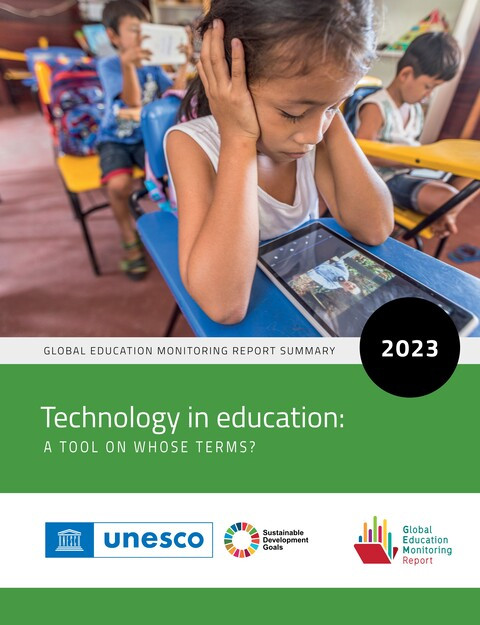 [Résumé] Résumé du rapport mondial de suivi sur l’éducation 2023 : les technologies dans l’éducation; qui est aux commandes? Год публикации: 2023 Организация-автор: UNESCO | Global Education Monitoring Report Team Le rôle de la technologie dans l’éducation suscite depuis longtemps un débat intense. Est-ce qu’elle démocratise le savoir ou menace la démocratie en permettant à quelques-uns de contrôler l’information? Offre-t-elle des opportunités sans limite ou mène-t-elle vers un avenir dépendant de la technologie sans retour en arrière possible ? Est-ce qu’elle égalise les chances ou aggrave les inégalités? Devrait-elle être utilisée pour enseigner aux jeunes enfants ou présente-t-elle des risques pour leur développement? Ce débat a été alimenté par les fermetures d’écoles dues à la COVID-19 et l’émergence de l’intelligence artificielle générative. Mais comme les développeurs sont souvent en avance sur les décideurs, la recherche sur la technologie éducative est complexe. Les preuves solides et impartiales sont rares. Les sociétés posent-elles même les bonnes questions sur l’éducation avant de se tourner vers la technologie comme solution? Reconnaissent-elles ses risques tout en cherchant ses avantages? Les technologies de l’information et de la communication ont le potentiel de favoriser l’équité et l’inclusion en permettant d’atteindre les apprenants défavorisés et de diffuser plus de connaissances dans des formats attrayants et abordables. Dans certains contextes et pour certains types d’apprentissage, elles peuvent améliorer la qualité de l’enseignement et l’apprentissage des compétences de base. De toute évidence, les compétences numériques font désormais partie des compétences de base. La technologie numérique peut également soutenir la gestion et accroître l’efficacité en aidant à traiter de plus grands volumes de données éducatives. Mais la technologie peut également exclure, être inappropriée et pesante, voire carrément nuisible. Les gouvernements doivent veiller à créer les bonnes conditions pour assurer un accès équitable à l’éducation pour tous, réguler l’utilisation de la technologie afin de protéger les apprenants de ses influences négatives, et former les enseignants. Ce rapport recommande que la technologie soit introduite dans l’éducation sur la base de preuves montrant qu’elle serait appropriée, équitable, évolutive et durable. En d’autres termes, son utilisation devrait être dans l’intérêt des apprenants et compléter l’interaction en face-à-face avec les enseignants. Elle devrait être considérée comme un outil à utiliser dans ces conditions. À mi-parcours de l’échéance, le Rapport mondial de suivi sur l'éducation 2023 évalue la distance qu’il reste à parcourir pour atteindre les objectifs éducatifs de 2030. L’éducation est la clé pour débloquer la réalisation d’autres objectifs de développement, notamment le progrès technologique.
  نحو عقد اجتماعي جديد للتربية والتعليم: الأخذ بترابط العلاقات نموذجاً فكرياً Год публикации: 2023 Автор: Elena Toukan Организация-автор: UNESCO إىل إبرام »عقد اجتماعي جديد للرتبية والتعليم« وذلك بمنظار تتناول هذه املقالة الدعوات الصادرة مؤخرا العالقات الوجودية بني البرش والكوكب الحي، وتفحص من خالل التحليل النقدي لنظرية العقد االجتماعي ً إىل إحداث تحول أعمق عىل مستوى النموذج الفكري عند تناول كيف يمكن أن توفر تلك الدعوات مدخال مسألة العدالة والتنظيم االجتماعي والتعليم بحد ذاته. وتقرتح املقالة التحول من نموذج املعامالت القائمة عىل قواعد محددة إىل نموذج قائم عىل العالقات يرتكز عىل إدراك عالقات الرتابط والتداخل وتقديرها حق ً للبرشية والكوكب، ال بد للعقد االجتماعي الجديد للرتبية ً واستدامة ً إىل بناء مستقبل أكثر عدال قدرها. وسعيا والتعليم من تجاوز الديناميات االجتماعية الفردية الذرية والقائمة عىل املعامالت والصدام، بل أن ينتظم حول ترابط العالقات املتشابكة. A New Social Contract for Education: Advancing a Paradigm of Relational Interconnectedness Год публикации: 2023 Автор: Elena Toukan Организация-автор: UNESCO This paper looks at recent calls for “a new social contract for education” through the lens of a relational ontology for humanity and a living planet. Through a critical view of social contract theory, the paper looks at how this call can be an entry point to a deeper paradigmatic shift in framing questions of justice, social organization, and education itself. It proposes a shift from a rules-based transactional model to a relationship-based model grounded in understanding and appreciation of interdependence and interconnectedness. In order to shape more just and sustainable futures for humanity and the planet, a new social contract for education will need to transcend atomistic, transactional, and adversarial social dynamics and instead be organized around relational interconnectedness.