
Ресурсы
Изучайте широкий спектр ценных ресурсов ВГГ, чтобы углубить своё понимание и повысить эффективность исследований, просветительской деятельности, преподавания и обучения.
Найдено: 2,668
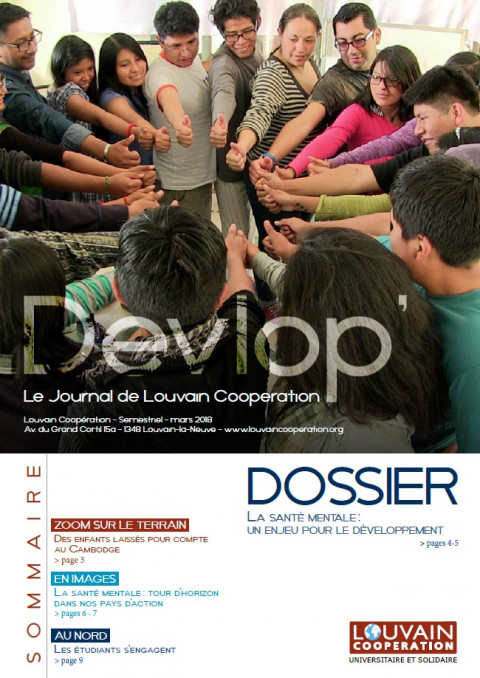 Devlop’ Le journal de Louvain Coopération 6 - Mars 2018 Год публикации: 2018 Организация-автор: Louvain Coopération Comme nous vous en parlions dans notre edition precedente, Louvain Cooperation a pris les mesures necessaires – parfois difficiles – pour perenniser ses activites dans le cadre de sa mission, ceci en concertation avec toutes les parties prenantes. L’elaboration de ces mesures a ete notamment l’occasion de jeter les bases d’une nouvelle organisation de l’ONG qui permettra de parvenir plus efficacement a la realisation de ses objectifs. Un nouveau directeur general a ete engage ainsi qu’un nouveau responsable financier. L’equipe ≪ Programmes ≫ a ete adaptee en fonction de la mission de l’ONG et aussi des exigences augmentees des bailleurs de fonds ; rendre les populations locales plus autonomes en leur transferant plus de competences est dans la lignee de cette mission. Des efforts considerables ont ete consentis en matiere de ressources humaines au siege a Louvainla-Neuve ; que toute l’equipe soit remerciee de sa collaboration. La reorganisation a aussi ete rendue possible grace a l’Universite catholique de Louvain qui, ayant confiance en l’ONG et en ses capacites a reagir, a mobilise les ressources indispensables pour la mise en oeuvre des reformes. Ce processus a pu aboutir car il a reuni les forces vives entourant notre association. C’est ensemble que nous continuons a ecrire l’histoire de Louvain Cooperation en mettant en place une dynamique nouvelle et porteuse de changement. Sur ces nouvelles bases, l’ONG rebondit, pleine de motivation et d’energie en se focalisant sur sa mission premiere, donner aux beneficiaires de ses projets les moyens de prendre leur destin en main. Un volet de cette mission est concretise par son programme de ≪ sante mentale ≫, theme qui fait l’objet de cette edition de Devlop’. Bonne lecture !
 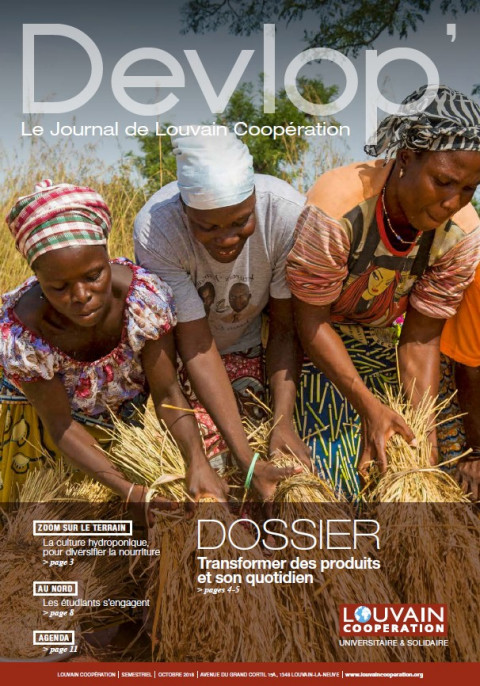 Devlop’ Le journal de Louvain Coopération 7 - OCTOBRE 2018 Год публикации: 2018 Организация-автор: Louvain Coopération Universitaire pour l’avenir En tant que premier cadre partant à la retraite, on m’offre le privilège d’écrire cet édito, que je consacre à l’opportunité que représente l’ancrage universitaire de notre ONG. Pendant mes quelques années au sein de cette organisation, j’ai pu observer et contribuer à quelques initiatives qui m’ont convaincu de la valeur ajoutée d’être une ONG universitaire. Les interactions avec l‘UCLouvain les plus intéressantes et pertinentes sont selon moi celles qui impliquent et renforcent des organisations et universités du Sud. Le développement durable étant avant tout l’affaire des citoyens locaux concernés, notre binôme avec l’UCLouvain doit relever le défi de renforcer les capacités locales du Sud à formuler et mettre en oeuvre ses propres politiques de développement : évoluer d’une dépendance aux idées du Nord vers une interdépendance avec les idées du Sud. J’encourage donc l’équipe à soutenir les capacités de recherche et d’innovation des partenaires du Sud. C’est le meilleur gage d’une appropriation de leur développement et d’une adaptation à leur contexte de stratégies adéquates. Au Nord, de nombreux chercheurs universitaires participent aux processus multi-acteurs qui orientent nos propres transitions sociétales. Pourquoi ne pas contribuer à cette capacitation-là au Sud ? Le défi pour Louvain Coopération consisterait alors à développer de plus en plus de collaborations incluant des ONG, étudiants et chercheurs universitaires du Sud. Ainsi nous pourrons évoluer vers des alliances entre partenaires de plus en plus égaux, et améliorerons notre ancrage social au sein du milieu universitaire. Les processus de transformations des productions agricoles présentés dans ce numéro de Devlop’ sont au coeur de cette problématique d’appropriation. Bonne lecture !
 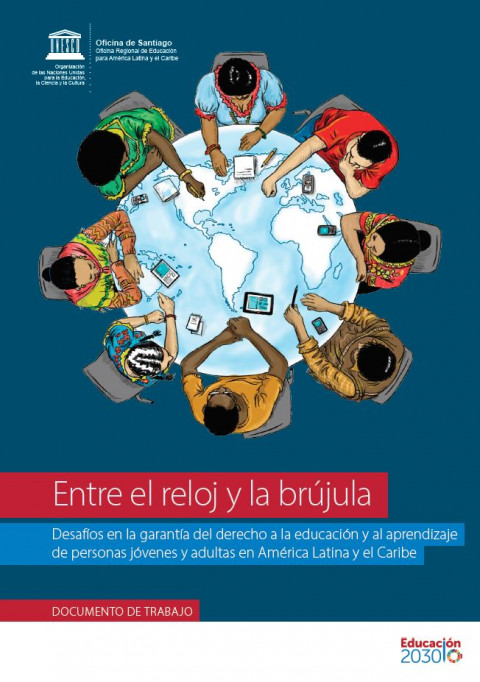 Entre el reloj y la brújula: desafíos en la garantía del derecho a la educación y al aprendizajede personas jóvenes y adultas en América Latina y el Caribe; documento de trabajo Год публикации: 2019 Автор: Henry Renna Организация-автор: UNESCO Santiago Este documento tiene por objetivo proporcionar una visión general de la educación y del aprendizaje de personas jóvenes y adultas como derecho humano y social. Los instrumentos de derecho vinculante y no vinculante que la sustentan son históricos y de larga data, como también contingentes, amplios y extensos en su alcance, con presencia regional e internacional. El documento muestra —sobre la base de los Indicadores del Objetivo de Desarrollo Sostenible 4 (ODS 4 Agenda 2030)— que los principales desafíos para los países de América Latina y el Caribe tienen relación con la lentitud de los progresos (el desafío del reloj) dejando a muchas y muchos jóvenes y adultos al margen de oportunidades educativas, de conocimientos, habilidades y aptitudes, y privados de alcanzar el bienestar integral. Este informe también sostiene —basado en los informes nacionales del Tercer Reporte Global de Educación y Aprendizaje de Adultos— que muchos desafíos están vinculados con la dirección de las políticas (el desafío de la brújula), con sentidos reduccionistas y homogeneizadores detrás de las instituciones y de la acción pública, lo que precariza y fragiliza la garantía del derecho a la educación y al aprendizaje de las personas jóvenes y adultas. Este documento es consistente con el llamado de la UNESCO a «repensar la educación» e invita a reconstruir en el siglo XXI un mundo y una educación sin muros, donde se difuminen las fronteras mentales e institucionales que reducen, dividen y aislan los sistemas educativos, con el fin de liberar su poder transformador para todos y todas.
 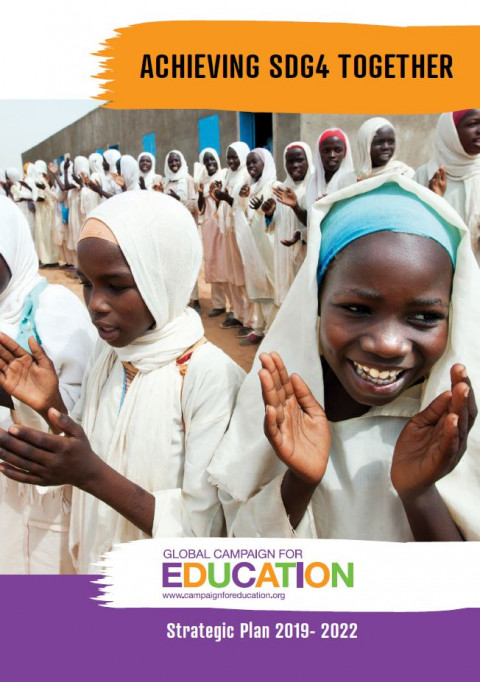 Achieving SDG 4 Together: Strategic Plan 2019 - 2022 Год публикации: 2018 Организация-автор: Global Campaign for Education (GCE) The 2019-2022 strategic plan of the Global Campaign for Education was adopted during the 6th World Assembly of the movement in November 2018, Kathmandu. The plan identifies 4 priority strategic areas: Inclusivity and non-discrimination, Transformative education, Education in emergencies and Financing education. The plan also focus on strengthening the global movement and integrating youth voices.On the eve of celebrating its 20th anniversary, the Global Campaign for Education (GCE) is the largest civil society organisation movement working to promote the human right to education and to put pressure on governments and the international community to fulfil their commitments to provide free, inclusive, quality public education and lifelong learning for all, particularly for children. Our regional and national coalitions encompass many thousands of civil society organisations and represent millions of individuals across the world. Each is independent, and all are united by the commitment to the human right to education, and to achieving change through the mobilisation of citizens and civil society.
 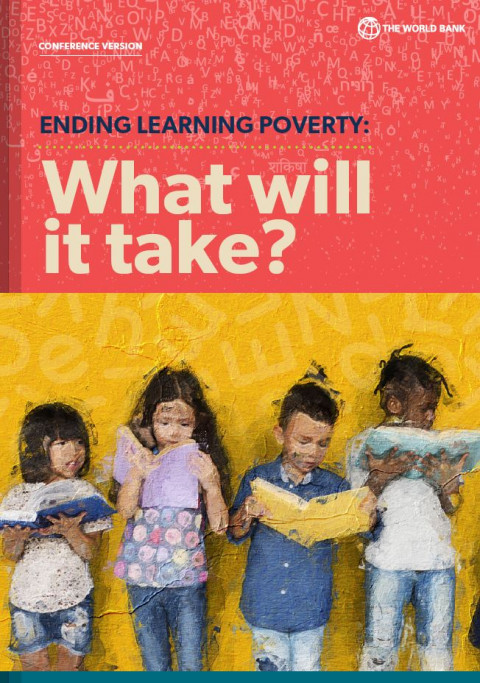 Ending Learning Poverty : What Will It Take? Год публикации: 2019 Организация-автор: World Bank In recent years, it has become clear that many children around the world are not learning to read proficiently. As a major contributor to human capital deficits, the learning crisis undermines sustainable growth and poverty reduction. To spotlight this crisis, we are introducing the concept of Learning Poverty, drawing on new data developed in coordination with the UNESCO Institute for Statistics.
 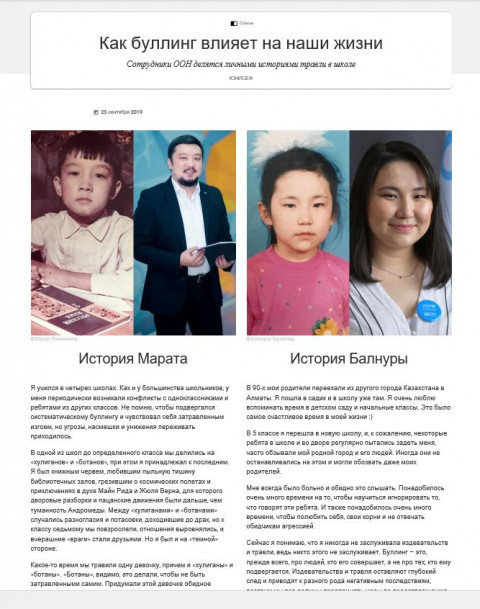 How Bullying Affects Our Lives Год публикации: 2019 Организация-автор: UNICEF Kazakhstan In this article, UN staff members share personal stories showing how they dealt with bullying at school.
 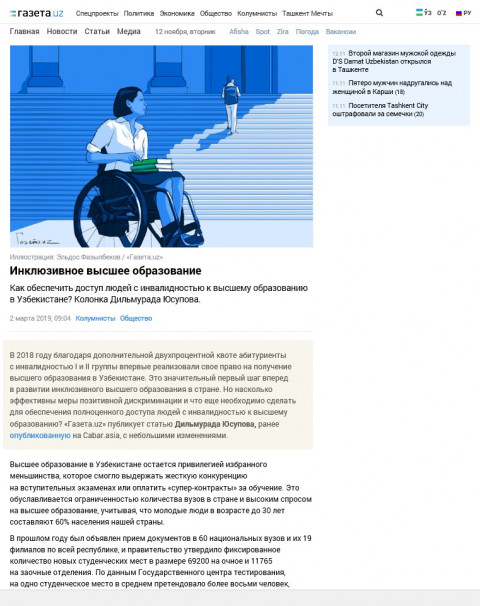 Инклюзивное высшее образование: Как обеспечить доступ людей с инвалидностью к высшему образованию в Узбекистане? Год публикации: 2019 Автор: Dilmurad Yusupov Статья посвящена анализу изменений, происходящих в системе высшего образования Узбекистана, а также мер, необходимых для обеспечения полноценного доступа людей с инвалидностью к высшему образованию.
 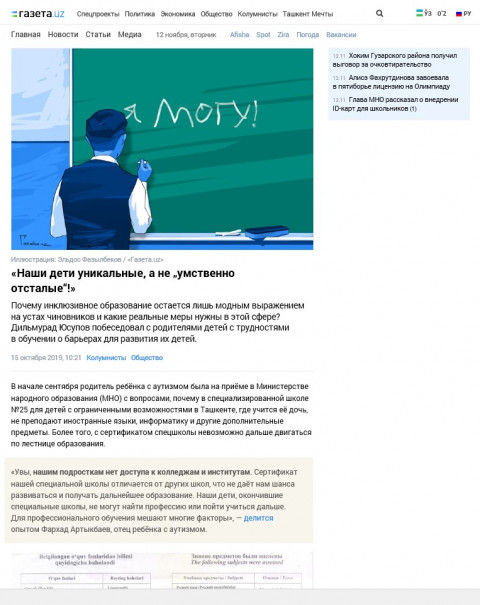 “Our Children Are Unique, Not 'Mentally Retarded'!” Год публикации: 2019 Автор: Dilmurad Yusupov The article analyzes the necessary measures in the field of inclusive education in Uzbekistan. The author spoke with parents of children with learning difficulties about the barriers to their children's development. «Наши дети уникальные, а не „умственно отсталые“!» Год публикации: 2019 Автор: Dilmurad Yusupov В статье проведен анализ необходимых мер в сфере инклюзивного образования в Узбекистане. Автор побеседовал с родителями детей с трудностями в обучении о барьерах для развития их детей. Как буллинг влияет на наши жизни Год публикации: 2019 Организация-автор: UNICEF Kazakhstan В данной статье сотрудники ООН делятся личными историями травли в школе.