
Ресурсы
Изучайте широкий спектр ценных ресурсов ВГГ, чтобы углубить своё понимание и повысить эффективность исследований, просветительской деятельности, преподавания и обучения.
Найдено: 1,322
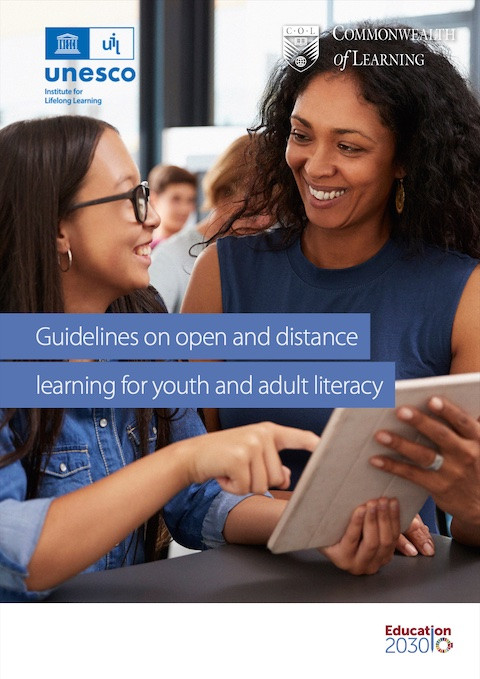 المبادئ اﻟﺘﻮﺟﯿﮭﯿﺔ ﻟﻠﺘﻌﻠﻢ اﻟﻤﻔﺘﻮح واﻟﺘﻌﻠﻢ ﻋﻦ ﺑﻌﺪ ﻟﻤﺤﻮ أﻣﯿﺔ اﻟﺸﺒﺎب واﻟﻜﺒﺎر Год публикации: 2022 Организация-автор: UNESCO Institute for Lifelong Learning (UIL) | Commonwealth of Learning تعالج المبادئ التوجيهية بشأن التعلم المفتوح والتعلم عن بعد للشباب والكبار فجوة في توفير محو الأمية من خلال تقديم مبادئ وممارسات التعلم المفتوح والتعلم عن بعد (ODL) لتوضيح كيف يمكن تقديم التعلم والتعليم عن بعد. ينقسم هذا المنشور إلى قسمين رئيسيين. يقدم الجزء الأول إرشادات عملية في أربعة مجالات - التخطيط ، والتطوير ، والتنفيذ ، والرصد والتقييم - وينظر الجزء الثاني في التقنيات المختلفة المستخدمة لبرامج ODL ويمكن أن تدعم تعلم القراءة والكتابة للشباب والكبار. سيستفيد صانعو السياسات ومقدمو محو الأمية والمعلمون من فهم وتطبيق مفهوم ومبادئ ODL في تصميم وتقديم برامج محو الأمية الفعالة والشاملة والمستدامة وفرص التعلم - تعزيز مرونة برامج محو الأمية وتوسيع نطاق التوعية والمشاركة في العملية .
  A study of the middle school social studies and moral education curriculum to foster global citizenship Год публикации: 2009 Автор: Geunho Lee | Deokgeun Kim | Byungsu Min | Hyunjeong Oh | Hyojeong Kim | Junsik Park | Jeongmin Eom Организация-автор: Korea Institute for Curriculum and Evaluation (KICE) This study was conducted to analyze the determinants (i.e. multicultural acceptability, national identity, and moral values) influencing global citizenship in order to examine the construct of global citizenship as well as to find the moral education about global citizenship for teacher education. Hierarchical regression was used to analyze the survey of 116 college students in university of education. The results are following. Firstly, The hierarchical regression analysis of ModelⅢ with influencing three factors to global citizenship explained 25% of the variance in student’s global citizenship, and it was found common good among moral values and experience of living a life in the foreign countries as important factors in the model. Second, They regressed into the variance of moral values even though a few ones of multi-cultural acceptability and national identity were influential factors before modelⅢ. Contrary to theoretical expectations, they are turned into be a half of influential factors to global citizenship. Based on the results, we suggested that to solve the global problems need to be strengthen in the developing the education curriculum for global citizenship. Furthermore, future research with stratified sampling will be conducting to generalize the result of this study. L’Étude sur l'Éducation à la Citoyenneté Mondiale dans l'enseignement de premier cycle Год публикации: 2009 Автор: Geunho Lee | Deokgeun Kim | Byungsu Min | Hyunjeong Oh | Hyojeong Kim | Junsik Park | Jeongmin Eom Организация-автор: Korea Institute for Curriculum and Evaluation (KICE) Cette étude a été menée pour analyser les déterminants (à savoir d'aceptabilité multiculturelle, identité nationale, et les valeurs morales) qui influent sur la citoyenneté mondiale en vue d'examiner la construction de la citoyenneté mondiale, ainsi que de trouver l'éducation morale de la citoyenneté mondiale pour la formation des enseignants. Régression hiérarchique a été utilisé pour analyser le sondage auprès des 116 étudiants de niveau collégial à l'université de l'éducation. Les résultats suivent. Tout d'abord, l'analyse de régression hiérarchique des ModelⅢ d'influencer trois facteurs à la citoyenneté mondiale explique 25% de la variance de la citoyenneté mondiale de l'étudiant, et il a été trouvé bien commun entre les valeurs morales et de l'expérience d'une vie dans les pays étrangers comme des facteurs importants dans la modèle. Deuxièmement, ils ont régressé dans la variance des valeurs morales, même si quelques uns d'aCECptabilité multi-culturelle et l'identité nationale sont des facteurs influents avant modelⅢ. Contrairement aux attentes théoriques, ils sont transformés en une moitié de facteurs influents à la citoyenneté mondiale. D'après les résultats, nous avons proposé que pour résoudre les problèmes mondiaux doivent être renforcer dans le développement du programme d'éducation à la citoyenneté mondiale. En outre, les recherches futures avec échantillonnage stratifié sera conduit à généraliser le résultat de cette étude. 세계시민의식 고취를 위한 중학교 사회과ㆍ도덕과 교육과정 선진화 연구 Год публикации: 2009 Автор: 이근호 | 김덕근 | 민병수 | 오현정 | 엄정민 | 김효정 | 박준식 | 김종람 Организация-автор: 한국교육과정평가원 This study was conducted to analyze the determinants (i.e. multicultural acceptability, national identity, and moral values) influencing global citizenship in order to examine the construct of global citizenship as well as to find the moral education about global citizenship for teacher education. Hierarchical regression was used to analyze the survey of 116 college students in university of education. The results are following. Firstly, The hierarchical regression analysis of ModelⅢ with influencing three factors to global citizenship explained 25% of the variance in student’s global citizenship, and it was found common good among moral values and experience of living a life in the foreign countries as important factors in the model. Second, They regressed into the variance of moral values even though a few ones of multi-cultural acceptability and national identity were influential factors before modelⅢ. Contrary to theoretical expectations, they are turned into be a half of influential factors to global citizenship. Based on the results, we suggested that to solve the global problems need to be strengthen in the developing the education curriculum for global citizenship. Furthermore, future research with stratified sampling will be conducting to generalize the result of this study.
  The Development of a Middle School Social Studies Instructional Module for Place-Based Global Citizenship Education: The Case of Jeju Island (Journal of Education for International Understanding; Vol. 14, No. 2) Год публикации: 2019 Автор: Han Sanghee Организация-автор: Korean Society of Education for International Understanding (KOSEIU) This study aims to develop an instructional module for middle school social studies as part of place-based global citizenship education. The main contents of this study are as follows:first, the methods used in developing an instructional module for middle school social studies in global citizenship education; second, the method applied in the module for middle school classes. The study was mainly based on reference research and action research. The place-based class module developed for this study is the case of Jeju Island and is focused on middle school social studies classes as oriented to the integrated curriculum. The results are as follows: First, I developed a class module for place-based global citizenship education. For this module, I created principles for the class module for place-based global citizenship education and compose the class module by focusing on the case of Jeju Island. The design of this module went through 3 stages. The first stage explores regional issues by considering mutual relationships and the context from which suitable themes to foster global citizenship in the region are uncovered. The second stage explores the geological, historical, social, and cultural contexts of the place-based issues. The third stage expands on the contexts of the regional issues and practice to exercise global citizenship. Through the application of the principles and developmental stages for the class module, I then compose three Jeju-based modules. Second, I developed and conducted a Jeju-based instructional module for global citizenship education. For the themes and Jeju cases of the place-based module, I present sympathy for universal values through the life of Kim Mandeok who gave aid to the poor in the late Joseon era; respect for diversity and difference through the history of Haenamcheon, the Jeju immigrant community during early industrialization; and solidarity and practice through the Jeju 4·3 Uprising and Massacre. These three class modules can be utilized independently or stage by stage. I concede that this study has spatial and content limitations due to the fact that the Jeju cases are only presented among domains relating to global citizenship education which means that follow-up research is required to expand into relating domains and other regions. In addition, this study has other limits in that it hasn’t been verified quantitatively by presenting the effects of global citizenship education only through the stories of students who attended this class and the follow-up educational activities through this module. 지역 기반 세계시민교육을 위한 중학교 사회과 수업모듈 개발: 제주 지역을 사례로 (국제이해교육연구; Vol. 14, No. 2) Год публикации: 2019 Автор: Sang-Hee Han Организация-автор: 한국국제이해교육학회 이 연구의 목적은 지역 기반 세계시민교육을 위한 중학교 사회과 수업 모듈을 개발하는 데 있다. 주요 연구 내용은 두 가지이다: 첫째, 지역 기반 세계시민교육을 위한 중학교 사회과 수업모듈을 어떻게 설계할 수 있는가, 둘째 지역 기반 세계시민교육 수업 모듈은 중학교 수업 현장에 어떻게 적용할 수 있는가이다. 연구 방법으로서 주로 문헌연구와 실행연구를 활용하였다. 이 연구에서 개발한 지역 기반 수업 모듈은 제주지역을 사례로 하였으며, 통합교육과정을 지향하는 중학교 사회과 수업에 초점을 맞추었다. 연구 결과는 다음과 같다. 첫째, 지역 기반 세계시민교육을 위한 수업 모듈을 설계하였다. 수업 모듈 설계는 먼저 지역 기반 세계시민교육 수업 모듈의 원리를 설정하고, 이에 따라 제주지역 사례를 중심으로 수업 모듈을 구성하였다. 모듈 설계는 3단계로 구성되는데, 1단계는 상호 연계성과 맥락(context)을 고려하여 지역 기반 이슈를 탐색하는 것으로 세계시민성 함양을 위한 적절한 주제를 지역에서 찾는 단계이다. 2단계는 지역 기반 이슈에 담긴 지리적, 역사적, 사회적, 문화적 맥락을 찾는 학습이 이루어지는 단계이다. 3단계는 지역 기반 이슈의 맥락을 확장하여 세계시민성을 발휘하도록 실천하는 단계이다. 이러한 수업 모듈의 원리와 단계를 적용하여 제주지역에 기반 한 수업 모듈 3가지를 제시하였다. 둘째, 제주지역을 기반으로 한 세계시민교육 수업 모듈을 개발하고 실행하였다. 지역 기반 세계시민교육 수업 모듈의 제주지역 사례로서 조선 후기 제주 빈민을 구제한 김만덕의 삶을 통한 보편적 가치에 대한 공감, 산업화 초기 제주 이주민 공동체인 해남촌 역사를 통해 본 차이와 다양성 존중, 제주 4⋅3을 통한 연대의식과 실천을 주제로 수업 모듈을 제시하였다. 이 연구는 세계시민교육 관련 영역 중 제주지역에 기반 한 사례만을 제시하였다는 점에서 공간적이고 내용적인 한계를 가지며, 이후 관련 영역 및 다른 지역 사례로 확장하는 후속 연구의 과제를 남긴다.
  Critical Analysis of World Geography and Travel Geography Curriculum through the Viewpoints of Global Citizenship Education (Journal of Education for International Understanding; Vol. 13, No. 2) Год публикации: 2018 Автор: Kyeonghan Yi Организация-автор: Korean Society of Education for International Understanding (KOSEIU) In this study I analysed world geography and travel geography curriculum through neo-liberal and critical viewpoints of global citizenship education(GCED). They have many contents about the understanding of diversity which deals in GCED importantly. Two geography curriculums provide many contents of GCED with neo-liberal viewpoint. World geography includes critical viewpoint based on regional conflicts, desertification problems, regional separation movements, righteous distribution of resources etc. The critical viewpoint of GCED in world geography emphasizes the critical understanding of disputes, regional issues, distribution etc. with structural aspect, and guides the realization of justice with problems solutions of these. Travel geography guides students’ identification about unfairness and injustice of travel, and emphasizes travelers’ responsibility, fairness and alternatives. But this travel geography is in circle of neo-liberalism viewpoint mainly. The understanding of diversity in two geographies provides important contents for GCED in schools. Geography make a understanding of diversity with other’s perspectives objectively, but it can neglect the critical and structural understanding about diverse landscape, culture, environment, issues, and travel etc. So geography is necessary to deal critical viewpoint also, because geography has mainly neo-liberal viewpoint. Geography teachers should have the harmony of neo-liberal viewpoint and critical viewpoint to contribute on development of global citizens. Geography teachers should critically re-conceptualize geography curriculum and reconstruct the contents of textbook. And students is necessary to aim transformative learning to understand global diversity and critically participate with global issues in everyday life. 세계시민교육의 관점에서 세계지리와 여행지리 교육과정의 비판적 분석 (국제이해교육연구; Vol. 13, No. 2) Год публикации: 2018 Автор: 이경한 Организация-автор: 한국국제이해교육학회 본 연구에서는 세계시민교육의 신자유주의적 관점과 비판적 관점으로 세계지리와 여행지리 과목을 분석하였다. 두 과목은 세계시민교육에서 매우 중요하게 다루는 다양성의 이해를 주요 학습 내용으로 담고 있다. 세계지리와 여행지리 과목은 내용면에서 신자유주의적 관점을 가지고서 세계시민교육의 콘텐츠를 풍부하게 제공하고 있다. 반면 세계지리 과목은 지역 분쟁, 사막화에 따른 지역 문제, 지역 분리 운동, 자원의 정의로운 분배 등의 비판적 관점도 담고 있다. 세계시민교육의 비판적 관점은 세계지리에서 분쟁, 지역문제, 분리, 분배를 구조적 측면에서의 비판적인 이해를 강조하면서, 이의 해결방안으로 정의의 실현을 제시하고 있다. 여행지리에서는 여행의 불공정과 부정의도 살펴보도록 유도하고 여행자의 책무성, 공정과 대안을 강조하지만 여행의 특성상 신자유주의적 관점을 벗어나지 못하고 있다. 세계지리와 여행지리 과목의 다양성 이해는 학교 수업에서 세계시민교육을 위한 중요한 콘텐츠를 제공하고 있다. 지리과목은 타자의 입장에서 다양성을 관조하게 만들고 지나치게 객관화함으로써 다양한 경관, 문화, 환경, 지역문제, 여행 등에 대한 심층적이고 구조적, 비판적 이해를 소홀히 할 수도 있다. 그래서 지리과목이 신자유주의적 관점을 주로 가지고 있어서 비판적 관점도 함께 다룰 필요가 있다. 지리교사는 신자유주의적 관점과 비판적 관점을 균형 있게 가진 역량 있는 세계시민을 육성하는데 기여해야 한다. 이를 위해서 지리교사는 비판적으로 지리교육과정을 재개념화하고 지리교과서의 내용을 재구성하여 학생들이 일상의 삶 속에서 세계 다양성의 이해와 세계 쟁점에의 비판적 참여를 실천할 수 있도록 변혁적 학습을 지향할 필요가 있다.
  Critical Understanding on Shrinkage and Limitation of UK’s Global Citizenship Education in the Era of Brexit (Journal of Education for International Understanding; Vol. 13, No. 2) Год публикации: 2018 Автор: Jinhee Kim Организация-автор: Korean Society of Education for International Understanding (KOSEIU) This study aims to analyze the shrinkage and limitation of Global Citizenship Education in the epoch of Brexit. It also attempts to examine a feature of positioning and direction of Global Citizenship Education which is confronted with a sceptical criticism of its' educational impact. In this vein, the major findings and arguments showed the practice and implementation of Global Citizenship Education under the pressure of Brexit faces complicated challenges across Europe including UK, since Brexit highly pursues national centred hegemony and nationalistic bloc. It could hinder the structural restriction of implementing of Global Citizenship Education in UK. Apparently, this study indicated that the phenomenon of Brexit and it's impact is functioning as dynamic learning contents, not for a teaching-learning resource. It has been discussed that Citizens of UK have strived to deal Brexit as a learning experience in life-world. Finally, this study suggests a direction to move forward of Global Citizenship Education in an ever-shrinking world of Brexit. 브렉시트 시대 영국의 세계시민교육 위축과 제약 분석: 세계시민교육이 나아갈 방향 (국제이해교육연구; Vol. 13, No. 2) Год публикации: 2018 Автор: 김진희 Организация-автор: 한국국제이해교육학회 이 논문은 영국의 브렉시트 결정 이후 세계시민교육이 어떤 맥락에서, 어 떤 쟁점과 이슈로 위축되고 있는지를 살펴보고 세계시민교육의 위상을 다시 고찰하는 논문이다. 국가중심의 블록화를 추진하는 브렉시트는 세계시민교 육과 어떤 관계를 가지는지 이것이 세계시민교육의 발전과 제약에 미치는 관계가 무엇인지 파악하고 영국 사례가 세계시민교육 실천 과정에 주는 시 사점을 분석하고자 한다. 또한 영국의 브렉시트 사태는 ‘가르침’으로서 세계시민교육의 교과서(text) 문건으로 치부되는 아니라, 시민들이 학습 주 체로서 탈(脫)유럽화라는 이슈를 자기 앞에 당도한 삶의 경험으로 이해하고 대응하면서, 브렉시트라는 사태가 살아있는 세계시민교육의 내용(content) 으로 된다는 점을 논의하였다. 이 연구를 통해서 오늘날 흔들리는 세계시민 교육의 위상과 향후 방향성을 반성적으로 고찰하였다.