
Ресурсы
Изучайте широкий спектр ценных ресурсов ВГГ, чтобы углубить своё понимание и повысить эффективность исследований, просветительской деятельности, преподавания и обучения.
Найдено: 3,797
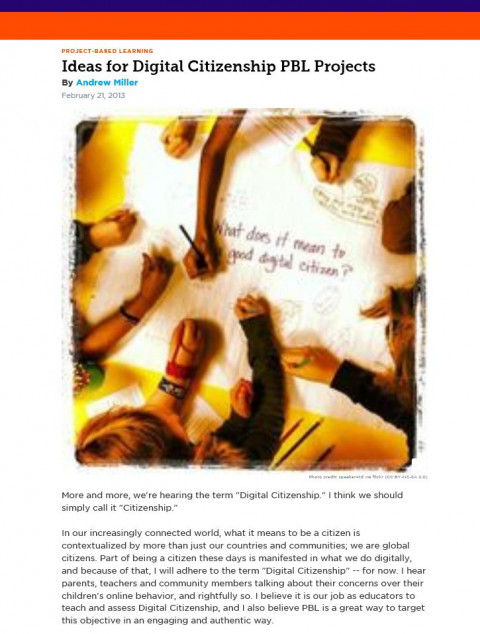 Ideas for Digital Citizenship PBL Projects Год публикации: 2013 Автор: Andrew Miller In our increasingly connected world, what it means to be a citizen is contextualized by more than just our countries and communities; we are global citizens. Part of being a citizen these days is manifested in what we do digitally, and because of that, I will adhere to the term "Digital Citizenship" -- for now. I hear parents, teachers and community members talking about their concerns over their children's online behavior, and rightfully so. I believe it is our job as educators to teach and assess Digital Citizenship, and I also believe PBL is a great way to target this objective in an engaging and authentic way.
 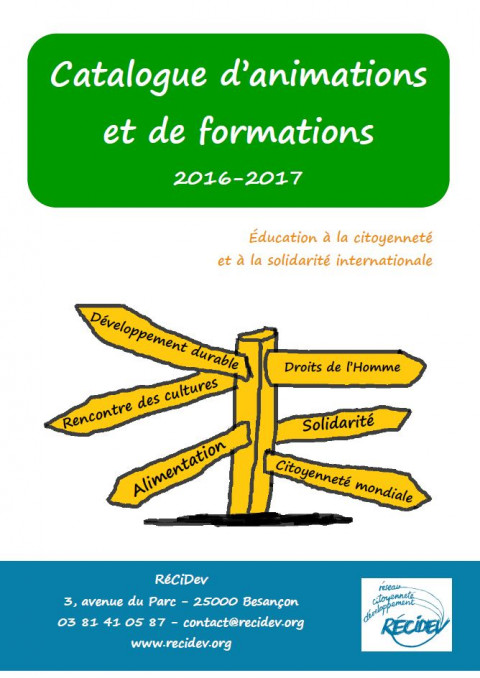 Catalogue d’animations et de formations 2016-2017 : Éducation à la citoyenneté et à la solidarité internationale Год публикации: 2016 Организация-автор: Réseau Citoyenneté Développement (RéCiDev) « L’éducation à la citoyenneté et à la solidarité internationale (ECSI) est une démarche sociale et politique dont la finalité est de favoriser la contribution individuelle et collective à la construction d’un monde juste, solidaire et durable. Elle s’appuie sur un processus pédagogique qui se déroule tout au long de la vie.Son objectif est de permettre à chacun de comprendre les mécanismes d’interdépendance et d’exclusion dans le monde ; de prendre conscience de l’importance d’une démarche citoyenne ayant pour but de favoriser une solidarité entre les territoires, les générations, les groupes sociaux… et d’agir pour la construction d’un monde solidaire. L’ECSI contribue à donner à tous des clés pour développer un esprit critique face à un modèle de développement dominant producteur d’inégalités et d’exclusions. Elle vise à une transformation sociale et à la construction collective d’autres modes de développement, respectueux des droits humains et de l’environnement. Elle valorise des alternatives en cours partout dans le monde. Elle favorise le vivre ensemble et l’épanouissement personnel.Parce qu’elle bénéficie au plus grand nombre et qu’elle répond aux enjeux du monde actuel, l’ECSI sert l’intérêt général. À ce titre, la promouvoir et la garantir est un devoir des Etats en cohérence avec l’ensemble des politiques publiques. »
  Impact of Radical Islamisation of Education on Pakistani Society Год публикации: 2012 Автор: Muhammad Safeer Awan This article traces the history, rather briefly, of how the national educational policies and curricula in social sciences and humanities have been changed to serve the jihadist ideology in Pakistani society. The crumbling social order in Pakistan is not only an indication of the bad governance but also the systemic inculcation of ideologies of hatred and extremism among a whole generation of schoolchildren and college graduates. It is a society where extremism, not only of the radical Islamists but also of the average person, is on the rise. Impact of Radical Islamisation of Educaion on Pakistani Society Год публикации: 2012 Автор: Muhammad Safeer Awan Cet article revient brièvement sur la façon dont les politiques éducatives nationales et les programmes scolaires en sciences sociales et en sciences humaines ont été modifiés au profit de l'idéologie djihadiste présente au sein de la société pakistanaise. Au Pakistan, le délitement de l'ordre social n'est pas seulement révélateur de la mauvaise gouvernance, il dénonce également de l’enseignement systématique d'idéologies haineuses et extrémistes auprès d'une génération entière d'élèves et d'étudiants. C'est une société où l'extrémisme, pas seulement celui porté par les islamistes radicaux mais aussi celui provenant de n'importe quel individu moyen, ne cesse de croître. Methods of Teaching the Holocaust to Secondary Students as Implemented by Tennessee Recipients of the Belz-Lipman Holocaust Educator of the Year Awards The purpose of this qualitative study was to explore methods of teaching Holocaust education in a variety of subject areas to secondary students in grades 7 through 12, as implemented by recipients of Tennessee’s Belz-Lipman Holocaust Educator of the Year Awards. These individuals have been recognized, through an application and committee selection process, as outstanding and successful teachers in this field. The findings of this study included the importance of teacher training in this area; participants spoke of regularly attending sessions offered by reputable Holocaust organizations. This study also found commonalities in resources and materials used, such as specific titles of poetry, literature, and movie selections. Additionally, instructional methods such as group discussions, writing assignments, student project activities, and assessment strategies were frequently discussed. The importance of personalizing Holocaust history was emphasized throughout the study. The results indicate that students and teachers benefited from these lessons. While the findings of this study significantly contribute to the field of Holocaust education in Tennessee, the need for additional research is also addressed. To ensure successful, meaningful, pedagogically sound lessons, attention to this topic must be an on-going endeavour. (By the author)
  Global Citizenship in a Digital World (The MILID Yearbook, 2014) Год публикации: 2014 Автор: Sherri Hope Culver | Paulette Kerr Организация-автор: International Clearinghouse on Children, Youth and Media (Sweden) | NORDICOM | University of Gothenburg The theme of the 2014 Yearbook is Global Citizenship in a Digital World. Global citizenship assumes ease of participation in global spaces in which persons are media and information literate and are equipped with competencies and attitudes to deal with the multi-faceted nature of a mediated world in which information is no longer bound by space or time. The unprecedented access to and use of media and Internet technologies for communication and collaboration especially among youth, suggest that effective strategies must be found to enable active critical inquiry and effective media production. The proliferation of mediated spaces throughout education environments, as well as personal and professional environments, does not in itself guarantee that citizens will consider their role as global citizens as they create and consume media. This awareness must be cultivated, encouraged and taught.The 2014 MILID Yearbook brings together a range of reviewed articles, which articulate the theme of global citizenship from varied perspectives and regions of the world. The articles represent different expressions on media and information literacy from researchers and practitioners who offer bold new strategies, share research findings and best practices, and share musings and reflections. Multicultural education: Israeli and German adolescents' knowledge and views regarding the Holocaust This study probes a unique case of multicultural education of Israeli and German students regarding the Holocaust. Their knowledge level of German history leading to the rise of Hitler and the Nazi party to power, knowledge about the Holocaust, the relation between their knowledge of attitudes toward the "other" (German/Israeli) group, and their reaction to a racist-dictatorial regime are explored. The findings were that German adolescents’ (high school students’) knowledge regarding the events leading to the rise of the Nazi party was greater than that of the Israeli adolescents. However, the knowledge of Israelis was greater regarding the Holocaust. A positive correlation was found between the knowledge levels and their attitudes toward the other groups (German/Israeli) and toward resistance to the possible rise of a dictatorial regime. The findings point to the fact that multicultural education, which combines attitudinal, cognitive and instrumental goals, can succeed in promoting non-racist views. (By the author)
  Jewish Studies and Holocaust Education in Poland This volume examines how people in Poland learn about Jewish life, culture and history, including the Holocaust. The main text provides background on concepts such as culture, identity and stereotypes, as well as on specific topics such as Holocaust education and curriculum, various educational institutions, and the connection of arts and cultural festivals to identity and culture. It also gives a brief overview of Polish history and Jewish history in Poland, as well as providing insight into how the Holocaust and Jewish life and culture are viewed and taught in present-day Poland. This background material is supported by essays by Poles who have been active in the changes that have taken place in Poland since 1989. A young Jewish-Polish man gives insight into what it is like to grow up in contemporary Poland, and a Jewish-Polish woman who was musical director and conductor of the Jewish choir Tslil gives her view of learning through the arts. Essays by Polish scholars active in Holocaust education and curriculum design give past, present and future perspectives of learning about Jewish history and culture. (By the publisher)
 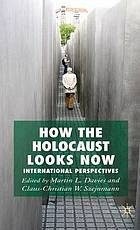 Auschwitz in museums - Representing and teaching the Holocaust in the twenty-first century Год публикации: 2007 Автор: S.Lassig | K.H.Pohl 'Auschwitz' in Museums: Representing and Teaching the Holocaust in the Twenty-first is a select extract from the book "How the Holocaust Looks Now International Perspectives". The book offers a series of essays that explore the historical culture the holocaust has engendered in Europe, Israel and the USA, the politics of its reception and representation, the motivations for and effectiveness of commemorating it, and the creative and didactic practices it has generated in contemporary literature, art, and thought.
 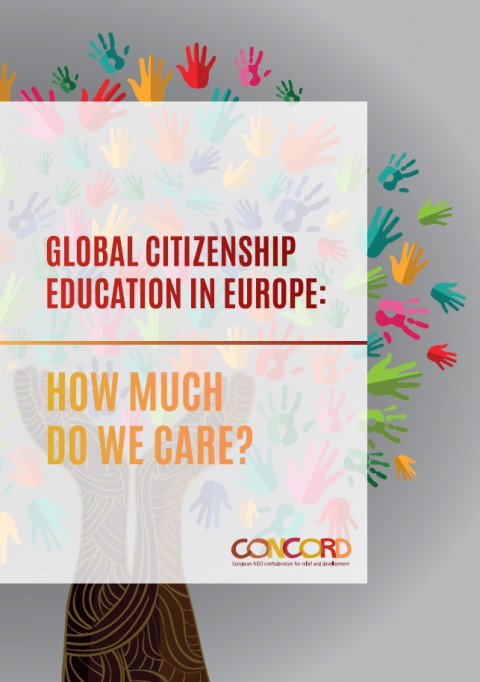 Global Citizenship Education: How Much Do We Care? Год публикации: 2018 Организация-автор: European confederation of Relief and Development NGOs (CONCORD) While Global Citizenship Education is recognised by many as a powerful tool to resolve the current global challenges our world is facing, the level of investment by national governments remains limited. Why is that? To answer this situation, CONCORD launches its new report “Global Citizenship Education – How much do we care?“. Based on a research across all EU Member States (+ Norway), this publication reveals the level of funding dedicated to Global Citizenship Education (GCE) in Europe between 2011 and 2015. Analysing the quantitative sources of investments by national governments as well as the qualitative narrative around GCE (How is GCE named? What is its framework of action?), this report digs into the complex world of GCE and provides a full picture of its current states in Europe. The report is composed of 2 parts:– a general overview and analysis– a comparative part made of an analysis per country of all EU member states (+ Norway), including interesting details on GCE definitions, concepts, funding trends.Strong of these analysis, the report draws conclusions and recommendations on where possible improvements at policy and advocacy level can be made.