
Ресурсы
Изучайте широкий спектр ценных ресурсов ВГГ, чтобы углубить своё понимание и повысить эффективность исследований, просветительской деятельности, преподавания и обучения.
Найдено: 2,790
 Alternative bilingual Miskito-Spanish intercultural literacy education linked to the exercise of citizenship and community production Год публикации: 2008 Организация-автор: Regional Literacy and CONFINTEA VI Preparatory Conference in Latin America and the Caribbean: From Literacy to Lifelong Learning: Towards the Challenges of the 21st Century, Mexico City, 2008 The Alternative Bilingual Intercultural Literacy Education project is carried out in five rural indigenous communities and eleven urban neighbourhoods of Bilwi (Puerto Cabezas) in the North Atlantic Autonomous Region (RAAN) of Nicaragua. In this region, illiteracy is the result of poverty, historical social exclusion and the lack of any official or State programme of adult literacy education in the Miskito language. This constitutes a negation of the right to bilingual intercultural education of the young and adult indigenous population and an obstacle to individual, social and regional development. The project provides literacy classes for young people and adults in their mother tongue Miskito and in Spanish, and deals with intercultural themes of their world view, the environment and indigenous rights. In Nicaragua, this experiment is a unique and alternative model of literacy provision in Miskito, with a Miskito-Spanish bilingual intercultural curriculum of its own. The texts have been produced by authors from the Miskito ethnic group, with contents determined on the basis of a needs analysis and the identification of fundamental features of the Miskito world view. Éducation Interculturelle bilingue Miskito-Espagnol liée à l'exercice de la citoyenneté et de la communauté production Год публикации: 2008 Организация-автор: Regional Literacy and CONFINTEA VI Preparatory Conference in Latin America and the Caribbean: From Literacy to Lifelong Learning: Towards the Challenges of the 21st Century, Mexico City, 2008 Le projet de l'éducation interculturelle bilingue est réalisée dans cinq communautés autochtones rurales et onze quartiers urbains de Bilwi (Puerto Cabezas) dans la région de l'Atlantique Nord autonome (RAAN) du Nicaragua. Dans cette région, l'analphabétisme est le résultat de la pauvreté, l'exclusion sociale historique et l'absence de tout programme officiel ou de l'Etat de l'alphabétisation des adultes dans la langue Miskito. Ceci constitue une négation du droit à l'éducation interculturelle bilingue des jeunes et des adultes population indigène et un obstacle au développement individuel, social et régional. Le projet offre des cours d'alphabétisation pour les jeunes et les adultes dans leur Miskito langue maternelle et en espagnol, et traite des thèmes interculturels de leur vision du monde, l'environnement et les droits des autochtones. Au Nicaragua, cette expérience est un modèle unique et alternatif de la prestation de l'alphabétisation en Miskito, avec un bilingue Miskito-espagnol curriculum interculturel propre. Les textes ont été rédigés par des auteurs du groupe ethnique Miskito, avec des contenus déterminés sur la base d'une analyse des besoins et l'identification des caractéristiques fondamentales de la vision du monde Miskito.
  مؤتمر اليونيسكو العالمي للتعليم من اجل التنمية المستدامة Год публикации: 2009 Организация-автор: German Commission for UNESCO | Germany. Federal Ministry of Education and Research عقدت المنظمة الدولية اليونيسكو مؤتمرها الخاص بالتعليم من أجل التنمية المستدامة والذ سلط الضوء على المساهمة الرئيسية للتعليم في التنمية المستدامة في التعليم وجودته ، ويتضمن هذا الكتيب عرضا مفصلا للجلسات ووقائع المؤتمر الدولي
 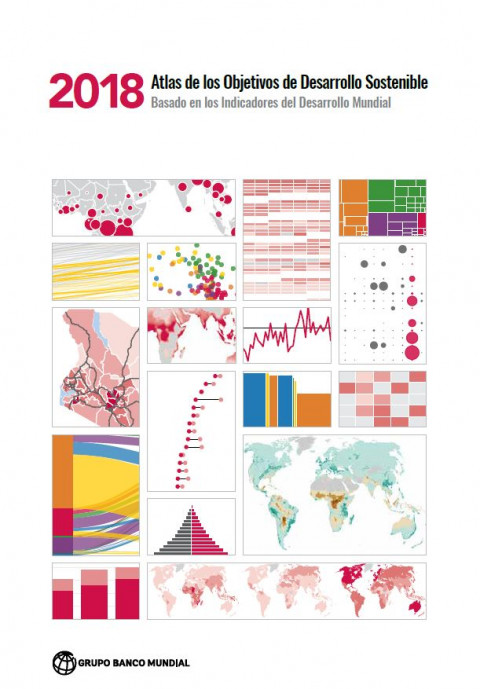 Atlas de los Objetivos de Desarrollo Sostenible 2018 Год публикации: 2018 Организация-автор: البنك الدولي للانشاء والتعمير En el Atlas de los Objetivos de Desarrollo Sostenible 2018 se presentan mapas, gráficos e historias relacionadas con los ODS.Los datos provienen de la base de datos de los WDI. Atlas des Objectifs de développement durable 2018 Год публикации: 2018 Организация-автор: البنك الدولي للانشاء والتعمير L’Atlas des Objectifs de développement durable 2018 présente des cartes, des diagrammeset des histoires concernant les Objectifs de développement durable (ODD).Les informations s’appuient sur la base de données des Indicateurs du développement dans le monde (WDI). أطلس أهداف التنمية المسـتدامة 2018 من مؤ ات التنمية العالمية Год публикации: 2018 Организация-автор: البنك الدولي للانشاء والتعمير يعرض أطلس أهداف التنمية المستدامة 2018 خرائط ورسوما بيانية وقصصا متعلقة بأهداف التنمية المستدامة. وهو يناقش االتجاهات والمقارنات وقضايا القياس باستخدام بيانات مرئية يمكن الوصول إليها وتبادلها. وتستند البيانات على قاعدة بيانات مؤشرات التنمية العالمية Atlas of the Sustainable Development Goals 2018 Год публикации: 2018 Организация-автор: البنك الدولي للانشاء والتعمير Atlas of the Sustainable Development Goals 2018 presents maps, graphs and stories related to the SDGs. It discusses trends, comparisons and measurement issues using visible and accessible data. The data are based on the World Development Indicators database.
  Identity, DNA Typing and Citizenship: Philosophical Reflections Год публикации: 2010 Автор: Marie-Hélène Parizeau Организация-автор: Sociologie et sociétés In a context of globalization, migratory flows and the hunt for terrorists, how are biometrics, and, more specifically, the notion of the human DNA Typing, changing the individual’s relationship to his or her citizenship ?To try to answer this question, we review some of the theoretical aspects of citizenship and briefly outline the history of identification measures linked to the advent of citizenship. We then examine the current context of the use of biometrics for identification purposes and the reasons for its use as cited by the European Community and the United States. We more particularly look at the case of the human DNA Typing, using examples from Canada and the United States. The genetic footprint is related to personal identity based on Paul Ricoeur’s concept of narrative identity. We show how the ethno-racial criteria used by biometrics, together with the ideology of multiculturalism, are constructing, in the West, a new narration of the Other, of foreigners, which excludes them from the sphere of citizenship. Identité, empreinte génétique et citoyenneté: réflexions philosophiques Год публикации: 2010 Автор: Marie-Hélène Parizeau Организация-автор: Sociologie et sociétés Dans quelle mesure la biométrie, et plus spécifiquement l’empreinte génétique, dans un contexte de globalisation, de flux migratoires, et de chasse au terrorisme, vient-elle modifier le rapport de l’individu à sa citoyenneté ?Pour tenter de répondre à cette question, nous rappellerons quelques aspects théoriques de la citoyenneté. L’historique des mesures d’encartement liées à l’avènement de la citoyenneté y sera aussi rapidement présenté. Nous évoquerons ensuite le contexte actuel de l’usage de la biométrie à des fins d’identification et les motifs invoqués par la Communauté européenne et les États-Unis. Nous examinerons plus attentivement le cas précis de l’empreinte génétique avec les exemples du Canada et des États-Unis. Finalement, l’empreinte génétique et l’identité personnelle seront mises en relation à partir du concept d’identité narrative de Paul Ricoeur. Nous montrerons comment les critères ethno-raciaux utilisés par la biométrie ; concomitamment avec l’idéologie du multiculturalisme ; construisent une nouvelle narration occidentale de l’Autre, qui l’exclut de la sphère de la citoyenneté.
  Intercultural and Inclusive Teacher Training: The Conceptualization and Operationalization of Professional Skills Год публикации: 2016 Автор: Julie Larochelle-Audet | Corina Borri-Anadon | Maryse Potvin Организация-автор: Éducation et francophonie In the context of globalization, educational systems, from elementary to university, must take into account the increasingly complex realities they face, especially in terms of skills that teachers need to develop. In this respect, on both political and scientific levels, the importance of training on ethnocultural, religious and linguistic diversity comes up regularly. However, a portrait of teacher training in Québec universities has revealed an overall deficiency in this area (Larochelle-Audet, Borri-Anadon, McAndrew and Potvin, 2013). While a competency-based approach has prevailed since 2001 in teacher training, an inter-university work group has begun to address this gap by enriching the Department of Education’s professional frame of reference on teacher competencies. The work of the group, presented in this article, is based on a critical analysis of the department’s frame of reference, which reveals an absence of tangible considerations on ethnocultural diversity and the objectives of intercultural and inclusive teacher training. The members of the group developed two methods aiming to add intercultural and inclusive competencies to the reference framework: the first proposes the integration of 21 components into the 12 existing professional competencies, and the second favours the addition of a new intercultural and inclusive competency. Their operationalization entails some limitations and risks, which are the subject of a discussion in this article.