
Ресурсы
Изучайте широкий спектр ценных ресурсов ВГГ, чтобы углубить своё понимание и повысить эффективность исследований, просветительской деятельности, преподавания и обучения.
Найдено: 1,477
 Dialogue Protocols (Fawaz and Nora Series, Episode 29) Год публикации: 2018 Организация-автор: Tatweer Company | Saudi Arabia. Ministry of Education The clip is a short video that talks about etiquette of dialogue between children. The teacher enters the classroom and finds quarrels between the children and begins to teach them etiquette of dialogue. آداب الحوار (مسلسل فواز ونورة - الحلقة 29) Год публикации: 2018 Организация-автор: Tatweer Company | Saudi Arabia. Ministry of Education المقطع عبارة عن فيديو قصير يتحدث عن اداب الحوار بين الأطفال. يدخل المعلم الصف ويجد التخاصم بين الأطفال ويبدأ بتعليمهم اداب الحوار.
 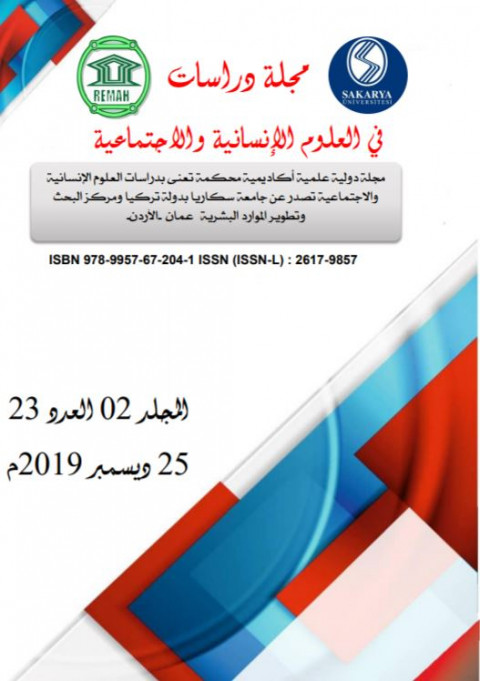 The Role of Education Towards Enhancing the Peaceful Coexistence Culture and Devoting the Citizenship Values of Postmodern Society Год публикации: 2019 Автор: Lilia Bensouilah Организация-автор: Research & Development of Human Resources Center REMAH This study aims to examine the role of education in creation the peaceful coexistence culture, promote opportunities for cosmopolitan openness to the other, preserve mutual respect and legitimize culture of difference, tolerance and pluralism of religions, beliefs and ideologies away from all manifestations of intolerance, hatred and destructive conflicts that violate human rights. دور التعليم في تعزيز ثقافة التعايش السلمي وتكريس قيم المواطنة في سياق مجتمع ما بعد الحداثة Год публикации: 2019 Автор: Lilia Bensouilah Организация-автор: Research & Development of Human Resources Center REMAH تركز الورقة على تحليل دور التعليم وبحث المجهودات العالمية والمساعي الدولية في سياق مجتمعي لما بعد الحداثة نحو تعزيز ثقافة التعايش السلمي وتكريس قيم المواطنة بما يتوافق مع المنظور الحقوقي الإنساني، وما ينبثق عنه من احترام وتقبل لتعددية واختلاف المذاهب والأديان والأيديول وجيات والثقافات بعيدا عن كل مظاهر التعصب الفكري المذهبي والعرقي والذي يمكن أن يهيأ بيئة محفزة لنشوب النزاعات المسلحة والصراعات المدمرة المنتهكة الكيان الحقوقي للبشرية قاطبة.
 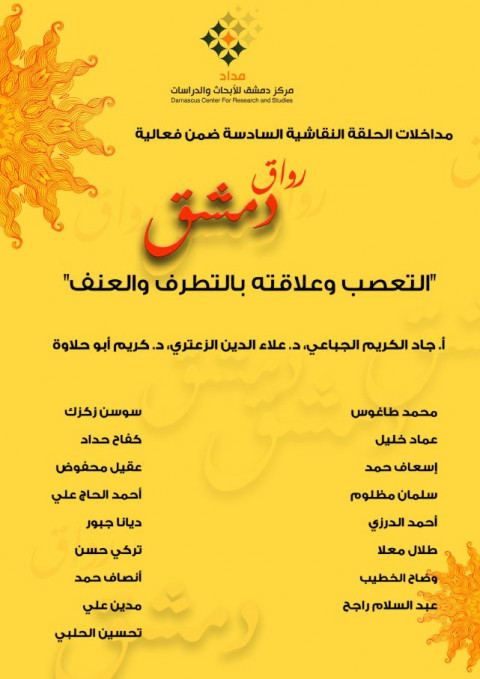 Intolerance and Its Relationship to Extremism and Violence Год публикации: 2017 Автор: Jad Al-Karim Al-Jabaei | Aladdin Zaatari | Karim Abu Halawa Организация-автор: Damascus Center for Research and Studies This document is a set of research papers discussing intolerance and its relationship to extremism and violence. In this production, the researchers tried to shed light on one of the issues facing societies, which is intolerance. التعصب وعلاقته بالتطرف والعنف Год публикации: 2017 Автор: Jad Al-Karim Al-Jabaei | Aladdin Zaatari | Karim Abu Halawa Организация-автор: Damascus Center for Research and Studies مجموعة من الأوراق البحثية تناقش التعصب وعلاقته بالتطرف والعنف. حاول الباحثون في هذا الانتاج تسليط الضوء على واحد من القضايا التي تواجه المجتمعات وهو التعصب.
 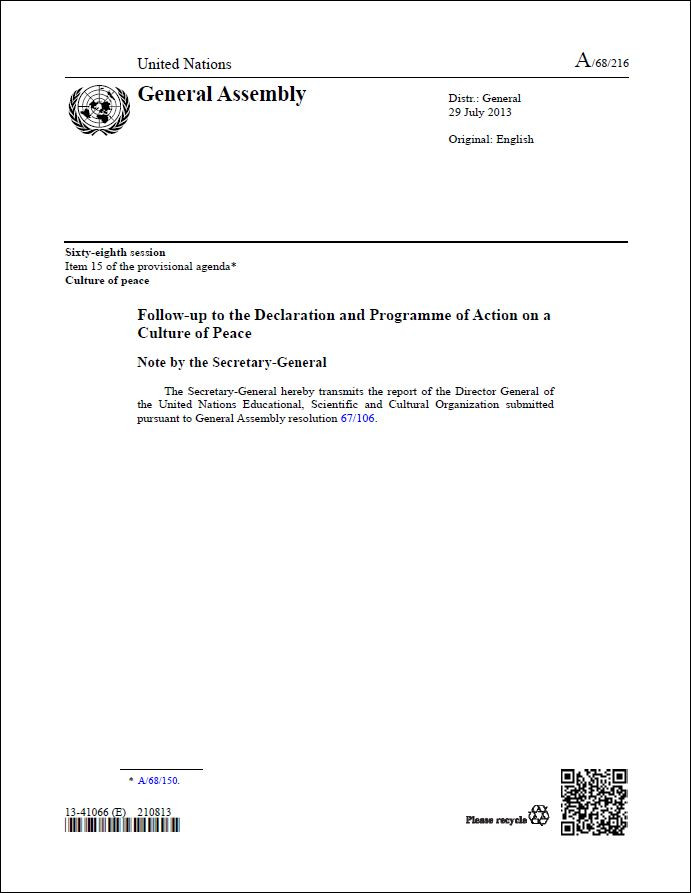 Report of the Director-General of the United Nations Educational, Scientific and Cultural Organization on the follow-up to the implementation of the Declaration and Program of Action on a Culture of Peace Год публикации: 2013 Организация-автор: United Nations. Secretary-General, 2007-2016 (Ban, Ki-moon) | UNESCO. Director-General, 2009-2017 (Bokova, I.G.) This is a report submitted by the Director-General of the United Nations Educational, Scientific and Cultural Organization, pursuant to General Assembly resolution 67/1, to follow up on the implementation of the Declaration and Program of Action on a Culture of Peace. The Director-General has reviewed an overview of the activities carried out to promote a culture of peace and non-violence, jointly with the United Nations Educational, Scientific and Cultural Organization (UNESCO) as the lead agency in the United Nations system on this subject. تقرير المديرة العامة لمنظمة الأمم المتحدة للتربية والعلم والثقافة عن متابعة تنفيذ الإعلان وبرنامج العمل المتعلقين بثقافة السلام Год публикации: 2013 Организация-автор: United Nations. Secretary-General, 2007-2016 (Ban, Ki-moon) | UNESCO. Director-General, 2009-2017 (Bokova, I.G.) هذا هو تقريـر مقـدم مـن المـديرة العامـة لمنظمـة الأمـم المتحـدة للتربيـة والعلم والثقافة عملاً بقرار الجمعية العامة ٦٧/١، لمتابعة تنفيذ الإعلان وبرنامج العمل المتعلقين بثقافة السلام. وقد استعرضت المديرة العامة لمحة عامة عن الأنشطة المنفذة لترويج ثقافة السلام واللاعنف، بالاشتراك مع منظمة الأمم المتحدة للتربية والعلم والثقافة (اليونيسكو) باعتبارها الوكالة الرائدة في منظومة الأمم المتحدة المعنية بهذا الموضوع.
 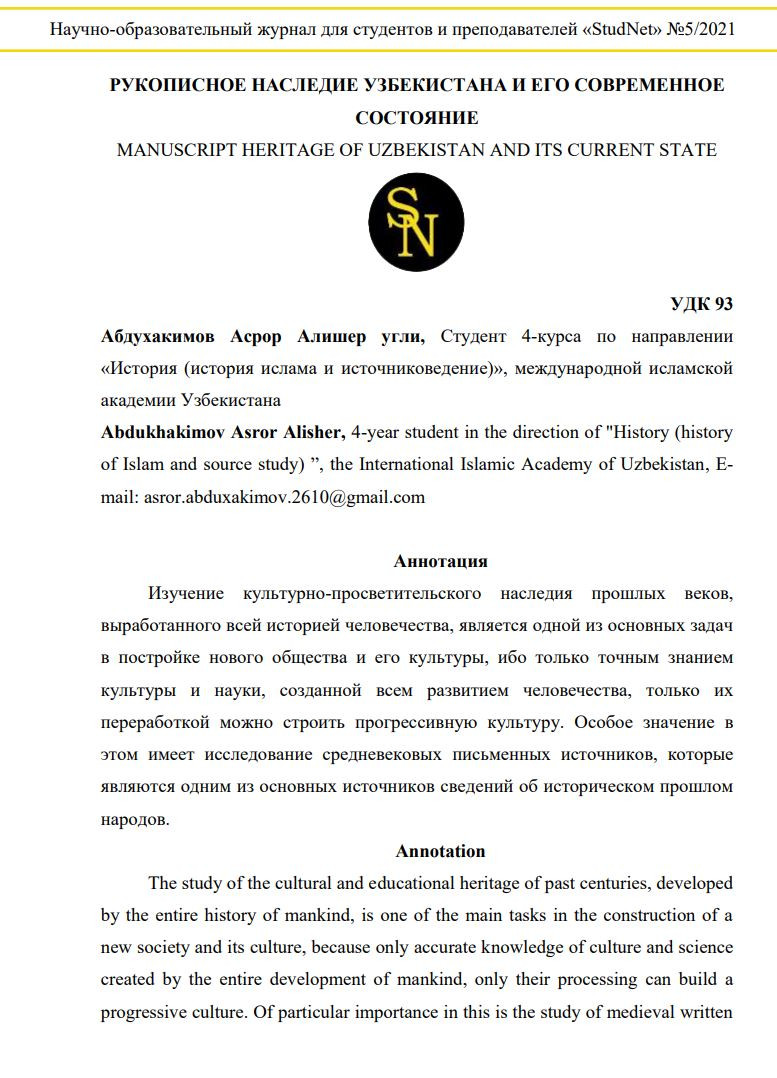 Manuscript Heritage of Uzbekistan and Its Current State Год публикации: 2021 Автор: Asror Abdukhakimov The study of the cultural and educational heritage of past centuries, developed by the entire history of mankind, is one of the main tasks in the construction of a new society and its culture, because only accurate knowledge of culture and science created by the entire development of mankind, and their processing can build a progressive culture. Of particular importance in this is the study of medieval written sources, which are one of the main sources of information about the historical past of people. Рукописное наследие Узбекистана и его современное состояние Год публикации: 2021 Автор: Asror Abdukhakimov Изучение культурно-просветительского наследия прошлых веков, выработанного всей историей человечества, является одной из основных задач в постройке нового общества и его культуры, ибо только точным знанием культуры и науки, созданной всем развитием человечества, только их переработкой можно строить прогрессивную культуру. Особое значение в этом имеет исследование средневековых письменных источников, которые являются одним из основных источников сведений об историческом прошлом народов.