
Ресурсы
Изучайте широкий спектр ценных ресурсов ВГГ, чтобы углубить своё понимание и повысить эффективность исследований, просветительской деятельности, преподавания и обучения.
Найдено: 2,668
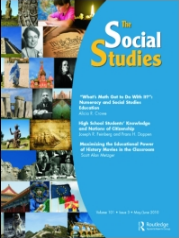 Powerful and Authentic Digital Media and Strategies for Teaching about Genocide and the Holocaust The continued prominence of genocide and Holocaust education, along with the movement toward the affective in social studies curricula, the advent of the Internet, and continued scholarship in the field, has led to the availability of a staggering array of digital resources for teachers (D. S. Symer 2001). These resources have the potential to enhance genocide and Holocaust education by providing robust content resources and interactive opportunities for students to develop new skills and understanding. In this article, the authors identify new digital media resources and strategies that engage students in authentic learning experiences about genocide and the Holocaust. They use F. W. Newmann and G. G. Wehlage's (1993) framework for "authentic instruction." Using this framework, the authors identify digital media that engage students in moral and ethical valuing, emphasize historical inquiry, and are relevant to the world outside of school. (By the author)
  Promoting the culture of dialogue between cultures in the Arab world Год публикации: 2013 Автор: Selim El Sayegh Организация-автор: UNESCO Beirut The major challenge of the Arab uprisings resides in the youth drive. Accounting for 60 per cent of the Arab population, Youth have been calling for political and economic reforms. During the revolts, these claims have become more radical seeking a fundamental change. This gradual evolution, from a relatively partial change to a more absolute comprehensive one, ushers in a new era with a different intellectual construct. With the ousting of dictatorships, all civil society forces are unleashed with huge actual and potential resources mobilized to contribute to building up the new order. Groups of solidarity, communities, parties, associations, and organizations of all nature among many others put forward new ideas and adequate action plans. Liberty thus acclaimed becomes the outcry for dignity, honor and pride. Never before in the Arab world has the individual had such a central place as it does today. An individual fully grasping the possibilities of restored liberty and recognized dignity gives birth to a new citizen acting in a new paradigm; a new citizen that seeks a transcendence of the ego to relate the individual to the common good. This fresh paradigm empowers the individual as a citizen in the name of equality, while simultaneously recognizing the right of difference of each citizen when it comes to belonging to a culture or sub‐culture. The right to be different involves more than the right to differ and to dispute and by the same token, the obligation of peaceful settlement. The right to be different, by belonging to a culture or a sub‐culture means in a new era of liberty and dignity, the obligation to conduct a transformation of the patterns generating disputes and conflicts among cultures. Henceforth, the issue of promoting the culture of intercultural dialogue in the aftermath of the Arab revolts represents major characteristics that will be reflected hereafter. Promouvoir la culture du dialogue entre les cultures dans le monde Arabe Год публикации: 2013 Автор: Selim El Sayegh Организация-автор: UNESCO Beirut Le défi majeur des soulèvements arabes réside dans le lecteur de la jeunesse. Comptabilisation de 60 pour cent de la population arabe, de la jeunesse ont été réclame des réformes politiques et économiques. Pendant les révoltes, ces créances sont devenues plus radicales à la recherche d'un changement fondamental. Cette évolution progressive, d'un changement relativement partielle à l'une complète plus absolue, ouvre la voie à une nouvelle ère avec une construction intellectuelle différente. Avec l'éviction des dictatures, toutes les forces de la société civile se déchaînent avec d'énormes ressources réelles et potentielles mobilisées pour contribuer à l'édification du nouvel ordre. Des groupes de solidarité, les communautés, les partis, les associations et organisations de toute nature parmi beaucoup d'autres mettent en avant de nouvelles idées et plans d'action adéquats. Liberté ainsi acclamé devient le cri de la dignité, l'honneur et la fierté. Jamais auparavant dans le monde arabe a l'individu avait une telle place centrale comme il le fait aujourd'hui. Un individu de saisir pleinement les possibilités de la liberté restaurée et reconnue la dignité donne naissance à un nouveau citoyen agissant dans un nouveau paradigme; un nouveau citoyen qui cherche une transcendance de l'ego de relier l'individu au bien commun. Ce nouveau paradigme permet l'individu en tant que citoyen au nom de l'égalité, tout en reconnaissant en même temps le droit à la différence de chaque citoyen en ce qui concerne l'appartenance à une culture ou sous-culture. Le droit d'être différent implique plus que le droit à la différence et à contester et par le fait même, l'obligation de règlement pacifique. Le droit à la différence, par l'appartenance à une culture ou d'une sous-culture signifie une nouvelle ère de liberté et de dignité, l'obligation de procéder à une transformation des modèles de génération de différends et les conflits entre les cultures. Dès lors, la question de la promotion de la culture du dialogue interculturel dans la foulée des révoltes arabes représente les principales caractéristiques qui seront reflétées ci-après.
 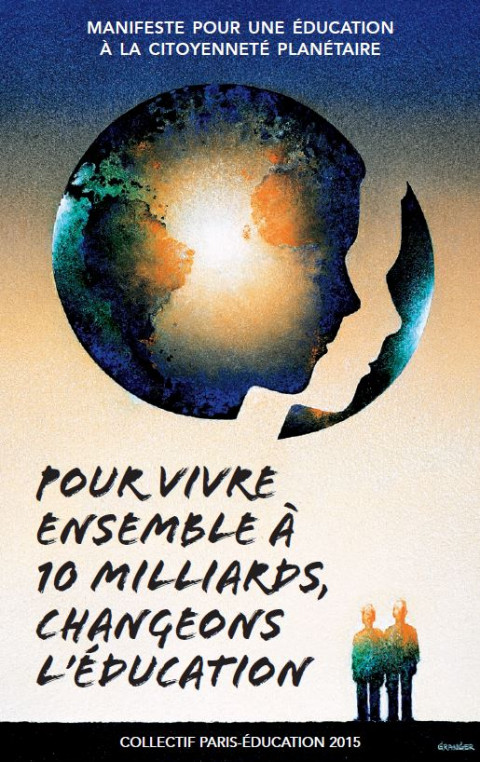 Manifeste pour une éducation à la citoyenneté planétaire: Pour vivre ensemble à 10 milliards, changeons l'éducation Год публикации: 2015 Организация-автор: Collectif Paris-Education 2015 Face à l’ampleur, l’urgence, la diversité et la complexité des problématiques engendrées par le modèle de développement de nos sociétés contemporaines, nous sommes donc obligés, dans l’urgence, de nous pencher sur les questions d’éducation et de formation des générations futures qui devront affronter des réalités biophysiques, économiques et politiques inédites, dont nous commençons à peine à entrevoir l’ampleur. Ce qui est dès lors en jeu, avec l’avenir de l’homme et de la Terre, c’est l’humain, ce qu’il deviendra, ce qu’il sera capable de porter comme projet pour l’humanité.Quelles qualités d’humains devons-nous faire advenir pour que ces réalités inédites puissent être rencontrées demain, sans que l’humanité bascule dans la violence et le dépeçage égoïste de la planète? Quels enfants voulons-nous laisser à notre Terre?Cette urgence impose un changement d’échelle dans la transformation des systèmes éducatifs, des contenus et des méthodes d’enseignement. Malgré la volonté et la compétence de nombreux acteurs de l’école, force est de constater que les actions menées pour une éducation plus en cohérence avec les enjeux climatiques et, plus largement, sociétaux restent à la marge. Elles sont réalisées par des individus clairvoyants. Il est temps d’enclencher la vitesse supérieure.
  Que valent les apprentissages en histoire, géographie et éducation à la citoyenneté ? : Colloque international des didactiques de l'histoire, de la géographie et de l'éducation à la citoyenneté Год публикации: 2014 Автор: Caroline Leininger | Angelina Ogier | Sylvain Genevois Организация-автор: Institut national de recherche pédagogique L’histoire et la géographie scolaires, de même que l’éducation à la citoyenneté, sont des domaines sensibles, liés au politique et au contexte social et sociétal dans lequel ils s’inscrivent. Si les recherches en didactique ont constaté dans les années 1990 une grande stabilité de l’histoire et la géographie scolaires, elles interrogent aujourd’hui plus spécifiquement les changements curriculaires et les recompositions qu’ils entraînent (thèmes des deux dernières éditions du colloque (Nantes, 2008, Lausanne 2009). Ces changements découlent de choix politiques et de savoirs universitaires, et redéfinissent le projet de ces disciplines et ses finalités. L'élève devient ainsi à l'issue de sa scolarité : un acteur de la société, un citoyen, un acteur économique, membre de communautés culturelles et politiques, un individu épanoui etc.Ce choix de finalités est aussi un choix de valeurs, explicites ou non dans les prescriptions, assumées ou non par les enseignants, par les élèves, les parents. Ce constat amène à questionner les articulations entre les apprentissages disciplinaires d’une part, et les apprentissages sociaux et politiques d’autre part. Les définitions de ces apprentissages, leur légitimité et leurs évaluations posent également question. Enseignants, décideurs, formateurs, didacticiens peuvent ainsi se demander ce que valent les apprentissages en histoire, en géographie et en éducation à la citoyenneté, tant du point de vue de leur reconnaissance disciplinaire et sociale que du point de vue des valeurs qui leur sont associées. Cet ouvrage cherche à questionner les articulations entre les apprentissages disciplinaires et les apprentissages sociaux et politiques.
 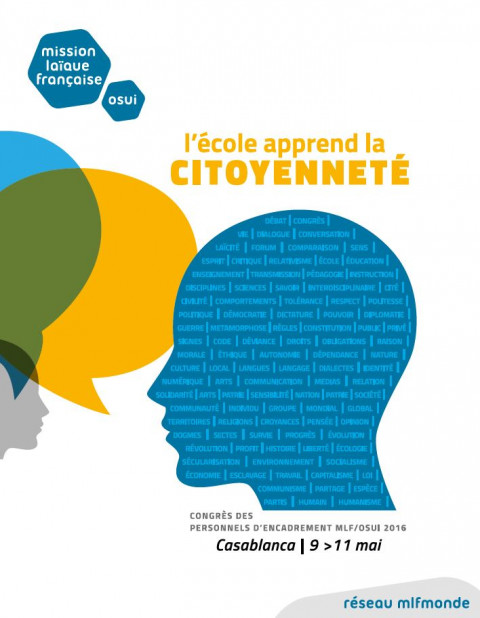 L’école apprend la citoyenneté (Congrès des personnels d’encadrement MLF/OSUI 2016) Год публикации: 2017 Организация-автор: Mission laïque française Le groupe scolaire Louis-Massignon à Bouskoura (Casablanca, Maroc) a accueilli du 9 au 11 mai 2016 près de 300 acteurs de l’enseignement français, représentants des établissements du réseau mlfmonde, du réseau de l’AFLEC, des académiespartenaires (Dijon, Paris, Poitiers et Reims), des représentants du MAEDI, du MENESR, de la DNE, de la DGESCO et de l’AEFE, des grands établissements de l’Éducation nationale (CNED, Canopé, ESENESR, CIEP), des représentants de l’organisation du baccalauréat international, de l’Unesco et de la société civile.Les mesures qui entrent en vigueur sur l’éducation à la citoyenneté concernent les «valeurs de la République».Parce que l’enseignement moral et civique est conçu et établi pour et dans un contexte strictement national, se pose dès lors la question d’une adaptation à l’usage de l’enseignement français à l’étranger qui ne soit pas en contradiction avec l’intention et l’esprit de cette partie du programme.
  Realization of the Sustainable Development Goals by, for and with Persons with Disabilities (UN Flagship Report on Disability and Development 2018) Год публикации: 2018 Организация-автор: United Nations (UN) Realization of the Sustainable Development Goals by, for and with persons with disabilities 'Disability and the 2030 Agenda for Sustainable Development' this report represents the first UN systemwide effort to examine disability and the Sustainable Development Goals (SDGs) of the 2030 Agenda for Sustainable Development at the global level. The report reviews data, policies and programmes and identifies good practices; and uses the evidence it reviewed to outline recommended actions to promote the realization of the SDGs for persons with disabilities. The report shows that despite the progress made in recent years, persons with disabilities continue to face numerous barriers to their full inclusion and participation in the life of their communities. It sheds light on their disproportionate levels of poverty, their lack of access to education, health services, employment, their under-representation in decision-making and political participation. This is particularly the case for women and girls with disabilities. Main barriers to inclusion entail discrimination and stigma on the ground of disability, lack of accessibility to physical and virtual environments, lack of access to assistive technology, essential services, rehabilitation and support for independent living that are critical for the full and equal participation of persons with disabilities as agents of change and beneficiaries of development. Data and statistics compiled and analysed in the present report indicate that persons with disabilities are not yet sufficiently included in the implementation, monitoring and evaluation of the SDGs.
  Focus on Global Common Good:The New International Research Trend on World Citizenship Education Год публикации: 2018 Автор: Song Qiang | Rao Congman Globalization has posed challenges for national-states to develop traditional citizenship education. To develop the citizenship education in the world needs to regard education and knowledge as global common good, surpass short- term benefit,and promote learners to be world citizens by 2030. Start with the dialectical logic on global benefit and national benefit,the researches of world citizenship education focus on“human rights protection and joint development”,“from national identity to world identity”,“from global governance to world government”, and “western universal mind vs. multi- civilizations intergrowth”. Chinese citizenship education needs to reinforce the national identity in socialism national citizenship education; cultivateing socialism world citizenship and promoteing international discourse power;seek human common good and build community of common destiny for all mankind. 着眼全球共同利益:“世界公民”教育的国际研究新趋势 Год публикации: 2018 Автор: Song Qiang | Rao Congman 全球化对民族国家开展的传统公民教育提出了挑战。全球公民教育发展需要将教育和知识视为全球共同利益,超越短期利益,推进学习者成为2030年的“世界公民”。当前“世界公民”教育研究本着全球利益与国家利益的辩证逻辑,聚焦在“人权保护与共同发展”“国家认同到世界认同”“全球治理到世界政府”“西方式普适思想与多元文明共生”四个方面。为此,我国公民教育要加强社会主义“国家公民”教育中的国家认同;培养社会主义“世界公民”,提升国际话语权;寻求人类共同利益,构建“人类命运共同体”。
 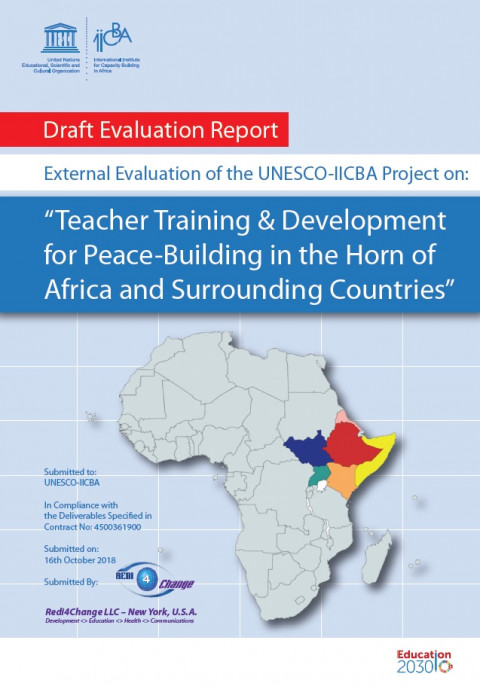 [Draft Evaluation Report] External Evaluation of the UNESCO-IICBA Project on: “Teacher Training & Development for Peace-Building in the Horn of Africa and Surrounding Countries” Год публикации: 2018 Организация-автор: UNESCO International Institute for Capacity-Building in Africa (IICBA) The project on “Teacher Training and Development for Peace-Building in the Horn of Africa and Surrounding Countries” was designed by UNESCO-IICBA and financed by the Government of Japan. The project benefitted six conflict-affected countries; Ethiopia, Eritrea, Somalia, Kenya, Uganda, and South Sudan by building on the mandate and niche expertise of UNESCO-IICBA in teacher education, as well as benefiting from the empathetic insights and financing of the Government of Japan.This evaluation report analyses the design, implementation, and consolidation of the project to assess the likelihood that it can facilitate peace education as an effective and integral part of the national education systems. The project’s short timeframe and modest financing mean that the evaluation could not credibly deal with its outcomes and impact; but efforts are made to gauge the uptake and sustainability of this project as a vehicle for promoting peace education and so help to prevent violent conflict and cultivate a culture of peace in the countries concerned.