
Ресурсы
Изучайте широкий спектр ценных ресурсов ВГГ, чтобы углубить своё понимание и повысить эффективность исследований, просветительской деятельности, преподавания и обучения.
Найдено: 2,790
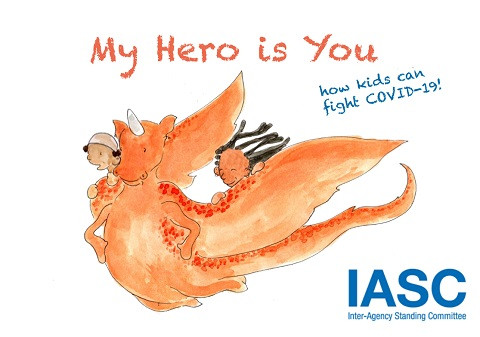 My Hero Is You: How Kids Can Fight COVID-19 Год публикации: 2020 Автор: Helen Patuck Организация-автор: Inter-Agency Standing Committee (IASC) A new story book that aims to help children understand and come to terms with COVID-19 has been produced by a collaboration of more than 50 organizations working in the humanitarian sector. With the help of a fantasy creature, Ario explains how children can protect themselves, their families and friends from coronavirus and how to manage difficult emotions when confronted with a new and rapidly changing reality. Mon héroïne, c’est toi: Comment combattre la COVID-19 quand on est un enfant Год публикации: 2020 Автор: Helen Patuck Организация-автор: Inter-Agency Standing Committee (IASC) Un novel livre qui a pour but d’aider les enfants à comprendre et à y faire face a été publié par plus d’une cinquantaine d’organisations actives dans le secteur humanitaire. Ario, une créature fantastique, comment les enfants peuvent se protéger et protéger leurs proches et leurs amis du coronavirus et comment ils peuvent gérer les émotions complexes qui s’emparent d’eux lorsqu’ils sont confrontés à une réalité nouvelle qui évolue rapidement.
  Spotlight: Quality Education for All during COVID-19 Crisis Год публикации: 2020 Автор: Chris Petrie | Katija Aladin | Pukhraj Ranjan | Romayne Javangwe | Danny Gilliland | Saku Tuominen | Leponiemi Lasse Организация-автор: HundrED | Organisation for Economic Co-operation and Development (OECD) | Supercell This report aims to offer effective solutions that help parents, teachers and children navigate through challenges facing education during the pandemic. It has plentiful insights and high- quality resources from the opportunity for teacher to form much stronger connections with parents, students to challenges of untrained teacher and lack of access to digital learning resources.
  Teaching for Sustainable Development through Ethical Global Issues Pedagogy: A Resource for Secondary Teachers Год публикации: 2019 Автор: Karen Pashby | Louise Sund | Matthew Williams | Jennifer Maguire | Heidi Meltovuo | David Few | Nicole Sandler | Ruth Till | Ilona Taimela Организация-автор: Manchester Metropolitan University This resource aims to support teacher in their current practice rather than a direct ‘how-to’ guide. The activities offer some suggestions for practice before, during, and after students learn about a particular global issue. It offers some suggested global issues topics, but intend for teachers to adapt this resource to the different issues they explore with their students.
  Understanding the Return on Investment from TVET: A Practical Guide Год публикации: 2020 Автор: Jane Schueler | Phil Loveder Организация-автор: UNESCO International Centre for Technical and Vocational Education and Training (UNEVOC) | National Centre for Vocational Education Research(NCVER) This guide presents an analytic framework that summarizes some of the main elements and issues that need to be considered in measuring ROI. This includes establishing the scope, context and purpose for measuring ROI, adopting guiding principles, identifying costs, benefits and factors that impact on ROI, and approaches to data collection and analysis. The Guide then introduces a framework that looks at the ROI equation from a range of perspectives – including economic and social dimensions – and for different stakeholders, including individuals, businesses and societies. The Guide presents relevant ROI indicators and measures drawn from the existing international research. Finally, it provides guidelines to planning and collecting ROI data, along with a set of practical pro forma resources and case studies to assist the reader.
 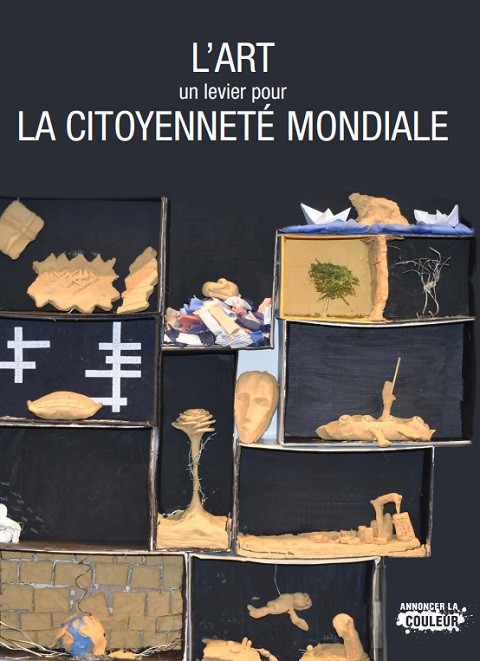 L’art: un levier pour la citoyenneté mondiale Год публикации: 2019 Организация-автор: Annoncer la Couleur (ALC) | Belgique Ce livre montre les avantages de proposer un moment de création artistique en ECM. L’art et la pédagogie du projet semblent être de très bons outils pour faire de l’ECM en milieu scolaire. Ce dossier s’appuie sur les expériences des enseignant∙e∙s qui ont mené un projet avec le soutien d’Annoncer la Couleur (ALC) et avec des artistes qui interviennent en milieu scolaire1.
  Education for Global Citizenship: Meanings and Practices for a Transformative Cosmopolitism Год публикации: 2017 Автор: Alejandra Boni Aristizabal According to the author: "The article aims to analyze in depth the meanings of global citizenships in order to characterize the pedagogical practices of what is known as education for global citizenship. After a brief analysis of the different stages that education for development has gone through, from the assistencialist approach of the 50s to education for global citizenship, we study different perspectives of cosmopolitanism: a vision from the field of ethics, mainly from Martha Nussbaum's perspective that talks about cosmopolitan abilities, from politics, that has democratic proposals such as David Held's, critical perspectives as Boaventura de Souza Santos' ones, and the sociological perspective that allows us to identify intercultural communicative processes where the cosmopolitan view is produced, according to Ulrick Beck's or Gerald Delanty's words. After this, we conclude with a discussion about how to encourage education for develpment spaces that foster global citizenship." Educación para la Ciudadanía Global: Significados y espacios para un cosmopolitismo transformado Год публикации: 2017 Автор: Alejandra Boni Aristizabal Según la autora: "El presente artículo tiene como objetivo profundizar en los significados de la ciudadanía global con el fin de caracterizar las prácticas pedagógicas de lo que se conoce como educación para la ciudadanía global. Tras una breve análisis de las distintas etapas por las que ha pasado la educación para el desarrollo, desde el planteamiento asistencialista de los años 50 hasta la educación para la ciudadanía global, nos detenemos en diferentes perspectivas del cosmopolitismo: la visión desde la ética, fundamentalmente a través de la obra de Martha Nussbaum que nos habla de las habilidades cosmopolitas, desde la política, que contiene propuestas de democracia como las de David Held y perspectivas más críticas como las de Boaventura de Sousa Santos, y la perspectiva sociológica que nos permite identificar los procesos de comunicación intercultural donde se produce la mirada cosmopolita, según palabras de Ulrick Beck o Gerard Delanty. Tras ello, concluiremos con una discusión sobre cómo potenciar espacios de educación para el desarrollo desde donde contribuir a la formación de ciudadanos globales"
  Global Citizenship and Lingual Identity: The Ability to Perform in Different Lingual Settings Год публикации: 2011 Автор: Ann-Christin Torpsten Организация-автор: SAGE Publications The aim of this article is to interpret second-language pupils’ encounter with the Swedish school regarding first- and second-language learning. An empirical context called experienced learning is investigated by interpreting student teachers’ oral and written narrated learning memories. Using a life-story approach, the interpretation focuses on lingual skills, lingual identity and citizenship. The study looks at participation in Swedish as a second language and mother tongue education when the subjects encountered the Swedish school system. Participating in those lessons is described as positive. Participating made it easier to improve skills in the second language and mother tongue. Mother tongue skills were transferred to the second-language improvement. It became much easier to continue developing the second language when skills in the mother tongue increased. Language skills were positive for continued learning, linguistic development, development of bilingualism and multilingualism. Through widened linguistic horizons it becomes possible to develop identity as multilingual persons. When skills increase in different languages such as Swedish as a second language and mother tongue, the subjects become aware of their identities as multilingual persons. They become aware of their possibilities of being active, multicultural, global citizens. Their ability to perform in different lingual settings becomes visible. Citoyenneté mondiale et Identité linguale : la capacité d'exécuter dans différents contextes linguales Год публикации: 2011 Автор: Ann-Christin Torpsten Организация-автор: SAGE Publications Le but de cet article est d'interpréter la rencontre des élèves de langue seconde à l'école suédoise au sujet de première et de l'apprentissage de la langue seconde. Un contexte empirique appelé apprentissage expérimenté est étudié en interprétant des souvenirs d'apprentissage orales et écrites narrés des enseignants aux étudiants. En utilisant une approche histoire de vie, l'interprétation se concentre sur les compétences linguales, l'identité et la citoyenneté lingual. L'étude se penche sur la participation en suédois comme langue seconde et éducation en langue maternelle lorsque les sujets ont rencontré le système scolaire suédois. La participation à ces leçons est décrit comme positif. La participation a rendu plus facile d'améliorer les compétences dans la langue seconde et langue maternelle. Compétences en langue maternelle ont été transférés à l'amélioration de la langue seconde. Il est devenu beaucoup plus facile de continuer à développer la deuxième langue lorsque les compétences dans la langue maternelle ont augmenté. Les compétences linguistiques ont été positifs pour l'apprentissage continu, le développement linguistique, le développement du bilinguisme et le multilinguisme. A travers élargi les horizons linguistiques, il devient possible de développer une identité en tant que personnes multilingues. Lorsque les compétences augmentent dans différentes langues comme le suédois comme langue seconde et la langue maternelle, les sujets prennent conscience de leur identité en tant que personnes multilingues. Ils prennent conscience de leurs possibilités d'être multiculturelles, des citoyens actifs. Leur capacité à effectuer dans différents contextes linguales devient visible.