
Ресурсы
Изучайте широкий спектр ценных ресурсов ВГГ, чтобы углубить своё понимание и повысить эффективность исследований, просветительской деятельности, преподавания и обучения.
Найдено: 1,322
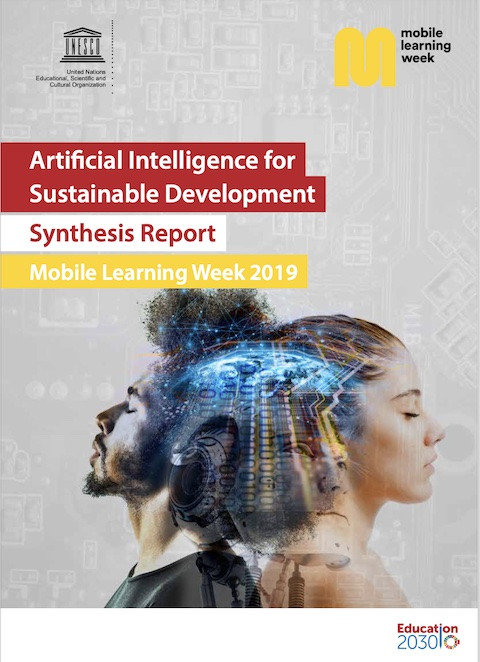 Artificial Intelligence for Sustainable Development: Synthesis Report; Mobile Learning Week 2019 Год публикации: 2019 Организация-автор: UNESCO During the five-day event for Mobile Learning Week 2019, UNESCO gathered participants from around the world to share experiences, initiatives and plan joint actions with a view to harnessing artificial intelligence (AI) to achieve Sustainable Development Goal (SDG) 4. The report stems from the work that the speakers presented and the insights that all the participants shared at the event.
 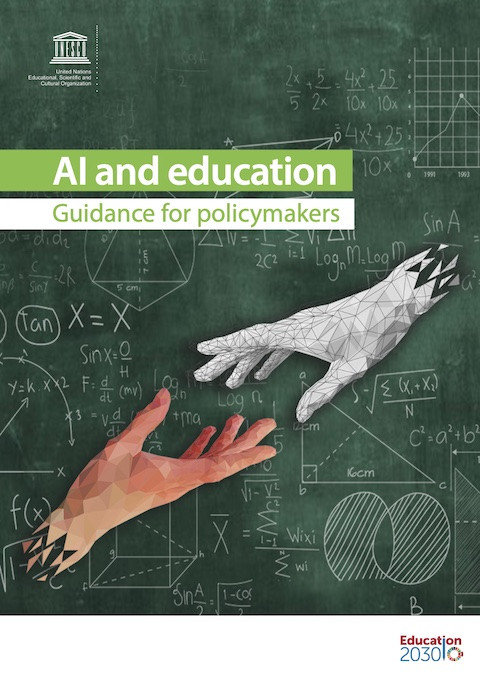 AI and Education: Guidance for Policy-Makers Год публикации: 2021 Автор: Fengchun Miao | Wayne Holmes | Ronghuai Huang | Hui Zhang Организация-автор: UNESCO Artificial intelligence (AI) is envisioned as a new tool to accelerate the progress towards the achievement of SDG 4. Policies and strategies for using AI in education are central to maximizing AI’s benefits and mitigating its potential risks. Fostering AI-ready policy-makers is the starting point of the policy development process.This publication offers guidance to policy-makers in understanding AI and responding to the challenges and opportunities in education presented by AI. Specifically, it introduces the essentials of AI such as its definition, techniques, technologies, capacities and limitations. It also delineates the emerging practices and benefit-risk assessment on leveraging AI to enhance education and learning, and to ensure inclusion and equity, as well as the reciprocal role of education in preparing humans to live and work with AI.The publication summarizes three approaches to the policy responses from existing practices: independent approach, integrated approach and thematic approach. In a further step, it proposes more detailed recommendations and examples for planning AI and education policies, aligned with the recommendations made in the 2019 Beijing Consensus on AI and Education. 人工智能与教育: 政策制定者指南 Год публикации: 2021 Автор: Fengchun Miao | Wayne Holmes | Ronghuai Huang | Hui Zhang Организация-автор: UNESCO 该文件为政策制定者提供关于人工智能在教育领域内应用于发展的相关知识,包括其定义与技术一级对教学和教育的影响,并为政策制定者提供相关政策建议。
 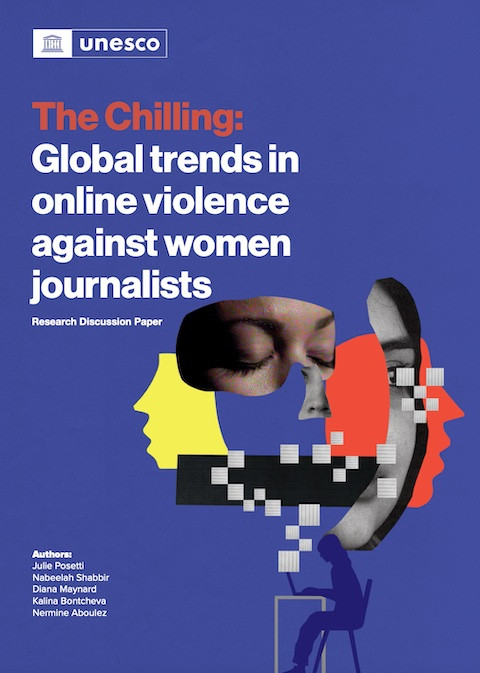 The Chilling: Global Trends in Online Violence Against Women Journalists; Research Discussion Paper Год публикации: 2021 Автор: Julie Posetti | Nabeelah Shabbir | Diana Maynard | Kalina Bontcheva | Nermine Aboulez Организация-автор: UNESCO This report demonstrates that online violence against women journalists is a global phenomenon, albeit one with uneven impacts that are heightened at various intersectional points, including racism, religious bigotry, sectarianism, homophobia and disinformation. There is a climate of impunity surrounding online attacks on women journalists which must be more urgently and effectively addressed because impunity emboldens the perpetrators, demoralises the victim, erodes the foundations of journalism, and undermines freedom of expression. For too long, the emphasis has been on making women journalists responsible for their own defence and protection, rather than making the perpetrators and instigators, the platform enablers, and law enforcement and media employers accountable.These methods of attack are growing more sophisticated, and they are evolving with technology. They are also increasingly networked and fuelled by political actors. This points to the need for responses to online violence to grow equally in technological sophistication and collaborative coordination. Another point highlighted by this research: most women journalists do not report or make public the online attacks they experience, in line with low levels of reporting when it comes to violence against women more broadly. Many media employers still appear reluctant to take online violence seriously. This aligns with the evident failure of the internet communications companies - whose social networks, messaging and search services facilitate much of the harassment, intimidation, abuse and threats targeting women journalists - to take effective action to address this freedom of expression and gender equality crisis.
 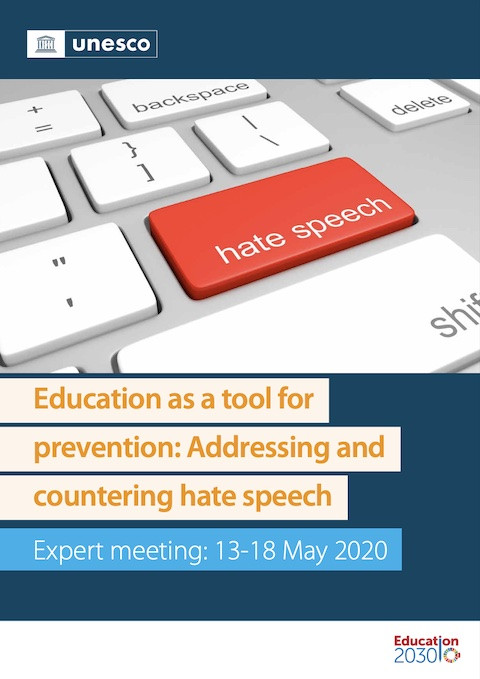 Education as a Tool for Prevention: Addressing and Countering Hate Speech (Expert Meeting: 13-18 May 2020) Год публикации: 2021 Организация-автор: UNESCO Addressing and countering hate speech is a multi-layered endeavour, which includes tackling its root causes and drivers, preventing it from translating into violence and dealing with its wider societal consequences.Within the framework of the Education 2030 Agenda, and more specifically target 4.7 of Sustainable Development Goal 4 (SDG 4), as well as the United Nations Strategy and Plan of Action on Hate Speech – which places specific emphasis on the role of education as a tool for addressing hate speech – UNESCO and the United Nations Office on the Prevention of Genocide and the Responsibility to Protect (OSAPG) convened a series of virtual meetings of experts from 13 to 18 May 2020. This report highlights some of the key discussion areas and unpacks the role of education as a preventive tool. It argues that strengthening educational responses to build the resilience of learners to exclusionary rhetoric and hate speech is paramount for sustainable development and peace for all.
 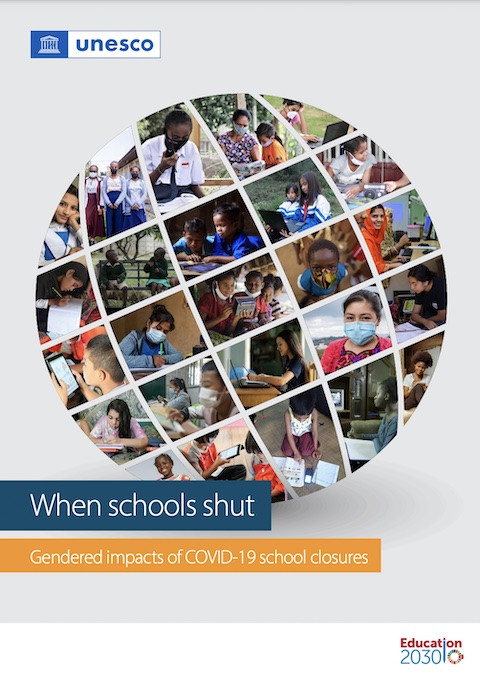 When Schools Shut: Gendered Impacts of COVID-19 School Closures Год публикации: 2021 Организация-автор: UNESCO School closures to mitigate the spread of COVID-19 have caused unprecedented disruption for nearly 1.6 billion learners across the globe. Beyond alarming effects on learning loss and school dropout, they pose an immediate and long-term threat to gender equality, with gender-specific effects on health, well-being and protection. This publication exposes these impacts and calls for effective strategies to ensure education continuity, promote gender equality and improve lives and futures. Through a review of published research, a global survey of actions taken by organizations in favour of gender equality in education, and in-depth data collection in five countries, UNESCO and its partners underline the challenges faced by children and young people to continue learning, and to return to school safely. When schools shut also showcases the efforts made by governments and the international community to mitigate harm and safeguard progress towards gender equality in and through education. While it is too soon to grasp the full scope of the impact of school closures, the publication sets out early evidence from across different contexts globally on how girls and boys have been participating in remote learning, planning for the return to school, and coping with mental and physical health challenges during the closures. It is a call to governments and their partners to put gender at the centre of education recovery to tackle declining participation and low return-to-school rates. When schools shut is a timely reminder that schools are essential sites not only for learning, but also lifelines when it comes to health, well-being and protection of all learners.
 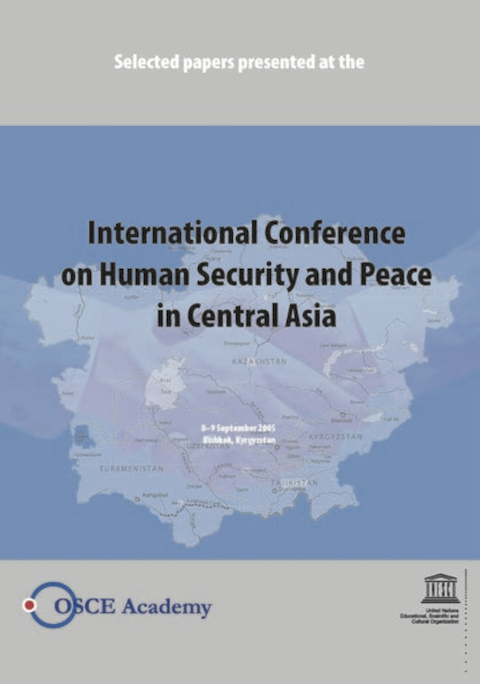 International Conference on Human Security and Peace in Central Asia Год публикации: 2007 Организация-автор: UNESCO | OSCE Academy in Bishkek From the perspective of confronting threats and encouraging development in Central Asia, UNESCO and the OSCE Academy organized an international conference on 'Human Security and Peace in Central Asia'. These two organizations are dedicated to promoting international security and understanding through highlighting and developing the diverse human and cultural values of peace and encouraging dialogue based on recognition, respect for diversity, and observance of human rights.
 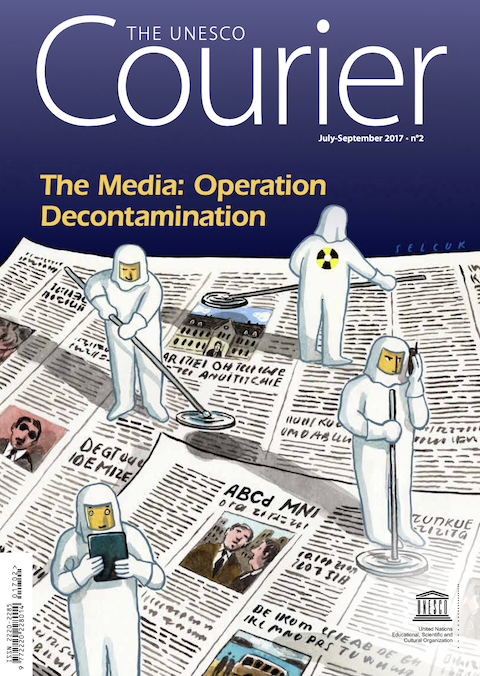 The Media: Operation Decontamination (The UNESCO Courier no. 2; July-September 2017) Год публикации: 2017 Организация-автор: UNESCO The plurality of enlightened opinions is a prerequisite of the democratic development of our societies. The quality of the information disseminated by the media – traditional or new – is decisive when it comes to shaping public opinion. This is why UNESCO puts special emphasis on education about media and information, which it considers a fundamental skill for citizens in the twenty-first century.Freedom of expression and the free movement of ideas by words and images are among the constitutive principles of UNESCO and at the core of the 2030 Agenda for Sustainable Development. UNESCO supports the work of dedicated journalists and activists who defend fundamental freedoms, like the journalist Dawit Isaak, winner of the 2017 UNESCO/ Guillermo Cano World Press Freedom Prize, whose story appears in this issue of the UNESCO Courier.Over the last decade, more than 800 journalists have been victims of crimes aimed at muzzling freedom of expression. Only one murder out of ten ended with a conviction. This impunity is unacceptable and further fuels the spiral of violence in the future. This is why UNESCO is committed to putting an end to these crimes against the press, on all continents, as an indispensable condition for peaceful societies that are all the more robust for being better informed.In this “post-truth” era, the role of UNESCO is more important than ever, and this issue of the Courier is a wonderful opportunity to renew our founding commitment to support information and communication to build peace in the minds of men and women. Médias: Opération décontamination (Le Courrier de l'UNESCO no. 2; Juillet-Septembre 2017) Год публикации: 2017 Организация-автор: Organisation des Nations Unies pour l'éducation, la science et la culture (UNESCO) La pluralité d’opinions éclairées est une condition sine qua non du développement démocratique de nos sociétés. La qualité des informations diffusées par les médias – traditionnels et nouveaux – est déterminante dans la formation de l’opinion publique. C’est pourquoi l’UNESCO met un accent tout particulier à l’éducation aux médias et à l’information qu’elle considère comme une compétence citoyenne fondamentale du XXIe siècle.La liberté d’expression et la libre circulation des idées par les mots et l’image font partie des principes constitutifs de l’UNESCO et sont au cœur de l’Agenda 2030 pour le développement durable. L’UNESCO soutient le travail des journalistes et militants déterminés qui défendent ces libertés fondamentales, comme le journaliste Dawit Isaak, lauréat du Prix mondial de la liberté de la presse UNESCO/Guillermo Cano 2017, dont on peut découvrir le portrait dans ce numéro du Courrier de l’UNESCO.Au cours de cette dernière décennie, plus de 800 professionnels des médias ont été victimes de crimes visant à museler la libre expression. Seul un meurtre sur dix a donné lieu à un jugement. Cette impunité est inacceptable et alimente encore la spirale de la violence dans le futur. C’est pourquoi l’UNESCO s’engage de toutes ses forces pour y mettre un terme, sur tous les continents, comme une condition indispensable de sociétés pacifiques et d’autant plus robustes qu’elles sont mieux informées.À l’ère de la « post-vérité », le rôle de l’UNESCO est plus important que jamais, et ce nouveau numéro du Courrier est une belle occasion de renouveler notre engagement fondateur à soutenir l’information et la communication pour construire la paix dans l’esprit des hommes et des femmes.
 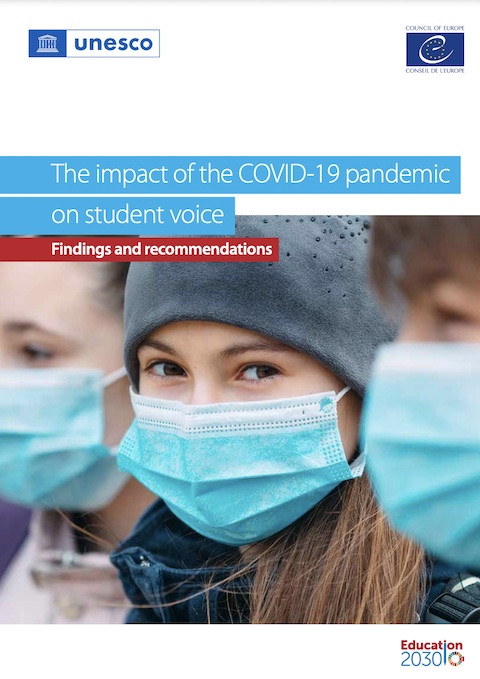 The Impact of the COVID-19 Pandemic on Student Voice: Findings and Recommendations Год публикации: 2021 Организация-автор: UNESCO | Council of Europe The COVID-19 pandemic has had serious consequences on the education of young people and their ability to engage and participate meaningfully. In 2020, UNESCO and the Council of Europe decided to collaborate on a research project with a view to examining the impact of the COVID-19 pandemic on student voice and particularly the consequences of the subsequent school closures on student voice opportunities in Europe and in the Middle East and North Africa (MENA). This publication details the findings of this study and provides recommendations for school directors and personnel, teachers, educators, policy-makers and young people to build on the lessons learned from the pandemic and help the education community work collectively towards promoting societies that are guided by human rights, with student voice and participation at the centre. It is primarily intended for policy-makers, educators, teachers working in formal school systems. It may also be of interest to professionals working in non-formal education settings or other sectors – namely the justice, social and health sectors – working with student.