
Ресурсы
Изучайте широкий спектр ценных ресурсов ВГГ, чтобы углубить своё понимание и повысить эффективность исследований, просветительской деятельности, преподавания и обучения.
Найдено: 1,407
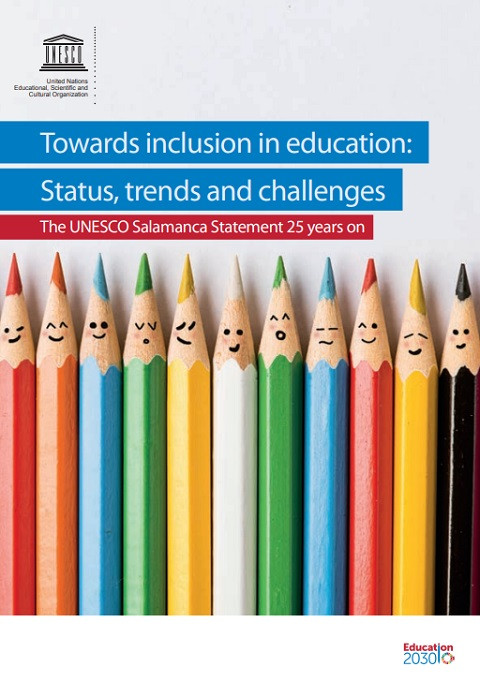 Towards Inclusion in Education: Status, Trends and Challenges: The UNESCO Salamanca Statement 25 Years on Год публикации: 2020 Организация-автор: UNESCO The 2030 Agenda for Sustainable Development focuses on leaving no one behind with its Goal 4 on education calling upon education systems ‘to ensure inclusive and equitable quality education and promote lifelong learning opportunities for all’. With ten years remaining to the target date of 2030, countries need to step up e¬orts to reach out to all learners, respect their diverse needs, abilities and characteristics and eliminate all forms of discrimination in the learning environment. This requires adopting an inclusive approach whose foundations have been laid by the UNESCO World Conference on Special Needs Education held in Salamanca, Spain, in 1994. The publication looks at the past, present and future since Salamanca. It provides examples from around the world and make recommendations to guide the further development of inclusive national policies and practices.
 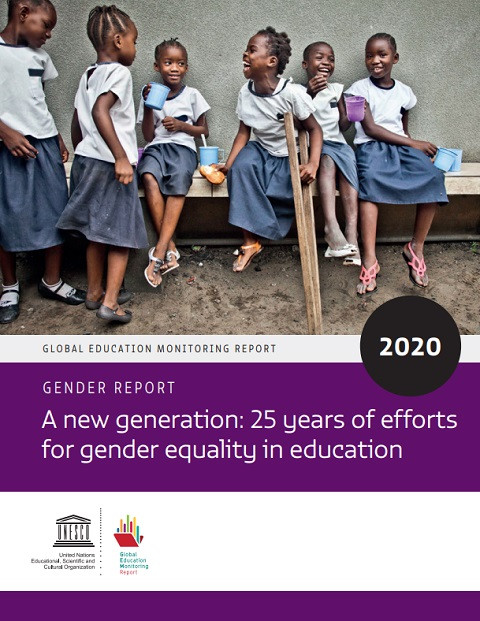 Gender Report 2020: A New Generation; 25 Years of Efforts for Gender Equality in Education (Global Education Monitoring Report) Год публикации: 2020 Организация-автор: UNESCO | Global Education Monitoring Report Team Building on the 2020 Global Education Monitoring Report, this report investigates how inclusion in education can advance gender equality in and through education, which is critical to make progress towards gender equality in society. The goal of gender equality is, of course, not new. It was enshrined in the 1979 Convention on the Elimination of All Forms of Discrimination Against Women and was at the core of the 1995 Beijing Declaration and Platform for Action, whose 25th anniversary is marked in 2020.
 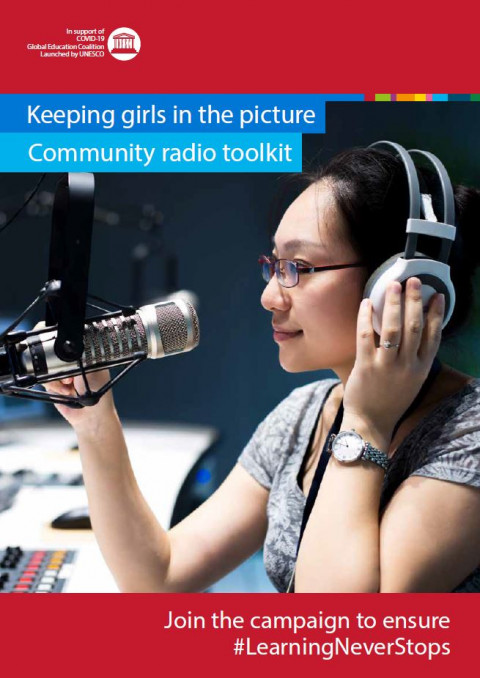 Keeping Girls in the Picture: Community Radio Toolkit Год публикации: 2020 Организация-автор: UNESCO | Global Education Coalition This toolkit is to help you to get stories and messages about this vital issue out to your audience. We want it to make an impact on people’s lives. We hope this toolkit will support you in creating exciting and memorable content for community radio programmes wherever you are.This toolkit contains the messages and facts from the global campaign. It has not been tailored for any specific region, country or area. We count on you to consider how to make this campaign most relevant to your audiences - drawing on local data and voices from your communities.The toolkit suggests several types of shows that community radio stations can create. If you want to include specific facts and statistics about your country, area or community, please work with organizations in your local network that can help.
 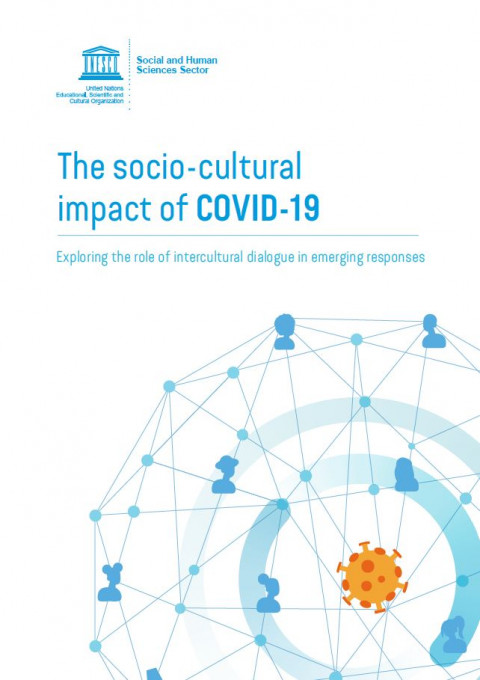 The Socio-Cultural Impact of COVID-19: Exploring the Role of Intercultural Dialogue in Emerging Responses Год публикации: 2020 Автор: Fethi Mansouri Организация-автор: UNESCO This brief illustrates, proponents and practitioners of ICD were quick to adapt to this crisis situation and shifted much of their activities online in order to mitigate the negative impacts of the pandemic. The shift has ensured that cross-cultural exchange, mutual support and intergroup solidarity, all key dimensions of the ICD approach, can be maintained in safe online contexts and thus continue to play a key role within the socio-cultural response to COVID-19.Through inductive exploration of authentic, local, community responses to the COVID-19 crisis, this brief aims to shed light on the new context in which the ICD agenda is being pursued, complementing the many existing quantitative analyses of the socio-cultural impact of the pandemic.
 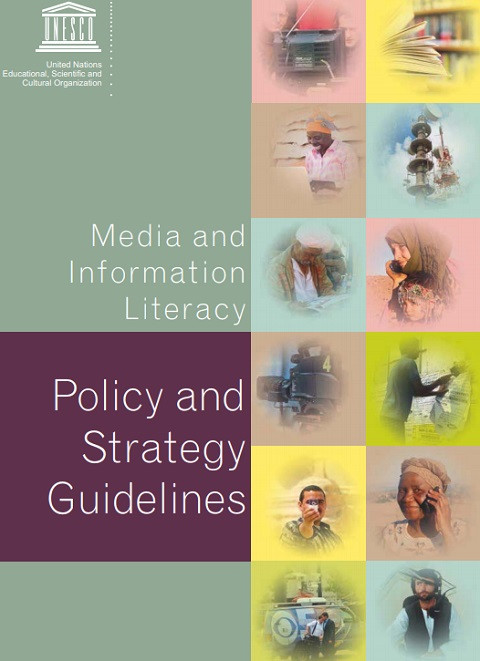 Media and Information Literacy: Policy and Strategy Guidelines Год публикации: 2013 Автор: Alton Grizzle | Penny Moore | Michael Dezuanni | Sanjay Asthana | Carolyn Wilson | Fackson Banda | Chido Onumah | Maria Carme Torras Calvo Организация-автор: UNESCO This resource aims to treat MIL as a composite concept, unifying information literacy and media literacy as well as considering the right to freedom of expression and access to information through ICTs. It is divided into two parts. Part 1 is the MIL Policy Brief, and is designed for policy or decision makers and can serve as a summary of the publication. Part 2 is divided into several comprehensive chapters and suggests: 1) how to enlist MIL a development tool; 2) conceptual frameworks for MIL policies and strategies; and 3) model MIL policy and strategies that can be adapted by countries globally.
 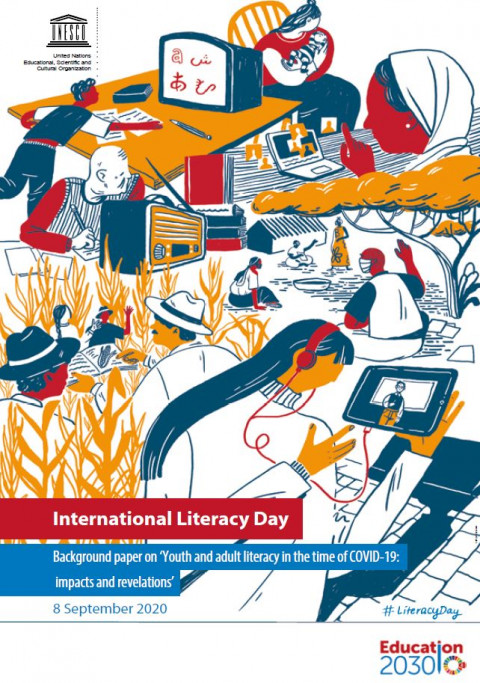 International Literacy Day: Background Paper on 'Youth and Adult Literacy in the Time of COVID-19; Impacts and Revelations' Год публикации: 2020 Организация-автор: UNESCO Specially prepared on the occasion of International Literacy Day 2020, this background paper illustrates the impact of the COVID-19 crisis on youth and adult literacy, based on the limited information that is currently available. It provides five regional snapshots and identifies preliminary lessons learned thus far, while aiming to inspire continued reflection and subsequent action. It also makes the case for the ongoing importance of advancing youth and adult literacy, a priority that was already neglected even before the pandemic but which deserves all our attention. ILD 2020 thus seeks to trigger reimaginations of literacy teaching and learning in the COVID-19 crisis and beyond, with a particular focus on the role of educators.
  What Does the Rule of Law Have to Do With Me? Год публикации: 2020 Организация-автор: UNESCO Using fun, interactive pedagogical tools and a classroom setting, this video explains to young people the basic concept of the rule of law and how they can engage in building a society on just laws which protect the fundamental rights of the individual and promote citizenship (https://en.unesco.org/themes/gced).In simple engaging language with real life examples and interaction with pupils, it explains 'accountability', 'freedom of expression', the characteristics of good law and equality before the law.The video describes the UNESCO-UNODC partnership on education for the rule of law (https://en.unesco.org/themes/gced/rul...) which works to bridge the gap between education and justice and supports Sustainable Development Goals 4 (in particular target 4.7) and 16. The partnership has developed interactive handbooks for schools and guidance for policy-makers.
 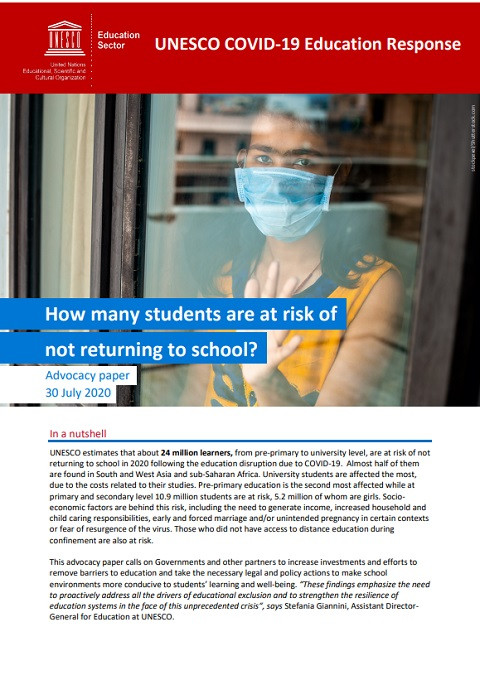 UNESCO COVID-19 Education Response: How Many Students Are at Risk of Not Returning to School?; Advocacy paper Год публикации: 2020 Организация-автор: UNESCO UNESCO estimates that about 24 million learners, from pre-primary to university level, are at risk of not returning to school in 2020 following the education disruption due to COVID-19. Almost half of them are found in South and West Asia and sub-Saharan Africa. University students are affected the most, due to the costs related to their studies. Pre-primary education is the second most affected while at primary and secondary level 10.9 million students are at risk, 5.2 million of whom are girls. Socioeconomic factors are behind this risk, including the need to generate income, increased household and child caring responsibilities, early and forced marriage and/or unintended pregnancy in certain contexts or fear of resurgence of the virus. Those who did not have access to distance education during confinement are also at risk. This advocacy paper calls on Governments and other partners to increase investments and efforts to remove barriers to education and take the necessary legal and policy actions to make school environments more conducive to students’ learning and well-being. “These findings emphasize the need to proactively address all the drivers of educational exclusion and to strengthen the resilience of education systems in the face of this unprecedented crisis“, says Stefania Giannini, Assistant DirectorGeneral for Education at UNESCO.
 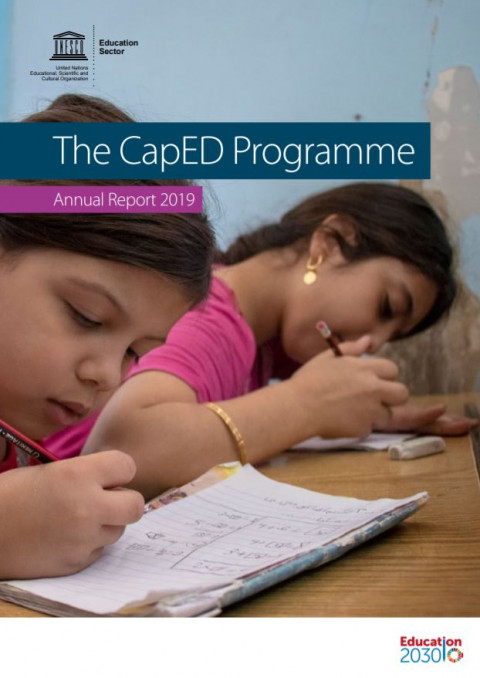 The CapED Programme: Annual Report 2019 Год публикации: 2020 Организация-автор: UNESCO UNESCO is the United Nation’s specialized agency for education and is mandated to lead and coordinate progress towards Sustainable Development Goal 4 – “Ensure inclusive and equitable quality education and promote lifelong learning opportunities for all”.The CapED Programme is central to delivering on this mandate through capacity development. It mobilizes UNESCO’s worldwide network of specialized Institutes and offices and works with partners to assist countries as they develop and implement national plans to deliver on SDG4 commitments.The Annual Report 2019 provides information on achievements and progress made in the 26 countries where CapED is operational. Programme CapED: rapport annuel 2019 Год публикации: 2020 Организация-автор: Organisation des Nations Unies pour l'éducation, la science et la culture (UNESCO) Institution spécialisée des Nations Unies pour l'éducation, l'UNESCO est chargée de conduire et de coordonner les efforts entrepris pour atteindre l'Objectif de développement durable 4 : « Assurer l'accès de tous à une éducation de qualité, sur un pied d'égalité, et promouvoir les possibilités d'apprentissage tout au long de la vie ».Le Programme CapED de développement des capacités pour l'éducation joue un rôle central dans l'exercice de ce mandat. Il mobilise le réseau mondial des instituts spécialisés et des bureaux de l'UNESCO et, en collaboration avec ses partenaires, aide les pays à élaborer et mettre en oeuvre leurs plans nationaux afin d'honorer les engagements qu'ils ont pris au titre de l'ODD 4.Le Rapport annuel 2019 met en lumière les résultats obtenus et les progrès accomplis dans les 26 pays où le Programme CapED intervient.