
Ресурсы
Изучайте широкий спектр ценных ресурсов ВГГ, чтобы углубить своё понимание и повысить эффективность исследований, просветительской деятельности, преподавания и обучения.
Найдено: 3,385
 Beyond Access: Toolkit for Integrating Gender-based Violent Prevention and Response into Education Projects Год публикации: 2015 Организация-автор: United States Agency for International Development (USAID) This toolkit was developed to support implementation of the U.S. Strategy to Prevent and Respond to Gender-based Violence Globally. It provides guidance and resources for USAID technical and program officers working on education to increase understanding of GBV in the education context and strengthen integration of a gender-based violence (GBV) response into projects and activities. Because reducing school-related GBV is a high priority for USAID in all school systems globally, this toolkit includes school-related GBV, but the overall focus is GBV in the education context broadly.The Toolkit provides:The United States government definition of GBV and USAID’s definition of school-related GBVExplanation for why integrating GBV prevention and response improves education outcomes, and the evidence on the prevalence of GBV in the education sectorGuiding principles to ensure the well-being of those at risk for, and survivors of, GBVIllustrative GBV prevention and response activities by the USAID Education Strategy GoalsGuidance on how to integrate GBV prevention and response throughout theUSAID Program Cycle to be able to monitor, evaluate, learn, and adapt education projects and activities accordingly, and it includes illustrative indicators for measuringGBV prevention and response for each of the USAID Education Strategy goals.
 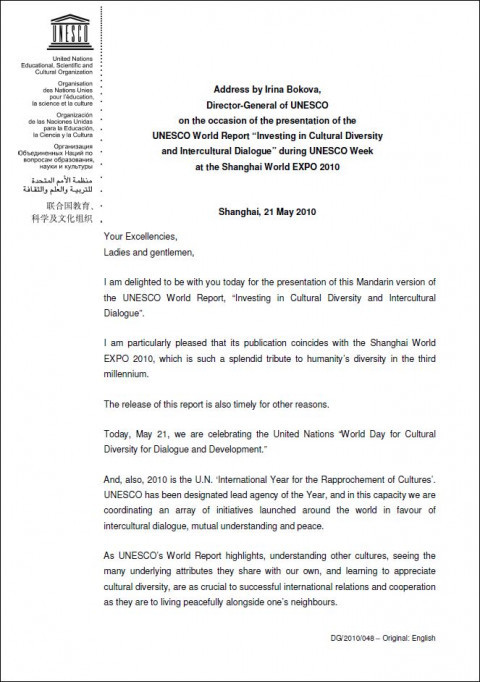 Address by Irina Bokova, Director-General of UNESCO on the occasion of the Presentation of the UNESCO World Report: Investing in Cultural Diversity and Intercultural Dialogue, during UNESCO Week at the Shanghai World EXPO 2010; Shanghai, 21 May 2010 Год публикации: 2010 Организация-автор: UNESCO. Director-General, 2009-2017 (Bokova, I.G.) This address was delivered by Irina Bokova, Director-Geneeral of UNESCO on the occasion of the presentation of the UNESCO world report in investing in cultural diversity and intercultural dialogue during UNESCO week at the Shanghai World Expo 2010. In this address she highlited the importance of cultural diversity and intercultural communication, and requested the protection of Chinese cultural heritage by Chinese governments. Discours de Mme Irina Bokova, Directrice Générale de l'UNESCO à l'occasion de la Présentation du Rapport Mondial de l'UNESCO: Investir dans la Diversité Culturelle et le Dialogue Interculturel, au cours de la Semaine de l'UNESCO à l'EXPO Shanghai 2010 Год публикации: 2010 Организация-автор: UNESCO. Director-General, 2009-2017 (Bokova, I.G.) Cette adresse a été prononcé par Irina Bokova, Directrice Geneeral de l'UNESCO à l'occasion de la présentation du rapport mondial de l'UNESCO à investir dans la diversité culturelle et le dialogue interculturel pendant la semaine de l'UNESCO à l'Exposition Universelle de Shanghai 2010. Dans cette adresse, elle a souligné l'importance de la diversité culturelle et la communication interculturelle, et a demandé la protection du patrimoine culturel chinois par les gouvernements chinois.
 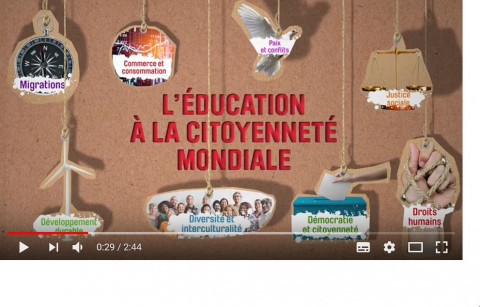 [Vidéo] Pédagogie du projet et éducation à la citoyenneté mondiale Год публикации: 2018 Организация-автор: Annoncer la Couleur (ALC) Quels sont les avantages de la pédagogie du projet ? En quoi cette pédagogie est particulièrement propice pour faire de l'éducation à la citoyenneté mondiale ?
  [Vidéo] L'éducation à la citoyenneté au Sud Год публикации: 2016 Организация-автор: ONG Défi Belgique Afrique (DBA) Un projet d'éducation au développement de la jeuness africaine
 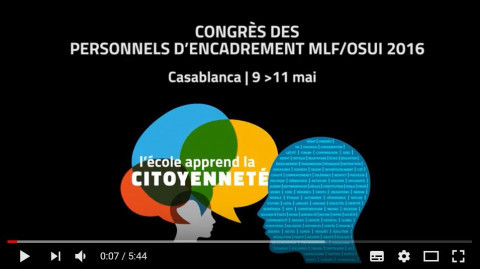 [Vidéo] L'école apprend la citoyenneté Год публикации: 2016 Организация-автор: Mission laïque française Organisé au Maroc en mai 2016, le congrès du réseau d'enseignement français à l'étranger mlfmonde a réuni 300 personnes autour du thème "l'école apprend la citoyenneté", élément central du projet éducatif de la Mission laïque française.
  Citizens but not Adults? Injunction to be Responsible and Citizens in Official Coming of Age Rituals in Switzerland Год публикации: 2018 Автор: Maxime Felder | Laurence Ossipow | Isabelle Csupor Организация-автор: Lien social et Politiques Swiss municipalities organize ceremonies for their residents reaching the official age of full citizenship. In the six studied municipalities, local authorities invite them to a municipal council’s meeting, offer them a dinner or an aperitif, or organize them a show and a debate with role models. Speeches are central to these ceremonies, and authority representatives encourage their audience to be “good” citizens. Call to vote is the leitmotiv, but discourses reveal broader definitions of citizenship, insisting sometimes on a local commitment and volunteering, and sometimes on the necessity to fight climate change and inequalities. Comparing officials’ speeches to statements of young people participating in these events reveals “tensions”. Indeed, authority representatives address young citizens without considering them as fully adult, and they do not consider themselves as such neither. However, some of them are already involved in forms of vernacular citizenship, and are progressively leaving the municipality to study, work or travel. Ultimately, these ceremonies allow officials to stage their interest in the youth, which they consider as both uncompleted and essential to the renewal of democracy. Citoyen·ne·s, mais pas encore adultes ? Les injonctions à la responsabilité et à la citoyenneté dans les rituels d’accession à la majorité en Suisse Год публикации: 2018 Автор: Maxime Felder | Laurence Ossipow | Isabelle Csupor Организация-автор: Lien social et Politiques Les communes suisses organisent un rituel pour célébrer l’accession à la majorité civile et civique de leurs résident·e·s qui atteignent l’âge de dix-huit ans. Dans les six communes que nous avons étudiées, les autorités invitent les jeunes à participer à une séance du conseil communal, les convient à un repas ou un apéritif, ou leur organisent une soirée de témoignages, de spectacle ou encore de jeux en plein air. Ces événements font place à des discours dans lesquels des représentant·e·s des autorités enjoignent les jeunes à être de « bonnes » et « bons » citoyens. Si l’appel au vote est toujours le leitmotiv, les discours se centrent aussi sur des définitions plus larges de la citoyenneté, insistant tantôt sur l’engagement associatif et local, tantôt sur la nécessité d’agir pour l’écologie ou contre les inégalités. Le croisement de ces analyses avec celles des entretiens menés avec de jeunes participant·e·s fait émerger des tensions. En effet, les autorités s’adressent à des jeunes qu’elles ne considèrent pas tout à fait comme des adultes (et qui ne se considèrent pas non plus comme tel·le·s), qui sont pour certain·e·s déjà engagé·e·s dans ces formes de citoyenneté vernaculaire, et qui s’apprêtent à quitter leur commune pour étudier ou voyager. Ces promotions citoyennes permettent ainsi de mettre en scène l’intérêt des élu·e·s pour les jeunes, considéré·e·s comme des citoyen·ne·s en apprentissage dont dépend le renouvellement de la démocratie.
  The Call for Participation: A Vision Exempt from Inequality? Год публикации: 2010 Автор: Yolande Pelchat Организация-автор: Nouvelles pratiques sociales Citizen participation, which is promoted by the New Public Management, conveys a high symbolic value. Citizen participation is generally associated with the consideration of others’ voices, recognition, emancipation, empowerment and well-being. In short, it carries the promise of a more just world with greater social solidarity and less hierarchic social relations. This paper proposes to leave aside this fashionable rhetoric, at least temporarily, and to search for what might have been left at its borders. This exploratory journey aims to reframe, within larger debates about democracy, the call for participation and its assumed or desired effects. The invitation to beware of losing, on the way, the radical nature of democracy, is issued. L’appel à la participation: Une vision privatisée de l’inégalité ? Год публикации: 2010 Автор: Yolande Pelchat Организация-автор: Nouvelles pratiques sociales La participation citoyenne, que promeut, entre autres, la nouvelle gestion publique (NGP) transporte avec elle une forte valeur symbolique. Elle est associée à la prise en compte d’autres voix, à la reconnaissance, à l’émancipation, au pouvoir d’agir, au bien-être, bref à l’idée d’un monde plus solidaire et plus juste, un monde où les rapports hiérarchiques s’atténueraient. Ce texte propose de quitter, du moins temporairement, ce cadre d’appréciation et d’aller en quête de ce qui pourrait bien avoir été maintenu à ses frontières. Le parcours consiste ici à recadrer la participation et certains de ses effets, postulés ou souhaités, dans les débats d’ensemble sur la démocratie tout en prenant garde que celle-ci ne perde pas, chemin faisant, son « tranchant ».