
Ресурсы
Изучайте широкий спектр ценных ресурсов ВГГ, чтобы углубить своё понимание и повысить эффективность исследований, просветительской деятельности, преподавания и обучения.
Найдено: 2,162
 Education à la citoyenneté et de la coexistence: la citoyenneté manuelle et la coexistence de construction collective du sens et de réseaux; participation sociale et politique Год публикации: 2015 Организация-автор: Centro de Investigación y Educación Popular (CINEP) | Secretaría de Educación del Distrito (SED) La participation sociale et politique est l'un des principaux thèmes liés à l'éducation à la citoyenneté et à la coexistence. Par conséquent, ce manuel identifie trois domaines de réflexion: 1) la participation sociale et politique que l'action humaine, 2) espaces de participation sociale et politique, 3) Actions de transformation. Chacun de ces domaines est accompagné d'outils didactiques qui permettent d'approfondir dans le contenu qui sont basés sur des éléments fondamentaux, théoriques et pratiques, qui pourraient être utiles dans le processus pédagogique mené par les participants du projet. Citizenship education and coexistence: guides for citizenship and coexistence from the colective construction of meaning and networks; diversity and gender Год публикации: 2015 Организация-автор: Centro de Investigación y Educación Popular (CINEP) | Secretaría de Educación del Distrito (SED) Cultural diversity education is one of the main topis related to education for citizenship and coexistence. Therefore, this manual identifies three areas of reflection: 1) Diversity and Gender: identities and imaginaries, 2) Relations and tensions : diversity, gender and power, 3) Being together and respecting the differences. Each one of these areas is accompanied by didactic tools that allow to deepen into the contents that are based on fundamental theoretical and practical elements, which could be useful in the pedagogical process leaded by the participants of the project. Educación para la ciudadanía y la convivencia:manual de ciudadanía y convivencia desde la construcción colectiva de sentidos y redes; diversidad y género Год публикации: 2015 Организация-автор: Centro de Investigación y Educación Popular (CINEP) | Secretaría de Educación del Distrito (SED) Cultural diversity education is one of the main topis related to education for citizenship and coexistence. Therefore, this manual identifies three areas of reflection: 1) Diversity and Gender: identities and imaginaries, 2) Relations and tensions : diversity, gender and power, 3) Being together and respecting the differences. Each one of these areas is accompanied by didactic tools that allow to deepen into the contents that are based on fundamental theoretical and practical elements, which could be useful in the pedagogical process leaded by the participants of the project. Education à la citoyenneté et de la coexistence: citoyenneté manuelle et la coexistence de construction collective du sens et de réseaux; la diversité et l'égalité Год публикации: 2015 Организация-автор: Centro de Investigación y Educación Popular (CINEP) | Secretaría de Educación del Distrito (SED) L’éducation à la diversité culturelle est l'un des principaux topis liés à l'éducation à la citoyenneté et à la coexistence. Par conséquent, ce manuel identifie trois domaines de réflexion: 1) la diversité et l'égalité: identités et Imaginaires, 2) Relations et tensions: la diversité, genre et de pouvoir, 3) étant ensemble et en respectant les différences. Chacun de ces domaines est accompagné d'outils didactiques qui permettent d'approfondir dans le contenu qui sont basés sur des éléments théoriques et pratiques fondamentales, qui pourraient être utiles dans le processus pédagogique mené par les participants du projet. Citizenship education and coexistence: guides for citizenship and coexistence from the colective construction of meaning and networks; care and self-care Год публикации: 2015 Организация-автор: Centro de Investigación y Educación Popular (CINEP) | Secretaría de Educación del Distrito (SED) Care and self-care is one of the main topics related to education for citizenship and coexistence. Therefore, this manual identifies three areas of reflection: 1) self-care, 2) caring for others: people with whom I interact, 3)Care of the ones I don't know and things that surround me. Each one of these areas is accompanied by didactic tools that allow deepening into the contents that have been created, proposing theoretical and practical fundamental elements, which could be useful in the pedagogical process leaded by the participants of the project. . Educación para la ciudadanía y la convivencia: manual de ciudadanía y convivencia desde la construcción colectiva de sentidos y redes; cuidado y autocuidado Год публикации: 2015 Организация-автор: Centro de Investigación y Educación Popular (CINEP) | Secretaría de Educación del Distrito (SED) Care and self-care is one of the main topics related to education for citizenship and coexistence. Therefore, this manual identifies three areas of reflection: 1) self-care, 2) caring for others: people with whom I interact, 3)Care of the ones I don't know and things that surround me. Each one of these areas is accompanied by didactic tools that allow deepening into the contents that have been created, proposing theoretical and practical fundamental elements, which could be useful in the pedagogical process leaded by the participants of the project. . Education à la citoyenneté et de la coexistence: citoyenneté manuelle et la coexistence de construction collective du sens et de réseaux; soins et auto-soins Год публикации: 2015 Организация-автор: Centro de Investigación y Educación Popular (CINEP) | Secretaría de Educación del Distrito (SED) Les soins et l'autonomie sont l'un des principaux thèmes liés à l'éducation à la citoyenneté et à la coexistence. Par conséquent, ce manuel identifie trois domaines de réflexion: 1) le soin de soi, 2) le soin des autres: les personnes avec qui j'interagis, 3) le soin de ceux que je ne connais pas et les choses qui m'entourent. Chacun de ces domaines s'accompagne d'outils didactiques permettant d'approfondir les contenus qui ont été créés, proposant des éléments théoriques et pratiques fondamentaux qui pourraient être utiles dans le processus pédagogique mené par les participants du projet.
  Manual for Teachers and Educators: To Empower Young People on Sdgs and Migration Год публикации: 2018 Организация-автор: Start the Change | European Union (EU) The Start the Change project aims to improve education provision linked to the Sustainable Development Goals (SDGs) in 12 European countries, with a special emphasis on the relationship between migration and global inequality, and contributing to the fulfilment of the 2030 Agenda for Sustainable Development.The first part of the guide (THINK) describes the educational model proposed by Start the Change. Service Learning gives an overview of a pedagogical approach that promotes a new perspective to acquiring global citizenship knowledge, skills and attitudes - not just in the classroom but also through direct experience of working on real issues in the community. MANUAL TO INSPIRE: START THE CHANGE 11 Participative methodologies are the basis of all good global citizenship education, and youth empowerment can be enhanced through peer to peer approaches. The second part of the guide (LEARN) is dedicated to enhancing teachers’ and educators’ knowledge of the contents of the project: the Sustainable Development Goals, inequality and migration issues. Storytelling can be used to develop short film storylines on Start the Change issues. Educational activities can be enriched by using ICT to promote global learning and include voices and experiences from the Global South. The third part of the guide (DO) is dedicated to activities and methodologies to help young people explore these issues and inspire them to take action in their communities.
 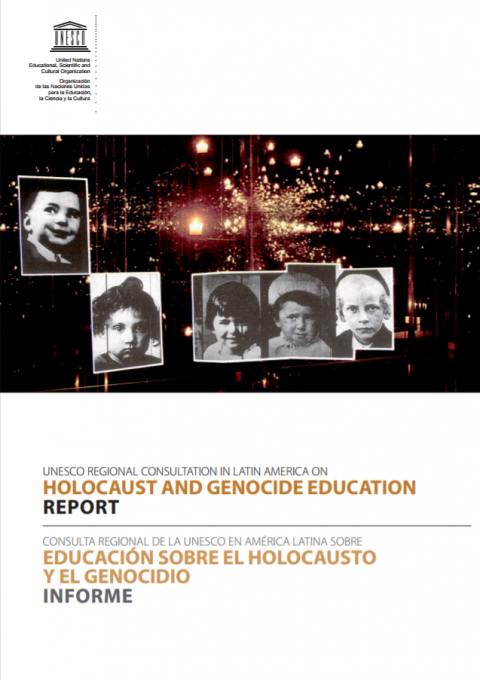 UNESCO regional consultation in Latin America on Holocaust and genocide education: report Год публикации: 2014 Организация-автор: UNESCO Santiago This consultation with Latin American Member States sought to raise awareness amongst policymakers and education specialists of the region about the history of the Holocaust, as it can contribute to the prevention of genocide, following United Nations General Assembly resolution 60/7 on Holocaust remembrance. The meeting also aimed at fostering concrete cooperation between UNESCO and Member States on education about the history of genocide and mass atrocities, notably the Holocaust, with a view of introducing the subject in the curriculum and of developing relevant educational programmes in the region. The overall objectives of the project were as follows:▶ Strengthen educational leaders’ awareness and support for Holocaust remembrance and education about the history of genocide and mass atrocities, in line with regional efforts to foster education for peace and human rights.▶ Increase the implementation of education programmes about the history of the Holocaust and other genocides, and support interested Ministries of Education to introduce these subjects in the curriculum.▶ Foster regional exchanges about this topic and facilitate access to good practices regarding Holocaust and genocide related issues and peace education.
  Global Rights, Nobel Goals: Refugees, Migration, the Sustainable Development Goals and Youth; Resource Pack Год публикации: 2016 Автор: Valerie Duffy | Leo Gilmartin | Grace McManus | Dermot O’Brien Организация-автор: National Youth Council of Ireland (NYCI) This resource pack explores the terms around migration (asylum seeker, refugee, internally displace peoples etc), the reasons that people choose or are forced to migrate and makes connections with the SDGs. It also includes a great selection of activities for young people at different ages and stages.