
Ресурсы
Изучайте широкий спектр ценных ресурсов ВГГ, чтобы углубить своё понимание и повысить эффективность исследований, просветительской деятельности, преподавания и обучения.
Найдено: 1,443
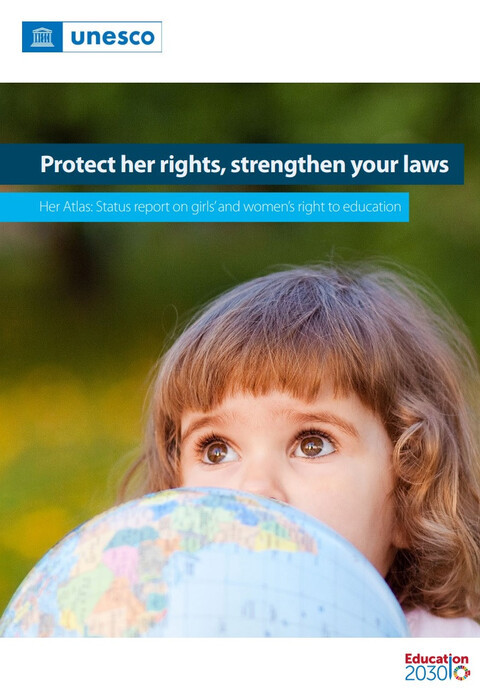 Protect Her Rights, Strengthen Your Laws: Her Atlas; Status Report on Girls’ and Women’s Right to Education Год публикации: 2022 Организация-автор: UNESCO UNESCO’s Her Education, our future initiative, Her Atlas was launched in 2019 with the aim to enhance public knowledge and monitor the status of national constitutions, legislation and regulations related to girls’ and women’s education rights in order to encourage countries to take actions to improve their legal frameworks. Three years after its launch, the research phase has been completed: overall, the legal frameworks of 196 countries have been thoroughly analyzed to evaluate the level of protection of girls’ and women’s right to education around the world. In an interactive world map format, Her Atlas uses a color-coded scoring system to monitor 12 indicators of legal progress towards gender equality in the right to education. This report marks the completion of the first research phase and intends to highlight some key trends outlined by the research work, and to emphasize examples of legal provisions regarding some aspects of girls’ and women’s right to education guaranteed by States’ domestic laws.
 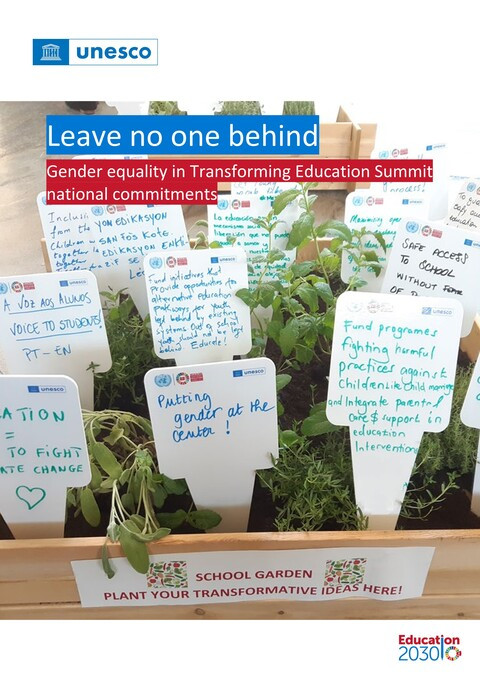 Leave No One Behind: Gender Equality in Transforming Education Summit National Commitments Год публикации: 2023 Организация-автор: UNESCO The Transforming Education Summit was convened in response to a global crisis in education – one of equity and inclusion, quality and relevance. This paper applies a gender lens to the national statements of commitments made by countries during the Summit. It considers the scope of commitments to gender equality and gender- transformative education, common gender themes and considerations emerging across commitments, and notable gaps. It aims to inform future actions by the Global Platform to Drive Leadership and Accountability for Gender Equality and Girls’ and Women’s Empowerment in and through Education, and support to country action to transform education systems to advance gender equality.
 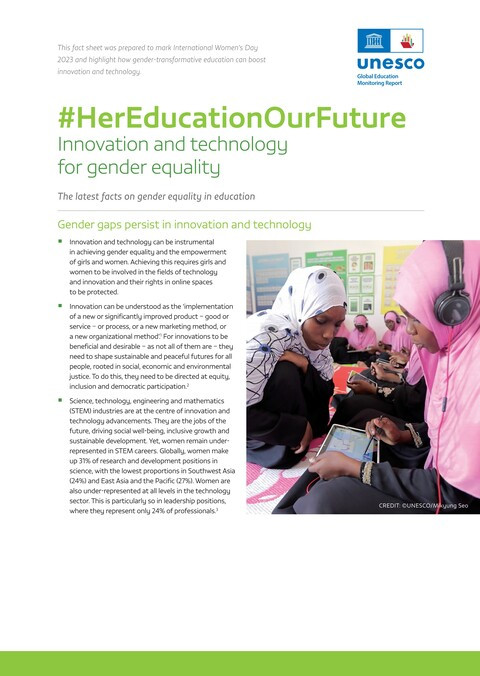 #HerEducationOurFuture: Innovation and Technology for Gender Equality; the Latest Facts on Gender Equality in Education Год публикации: 2023 Организация-автор: UNESCO | Global Education Monitoring Report Team Gender gaps persist in innovation and technology Innovation and technology can be instrumental in achieving gender equality and the empowerment of girls and women. Achieving this requires girls and women to be involved in the fields of technology and innovation and their rights in online spaces to be protected. #SuEducaciónNuestroFuturo: Innovación y tecnología para la igualdad de género: últimos datos sobre la igualdad de género en la educación Год публикации: 2023 Организация-автор: UNESCO | Global Education Monitoring Report Team La brecha de género persiste en la innovación y la tecnología La innovación y la tecnología pueden ser decisivas a la hora de lograr la igualdad de género y empoderar a las niñas y las mujeres. Para lograrlo, es necesario que las niñas y las mujeres participen en los ámbitos de la tecnología y la innovación y que se protejan sus derechos en los espacios en línea. #SonÉducationNotreAvenir: l’innovation et la technologie au service de l’égalité des genres: derniers développements sur l’égalité des genres dans l’éducation Год публикации: 2023 Организация-автор: UNESCO | Global Education Monitoring Report Team Les inégalités entre les genres persistent dans les domaines de l’innovation et de la technologie L’innovation et la technologie peuvent jouer un rôle essentiel en faveur de l’égalité des genres et de l’autonomisation des filles et des femmes. Pour que ces objectifs soient atteints, il faut que les filles et les femmes participent dans les domaines de la technologie et de l’innovation, mais aussi que leurs droits dans les espaces en ligne soient protégés.
 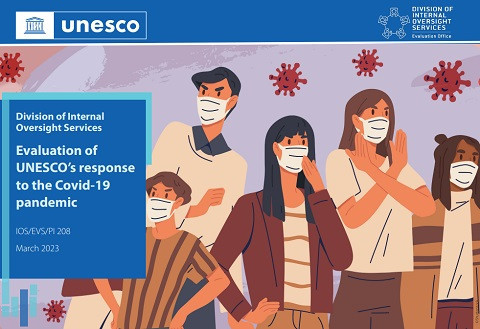 Evaluation de la riposte de l’UNESCO à la pandémie de COVID-19 Год публикации: 2023 Организация-автор: Organisation des Nations Unies pour l'éducation, la science et la culture (UNESCO) Le présent rapport d’évaluation contient les conclusions tirées d’une évaluation complète de la manière dont l’Organisation des Nations Unies pour l’éducation, la science et la culture (UNESCO) s’est adaptée et a répondu à la pandémie de coronavirus 2019 (COVID-19). Il rend compte de la réponse programmatique de l’UNESCO dans tous ses secteurs, et en évalue la pertinence et l’efficacité. Il examine également l’efficacité avec laquelle l’Organisation s’est adaptée pour assurer la continuité de ses opérations tout au long de la pandémie. Axée sur l’apprentissage, l’évaluation a permis de dégager une série d’enseignements et de mettre en évidence les innovations les plus précieuses apportées durant la pandémie. Le présent rapport énonce cinq recommandations visant à guider l’UNESCO vers la pérennisation des innovations les plus efficaces et le renforcement de la résilience de ses activités et de ses programmes en cas de crise.
 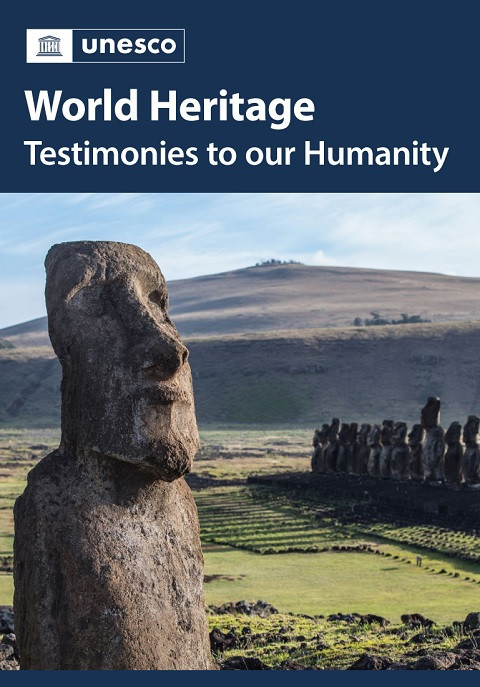 World Heritage: Testimonies to Our Humanity Год публикации: 2022 Организация-автор: UNESCO The Convention for the Protection of the Cultural and Natural Heritage is an international agreement based on the principle that some places on Earth embody outstanding universal value that should be part of the shared heritage of humankind. UNESCO recognizes cultural and natural sites of outstanding universal value, and protects them for the benefit of all. As a basis for mutual understanding and dialogue, the responsibility for protecting our shared heritage requires cooperation among all States Parties as well as civil society, local communities and the private sector. The idea of reconciling the conservation of cultural sites with that of natural sites originated in the United States of America. A White House conference in Washington, D.C., in 1965 called for the creation of a “World Heritage Foundation” that would stimulate international cooperation to protect “the most extraordinary places, landscapes, and historic sites for the present and future of all mankind.” In 1968, the International Union for Conservation of Nature (IUCN) made similar proposals to its members. These proposals were presented at the United Nations Conference on the Human Environment in Stockholm in 1972. Eventually, all parties concerned agreed on a single text. The Convention concerning the Protection of the World Cultural and Natural Heritage was adopted by the General Conference of UNESCO on 16 November 1972. In recognizing both cultural and natural aspects of heritage, the Convention reminds us of the interaction between human beings and nature and the fundamental need to preserve the balance between the two. Evaluation of UNESCO’s response to the Covid-19 pandemic Год публикации: 2023 Организация-автор: UNESCO This evaluation report summarises the findings of a comprehensive evaluation on how UNESCO has adapted and responded to the Covid-19 pandemic. It describes and assesses the relevance and effectiveness of UNESCO’s programmatic response across all of its Sectors, and reviews how efficiently the Organization adapted itself to ensure business continuity during the pandemic. With an overall focus on learning, the evaluation identified a series of lessons and useful innovations made during the pandemic. The report’s five recommendations aim to guide UNESCO towards sustaining useful innovations and further increasing the crisis resilience of its operations and programme.
  UNESCO Guidance for the World Heritage ‘No-Go’ Commitment: Global Standards for Corporate Sustainability Год публикации: 2022 Организация-автор: UNESCO UNESCO World Heritage properties are cultural, natural and mixed sites of outstanding universal value (OUV) that exemplify some of humanity’s most exceptional heritage and treasures on our planet. They cover over a thousand properties in all regions of the world and it is the duty of the international community as a whole to cooperate on their protection. UNESCO World Heritage sites provide major benefits to our society and help safeguard ecosystem services and cultural resources vital for human well-being. Yet the threats to UNESCO World Heritage sites have been rising steadily for decades, including those arising from harmful industrial and infrastructure projects, extractive activities such as mining, oil and gas and large hydropower projects, among others. In view of these significant threats, several leading companies and financial institutions have committed to protect World Heritage by respecting them as ‘no-go’ areas. UNESCO World Heritage sites are protected under international law as humanity’s legacy to future generations and, as such, merit particular attention in corporate policies and business conduct. However, there is wide variation in the nature and strength of sustainability policies and due diligence processes. This guidance was developed to assist companies to develop comprehensive strategies for World Heritage as part of their efforts to measure and manage environmental, social and governance risks. Orientations de l’UNESCO relatives à l’engagement de respecter les sites du patrimoine mondial en tant que zones d’exclusion : recommandations mondiales pour le développement durable des entreprises Год публикации: 2022 Организация-автор: Organisation des Nations Unies pour l'éducation, la science et la culture (UNESCO) Les biens du patrimoine mondial de l’UNESCO sont des sites culturels, naturels et mixtes d’une valeur universelle exceptionnelle (VUE) qui sont représentatifs du patrimoine et des trésors les plus exceptionnels de l’humanité sur notre planète. Ils recouvrent plus d’un millier de biens dans toutes les régions du monde et il incombe à la communauté internationale toute entière de coopérer pour en assurer la protection. Les sites du patrimoine mondial de l’UNESCO apportent de nombreux bénéfices à notre société et aident à préserver les services écosystémiques et les ressources culturelles indispensables au bien-être humain. Pourtant, les menaces qui pèsent sur les sites du patrimoine mondial de l’UNESCO n’ont cessé d’augmenter depuis des décennies, notamment celles qui découlent de projets industriels et d’infrastructures néfastes, d’activités extractives telles que l’exploitation minière, pétrolière et gazière, et de grands projets hydroélectriques, entre autres. Au vu de ces menaces importantes, plusieurs grandes entreprises et institutions financières se sont engagées à protéger le patrimoine mondial en respectant le principe de zones d’exclusion (« no-go areas »). Les sites du patrimoine mondial de l’UNESCO sont protégés par le droit international en tant que legs de l’humanité aux générations futures et, à ce titre, ils méritent qu’une attention particulière leur soit octroyée par les entreprises dans leurs politiques et leur conduite. Cependant, la nature et le poids des politiques de durabilité et des procédures de diligence raisonnable varient considérablement. Les présentes orientations ont été conçues pour aider les entreprises à élaborer des stratégies globales relatives au patrimoine mondial dans le cadre de leurs efforts pour mesurer et gérer les risques environnementaux, sociaux et de gouvernance.