
Ресурсы
Изучайте широкий спектр ценных ресурсов ВГГ, чтобы углубить своё понимание и повысить эффективность исследований, просветительской деятельности, преподавания и обучения.
Найдено: 2,790
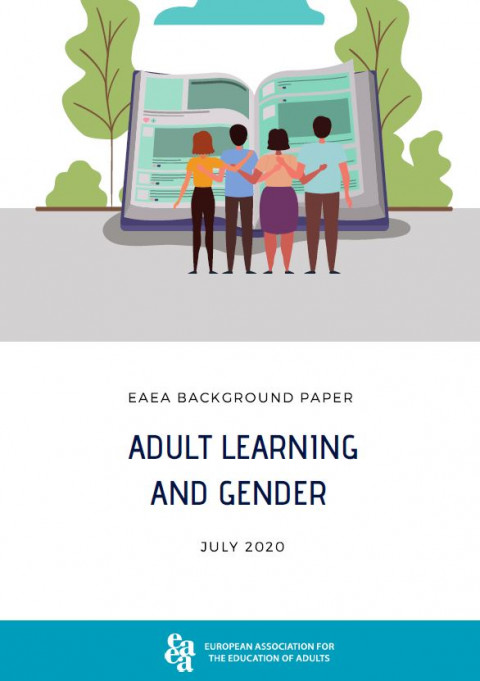 Adult Learning and Gender: EAEA Background Paper Год публикации: 2020 Автор: Agatha Devlin Организация-автор: European Association for the Education of Adults (EAEA) Gender sensitivity in adult learning and education (ALE) is about more than trying to improve targeted outreach programmes for men and women who seem to be slipping through the gaps. By providing gender sensitive education opportunities, people are not only more likely to engage but also more likely to get the most out of their experiences. This background paper explores the problems that gender sensitive adult education could attempt to solve, good practices and examples to help make current structures more gender sensitive, and the wider benefits of gender sensitivity in ALE.This background paper takes various subtopics or examples of gender sensitivity in adult education and analyses them as individual areas, making its content easier to navigate according to the reader’s interests or concerns.
  Diversity and Interculturality: Identity and Rights; Ethical and Civic Education (2nd year) Год публикации: 2018 Организация-автор: Buenos Aires Ciudad This document is part of the series of materials Deepening the NES, which presents different teaching proposals including both the contents - concepts, skills, abilities, practices, values and attitudes - defined in the Curriculum Design of the New Secondary School of the Autonomous City of Buenos Aires, and new ways of organizing spaces, times and teaching methods. Diversidad e interculturalidad: Identidad y derechos; Formacion ética y ciudadana (2do año) Год публикации: 2018 Организация-автор: Buenos Aires Ciudad Este documento hace parte de la serie de materiales Profundización de la NES, que presenta distintas propuestas de enseñanza en las que se ponen en juego tanto los contenidos –conceptos, habilidades, capacidades,prácticas, valores y actitudes– definidos en el Diseño Curricular de la Nueva Escuela Secundaria de la Ciudad Autónoma de Buenos Aires, como nuevas formas de organizar los espacios, los tiempos y las modalidades de enseñanza.
  Training for Citizenship, Yes it Is Possible !: What We Need to Know and Know How to Do; Standards Basic Citizenship Skills Год публикации: 2004 Организация-автор: Colombia. Ministerio de Educación Nacional This document presents the national standards of education for citizenship in Colombia, from a competency development approach. It includes the learning standards to be promoted in all grades, from basic to secondary education. Which are organized into three groups: Peaceful coexistence, identity and respect of differences, and democratic participation and responsibility. Formar para la Ciudadanía, ¡ Sí es posible !: Lo que necesitamos saber y saber hacer ; Estándares básicos de competencias ciudadanas Год публикации: 2004 Организация-автор: Colombia. Ministerio de Educación Nacional Este documento presenta los estándares nacionales de educación para la ciudadanía en Colombia, desde un enfoque de desarrollo de competencias. Incluye los aprendizajes que se quieren promover en todos los grados de la educación básica y media, organizados en tres grupos: Convivencia pacífica, identidad y respeto por las diferencias y participación y responsabilidad democrática.
  Deleuze’s Experimental Apprenticeship and Global Citizenship Education Год публикации: 2017 Автор: Seunghyun Choi Организация-автор: Korean Philosophy of Education Society The purpose of this study is to examine the implications of Deleuze’s apprenticeship for Global Citizenship Education. Nowadays, many researchers are interested in the meaning of learning as a bridge between ideal and practice. Deleuze’s apprenticeship suggests the logic of the ‘composition’ with others in the context of overcoming ‘the societies of control’. The structure of this argument consists in ‘process’ including involution and in ‘signs’ that are not reduced to information. It aims at ‘becoming’. The global citizenship lesson focusing on the element of multi-cultural experience of Korean elementary school students has a well-balanced relationship with Deleuze’s apprenticeship as experimentation. Lastly, we are able to understand the meaningful implications for the aporia in Global Citizenship Education, that is the uncertainty of academic conceptualization and the contingency of practice. 들뢰즈의 실험적 배움론으로 본 세계시민교육 (교육철학연구; Vol. 39, No. 4) Год публикации: 2017 Автор: 최승현 Организация-автор: 한국교육철학학회 본 연구는 들뢰즈의 실험적 배움론을 바탕으로 한국 초등학교에서 실시한 세계시민교육의 의의를 고찰하고 그 시사점을 살펴보았다. 불확실성, 개입, 형성으로 특징지어지는 기존의 세계시민교육론은 최근 학습에 관한 논의를 통해 이론과 실천을 잇고자 노력하고 있다. 들뢰즈의 배움론은 관리사회의 극복이라는 맥락에서 타자와의‘합성’이라는 논리를 제시한다. 이는 역행을 포함하는 ‘경과’와 정보로 환원되지 않는 ‘기호’의 결합을 통한 기제를가진바, 궁극적으로 지배적 남성성에 저항하는 ‘-되기’를 지향한다. 다문화 체험 요소를 중심으로 이루어진 한국 초등학교에서의 세계시민교육 수업은 실험적 성격을 강하게 띤 들뢰즈의 실험적 배움론을 통해 세계시민교육이 처한 난관, 곧 학문적 개념의 불확정성과 실천의 우연성을 돌파할 계기를 제공한다.
  UNESCO-UNEVOC Study on the Trends Shaping the Future of TVET Teaching (Trends Mapping Studies) Год публикации: 2020 Автор: Gita Subrahmanyam Организация-автор: UNESCO International Centre for Technical and Vocational Education and Training (UNEVOC) This report presents the results of the trends mapping study on the future of technical and vocational education and training (TVET) teaching, conducted by UNESCO-UNEVOC. The study aimed to engage the international TVET community to: (i) improve the understanding of the implications of global disruptions; (ii) gather knowledge, insights, experiences; and (iii) highlight promising practices in preparing TVET teaching staff to deliver the skills needed in the 21st century and beyond. Coordinated by UNESCO-UNEVOC, trends mapping studies aim to further the international community's understandings on contemporary key issues concerning TVET. The studies review existing literature and policies, and engage TVET stakeholders from around the world through surveys and virtual conferences.
  Education in the Time of COVID-19 (COVID-19 Report; ECLAC-UNESCO) Год публикации: 2020 Организация-автор: Economic Commission for Latin America and the Caribbean (ECLAC) | UNESCO Santiago The coronavirus disease (COVID-19) pandemic has caused an unprecedented crisis in all areas. In the field of education, this emergency has led to the massive closure of face-to-face activities of educational institutions in more than 190 countries in order to prevent the spread of the virus and mitigate its impact. The Economic Commission for Latin America and the Caribbean (ECLAC) has argued that even before the pandemic hit, the social situation in the region was deteriorating, owing to rising rates of poverty and extreme poverty, the persistence of inequalities and growing social discontent. In this context, the crisis will have a profoundly negative impact on the various social sectors, particularly health and education, as well as on employment and poverty. Meanwhile, UNESCO has identified major gaps in educational outcomes, which are related to the unequal distribution of teachers in general, and of the best qualified teachers in particular, to the detriment of lower-income countries and regions and of rural areas, where indigenous and migrant populations tend to be concentrated.In the sphere of education, many of the measures that the region’s countries have adopted in response to the crisis are related to the suspension of face-to-face classes at all levels, which has given rise to three main areas of action: the deployment of distance learning modalities through a variety of formats and platforms (with or without the use of technology); the support and mobilization of education personnel and communities; and concern for the health and overall well-being of students.The aim of this document is to shed light on various consequences that these measures will have on educational communities in the short and medium term, and to offer key recommendations on how to manage those consequences in the best possible manner, drawing attention to opportunities for learning and innovation in the post-pandemic education system. La educación en tiempos de la pandemia de COVID-19 (Inform COVID-19; CEPAL-UNESCO) Год публикации: 2020 Организация-автор: Economic Commission for Latin America and the Caribbean (ECLAC) | UNESCO Santiago La pandemia de enfermedad por coronavirus (COVID-19) ha provocado una crisis sin precedentes en todos los ámbitos. En la esfera de la educación, esta emergencia ha dado lugar al cierre masivo de las actividades presenciales de instituciones educativas en más de 190 países con el fin de evitar la propagación del virus y mitigar su impacto.La Comisión Económica para América Latina y el Caribe (CEPAL) ha planteado que, incluso antes de enfrentar la pandemia, la situación social en la región se estaba deteriorando, debido al aumento de los índices de pobreza y de pobreza extrema, la persistencia de las desigualdades y un creciente descontento social. En este contexto, la crisis tendrá importantes efectos negativos en los distintos sectores sociales, incluidos particularmente la salud y la educación, así como en el empleo y la evolución de la pobreza. Por su parte, la UNESCO ha identificado grandes brechas en los resultados educativos, que se relacionan con una desigual distribución de los docentes, en general, y de los docentes mejor calificados, en particular, en desmedro de países y regiones con menores ingresos y de zonas rurales, las que suelen concentrar además a población indígena y migrante.En el ámbito educativo, gran parte de las medidas que los países de la región han adoptado ante la crisis se relacionan con la suspensión de las clases presenciales en todos los niveles, lo que ha dado origen a tres campos de acción principales: el despliegue de modalidades de aprendizaje a distancia, mediante la utilización de una diversidad de formatos y plataformas (con o sin uso de tecnología); el apoyo y la movilización del personal y las comunidades educativas, y la atención a la salud y el bienestar integral de las y los estudiantes.El objetivo de este documento es visibilizar la diversidad de consecuencias que estas medidas tendrán sobre las comunidades educativas a corto y mediano plazo, así como plantear las principales recomendaciones para sobrellevar el impacto de la mejor manera posible, proyectando oportunidades para el aprendizaje y la innovación en la educación posterior a la pandemia.