
Ресурсы
Изучайте широкий спектр ценных ресурсов ВГГ, чтобы углубить своё понимание и повысить эффективность исследований, просветительской деятельности, преподавания и обучения.
Найдено: 3,385
 Resilience, violent extremism and religious education Год публикации: 2013 Автор: Joyce Miller This article is an attempt to provide an educational justification for the British Government-funded project REsilience, on addressing contentious issues through religious education (RE), which was carried out by the RE Council of England and Wales. A number of issues relating to the inclusion of religiously inspired violent extremism in the curriculum are raised – definitional, political and educational.
  Discours de Mme Irina Bokova, Directrice générale de l'UNESCO, à l'occasion de la Présentation du Rapport Mondial de l'UNESCO: Investir dans la Diversité Culturelle et le Dialogue Interculturel Год публикации: 2010 Организация-автор: UNESCO. Director-General, 2009-2017 (Bokova, I.G.) This address was delivered by Irina Bokova, Director-Geneeral of UNESCO on the occasion of the presentation of the UNESCO world report in investing in cultural diversity and intercultural dialogue during UNESCO week at the Shanghai World Expo 2010. In this address she highlited the importance of cultural diversity and intercultural communication, and requested the protection of Chinese cultural heritage by Chinese governments.
  Youth and the Field of Countering Violent Extremism Год публикации: 2018 Автор: Marc Sommers Most youth are peaceful. Even if the field known as “countering violent extremism” (CVE) did not exist, most young people still would not join a violent extremist organization (VEO). At the same time, the overwhelming majority of people who become violent extremists are youth — most of whom are male. The challenge at the center of CVE is thus an unusual one: identifying the fraction of youth populations most likely to enter a VEO and thwarting that option. This paper investigates that challenge, with analysis featuring interviews with 21 experts and over 400 publications on violent extremism, CVE, and youth. Two correlations inform this work: the direct relationship between nations with “youth bulge” populations and state repression, and the connection between state repression and increased violent extremism, with repressive states usually targeting male youth.
  School-related violence and bullying on the basis of Sexual Orientation and Gender Identity or Expression (SOGIE) - Synthesis Report on China, the Philippines, Thailand and VietNam Год публикации: 2018 Организация-автор: UNESCO Bangkok School related violence and bullying is a problem in all countries. UNESCO is committed to ensuring that all children and young people have access to safe, inclusive, health-promoting learning environments as part of its strategy on education for health and well-being. This synthesis report on school related violence and bullying on the basis of Sexual Orientation and Gender Identity or Expression (SOGIE), covering China, the Philippines, Thailand and Viet Nam, was developed to broaden awareness and understanding about this issue, while also identifying best practices and policies. It also aims to mobilize support for advocacy among educators, research institutions, policy makers and activists at the national and regional levels.
 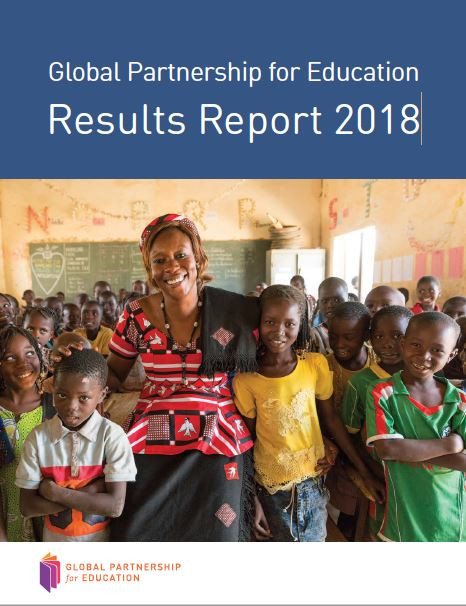 Global Partnership for Education Results Report 2018 Год публикации: 2018 Организация-автор: Global Partnership for Education (GPE) The GPE Results Report 2018 shows progress against agreed-upon targets and identifies critical gaps that need to be addressed. The end of national models? Integration courses and citizenship trajectories in Europe Год публикации: 2007 Автор: Dirk Jacobs, Andrea Rea Several European countries have recently introduced, or are planning to introduce, citizenship trajectories (voluntary or obligatory inclusion programmes for recent immigrants) or citizen integration tests (tests one should pass to be able to acquire permanent residence or state citizenship). Authors such as Joppke claim that this is an articulation of a more general shift towards the logic of assimilation(and away from a multicultural agenda) in integration policy paradigms of European states. Integration policies would even be converging in such a fashion that it would no longer make sense to think in terms of national models for immigrant integration. The empirical fact of diffusion of civic integration policies throughout Europe cannot be denied. This paper claims that there is, however, still sufficient distinctiveness between immigrant integration policies in order to continue and use an analytical framework that distinguishes national models.
 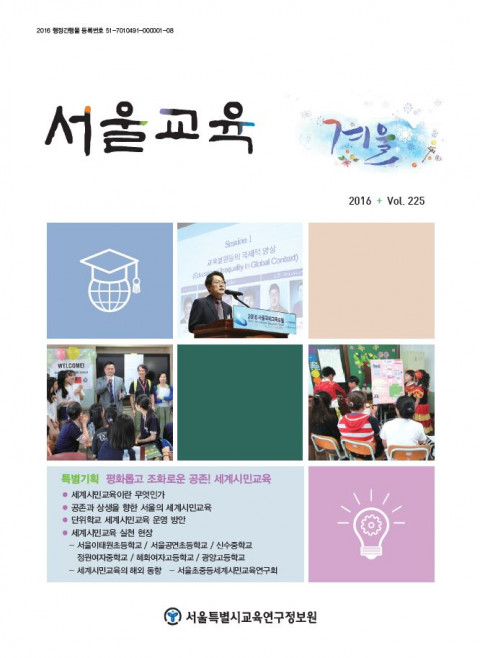 서울교육 2016년 겨울호 (제58권 통권 225호) Год публикации: 2016 Организация-автор: 서울특별시교육청 교육연구정보원 권두칼럼:혁신미래교육으로서의 세계시민교육특별기획: 평화롭고 조화로운 공존! 세계시민교육세계시민교육이란 무엇인가공존과 상생을 향한 서울의 세계시민교육단위학교 세계시민교육 운영 방안세계시민교육 실천 현장 해외교육:세계시민교육의 해외 동향 출처 URL:http://www.serii.re.kr/photo/viw.do?method=getView&mcode=S029a&seq=921
 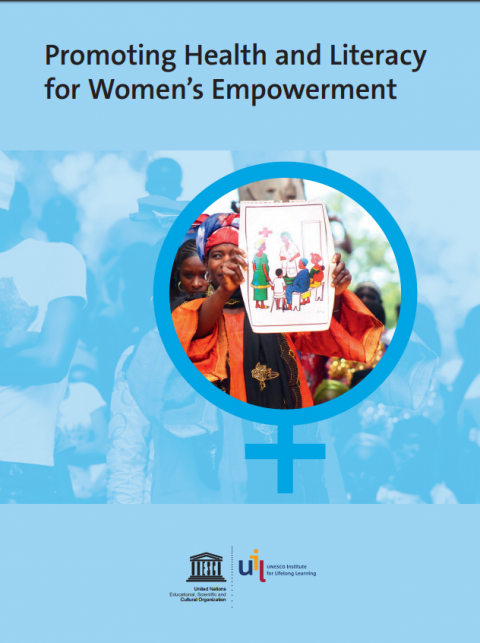 Promoting health and literacy for women's empowerment Год публикации: 2016 Автор: Anna Robinson-Pant This publication is the third in a series of research studies focused on literacy and women’s empowerment. Its aim is to contribute to the development of crosssectoral approaches to the provision of adult literacy, education and training, traversing policy on education, family, integration, citizenship, health, social welfare and public finance. This paper uses a number of specific examples to show how literacy programmes for young people and adults, with a particular focus on young and adult women, can contribute to the achievement of the Sustainable Development Goals. Autonomiser les femmes par la promotion de la santé et de l'alphabétisme Год публикации: 2016 Автор: Anna Robinson-Pant This publication is the third in a series of research studies focused on literacy and women’s empowerment. Its aim is to contribute to the development of crosssectoral approaches to the provision of adult literacy, education and training, traversing policy on education, family, integration, citizenship, health, social welfare and public finance. This paper uses a number of specific examples to show how literacy programmes for young people and adults, with a particular focus on young and adult women, can contribute to the achievement of the Sustainable Development Goals.
 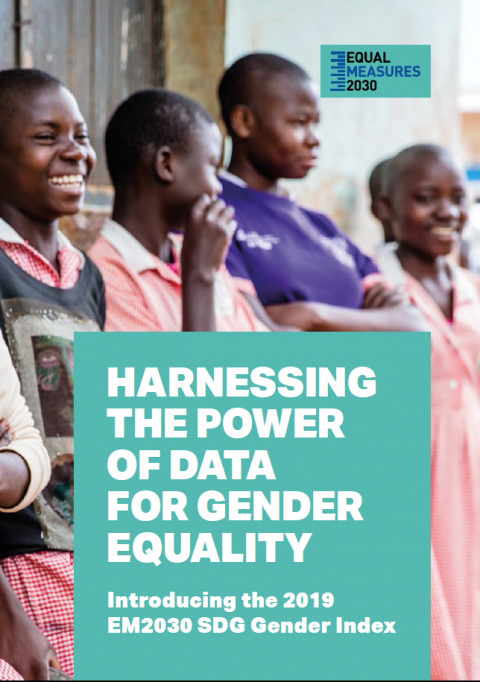 HARNESSING THE POWER OF DATA FOR GENDER EQUALITY: Introducing the 2019 EM2030 SDG Gender Index Год публикации: 2019 Организация-автор: Equal Measures 2030 In the 2019 Global Report “Harnessing the power of data for gender equality: Introducing the 2019 EM2030 SDG Gender Index”, the Equal Measures 2030 (EM2030) introduces the 2019 SDG Gender Index. The index is a comprehensive tool available to explore the state of gender equality across 129 countries (covering 95% of the world’s girls and women), 14 of the 17 Sustainable Development Goals (SDGs), and 51 targets linked to issues inherent in the SDGs. The 2019 SDG Gender Index finds that, with just 11 years to go until 2030, nearly 40% of the world’s girls and women – 1.4 billion – live in countries failing on gender equality. Another 1.4 billion live in countries that “barely pass”. Even the highest-scoring countries have more to do, particularly on complex issues such as climate change, gender budgeting and public services, equal representation in powerful positions, gender pay gaps, and gender-based violence. No country in the world has reached the “last mile” on gender equality. 2019 Global Report overview: Section 1: A foreword from Equal Measures 2030’s partners: The African Women’s Development and Communication Network (FEMNET), The Asian-Pacific Resource & Research Centre for Women (ARROW), Bill & Melinda Gates Foundation, the Committee for Latin America and the Caribbean for the Defense of Women’s Rights (CLADEM), Data2X, International Women’s Health Coalition (IWHC), KPMG, ONE Campaign, Plan International, Women Deliver. Section 2: Key findings from the 2019 SDG Gender Index. Section 3: Introducing the 2019 SDG Gender Index, the approach, what makes this index unique and how the findings should be interpreted. Section 4: Key global findings, patterns and comparisons of index scores between and within the different regions: Asia and the Pacific, Europe and North America, Latin America and the Caribbean, the Middle East and North Africa, Sub-Saharan Africa. Section 5: Regional overviews of index scores and gender equality context, and thematic deep drives on 1) inequalities in girls’ education, 2) women in science and technology research positions, 3) girls’ and women’s physical safety, 4) legal barriers for women, 5) women in government. Section 6: Leaving no one behind: multiple and intersecting forms of discrimination of girls and women. Section 7: Recommendations for action.