
Ресурсы
Изучайте широкий спектр ценных ресурсов ВГГ, чтобы углубить своё понимание и повысить эффективность исследований, просветительской деятельности, преподавания и обучения.
Найдено: 2,162
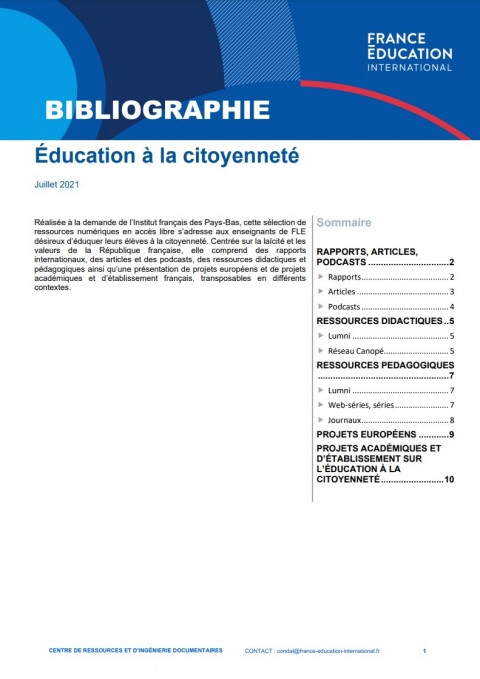 Bibliographie: Éducation à la citoyenneté Год публикации: 2021 Организация-автор: France Education International Réalisée à la demande de l’Institut français des Pays-Bas, cette sélection de ressources numériques en accès libre s’adresse aux enseignants de FLE désireux d’éduquer leurs élèves à la citoyenneté. Centrée sur la laïcité et les valeurs de la République française, elle comprend des rapports internationaux, des articles et des podcasts, des ressources didactiques et pédagogiques ainsi qu’une présentation de projets européens et de projetsacadémiques et d’établissement français, transposables en différents contextes.
 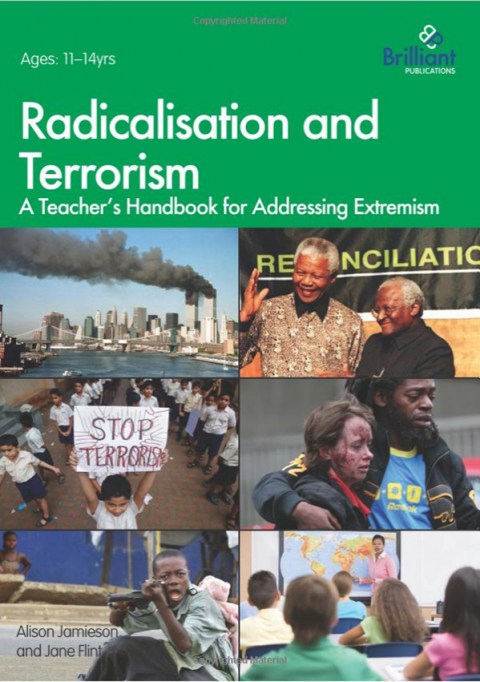 Radicalisation and Terrorism: A Teacher's Handbook for Addressing Extremism Год публикации: 2015 Автор: Alison Jamieson | Janet Flint This practical handbook provides a reliable and objective resource to enable lower secondary school teachers to tackle the complex subjects of terrorism and radicalization with confidence. The text covers issues of citizenship, human rights and respect, civil and political engagement, the nature of identity and how we identify with others. It examines different forms of violence from bullying to the most recent examples of 21st century terrorism. Historical precedent is used to illustrate a variety of contexts in which political violence has occurred, from Assassins through Suffragettes to militancy in South Africa, Europe, the Middle East and Oceania. Radicalisation and Terrorism: A Teacher's Handbook for Addressing Extremism Год публикации: 2015 Автор: Alison Jamieson | Janet Flint Cet outil pratique constitue une ressource fiable et objective, permettant aux professeurs de collège d’aborder les sujets complexes du terrorisme et de la radicalisation tout en étant préparés. Cet ouvrage parcourt les thèmes de la citoyenneté, des droits de l’homme et du respect, de l’engagement civique et politique, les fondements de l’identité et comment on s’identifie à l’autre. Il revient sur les différentes formes de violence : du harcèlement scolaire au phénomène plus récent de terrorisme tel que pratiqué au XXIème siècle. L’auteur s’appuie sur l’histoire pour illustrer la diversité des contextes dans lesquels la violence politique est apparue, des Nizârites aux Suffragettes, sans oublier le militantisme sud-africain, européen, du Moyen-Orient et d’Océanie.
  Teaching Controversial Issues Год публикации: 2006 Организация-автор: Oxfam GB Young people frequently face making decisions about a wide range of issues on which there are many different views. Issues like sexuality, religion, bullying, and war can evoke complicated emotions, both in and out of the classroom.Young people need to develop skills that allow them to discuss and come to their own views about these types of issues. Having a chance to engage with controversial topics in a constructive environment will help young people to develop as global citizens, and teachers have a key role to play in enabling this.This guide explores what controversial issues are, why they should be taught, and includes classroom strategies, existing guidance and practical teaching activities. Teaching Controversial Issues Год публикации: 2006 Организация-автор: Oxfam GB Les jeunes sont souvent confrontés à des prises de décisions dans de nombreux domaines. Des sujets tels que la sexualité, la religion, le harcèlement scolaire et la guerre peuvent susciter des émotions compliquées, que ce soit au sein des salles de classe ou ailleurs.Il est nécessaire que les jeunes développent des compétences leur permettant d’échanger sur ces sujets et de se forger leur propre opinion. Avoir la possibilité d’échanger sur des sujets controversés dans un environnement constructif peut aider les jeunes à devenir des citoyens mondiaux ; les enseignants ont un rôle primordial à jouer dans ce processus.Ce guide s'interroge sur la nature des questions controversées et la nécessité d'en parler ; il comprend des conseils et des activités pratiques d'apprentissage.
 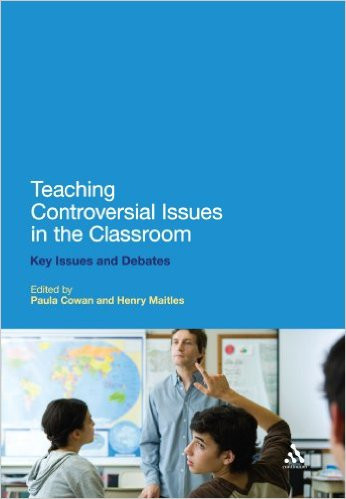 Teaching Controversial Issues in the Classroom: Key Issues and Debates Год публикации: 2012 Автор: Paula Cowan, Henry Maitles Организация-автор: Continuum The book provides an exploration of current debates and controversies relating to teaching controversial issues in primary and secondary schools. It investigates the changing nature of this type of learning experience and explore its contribution to the curriculum, particularly history and citizenship education. Topics covered include: - What is the 'right' age to discuss controversial issues? - The Citizenship Agenda - Discussing Iraq with school students - Teaching the Holocaust in the multicultural classroom – Islamophobia. International case studies provide fresh insights and valuable student and teacher feedback regarding the teaching of what many perceive as sensitive and difficult subjects. Teaching Controversial Issues in the Classroom: Key Issues and Debates Год публикации: 2012 Автор: Paula Cowan, Henry Maitles Организация-автор: Continuum Cet ouvrage propose un tour d'horizon des débats actuels que soulève la question de savoir s'il faut enseigner des sujets controversés à l’école primaire et au collège. L’auteur analyse également les changements engendrés par ce type d’expérience d’apprentissage et leur contribution aux programmes scolaires, particulièrement d’histoire et d’éducation civique.Les principaux thèmes abordés sont les suivants : A quel âge peut-on commencer à discuter de sujets controversés ? - L’agenda citoyen - Parler de l'Iraq avec les collégiens et lycéens - Enseigner l'Holocauste à une classe marquée par la diversité culturelle – L'islamophobie.
 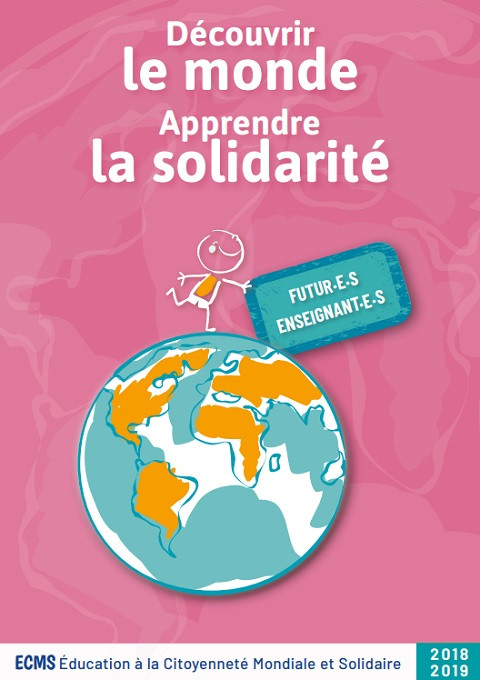 Découvrir le monde, apprendre la solidarité Год публикации: 2018 Организация-автор: UNICEF Belgique | Croix-Rouge Belgique | Îles de Paix | Oxfam | Plan International Belgique Destinée aux futur.e.s enseignant.e.s des Hautes Écoles pédagogiques, la brochure "Découvrir le monde, apprendre la solidarité" a été développée par sept organisations: l’UNICEF Belgique, la Croix-Rouge Belgique, les Îles de Paix, Oxfam magasin du monde, Oxfam solidarités, Quinoa et Plan International Belgique pour aborder l’éducation à la citoyenneté mondiale et solidaire en classe avec les élèves.
 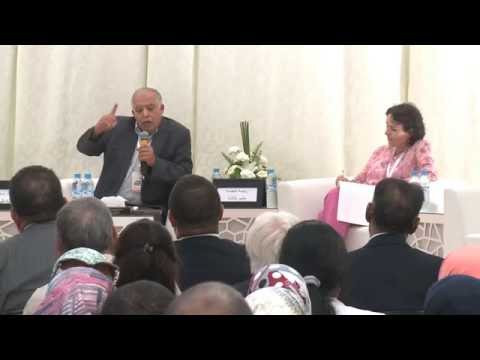 Education and Citizenship: Summer University 2016 Год публикации: 2016 Автор: Abdullah Saaf Организация-автор: General Delegation for Prison Administration and Reintegration (DGAPR) This video is a lecture given to women prisoners in Morocco, and it is a rehabilitation program. The lecture by Dr. Abdullah Sa`f talks about citizenship and inclusion in society, and discusses the relationship between education and citizenship. التعليم والمواطنة: الجامعة الصيفية 2016 Год публикации: 2016 Автор: Abdullah Saaf Организация-автор: General Delegation for Prison Administration and Reintegration (DGAPR) الفيديو عبارة عن محاضرة القت للسجينات في المغرب، وهو برنامج لاعادة التأهيل. المحاضرة للدكتور عبدالله ساعف يتحدث فيها عن المواطنة، والاندماج في المجتمع، ويناقش علاقة التعليم بالمواطنة.