
Ресурсы
Изучайте широкий спектр ценных ресурсов ВГГ, чтобы углубить своё понимание и повысить эффективность исследований, просветительской деятельности, преподавания и обучения.
Найдено: 3,385
 The Role of Teachers in Education and Democracy: The Impact of a Research Project on Preservice Teacher Perceptions Год публикации: 2015 Автор: Gina Thésée | Paul R. Carr | Franck Potwora Организация-автор: McGill University. Faculty of Education This article presents reflections on a survey questionnaire related to the connection between education and democracy. A sample of 157 teacher-education students in Montreal completed a follow-up questionnaire after having participated in a research questionnaire (first study) concerning their perception and experience of the linkage between education and democracy. The first study underscored a weak democratic experience as well as an educational journey without a strong linkage to democracy, which concurs with our previous findings. However, the results of the follow-up survey indicate that participation in this inquiry generated socio-educational, epistemological, pedagogical, and methodological reflections, which could have significant implications for the perception of the role of educators. Le rôle des enseignants dans l’éducation et la démocratie: Impacts d’un projet de recherche sur la perception de futurs enseignants Год публикации: 2015 Автор: Gina Thésée | Paul R. Carr | Franck Potwora Организация-автор: McGill University. Faculty of Education Cet article étudie les réflexions suscitées par un questionnaire d’enquête portant sur les liens entre l’éducation et la démocratie. Un échantillon de 157 étudiants d’un programme de formation initiale des enseignants à Montréal a répondu à un questionnaire de suivi (seconde étude) après avoir rempli un questionnaire d’enquête (première étude) portant sur leurs perceptions et leurs expériences des liens entre l’éducation et la démocratie. La première étude révèle une expérience démocratique faible et un parcours éducatif pratiquement sans lien avec la démocratie, ce qui concorde avec les résultats d’études antérieures. Cependant, les résultats du questionnaire de suivi indiquent que la participation à l’enquête a suscité des réflexions d’ordre socioéducatif, épistémologique, pédagogique et méthodologique, qui pourraient avoir des retombées significatives sur leur perception du rôle de l’enseignant.
  Новые тенденции межкультурного диалога в контексте региональной геополитики Год публикации: 2013 Автор: Munzifa Babadjanova Межкультурный и межрелигиозный диалог между цивилизациями – это начало нового пути к лучшему будущему. Диалог по международным проблемам, по различным вопросам культур и цивилизаций обуславливает устранение непонимания, сближает позиции и создает почву для большего обеспечения прав наций и государств путем установления равноправия и мира на международной арене. Особую актуальность приобретает распространение культурных стандартов сохранение этнокультурного многообразия и самобытных традиций в сочетании с развитием диалога и контактов.
  Study on measures taken by municipalities and recommendations for further action to challenge racism through education Год публикации: 2006 Автор: Klaus Starl Организация-автор: European Training and Research Centre for Human Rights and Democracy (Austria) Commitment 8 of the Ten-Point Plan of Action of the European Coalition of Cities against Racism requires the measures “Challenging Racism and Discrimination through Education”. This point aims to improve the access to and enjoyment of all forms of education, as well as the promotion of education in mutual tolerance and understanding. To reach this goal, the members of the coalition have been called to undertake activities, elaborate strategies and establish relevant institutions to influence society and train attitudes, behaviour and skills within the population. They are called to find out causes for racist tendencies among their population and to involve all stakeholders, particularly parents and school officials. As an external expert, the European Training and Research Centre for Human Rights and Democracy in Graz, Austria, (ETC Graz) was commissioned by UNESCO to carry out a study on the measures against racism already in place at a local level and serve as good illustration of “Commitment 8”. A major source of information was the written material provided by the selected cities. Additional or missing information could be obtained through direct exchanges and/or interviews with officers responsible for the municipalities and some NGOs. The material should not to be considered as complete. On the basis of the contributions sent in by the participating cities, the ETC assessed whether these actions/activities meet the objectives of Commitment 8. The authors used the following criteria to make this assessment: Does the action undertaken contribute to a) the improvement of access to education and promote equal opportunities; b) the impact of educational measures on individuals (potential victims and offenders) and on the atmosphere at school and in society. The following recommendations are derived from the eight selected measures documented in Chapter II, and the analysis on their “replicability” in Chapter III. The 12 recommendations explicitly or implicitly refer to the replicable documented measures. Where “replicability” requires specific conditions, or it is recommended to fulfil these conditions firstly, i.e. structural and institutional conditions, these are stated. The 12 recommendations are addressed to municipalities in Europe irrespective of their current membership in the European Coalition of Cities against Racism. As already mentioned the recommendations focus on meeting the requirements of Commitment 8, challenging racism through education.
 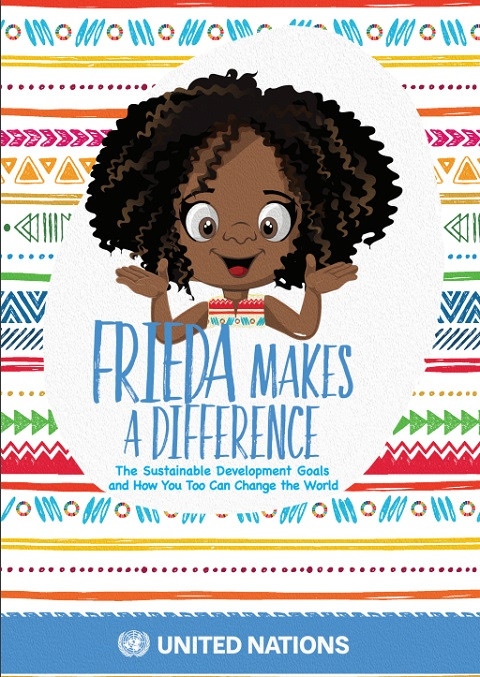 Frieda Makes a Difference: The Sustainable Development Goals and How You Too Can Change the World Год публикации: 2019 Организация-автор: United Nations (UN) This is the story about a young girl named Frieda who embarks on a wonderful adventure to bring about positive change in the world. One day, Ana from the United Nations visits Frieda’s school to teach her class about the Sustainable Development Goals—the world’s plan to reduce poverty and protect the planet by 2030. Frieda develops a global perspective and is encouraged to take action against the biggest issues of our day: from combating climate change and protecting endangered species to ending poverty and fighting inequality. But most important, Frieda learns that “everyone must work together to make the world much better for all”. With colourful illustrations, engaging text, and tips on how to change the world, children will discover what they can do to make a difference— in their lives and the lives around them.
 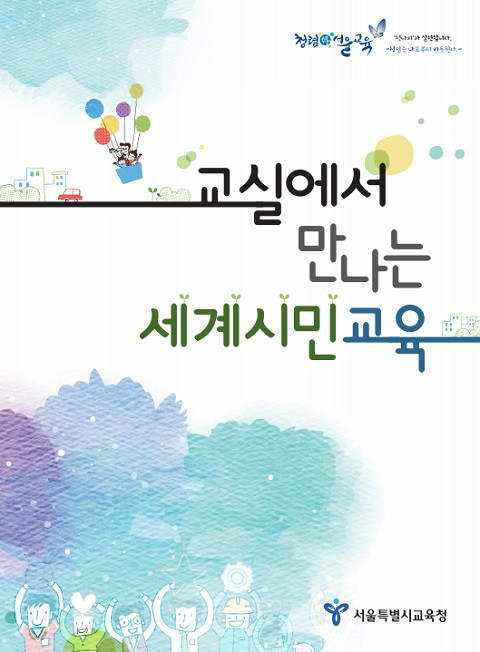 교실에서 만나는 세계시민교육 Год публикации: 2016 Автор: 정애경 | 윤지아 | 정혜선 | 이근화 | 공석범 | 주예진 | 이원용 | 정용민 Организация-автор: 서울특별시교육청 본 자료는 학습자로 하여금 인류가 공동으로 직면하고 있는 문제들에 대해 이해하고 지구촌 공동체에 대한 소속감과 연대감을 키워 지구촌의 문제들을 해결할 수 있는 다양한 실천적이고 협력적인 능력을 키우는데 그 목적을 두고 있으며, 직접 교실 현장에서 활용할 수 있도록 교수학습과정안의 형식으로 구성되어 있다. 학습주제로 제시된 것은 국제이해교육과 세계시민교육에서 공통으로 다루는 인권과 평화, 다문화를 비롯하여 2030년까지의 인류 공동의 목표인 지속가능발전의 환경과 사회와 경제 부분, 그리고 세계시민교육의 배경인 세계화와 미래사회의 지향점인 국제협력 다섯 영역이다.
 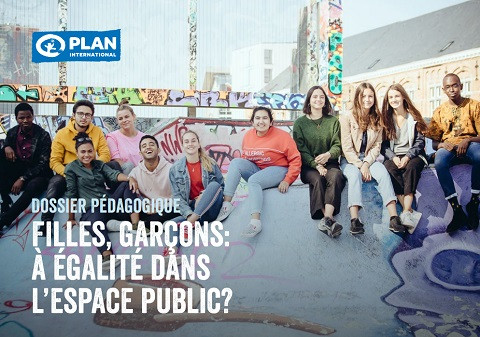 Dossier pédagogique: Filles, garçons, à égalite dans l'espace public? Год публикации: 2019 Организация-автор: Plan International Ce dossier pédagogique vise à sensibiliser les adolescent-e-s à propos des inégalités entre garçons et filles et à les faire réfléchir aux conséquences. Le message global est positif: le chemin est porteur d’espoir. Les jeunes peuvent changer les choses. Ils/elles peuvent réfléchir et s’élever contre des normes inadaptées et construire leur avenir. Et nous pouvons, ensemble, briser les stéréotypes de genre, améliorer les modèles de rôles et construire à l’égalité des chances entre garçons et filles. Prendre conscience du poids des stéréotypes et les questionner constamment en les observant à travers le prisme du genre sont des étapes décisives sur la voie de l’égalité. La classe est un cadre idéal pour cette remise en question.
 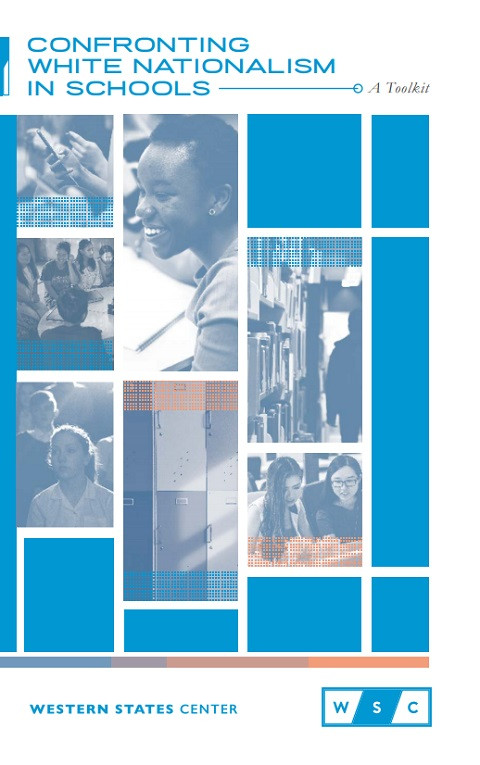 Confronting White Nationalism in Schools: A Toolkit Год публикации: 2019 Автор: Nora Flanagan | Jessica Acee | Lindsay Schubiner Организация-автор: Western States Center This toolkit shows strategies to counter white nationalist organizing in schools through sample scenarios that schools frequently encounter. It also offers advice for parents, students, teachers, school administrators, and the wider community. Many resources currently exist that address diversity, inclusion, and bullying in schools; a few of them are listed in the resources section. This toolkit is specifically focused on responding to white nationalist targeting and recruitment of students.
  可欲且可行的全球公民教育实践路径: 苏格兰“全球故事情节法”探析 (外国教育研究; Vol. 47, No. 3) Год публикации: 2020 Автор: Rao Shuqi Организация-автор: Northeast Normal University 研究发现,全球公民教育的热度不高与其实践层面的三重困境有关。“全球故事情节法”之所以成为苏格兰实施全球公民教育的最有效路径,正是源自于其对实践困境的有效回应:其一,政府对全球公民教育的倡导营造了相对宽松的政策环境,“全球故事情节法”与现有课程体系相融合获得了灵活的实践空间,实现了安全的课程地位。其二,通过对“故事情节法”和教育戏剧的运用,使全球社会和全球议题通俗化,实现了学生的体验式学习,弥合了学生认知能力和认知需求间的矛盾。其三,西苏格兰发展教育中心通过职业培训传播了理论知识和实践能力,构建了围绕全球公民教育的共同体,为教师提供了教学支持。
  Constructing the Global Dimension of Ideological and Political Education From the Perspective of “Community With a Shared Future for Mankind” (Ideological and Political Education Research; Vol. 36, No. 2) Год публикации: 2020 Автор: Cao Qingyan | Peng Jiaojiao Организация-автор: Harbin University of Science and Technology In the context of building a community with a shared future for mankind, issues such as “global crisis”, the negative impact of ultra-nationalism and the conflicts in the confrontation of “multi-cultures” all challenge the ideological and political education in the context of nation-states. Therefore, it is necessary and urgent to pay attention to the global dimension of ideological and political education. The global dimension of ideological and political education is guided by the concept of “a community with a shared future for mankind” and aims to cultivate social members with global awareness, recognition of global common values and global participation ability. It is not the rejection and denial of the national dimension of ideological and political education, and it is also different from the western global citizenship education in essence. The global dimension of ideological and political education needs to be promoted from three aspects: policy design, multi-force participation and network technology.