
Ресурсы
Изучайте широкий спектр ценных ресурсов ВГГ, чтобы углубить своё понимание и повысить эффективность исследований, просветительской деятельности, преподавания и обучения.
Найдено: 2,162
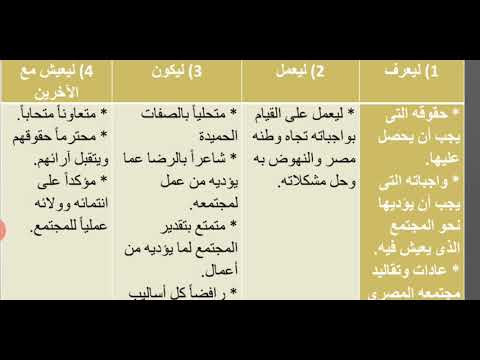 كيف تكون مواطن صالح Год публикации: 2020 Организация-автор: Helalia Language School الفيديو عبارة عن درس تعليمي للصف الأول الاعدادي. ويركز الدرس على ماهية المواطن الصالح وكيف يمكن أن يكون الطالب مواطنا صالحا.
  Les clés de l’énergie: Guide pour découvrir, enquêter et agir au sein de son établissement scolaire Год публикации: 2020 Организация-автор: Eco-Ecole L’énergie est présente dans toutes les sphères de notre quotidien et favoriser sa gestion durable et responsable est un enjeu majeur dans la lutte contre le réchauffement climatique ! Afin d’aider les communautés éducatives à s’approprier ce sujet, le programme Eco-Ecole, en partenariat avec le Conseil Départemental de Seine-Saint-Denis et l’ADEME, dévoile son nouvel outil : Les clés de l’énergie : Guide pour découvrir, enquêter et agir au sein de son établissement.En abordant l’énergie à travers le bâti, l’alimentation, le numérique et les déplacements, ce guide permet aux enseignant.e.s et à leurs élèves de se questionner sur les enjeux environnementaux liés à cette thématique et de réfléchir à des solutions à mettre en place à leur échelle.Destiné principalement à être utilisé dans le secondaire, cet outil contient :• des éléments de contexte et des clés de compréhension sur le thème de l’énergie ;• des pistes d’enquête concrètes pour réaliser un diagnostic ;• des déroulés d’ateliers pour découvrir la thématique et faire émerger des idées d’actions dans son établissement ;• des supports d’activités (à photocopier, découper ou reproduire) disponibles dans le corps du guide et dans les annexes.
  Inspiring Global Citizens - An Educator's Guide Год публикации: 2017 Организация-автор: AGA Khan Foundation Canada This resource is intended for use by teachers of intermediate and secondary school grades to support education about global development and related themes such as global citizenship. The activities included in the resource are designed to assist students in increasing their understanding of the interconnectedness of the world, of the factors contributing to global inequalities, and of some effective and sustainable ways to help reduce global poverty. It is hoped that students will be inspired to take action to make their own contribution to improving lives everywhere.
  Global Citizenship in the Classroom: A guide for teachers Год публикации: 2015 Организация-автор: Oxfam GB A practical and reflective guide full of practical tools and ideas that can be applied to almost any topic to develop learner participation and global learning.
  Radicalisations Awareness Network (RAN) Edu's Guide on training programmes 'Effective and confident teachers and other school staff' Год публикации: 2016 Организация-автор: Radicalisations Awareness Network (RAN) This document will help teachers, principals, schools and (local and national) authorities discuss and design training programmes. Different training modules are identified, like (de)polarisation training, critical thinking, and how to turn a school into a safe and democratic mini society. Radicalisations Awareness Network (RAN) Edu's Guide on training programmes 'Effective and confident teachers and other school staff' Год публикации: 2016 Организация-автор: Radicalisations Awareness Network (RAN) Ce document aidera les enseignants, les directeurs d'école, les écoles et les autorités (locales et nationales) à discuter et à concevoir des programmes de formations. Différents modules de formation sont identifiés, comme la formation de dépolarisation, la pensée critique, et comment transformer une école en une mini société sûre et démocratique.
  Beyond Bali Education Package Год публикации: 2012 Автор: Lily Taylor | Saul Karnovsky The Beyond Bali Project funded by Building Community Resilience (BCR) aims to develop and produce an education resource for secondary school students (years 8/9) on the Bali bombings and the Bali Peace Park. The resource is designed to build social resilience to violent extremism by: - providing students with the skills and tools to critically analyze and challenge violent extremism, its causes and consequences - raising awareness and education on the social impacts of violent extremism - encouraging students to think about how societies can resist the influence of violent extremism - engaging students through activities and discussion about the Bali Peace Park as social resistance to terrorism. Beyond Bali Education Package Год публикации: 2012 Автор: Lily Taylor | Saul Karnovsky Le projet Beyond Bali financé par Building Community Resilience (BCR) a pour objectif l’élaboration d’une ressource pédagogique pour les collégiens (de 5ème et 4ème) qui porte sur les attentats survenus à Bali et le Bali Peace Park. Cette ressource est conçue afin de renforcer la résilience sociale à l’extrémisme violent. Pour ce faire, elle :- Fournit aux étudiants les compétences et les outils nécessaires pour analyser de façon critique et remettre en question l’extrémisme violent, ses causes et ses conséquences,- Sensibilise aux impacts sociaux de l’extrémisme violent- Encourage les étudiants à réfléchir sur les façons dont les sociétés peuvent résister à l’influence de l’extrémisme violent- Propose aux étudiants de participer à des activités et à engager des discussions autour du Bali Peace Park.
 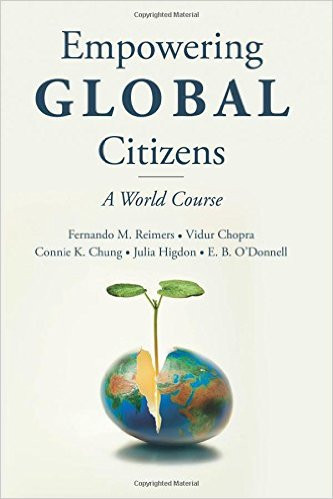 Empowering Global Citizens: A World Course Год публикации: 2016 Автор: Fernando Reimers | Vidur Chopra | Connie K. Chung | Julia Higdon | E. B. O'Donnell The world is changing rapidly and shcools must evolve to prepare young people to invent the future. Reinventing education requires thinking anew about how to help students develop competencies that will empower them as architects of their own lives and contributing members of their communities. Drawing on a synthesis of research and practice in global citizenship education, this book presents The World Course - a rigorous and coherent curriculum to foster student agency, empathy, and deep knowledge and skills to recognize the biggest global challenges and opportunities of our times, and to advance sustainability, human rights, and peace. Integrating current thinking on twenty-first-centry competencies and deeper learning, and deploying pedagogies that cultivate student responsibility, imagination, and creativity, such as project-based learning and design thinking, this book is a blueprint to reinvent education to empower global citizens.
 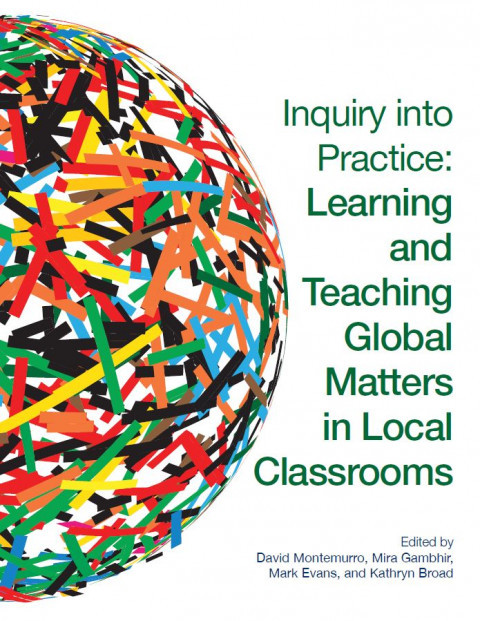 Inquiry into practice: learning and teaching global matters in local classrooms Год публикации: 2014 Автор: David Montemurro | Mira Gambhir | Mark Evans | Kathryn Broad Организация-автор: University of Toronto. Ontario Institute for Studies in Education This Inquiry into Practice publication, Learning and Teaching Global Matters in Local Classrooms, is the most recent addition to the series. It examines and shares varied perspectives, curricula, instructional practices, and resources intended to enhance student learning related to the infusion of global and international dimensions of education into classroom and schoolwide teaching and learning. It is organized in three sections: Educator Perspectives, Inquiry into Practice, and Resources. In this introduction, we briefly discuss how the text is organized, common themes that emerged across the sections, and concluding reflections.The first section, Educator Perspectives, provides insights from a range of university scholars and fieldbased leaders who, in multiple and distinct ways, have made learning and teaching about global matters in local classrooms a core feature of their work. Each was invited to comment on purposes, opportunities, and challenges related to infusing global and international dimensions into teaching and learning. Therefore, this section offers both contrasting conceptual perspectives and concrete suggestions that can impress the reader with a sense of urgency, critique, hope, and challenge when engaging in the complex and shifting work of teaching and learning about global matters.The second section, Inquiry into Practice, presents the 11 school-based and university-linked professional inquiries undertaken over a two-year period. The inquiries focus on a range of topics including critical global citizenship, the use of children’s literature to develop students’ understanding of sustainability in science education, and the refugee experience in personal and global understanding of “home.” The inquiries were carried out mostly with OISE partner schools and districts located in the city of Toronto and the GTA (regional municipalities including Durham, Halton, Peel, and York). This region of Canada provides a distinctly international, diverse context for this type of study. Local schools and districts linked with OISE’s Initial Teacher Education program have become sites of fascinating explorations into the possibilities of learning and teaching in pluralist contexts. The collection of inquiries in this publication speaks to the process of crossing borders demarcated by tangibles such as regions, nationalities, citizenship, and also by less tangible mindsets, identities, beliefs, and understandings. The voices across the project represent stakeholders in education: including voices of youth, beginning and experienced teachers, administrators, and researchers.The Resources section provides an annotated bibliography of print, media, and web resources to support those interested in teaching with global perspectives in mind. Recommended by project leaders and participants, by the authors, and by experts with various lenses, these resources are offered as a means to extend the exploration of the topics, ideas, and questions posed throughout the publication.