
Ресурсы
Изучайте широкий спектр ценных ресурсов ВГГ, чтобы углубить своё понимание и повысить эффективность исследований, просветительской деятельности, преподавания и обучения.
Найдено: 2,162
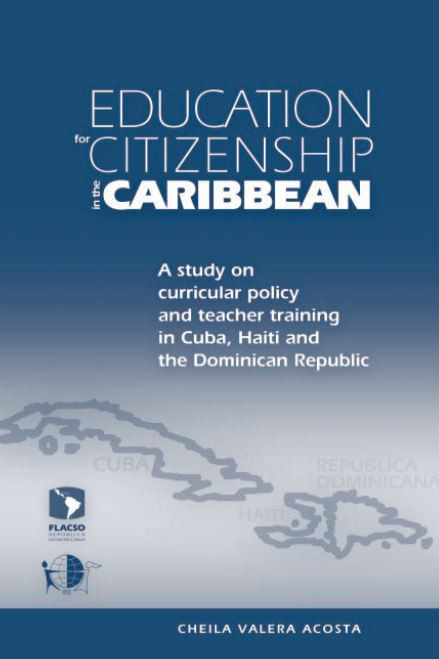 Education for Citizenship in the Caribbean: A Study on Curricular Policy and Teacher Training in Cuba, Haiti and the Dominican Republic Год публикации: 2005 Автор: Cheila Valera Acosta Организация-автор: UNESCO International Bureau of Education (IBE) | Facultad Latinoamericana de Ciencias Sociales (FLACSO) This study aims to describe teacher training and curricular policy for the primary and secondary levels in relation to education for citizenship in Cuba, Haiti and the Dominican Republic and make practical recommendations for improvements in the quality of design and implementation of these initiatives in the three countries.The following are some of the conclusions: At the start of the twenty-first century, Cuba, the Dominican Republic and Haiti share a context in which the processes of democratization have encountered obstacles connected with their colonial heritage, the hegemony of the European nations and the influence and direct interference from United States geopolitical, economic and cultural power.These democracies have developed from long and violent political dictatorships, which established authoritarian and restrictive institutional mechanisms for the day-to-day administration of public affairs. Public policies on education for citizenship should therefore take account of the contradictions faced by the democratizing processes and of the complex cultural impact on the development of social identities brought about by the phenomenon of mass migration.These issues and the tensions arising from social and economic inequalities are inadequately addressed in the three countries’ curricula and teacher training policies.There are legal bases integrating education for citizenship as part of the State’s educational responsibilities in all three countries. Education for citizenship is intended as a specific subject for the primary and secondary school levels.Educational proposals are required that can provide the population with greater understanding of community life, skills for confronting traditional ideological indoctrination, and for learning to live together while recognizing differences, and for helping to educate the imagination for a broader view of human affairs and our responsibilities with regard to them.The actors involved in teacher training in the three countries consider it a key tool for the democratic development of societies. Their main criticisms indicate that there is a need to improve the contents and the approaches to teacher training so that they can respond to the current challenges of these societies from an interdisciplinary standpoint consistent with the stated educational goals. Education à la citoyenneté dans les Caraïbes: une étude sur la politique des programmes et la formation des enseignants à Cuba, en Haïti et en République Dominicaine Год публикации: 2005 Автор: Cheila Valera Acosta Организация-автор: UNESCO International Bureau of Education (IBE) | Facultad Latinoamericana de Ciencias Sociales (FLACSO) Cette étude vise à décrire la formation des enseignants et de la politique des programmes d'études pour les niveaux primaire et secondaire par rapport à l'éducation à la citoyenneté à Cuba, en Haïti et en République dominicaine et faire des recommandations pratiques pour l'amélioration de la qualité de la conception et la mise en œuvre de ces initiatives dans les trois pays .Voici quelques-unes des conclusions:Au début du XXIe siècle, Cuba, la République Dominicaine et Haïti partagent un contexte dans lequel les processus de démocratisation ont rencontré des obstacles liés à leur héritage colonial, l'hégémonie des nations européennes et l'influence et l'ingérence directe de Etats-Unis puissance géopolitique, économique et culturelle.Ces démocraties ont développé des dictatures politiques longues et violentes, qui ont établi des mécanismes institutionnels autoritaires et contraignantes pour l'administration des affaires publiques au jour le jour. Les politiques publiques en matière d'éducation à la citoyenneté doivent donc tenir compte des contradictions rencontrées par les processus de démocratisation et de l'impact culturel complexe sur le développement des identités sociales provoquées par le phénomène de la migration de masse.Ces questions et les tensions résultant des inégalités sociales et économiques ne sont pas suffisamment abordés dans les programmes scolaires et la formation des enseignants des politiques des trois pays.Il y a des bases juridiques intégrant l'éducation à la citoyenneté dans le cadre des responsabilités éducatives de l'Etat dans les trois pays. Education à la citoyenneté est conçue comme un sujet spécifique pour les niveaux primaire et secondaire.propositions pédagogiques sont nécessaires qui peuvent fournir à la population avec une plus grande compréhension de la vie communautaire, les compétences pour faire face à l'endoctrinement idéologique traditionnelle, et pour apprendre à vivre ensemble, tout en reconnaissant les différences, et pour aider à éduquer l'imagination pour une vision plus large des affaires humaines et nos responsabilités en ce qui concerne eux.Les acteurs impliqués dans la formation des enseignants dans les trois pays considèrent comme un outil clé pour le développement démocratique des sociétés. Leurs principales critiques indiquent qu'il ya un besoin d'améliorer le contenu et les approches de la formation des enseignants afin qu'ils puissent répondre aux défis actuels de ces sociétés à partir d'un point de vue interdisciplinaire cohérent avec les objectifs éducatifs énoncés Educación para la ciudadanía en el Caribe: estudio sobre política curricular y de formación docente en Cuba, Haití y República Dominicana Год публикации: 2005 Автор: Cheila Valera Acosta Организация-автор: UNESCO International Bureau of Education (IBE) | Facultad Latinoamericana de Ciencias Sociales (FLACSO) Este documento describe la política curricular de los niveles primarios y secundarios así como la formación docente relacionada con educación para la ciudadanía en Cuba, Haití y República Dominicana con el propósito de realizar recomendaciones prácticas que puedan mejorar la calidad en el diseño e implementación de estas iniciativas en los tres países seleccionados.
  School knowlegde and curriculum standard Год публикации: 2000 Автор: Zhong Qiquan Based on curriculum sociology, criticism towards school knowledge has been expanded. This article first discusses the problems of education in both Japan and China and then emphasizes the important relationship between quality value and curriculum standard. The four elements of school curriculum: curriculum objectives, curriculum content, curriculum implementation and curriculum evaluation are also clarified with regard to design curriculum standard. 学校知识与课程标准 Год публикации: 2000 Автор: Zhong Qiquan 基于课程社会学,对于学校知识的批判增加。文章首先讨论了中国和日本的教育问题,并强调了“素质价值”与课程标准间的重要关系。文章讨论了课程构成的四要素:课程目标、课程内容、课程实施和课程评价,及其与课程标准编制的关系。
  Regional handbook on life skills programmes for non-formal education Год публикации: 2012 Организация-автор: UNESCO Bangkok The Regional Handbook on Life Skills Programme for Non-formal Education (NFE) was developed for education policy makers, experts in curriculum development, materials development and trainers of personnel in the field of NFE, NFE practitioners such as Community Learning Centres (CLCs) personnel, teachers and facilitators, and researchers. It aims to provide information about life skills programmes and to serve as a practical guide to implement educational programmes to enhance life skills. It is expected to help NFE personnel with adopting, adapting and integrating life skills programmes in NFE. This Handbook consists of two parts as follows: Part one- overview of Life Skills Programme for Non-formal Education (NFE), Part Two- Practical Guide on Integrating Life Skills Programme in NFE. Part One provides answers to various questions related to life skills and life skills progrmmes. Part Two intends to provide practical information about the systematic planning and implementation of life skills programmes for NFE. It offers suggested steps for curriculum development, development of teaching and learning materials, delivery of life skills programmes and monitoring and evaluation strategies. Details of this process are elaborated for NFE practitioners at various levels, but in particular at the community level. This Handbook was developed based on the project outputs of UNESCO Bangkok's 'Life Skills Learning through Non-formal Education" carried out in Asia and the Pacific region from 2003-2006 within the framework of Asia-Pacific Programme of Education for All (APPEAL). The project consisted of country studies, regional meetings, pilot projects and action research in selected countries in the region. A group of experts from the region consolidated the main outputs of the project and developed this Handbook through a series of workshops in 2006-2007 in coordination with UNESCO Bangkok and the office of Non-formal and Informal Education (ONIE) of Thailand Ministry of Education. In addition, resource materials of various organizations including United Nations agencies, government institutions, universities and NGOs were also collected and used for developing this Handbook. Manuel régional sur les programmes de compétences de vie pour l'éducation non formelle Год публикации: 2012 Организация-автор: UNESCO Bangkok Le manuel régional sur le programme des compétences de vie pour l'éducation non-formelle (ENF) a été développé pour les décideurs politiques de l'éducation, des experts dans l'élaboration des programmes, le développement des matériaux et formateurs de personnel dans le domaine de l'ENF, les praticiens ENF tels que les centres d'apprentissage communautaires (CJC) personnel , les enseignants et les animateurs et les chercheurs. Il vise à fournir des informations sur les programmes de compétences de vie et de servir comme un guide pratique pour mettre en œuvre des programmes éducatifs pour améliorer les compétences de la vie. Il est prévu pour aider le personnel de l'ENF à l'adoption, l'adaptation et l'intégration des programmes de compétences de vie en ENF. Ce manuel se compose de deux parties: Partie de un aperçu le programme des compétences de vie pour l'éducation non formelle (ENF), en deux parties Guide pratique sur le programme des compétences de vie de l’Intégration dans ENF. La première partie fournit des réponses aux diverses questions liées aux compétences de vie et les compétences de la vie programmes. La deuxième partie a l'intention de fournir des informations pratiques sur la planification et la mise en œuvre des programmes de compétences de vie pour ENF systématique. Il propose des étapes suggérées pour l'élaboration des programmes, le développement de matériel pédagogique et d'apprentissage, la prestation de compétences pour la vie des programmes et des stratégies de Suivi et d'évaluation. Les détails de ce processus sont élaborés pour les praticiens ENF à différents niveaux, mais en particulier au niveau de la communauté. Ce manuel a été élaboré sur la base des résultats du projet de «Life Skills de l'UNESCO Bangkok L'apprentissage par l'éducation non formelle» réalisée en Asie et dans la région du Pacifique 2003-2006 dans le cadre du Programme Asie-Pacifique d'éducation pour tous (APPEAL). le projet consistait en études de pays, des réunions régionales, des projets pilotes et la recherche-action dans certains pays de la région. un groupe d'experts de la région a regroupé les principaux résultats du projet et a développé ce manuel à travers une série d'ateliers en 2006-2007 coordination avec l'UNESCO Bangkok et le bureau de l'éducation non formelle et informelle (ONIE) de la Thaïlande Ministère de l'éducation. En outre, des ressources documentaires de diverses organisations, y compris les organismes des Nations Unies, les institutions gouvernementales, les universités et les ONG ont également été recueillies et utilisées pour le développement de cette Manuel.
  세계시민 양성을 위한 교육과정 모형 개발 연구: 2015 개정교육과정 성취기준 분석을 중심으로 Год публикации: 2017 Автор: 강혜영 | 장준호 | 하은나 | 양은주 | 임윤정 | 최은정 | 최윤경 | 하승관 | 홍근태 Организация-автор: 인천교육과학연구원 교육정책연구소 세계시민교육에 대한 중요성이 점차 강조되고 있음에도 현재 단위학교 현장에서는 세계시민교육의 개념과 관점이 혼재되어 있고 이를 교육과정 속에서 운영하는 사례도 부족한 실정이다. 이에 세계시민교육에 대한 방향을 제시하고 교육 현장에 보편적 가치를 반영하면서도 국가와 지역의 특수성을 기반으로 하는 경험중심의 세계시민교육이 뿌리 내릴 수 있도록 다양한 연구와 함께 시도교육청 차원의 노력이 시도되고 있다.인천광역시 교육청 역시 이러한 노력의 일환으로 다양한 연구를 수행하였고 본 연구는 학교가 교육과정 내에서 세계시민을 양성할 수 있는 교육과정 모형으로서 국가수준 교육과정에 해당하는 2015 개정교육과정의 성취기준 분석과 수업설계방법에 대한 제안을 목적으로 하고 있다.
  General Framework of Curriculum Standards: National Education and Social Studies Год публикации: 2014 Автор: Khalid Abdaslam Организация-автор: United Arab Emirates. Ministry of Education The file is a reference document for the general framework of curriculum standards in national education and social studies in the United Arab Emirates. The file outlines study plans for social studies subjects, learning outcomes, performance standards, and general guidelines for planning. The file ends with a set of lesson design templates. الإطار العام لمعايير المناهج: التربية الوطنية والدراسات الاجتماعية Год публикации: 2014 Автор: Khalid Abdaslam Организация-автор: United Arab Emirates. Ministry of Education يعتبر الملف وثيقة مرجعية للإطار العام لمعايير المناهج في التربية الوطنية والدراسات الاجتماعية بدولة الامارات العربية المتحدة. يوضح الملف الخطط الدراسية لمواد الدراسات الاجتماعية ونواتج التعلم ومعايير الأداء وموجهات عامة للتخطيط. وينتهي الملف بمجموعة من نماذج تصميم الدروس.