
Ресурсы
Изучайте широкий спектр ценных ресурсов ВГГ, чтобы углубить своё понимание и повысить эффективность исследований, просветительской деятельности, преподавания и обучения.
Найдено: 2,162
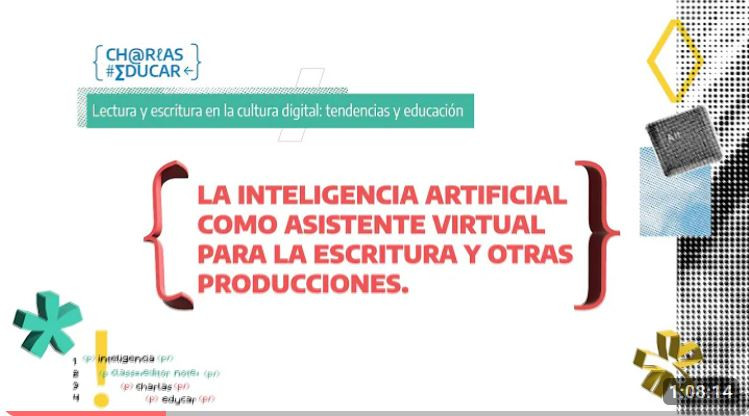 Reading and Writing in Digital Culture: Trends and Education Год публикации: 2023 Автор: Carina Maguregui Организация-автор: Educ.ar This video presents an expanded talk whose central theme or narrative thread, «Reading and writing in digital culture: trends and education», provides a contextual framework for three possible itineraries or expansions: a.) Artificial intelligence as a virtual assistant for writing and other productions; b) Ecosystem of screens and platforms, and c) The right to digital disconnection.Each expansion—itinerary or talk—is self-contained, has a presentation, development and closure. However, the three complement each other and, in some way, dialogue with each other. The most important thing is that they provide a much richer overview. Lectura y escritura en la cultura digital: tendencias y educación Год публикации: 2023 Автор: Carina Maguregui Организация-автор: Educ.ar Este video presenta una charla expandida cuyo tema central o hilo narrativo, «Lectura y escritura en la cultura digital: tendencias y educación», da marco contextual a tres itinerarios posibles o expansiones: a.) La inteligencia artificial como asistente virtual para la escritura y otras producciones; b) Ecosistema de pantallas y plataformas, y c) El derecho a la desconexión digital.Cada expansión —itinerario o charla— es autoconclusiva, tiene presentación, desarrollo y cierre. Sin embargo, las tres se complementan y, de algún modo, dialogan entre sí. Lo más importante es que brindan una visión de conjunto mucho más rica.
  Media and Information Literacy: A Practical Guidebook for Trainers; Media Development Год публикации: 2018 Автор: Sylvia Braesel | Thorsten Karg Организация-автор: DW Academy The Media and Information Literacy (MIL) guide provides trainers with background information, ideas, methodology and practical exercises for training. Literacy is the ability to read and write. Media and Information Literacy (MIL) is the ability to understand how the media works and how it can be used to participate in public debate. MIL includes social media such as Facebook as well as traditional media such as books, newspapers, radio and television. This practical guide provides MIL trainers with background information, ideas, methodology and practical exercises for training. Alfabetización mediática e informacional: Una guía práctica para capacitadores; Desarrollo de medios Год публикации: 2018 Автор: Sylvia Braesel | Thorsten Karg Организация-автор: DW Academy La guía en Alfabetización Mediática e Informacional (AMI) brinda a los capacitadores información de trasfondo, ideas, metodología y ejercicios prácticos para la capacitación. Alfabetización es la capacidad de leer y escribir. Alfabetización Mediática e Informacional (AMI) es la capacidad para comprender cómo funcionan los medios de comunicación y cómo se pueden utilizar para participar en el debate público. AMI incluye redes sociales como Facebook, así como a los medios de comunicación tradicionales como libros, periódicos, radio y televisión. Esta guía práctica brinda a los capacitadores en AMI información de trasfondo, ideas, metodología y ejercicios prácticos para la capacitación.
  Resource Kit for Working With Families in Digital Citizenship Год публикации: 2024 Организация-автор: Chile. Ministry of Education The role of families and guardians is essential to help children and adolescents learn to navigate the digital environment, taking advantage of its opportunities and minimizing its risks. For this reason, it is important that schools work with families and guardians to provide support in the digital environment, safeguarding the rights of children and adolescents and promoting their autonomy in a progressive way, through the development of digital citizenship. This kit is composed of: Capsules for parents/guardians that deal with issues related to the digital environment, Booklets “Recommendations for working with families on their mediating role in the use of mobile devices” and a training module “Digital Citizenship”. Kit de recursos para el trabajo con familias en ciudadanía digital Год публикации: 2024 Организация-автор: Chile. Ministerio de Educación El rol de las familias y tutores es fundamental para ayudar a los niños, niñas y adolescentes a aprender a desenvolverse en el entorno digital aprovechando sus oportunidades y minimizando sus riesgos. Por esta razón, resulta importante que desde el espacio escolar se trabaje con las familias y tutores para realizar un acompañamiento en el entorno digital, resguardando la protección de los derechos de niños, niñas y adolescentes y favoreciendo su autonomía de forma progresiva, a través del desarrollo de la ciudadanía digital. Este kit está compuesto por: Cápsulas para apoderados/as que tratan temas relacionados con el entorno digital, Cartillas “Recomendaciones para trabajar con familias su rol mediador en el uso de dispositivos móviles” y un módulo de formación “Ciudadanía Digital”.
  Basic education curriculum guide: building on strengths (Primary 1 - Secondary 3) Год публикации: 2002 Организация-автор: Curriculum Development Council (Hong Kong) The Basic Education Curriculum Guide – Building on Strengths is prepared by the Curriculum Development Council (CDC) to advise school supervisors, school heads/principals, teachers, parents and those concerned on how to realise both the aims of education (EC, 2000) and the recommendations made in the report on Learning to Learn – The Way Forward in Curriculum Development (CDC, 2001) for life-long learning and the whole-persons development of students. This Guide replaces the Guide to the Primary 1 to 6 Curriculum (CDC, 1993) and the part on junior secondary level of the Guide to the Secondary 1 to 5 Curriculum (CDC, 1993). It aims to provide:• Recommendations of a central curriculum for schools and time allocation which all schools to adopt at primary and junior secondary levels• Suggestions for actions in school curriculum planning, learning and teaching and assessment to improve the quality of education, and for school-based adaptations to build on the strengths of Hong Kong schools as well as to meet the needs of students• Illustrative examples in authentic school contexts• Opportunities for reflection by school heads/principals, teachers and related parties Guide de Programme d'Éducation de Base: construire sur les forces (primaire 1 - secondaire 3) Год публикации: 2002 Организация-автор: Curriculum Development Council (Hong Kong) Guide de Programme d'Éducation de ㅠase - Construire sur les Forces est préparé par le Curriculum Development Council (CDC) pour conseiller les superviseurs scolaires, les directeurs d'école / directeurs, les enseignants, les parents et les personnes concernées sur la façon de réaliser les objectifs de l'éducation (EC, 2000) et les recommandations formulées dans le rapport sur Apprendre à apprendre - Aller de l'avant dans le développement du curriculum (CDC, 2001) pour l'apprentissage à vie et le développement des personnes sistes des étudiants. Ce guide remplace la <cite> Guide du primaire 1 à 6 Curriculum (CDC, 1993) et la partie au niveau secondaire du premier cycle de la balise <cite> Guide du secondaire 1 à 5 Curriculum (CDC, 1993). Il vise à fournir: • Les recommandations d'un programme central pour les écoles et la répartition du temps qui toutes les écoles adoptent à des niveaux primaire et secondaire juniors • Suggestions pour des actions dans la planification des programmes scolaires, l'apprentissage et l'enseignement et l'évaluation pour améliorer la qualité de l'éducation, et pour adaptations scolaires pour construire sur les points forts des écoles de Hong Kong, ainsi que pour répondre aux besoins des élèves • des exemples illustratifs dans des contextes scolaires authentiques • Possibilités de réflexion par les chefs d'établissement / directeurs, les enseignants et les parties liées 基础教育课程指引——各尽所能 发挥所长 (小一至中三) Год публикации: 2002 Организация-автор: Curriculum Development Council (Hong Kong) The Basic Education Curriculum Guide – Building on Strengths is prepared by the Curriculum Development Council (CDC) to advise school supervisors, school heads/principals, teachers, parents and those concerned on how to realise both the aims of education (EC, 2000) and the recommendations made in the report on Learning to Learn – The Way Forward in Curriculum Development (CDC, 2001) for life-long learning and the whole-persons development of students. This Guide replaces the Guide to the Primary 1 to 6 Curriculum (CDC, 1993) and the part on junior secondary level of the Guide to the Secondary 1 to 5 Curriculum (CDC, 1993). It aims to provide:• Recommendations of a central curriculum for schools and time allocation which all schools to adopt at primary and junior secondary levels• Suggestions for actions in school curriculum planning, learning and teaching and assessment to improve the quality of education, and for school-based adaptations to build on the strengths of Hong Kong schools as well as to meet the needs of students• Illustrative examples in authentic school contexts• Opportunities for reflection by school heads/principals, teachers and related parties
 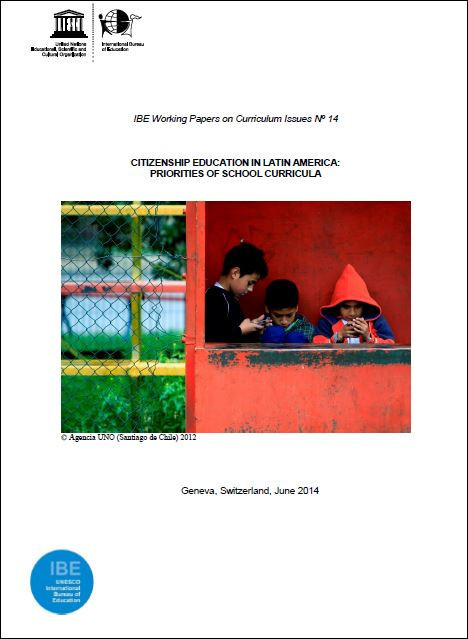 Citizenship education in Latin America: Priorities of School Curricula Год публикации: 2014 Автор: Cristián Cox | Martín Bascopé | Juan Carlos Castillo | Daniel Miranda | Macarena Bonhomme Организация-автор: UNESCO International Bureau of Education (IBE) This work focuses on the curricula of six Latin American countries – Colombia, Chile, the Dominican Republic, Guatemala, Mexico and Paraguay – which at the close of the past decade agreed to be part of the project Regional System of Evaluation and Development of Citizenship Competencies (SREDECC). With the support of the Inter-American Development Bank, SREDECC developed the Latin American module of the International Civic and Citizenship Study (ICCS- 2009) undertaken by the International Association for the Evaluation of Educational Achievement (IEA), in addition to encouraging the participation of the countries in that study (Cox 2010; Schulz, Ainley, Friedman and Lietz 2011). This document comprises four parts. The first section takes stock of the state of democratic belief in the region, drawing upon the most significant opinion studies of the past decade, so as to offer broader meaning bases for curriculum analysis and, more generally, for educational work in the field of citizenship. The second section describes the organizational (or structural) characteristics of the curricula of the six countries and presents a framework of categories for their comparative analysis. The subsequent section describes and analyses the contents of the six curricula examined and how they deal with the values, institutions and citizenship relations in their civic (political) and civil (coexistence) dimensions. On the basis of the most significant findings, the closing section includes some reflections regarding curriculum development with regard to citizenship.