
Ресурсы
Изучайте широкий спектр ценных ресурсов ВГГ, чтобы углубить своё понимание и повысить эффективность исследований, просветительской деятельности, преподавания и обучения.
Найдено: 2,668
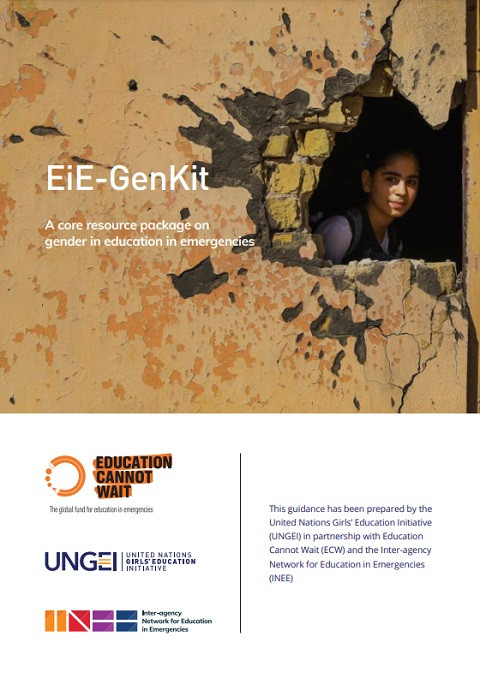 EiE-GenKit: A Core Resource Package on Gender in Education in Emergencies Год публикации: 2021 Организация-автор: Education Cannot Wait (ECW) | Inter-agency Network for Education in Emergencies (INEE) | United Nations Girls' Education Initiative (UNGEI) When gender-responsive, quality education is available to all it has the potential to transform societies and build sustainable peace. A joint initiative from the Inter-agency Network for Education in Emergencies (INEE), Education Cannot Wait (ECW) and the UN Girls’ Education Initiative (UNGEI), the EiE-GenKit is a core resource package for gender in education in emergencies. The EiE-GenKit is the first resource of its kind, providing education practitioners with practical tools to promote gender-responsive programming from crisis to peace and sustainable development.The EiE-GenKit is based on extensive research and consultation with the latest resources, evidence, new tools and good practice available in one easy-to-use package. The EiE-GenKit builds on existing humanitarian processes for a streamlined approach to gender-responsive EiE. The EiE-GenKit offers tools for practical and immediate use including checklists, tipsheets and assessment templates supporting practitioners to ensure that each phase of an EiE intervention is gender-responsive. Bridging the gap between what we know about gender-responsive EiE and the tools we need to make it happen, the EiE-GenKit aims to promote improved gender and education outcomes of learners living in crises.
 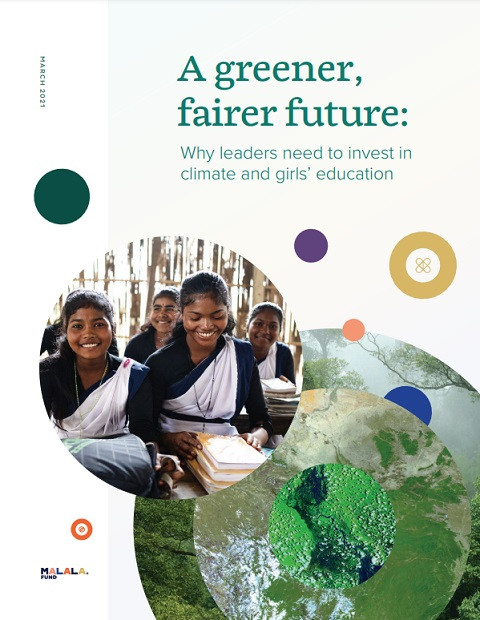 A Greener, Fairer Future: Why Leaders Need to Invest in Climate and Girls’ Education Год публикации: 2021 Автор: Lucia Fry | Philippa Lei Организация-автор: Malala Fund The world is on the brink of a climate catastrophe — and girls are disproportionately bearing the impact. Climate-related events like flooding, droughts and increased exposure to zoonotic diseases amplify the inequalities girls face and further limit their ability to access and complete their education. Malala Fund’s new report, A greener, fairer future: Why leaders need to invest in climate and girls' education, estimates that in 2021 climate-related events will prevent at least four million girls in low- and lower-middle-income countries from completing their education. If current trends continue, by 2025 climate change will be a contributing factor in preventing at least 12.5 million girls from completing their education each year.Yet evidence shows that closing gender gaps in education can help countries better adapt to the effects of climate change and decrease the rate and impact of global warming.“Girls in lower-income countries are the least responsible for the climate crisis, so it’s a travesty that it now threatens their very lifeline to a brighter future: quality education,” said Lucia Fry, Director of Research and Policy at Malala Fund. “Malala Fund wants leaders at COP26 to hear young people’s demands around education. They know that climate action helps girls stay in school, which in turn helps countries tackle the climate crisis. Young people are demanding an education that will prepare them to adapt to the effects of climate change and challenge the root causes of the crisis.”A greener, fairer future outlines the origins of the climate emergency and explains how confronting issues like the legacy of colonialism, racial discrimination and gender inequality through education is key to finding a sustainable solution to the crisis. The paper introduces the Gender-Equal Green Learning Agenda, a new framework to help leaders address the climate crisis through education.In this report, Malala Fund recommends how leaders can take urgent climate action at meetings this year, like COP26. This includes reducing carbon emissions, improving girls’ access to education, helping communities adapt to the realities of climate change and transforming education systems to provide all students with the knowledge, skills and values needed to challenge the social and economic inequalities fuelling the climate crisis.For more about the links between climate change and girls’ education, read the full paper below.
  In Solidarity With Girls: Gender and Education in Crisis (Policy Brief Series) Год публикации: 2020 Организация-автор: United Nations Girls' Education Initiative (UNGEI) The In Solidarity With Girls: Gender and education in crisis policy brief series was developed through a series of intergenerational dialogues on gender, education and COVID-19. The contents of this paper and its recommendations belong to the young women activists featured in each brief. Drawing on the ‘build back equal’ principle, this brief contributes to policy dialogues and discussions on (1) how we can plan for and work towards more equal, gender-responsive school systems once restrictions are lifted, and (2) achieve this through meaningful partnership with youth and youth-led networks.
 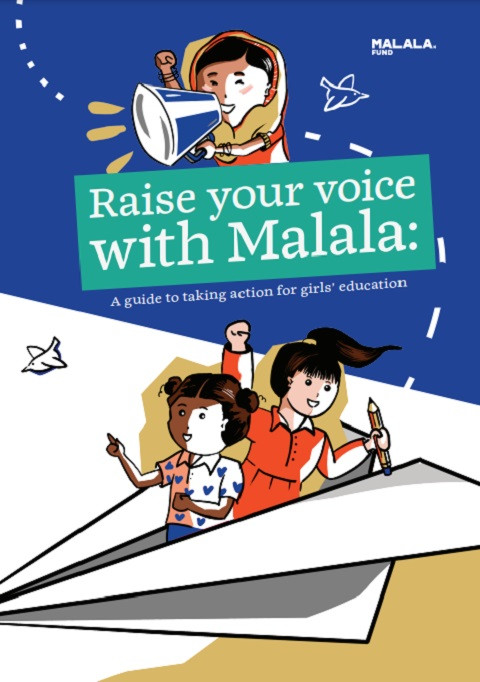 Raise Your Voice With Malala: A Guide to Taking Action for Girls’ Education Год публикации: 2018 Автор: Emily Laurie | Eleanor Gall Организация-автор: Malala Fund This guide gives young activists the tools to raise their voices and make change happen. Girls around the world are standing up in support of their out-of-school sisters and fighting to see every girl complete 12 years of free, safe, quality education. By taking action in their communities, girls can contribute to the peace and prosperity of our entire world. The guide includes real stories about girls around the world working to make sure all girls have the opportunity to go to school.
 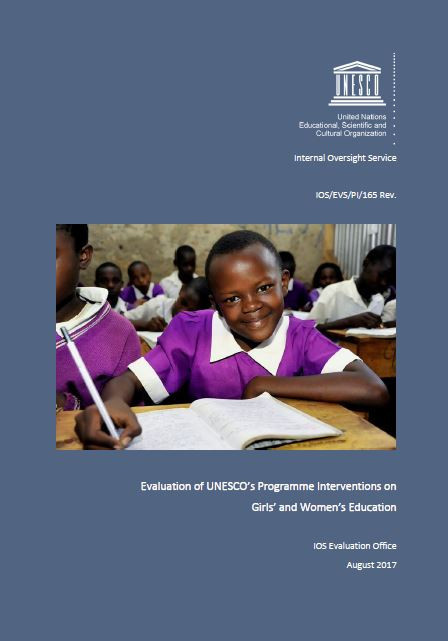 Evaluation of UNESCO's Programme Interventions on Girls' and Women's Education Год публикации: 2017 Автор: Michael Reynolds, Martina Rathner, Estelle Loiseau Организация-автор: UNESCO Internal Oversight Service (IOS) Since 2008, Gender Equality has been one of two global priorities for UNESCO. In May 2011, UNESCO launched the Global Partnership for Girls’ and Women’s Education, also known as “Better Life, Better Future”, which aims to increase learning opportunities for adolescent girls and women and to find solutions to some of the biggest obstacles to their education. To further advance the global priority of Gender Equality, since 2015 a dedicated Section of Education for Inclusion and Gender Equality specifically addresses the gender dimensions in education that contribute to differential access, participation, completion, and learning outcomes by boys and girls, and men and women. The evaluation examines UNESCO’s programme interventions in girls’ and women’s education during the period 2015 to 2017, in particular to ascertain the relevance, effectiveness, efficiency and sustainability of initiatives, and to clarify the strategic role and positioning of the Organization in supporting girls’ and women’s education at regional and country levels.The evaluation found that although UNESCO’s efforts for enhancing girls’ and women’s education are clearly aligned to SDG 4 and SDG 5 and also broadly in line with the overall principle of leaving no one behind, there is at times a trade-off between targeting the hardest to reach and other donor priorities, and UNESCO needs to more clearly position its efforts in support of girls’ and women’s education and its niche in the 2030 Agenda. Furthermore, continued efforts are required to scale up and/or replicate small-scale interventions, to better ensure sustainability and to consolidate mechanisms for coordination and information sharing among different interventions to seize synergies and enhance organizational learning.
  Key Concepts: A Feminist Approach to Human Rights Education (Chapter 4) Год публикации: 2014 Автор: Julie Maia Организация-автор: Stanford Human Rights Education Initiative (SHREI) Developed for the Stanford Human Rights Education Initiative (SHREI), this curriculum project examines connections among Gender Studies, feminist theory, and human rights movements around the world. This SHREI project presents its four key concepts through four curricular units, or chapters, each with a series of activities that can easily be adapted for use in courses in many disciplines. Each chapter contains these elements: A definition of the key concept An example of the use of the concept in a human rights document A brief essay on the value of the concept for human rights education A series of activities that guide students in using gender, race/ethnicity/nation, and class as lenses for analyzing social justice issues include transnational and multicultural perspectives on gender and human rights issues use "best practices" pedagogies for teaching human rights topics in community colleges. Within each chapter, activities are orgaized from simple to complex. Most activities, however, have self-contained objectives and can be used independently of the others. Sections on “Extending the Learning” offer longer readings or in-depth material for advanced courses. The GCED Clearinghouse introduces only chapter 4, "global citizenship" of this SHERI project.
  2nd European congress on global education: education, interdependence and solidarity in a changing world; final report Год публикации: 2012 Организация-автор: North-South Centre of the Council of Europe | Global Education Network Europe (GENE) | CONCORD Europe | Portuguese Institute of Cooperation and Language | Portuguese NDGO Platform | University of Lisbon | European Commission The 2nd European Congress on Global Education: Education, Interdependence and Solidarity in a Changing World took place on 27 – 28 September 2012 in Lisbon. It was organised by the North-South Centre of the Council of Europe (NSC) in partnership with Global Education Network Europe (GENE) and CONCORD Europe, in cooperation with the Portuguese Institute of Cooperation and Language - Camões, the Portuguese NDGO Platform and the University of Lisbon and with the financial support of the European Commission. This Congress brought together approximately 200 stakeholders in global education, in particular international organisations, governments, parliamentarians, local and regional authorities, civil society organisations, as well as educators from Europe and beyond, using the principle of “quadrilogue” and a holistic approach to global education. This two-day event built on the efforts of the North-South Centre (NSC) and other stakeholders to promote global education since the Maastricht Congress Declaration (2002) which established a European strategy framework for improving and increasing global education in Europe to the year 2015. Thematic dialogue and exchange of ideas and practices together with a reflection on the political dimension of global education contributed to the formulation of a Lisbon Statement and the revision of the proposed Strategic Recommendations for Strengthening Global Education till 2015. The resume of the thematic dialogues, the Lisbon Statement on Global Education and the Strategic Recommendations represent an integral part of this report. This is also complemented with a short concluding section with follow-up proposals. 2nd European congress on global education: education, interdependence and solidarity in a changing world; final report Год публикации: 2012 Организация-автор: North-South Centre of the Council of Europe | Global Education Network Europe (GENE) | CONCORD Europe | Portuguese Institute of Cooperation and Language | Portuguese NDGO Platform | University of Lisbon | European Commission Ce rapport national sur l'éducation globale en Autriche fait partie du processus d'évaluation intra-européenne Éducation Mondiale, qui a été lancé en 2002 dans le but d'augmenter et d'améliorer l'éducation mondiale dans les États membres du Conseil de l'Europe. Ce rapport est l'aboutissement d'un processus d'examen par les pairs mené par une équipe d'examen international par des pairs. Grâce à la recherche et des entrevues avec des intervenants clés, des informations ont été recueillies et des perspectives critiques développé sur l'état actuel et les perspectives d'avenir pour l'éducation mondiale en Autriche. Ce processus long de l'année, facilitée par le Centre Nord-Sud du Conseil de l'Europe, a été développé en partenariat avec le Groupe Stratégie autrichienne pour l'éducation mondiale comme la contrepartie nationale dans le processus. Il a impliqué le Ministère des Affaires étrangères, le Ministère de l'Education, l'Agence Autrichienne de Développement (AAD), KommEnt, et les ONG et les milieux universitaires. Ce rapport d'évaluation intra reconnaît la relativement forte tradition d'éducation mondiale en Autriche. le soutien autrichien de EM se reflète dans l'éventail des organisations engagées impliquées dans EM, et les nombreuses initiatives et projets dans les secteurs formels et non formels d'éducation, et dans la société civile. Le chapitre 1 ci-dessous fournit une introduction au rapport et le processus général. Le chapitre 2 décrit le contexte de l'éducation mondiale en Autriche. Le chapitre 3 examine l'éducation mondiale dans le secteur de l'éducation formelle. Le chapitre 4 met l'accent sur le travail important et varié qui se déroule dans l'éducation non formelle, les organisations de la société civile et d'autres secteurs dans ce domaine. Le chapitre 5 fournit, de façon sommaire, un aperçu des observations et recommandations de l'examen par les pairs clés. 세계 교육에 관한 제 2차 유럽 의회: 변화하는 세계에서의 교육, 상호 의존 및 연대; 최종 보고서 Год публикации: 2012 Организация-автор: North-South Centre of the Council of Europe | Global Education Network Europe (GENE) | CONCORD Europe | Portuguese Institute of Cooperation and Language | Portuguese NDGO Platform | University of Lisbon | European Commission 오스트리아 글로벌 교육에 관한 이 국가 보고서는 유럽 의회 회원국들의 글로벌 교육을 증진 및 향상시키기 위한 목적으로 2002년에 시작된, 유럽 글로벌 교육의 공동 심의 과정(the European Global Education Peer Review Process)의 일부이다. 이 보고서는 국제 공동 심의 과정 팀에 의해 주도되는 공동 심의 과정의 정점이다. 리서치 및 주요 이해 관계자들과의 인터뷰를 통해서 정보를 수집하고, 오스트리아 글로벌 교육 현황 및 미래 전망에 대한 비판적 시각도 발전시켰다. 유럽 의회 남북 센터가(the North-South Centre of the Council of Europe)가 추진한 이 1년 과정은 현재 진행중인 국가적 대응 사업으로서, 글로벌 교육을 위한 오스트리아 전략 그룹(Austrian Strategy Group for Global Education)과 협력하여 개발되었다. 여기에는 외무부, 교육부, 오스트리아 개발기구(ADA), KommEnt, NGO 및 학계가 포함된다. 이 피어 리뷰 보고서(Peer Review report)에서는 오스트리아 글로벌 교육의 상대적으로 강한 전통을 인지하고 있다. 글로벌 교육(이하 GE)을 위한 오스트리아 국가 서포트와 GE와 관련된 열성적인 조직과 공식 및 비공식적 교육 분야, 시민 사회 내의 다수 이니셔티브 및 프로젝트에 반영이 되어 있다. 다음의 제 1장에서는 보고서와 프로세스 전반에 대한 소개를 제공한다. 제 2장에서는 오스트리아 글로벌 교육의 맥락을 개략적으로 보여준다. 제 3장에서는 정규 교육 부분에서의 글로벌 교육에 대해 살펴본다. 제 4장에서는 비정규 교육, 시민사회 조직 및 다른 부문에서 일어나는 중요하고 다양한 교육 작업에 중점을 둔다. 제 5장에서는 요약 방식으로, 피어 리뷰의 권고안들 및 주요 관찰에 대한 아웃라인을 제공한다.
  Holocaust & Human rights education center This curriculum guide was developed by a group of master teachers who have studied and taught the Holocaust in the context of history and the language arts. The New York State Core Curriculum and Learning Standards in English Language Arts and Social Studies have guided our selection of activities, historical documents and assessment tools. All materials and activities have been field-tested; they are challenging, age-appropriate and well suited to the needs of a diverse student population.