
Ресурсы
Изучайте широкий спектр ценных ресурсов ВГГ, чтобы углубить своё понимание и повысить эффективность исследований, просветительской деятельности, преподавания и обучения.
Найдено: 2,161
 Trust me Год публикации: 2016 Организация-автор: Childnet International L'objectif principal de cette ressource est de mettre en garde les enfants contre les informations fausses et largement répandues qu'ils peuvent trouver en ligne. Elle a pour fonction de stimuler et de faciliter les discussions autour des risques liés à internet.Elaborée en partenariat avec le Conseil de sécurité du London Grid for Learning (LGfL), elle contient des plans de cours destinés aussi bien aux classes primaires que secondaires, afin de donner aux enseignants les outils nécessaires pour apprendre à leurs élèves comment exercer leur esprit critique, interroger les contenus et les objets de propagande pouvant chercher à les influencer.
  Peace education in formal schools of West Africa: an implementation guide Год публикации: 2012 Организация-автор: West Africa Network for Peacebuilding (WANEP) This guide, first and foremost, seeks to bring hope and provide opportunity for practitioners to use tried and tested techniques to develop capacities of young people to build requisite knowledge and skills to become credible and responsible leaders. It provides both a conceptual and practical framework of peace education and confirms the potential benefits of Peace Education, particularly in the formal sector. It has been developed based on the extensive experience of WANEP’s Peace Education programme across West Africa and this experience has been outlined in great detail throughout the manual. The guide lays emphasis on entry points for developing and initiating Peace Education programmes in schools and provides practical tools for engaging various stakeholders and the wide range of potential roles they can play. In terms of the content of a peace education programme, guidelines are provided on developing a comprehensive programme that integrates effectively key concepts such as Gender and Human Rights. Critical issues of sustainability, resource mobilisation and monitoring and evaluation are covered using practical case studies based on the WANEP experience. The concluding chapter is devoted to addressing some Frequently Asked Questions. This laudable initiative and recommend this guide for adoption by West African states and institutions especially the educational sector as a tool for inculcating a culture of peace and nonviolence amongst children.The guide is divided into six chapters.Chapter 1 consists of introduction and the conceptual definition of basic philosophy that influenced the peace education program of WANEP. It also examines the role of peace education on the psycho social behaviour of youths in West Africa.Chapter 2 highlights WANEP’s guiding principles to the development of its peace education in the sub region and also the basic steps it took to implement its program in the seven (7) pilot states.Chapter 3 looks at how to mobilise resources to sustain the peace education program especially within the context of West Africa.Chapter 4 highlights the challenges that WANEP encountered in implementing the program.Chapter 5 emphasises the importance of monitoring and evaluation for impact and success of a peace education program.Chapter 6 deals with frequently asked questions by interested stakeholders. L’éducation à la paix dans les écoles formelles de l'Afrique de l'Ouest: un guide de mise en œuvre Год публикации: 2012 Организация-автор: West Africa Network for Peacebuilding (WANEP) Ce guide, d'abord et avant tout, cherche à apporter l'espoir et offrir la possibilité pour les praticiens à utiliser essayé et testé des techniques pour développer les capacités des jeunes à acquérir des connaissances et des compétences nécessaires pour devenir des leaders crédibles et responsables. Il fournit à la fois un cadre conceptuel et pratique de l'éducation de la paix et confirme les avantages potentiels de l'éducation pour la paix, en particulier dans le secteur formel. Il a été développé sur la base de la longue expérience du programme Education à la Paix de WANEP à travers l'Afrique de l'Ouest et cette expérience a été décrite en détail dans le manuel. Le guide met l'aCECnt sur les points d'entrée pour le développement et le lancement de programmes d'éducation de la paix dans les écoles et fournit des outils pratiques pour engager divers intervenants et le large éventail de rôles potentiels qu'ils peuvent jouer. En termes de contenu d'un programme d'éducation à la paix, les lignes directrices sont prévues sur l'élaboration d'un programme complet qui intègre les concepts efficacement clés tels que le genre et droits de l'homme. Les questions critiques de la durabilité, la mobilisation des ressources et de Suivi et de l'évaluation sont couverts au moyen d'études de cas pratiques fondées sur l'expérience WANEP. Le chapitre final est consacré à aborder quelques questions fréquemment posées. Cette initiative louable et recommande ce guide pour adoption par les Etats et les institutions ouest-africaines en particulier le secteur de l'éducation comme un outil pour inculquer une culture de la paix et de la non-violence chez les enfants. Le guide est divisé en six chapitres. Chapitre 1 est constitué d'introduction et la définition conceptuelle de la philosophie de base qui a influencé le programme d'éducation à la paix de WANEP. Il examine également le rôle de l'éducation de la paix sur le comportement social psycho des jeunes en Afrique de l'Ouest. Le chapitre 2 met en évidence les principes directeurs de WANEP au développement de son éducation à la paix dans la sous-région et aussi les étapes de base qu'il a fallu pour mettre en œuvre son programme dans les sept (7) Etats pilotes. Le chapitre 3 examine comment mobiliser des ressources pour soutenir le programme d'éducation à la paix en particulier dans le contexte de l'Afrique de l'Ouest. Le chapitre 4 met en évidence les défis que WANEP rencontrés dans la mise en œuvre du programme. Le chapitre 5 met l'aCECnt sur l'importance de Suivi et de l'évaluation de l'impact et le succès d'un programme d'éducation à la paix. Chapitre 6 traite des questions fréquemment posées par les parties intéressées. The education we want: youth advocacy toolkit Год публикации: 2015 Автор: James Edleston | Dan Smith, Sumaya Saluja | David Crone | Chernor Bah | Emily Laurie Организация-автор: UN Global Education First Initiative - Youth Advocacy Group (YAG) | Plan | A World at School This toolkit is for anyone who believes passionately in the power of education as a force for good in the world and the right for all children to get a good quality education, no matter where they are and what the circumstances. We hope this toolkit will support you to carry out your own advocacy campaign. If you are just beginning to think about taking action on education, you can work your way through the toolkit from start to finish. But you can also dip in to pick up useful hints or activities to help you carry out your existing plans. We know this toolkit doesn’t cover everything you might need and we’ve tried to sign-post you to other resources where possible. Included in here are lots of real stories of change, led by young people, from all over the world. We hope they inspire you. The young global movement for education is growing, and you can be part of it.
  دليل شباب تونس في تعلّم الديمقراطيّة Год публикации: 2011 Организация-автор: UNESCO Rabat The main aim of these manual and guide is to raise awareness among Tunisian youth about the values of democracy, human rights and responsible citizenship, and empower youth to make their voice heard during this critical period in the Tunisian democratic transition.
  Preventing Violent Extremism through Sport: Technical Guide; Criminal Justice Handbook Series Год публикации: 2020 Организация-автор: UN. Office on Drugs and Crime (UNODC) The Technical Guide on Preventing Violent Extremism through Sport, developed in consultation with international experts, recognizes the importance of promoting the well-being of children and youth. It applies an approach that encourages prosocial behaviour and good safeguarding and welfare practices, with particular emphasis on educational and social development measures in line with the United Nations Guidelines for the Prevention of Crime.The guide, addressed mainly to policy makers and implementing organizations, has been carefully designed to support effective integration of sport-based learning in primary prevention frameworks. By adopting a five-zone approach to prevent violent extremism namely safe space, empowerment, resilience, social inclusion and education, it supports informed policy development and a Theory of Change that can shape curriculum design and content. To further support global efforts in preventing violent extremism, UNODC is also developing an e-learning module and a practical tool for trainers that will be published soon and will complement this technical guide.
  Building Back Better: Youth, Power and Planet Год публикации: 2020 Автор: Valerie Duffy | Leo Gilmartin | Eva Janssens | Dermot O’Brien Организация-автор: National Youth Council of Ireland (NYCI) Building Back Better: Youth, Power and Planet is about power. The understanding of power in youth work is vitally important for the development of young people as they navigate through their lives and society.The aim of this resource is to support young people and youth workers in understanding power, seeing power, claiming power, and activating power. It includes a wealth of background information on concepts around power and terminology, as well as a guide on ‘How to Use this Resource’, activities, stimulus sheets. This toolkit explores the issue of power and helps you make links to the Sustainable Development Goals.It is designed for global educators, youth workers, development education practitioners, trainers, climate activists, changemakers of all shapes and sizes but in particular those working with the current generation of young people.Building Back Better contains 4 main sections:Section 1. Defining PowerSection 2. Seeing PowerSection 3. Claiming PowerSection 4. Activating PowerIt also contains:an introduction to power in theory and in practice 10 activities with interactive exercisesaction power templates for planningstriking visuals, case studies on human development for adapting This was resource was created by the NYCI Youth 2030 programme. Kit de Plaidoyer pour la promotion de l'éducation multilingue: y compris les exclus Год публикации: 2007 Организация-автор: UNESCO Bangkok
 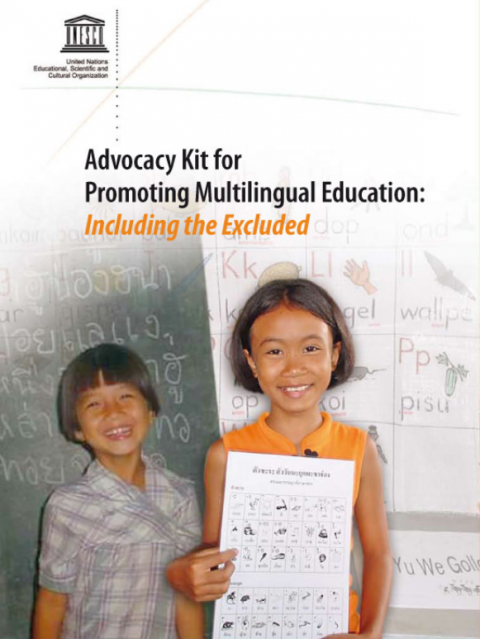 Advocacy kit for promoting multilingual education: including the excluded Год публикации: 2007 Организация-автор: UNESCO Bangkok Who Can Use This Kit? This kit was prepared for all of those who want to ensure that “Education for All” does, indeed, include everyone! The kit will be especially valuable for policy makers, education practitioners and specialists who want to improve access to and quality of education for those excluded by language. It will also be helpful for speakers of ethnic minority languages who want to improve the education situation in their own communities.This kit is designed to raise awareness on the importance of mother tongue-based multilingual education (MLE). It presents key arguments and facts about MLE and provides important insights about the value and benefits of providing education in learners’ mother tongue. The kit also presents ideas, research findings and concrete examples that you can use to think about your own situation and suggests steps for taking actions to make your school system more responsive to linguistic diversity.The kit is not a definitive textbook, and it will not have an answer for every problem that you might face. To help you as much as possible, at the end of each booklet we have included lists of references. In addition, each booklet contains a glossary of terms and, at the front of each booklet is a one-page summary of its contents.How Can You Use This Kit? This kit contains three main booklets. Each booklet has a designated audience: 1) policy makers, 2) education programme planners and practitioners and 3) community members. Please remember that developing MLE requires contributions from everyone at all levels. For that reason, we encourage you to use all three booklets along with other available resources as you work together to plan, implement and sustain your MLE programmes.This kit can be used in many different ways. For those who are already involved in MLE programmes, you might use these ideas to help you to promote mother tongue instruction and strengthen your programme. Those who are not familiar with multilingual education but want to improve educational access for minority language students might use these booklets to identify specific points that they can investigate and discuss in their own contexts.
 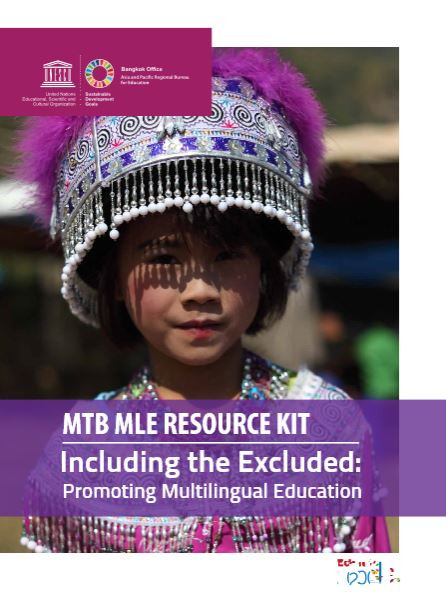 MTB MLE resource kit: Including the excluded: promoting multilingual education Год публикации: 2016 Автор: Susan Malone Организация-автор: UNESCO Bangkok Who Can Use this Resource Kit?This MTB MLE Resource Kit is for people who are committed to the idea that all children have the right to quality education in a language they speak and understand. MTB MLE programmes that are sustained within the formal education system require contributions from all stakeholders, working together and supporting one another. The next three booklets were developed for three specific stakeholder groups: policy makers, programme implementers and community members. These three booklets, with the case studies, provide a “big picture” of successful MTB MLE programmes and suggestions for the roles each group can take as they plan, implement and maintain their programmes. How Can You Use this Resource Kit?Each booklet is organized around key questions about MTB MLE that are frequently asked by policy makers, implementers and community members. Responses to each question include examples of specific activities that are part of successful MTB MLE programmes in a variety of contexts. Working together, stakeholders can identify the specific activities that are best suited for their own situation and make the best use of all available resources.