
Ресурсы
Изучайте широкий спектр ценных ресурсов ВГГ, чтобы углубить своё понимание и повысить эффективность исследований, просветительской деятельности, преподавания и обучения.
Найдено: 3,385
 Inscool: Activities Booklet; Practical Classroom Approaches to Rights-Based Learning Год публикации: 2020 Организация-автор: Scotdec | European Union (EU) | Erasmus+ This toolkit is designed to guide you flexibly, in ways that suit your primary school, through the start of a journey towards including more pupils in learning and life at school. A key point to remember about this journey is that it does not have a final destination. Rather, it is about cumulative change that has, at its heart, a continuous focus on improving their access to and participation in quality, inclusive education.
  الثنائية اللغوية بين اكتساب اللغة الأم (العربية) وتعلم اللغة الأجنبية (الإنجليزية) Год публикации: 2015 Автор: Fuad Abdul Muttalib | Shafeeq Banat Организация-автор: AlMamon University College تبحث هذه الدراسة أهمية تعلم اللغات الأجنبية، لا سيما اللغة الإنجليزية، ودورها في مختلف ميادين الحياة، وعلى نحو ملحوظ في التربية والتعليم والبحث ونقل المعرفة والتنمية اللغوية والثقافية. لكن التداخل اللغوي بين اللغة الأجنبية واستخدامات اللغة الأم يؤدي أحياناً إلى مشكلات غدت مستفحلة في الآونة الأخيرة. وبغية تقصي هذه المشكلات، يحاول هذا البحث الخوض في موضوع اكتساب الأطفال للغتهم الأم ومن ثمَّ نماء هذه اللغة وإبداعهم فيها، مستعرضاً آراء باحثين مختصين في هذا المجال.ويتطرق البحث إلى المشتغلين باللغة وانجذاب بعضهم إلى اللغة الإنجليزية التي راحت تقتحم عملية اكتساب المعرفة والتعليم والثقافة والإبداع وتؤثر سلباً في هذه العملية انطلاقاً من نظرة دونية وتشكيك حيال اللغة العربية واتهامها بالعجز والقصور عن مواكبة مستجدات العصر. ويشير البحث إلى ظهور هذه المشكلة قديماً في اللغة والثقافة العربيتين متناولاً آراء ابن خلدون فيها. ويعرض البحث لأفكار ومقترحات يمكن أن تخدم بوصفها حلولاً لهذه الإشكالية القديمة الجديدة، مستفيداً في ذلك من دراسات وثيقة الصلة بموضوعه، وذلك كله من خلال تأكيد فكرة استخدام العربية لغةً للتعلّم والبحث والتربية والإبداع وإنتاج المعرفة على نحوٍ أساس. Bilingualism Between Mother Tongue (Arabic) Acquisition and Foreign Language (English) Learning Год публикации: 2015 Автор: Fuad Abdul Muttalib | Shafeeq Banat Организация-автор: AlMamon University College This research work considers the importance of learning of foreign languages, especially English, and their role in education, research, knowledge transfer, language and cultural growth. Language overlapping, between English and Arabic, leads sometimes to acute problems. To approach these problems, the work tries to discuss the acquisition of children of their mother tongue, its expansion and its use creatively in different disciplines.The work tackles the attraction of English to some experts in their fields, the thing that drives them to look suspiciously and down at Arabic accusing it of incompetence to catch up with new changes. Since language overlapping is an old problem, this has entailed a reference to Iben Khaldoun’s diagnosis of it with commentary. The work asserts eventually the essential use of Arabic as a language of education, research, culture and knowledge production, without neglecting foreign languages learning, above all English. The work is carried out in the light of the available studies on this issue.
 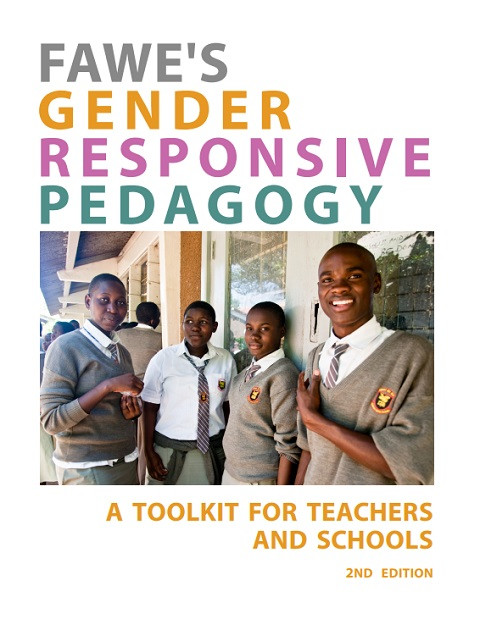 Gender Responsive Pedagogy: A Toolkit for Teachers and Schools Год публикации: 2019 Автор: Clare Dowd | Aryeh Shell | Veronica Thamaini | Louisa Trackman Организация-автор: Forum for African Women Educationalists (FAWE) This toolkit is intended as a practical tool for training new teachers and refreshing the knowledge and skills of seasoned teachers and a reference for teacher and school management to creatively engage a wide range of community stakeholders in gender-responsive pedagogy (GRP) and related topics.
 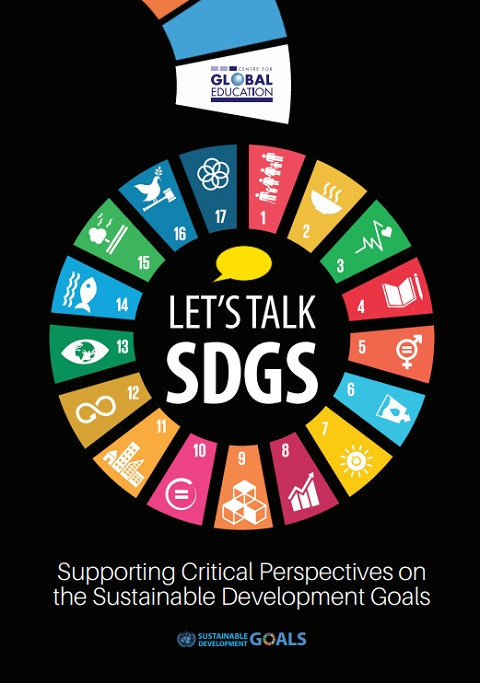 Let’s Talk SDGs: Supporting Critical Perspectives on the Sustainable Development Goals Год публикации: 2020 Автор: Caroline Murphy Организация-автор: Centre for Global Education (CGE) This resource is an invitation to development educators to critically interrogate the Sustainable Development Goals and discuss their capacity to deliver upon their intended outcomes. It invites users to ask if the SDGs can support effective global learning and represent a sound critique of the international system. The resource is a useful starting point for a critical discussion on the Goals' capacity for effective advocacy and education toward the eradication of poverty and inequality.
  Putting the Voice of Young People at the Heart of Global Citizenship Education Год публикации: 2014 Автор: Douglas Bourn Организация-автор: UCL Institute of Education | Erasmus+ This briefing is aimed at policy-makers across Europe who are engaged with, or interested in ensuring that education and international development programmes give consideration to the voices of young people. It also aims to contribute to policy-makers responses to how they are implementing the Sustainable Development Goals.
  Towards an urban culture of non-discrimination and non-violence: The ICCAR experience Год публикации: 2017 Организация-автор: International Coalition of Inclusive and Sustainable Cities This is a conference report for the World Forum on Urban Violence and Education for Coexistence and Peace.
  Indicators for evaluating municipal policies aimed at fighting racism and discrimination Год публикации: 2005 Автор: Jean Claude Icart | Micheline Labelle | Rachad Antonius Организация-автор: Centre de recherche sur l'immigration, l'ethnicité et la citoyenneté (Canada). Observatoire international sur le racisme et les discriminations Ethnocultural diversity increasingly constitutes an important characteristic of major cities around the world. As the primary centres for national, ethnic and cultural intermixing, cities are becoming laboratories for new ways of “living together” (UNESCO, 2004). However, when this diversity is accompanied by inequalities, racism and discrimination, it can increase the social divide. Therefore, in order to benefit from the true advantages of the ethnocultural diversity that makes up the fabric of contemporary societies, it has become increasingly necessary to employ methods to correct social injustices, and to ensure the equality and the full exercise of citizens’ rights. Accordingly, the last few years have seen true efforts to conceptualize interventions by cities to manage ethnocultural diversity. These efforts rely on ideologies controlled by the state and on the values of equality, social justice, and respect for pluralism that are endorsed by different international organizations such as the UN and UNESCO, or by national organizations such as human rights commissions.To promote and reinforce municipal anti-discriminatory policies, UNESCO supported the launching of the International Coalition of Cities Against Racism1. The initial framework for this Coalition was the proposal of the Ten-Point Action Plan, which was adopted in December 2004 in Nuremburg.The present research report relating to the development of a series of indicators for evaluating municipal policies to fight racism and discrimination should be situated in this context. It was carried out with the goal of assisting cities that want to adopt public policies of diversity management and to fight racism and discrimination, and to evaluate the impact of such policies. The goal is to equip cities with tools that make it possible to evaluate, in quantitative and/or qualitative terms, whether their actions produce results that correspond to the major goals of adopted policies. Indicateurs pour l'évaluation des politiques municipales visant à contrer le racisme et la discrimination Год публикации: 2005 Автор: Jean Claude Icart | Micheline Labelle | Rachad Antonius Организация-автор: Centre de recherche sur l'immigration, l'ethnicité et la citoyenneté (Canada). Observatoire international sur le racisme et les discriminations Ethnocultural diversity increasingly constitutes an important characteristic of major cities around the world. As the primary centres for national, ethnic and cultural intermixing, cities are becoming laboratories for new ways of “living together” (UNESCO, 2004). However, when this diversity is accompanied by inequalities, racism and discrimination, it can increase the social divide. Therefore, in order to benefit from the true advantages of the ethnocultural diversity that makes up the fabric of contemporary societies, it has become increasingly necessary to employ methods to correct social injustices, and to ensure the equality and the full exercise of citizens’ rights. Accordingly, the last few years have seen true efforts to conceptualize interventions by cities to manage ethnocultural diversity. These efforts rely on ideologies controlled by the state and on the values of equality, social justice, and respect for pluralism that are endorsed by different international organizations such as the UN and UNESCO, or by national organizations such as human rights commissions.To promote and reinforce municipal anti-discriminatory policies, UNESCO supported the launching of the International Coalition of Cities Against Racism1. The initial framework for this Coalition was the proposal of the Ten-Point Action Plan, which was adopted in December 2004 in Nuremburg.The present research report relating to the development of a series of indicators for evaluating municipal policies to fight racism and discrimination should be situated in this context. It was carried out with the goal of assisting cities that want to adopt public policies of diversity management and to fight racism and discrimination, and to evaluate the impact of such policies. The goal is to equip cities with tools that make it possible to evaluate, in quantitative and/or qualitative terms, whether their actions produce results that correspond to the major goals of adopted policies.
  Référentiel des compétences développées en éducation à la citoyenneté mondiale et solidaire à l’âge de l’obligation scolaire Год публикации: 2017 Организация-автор: Annoncer la Couleur (ALC) | La coopération belge au développement | Centre de Connaissances en Éducation à la Citoyenneté Mondiale (WikiCM) Ce référentiel de compétences ECM(Éducation à la citoyenneté mondiale) a été élaboré par WikiCM, le centre de connaissances en éducation à la citoyenneté mondiale coordonné par Annoncer la Couleur a réuni des professionnels de l’enseignement (administration, réseaux, inspection) et de l’éducation à la citoyenneté mondiale (ONG, ALC). Il présente dans un premier temps les repères sur les stades de développement de l’enfant et, dans un deuxième temps, les 7 compétences de l’ECM en milieu scolaire.