
Ресурсы
Изучайте широкий спектр ценных ресурсов ВГГ, чтобы углубить своё понимание и повысить эффективность исследований, просветительской деятельности, преподавания и обучения.
Найдено: 2,161
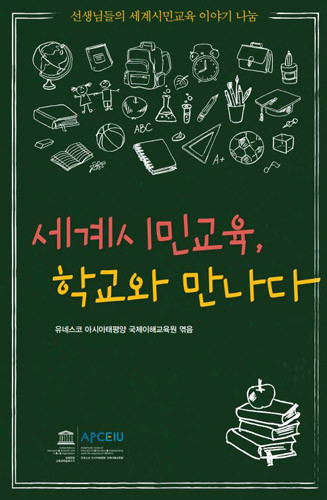 Rencontrant L'éducation à la Citoyenneté Mondiale (ECM) dans les Écoles: Histoires des enseignants sur ECM Год публикации: 2016 Организация-автор: Centre Asie-Pacifique d'éducation pour la compréhension internationale (APCEIU) Intitulée «Rencontrant L'éducation à la citoyenneté Mondiale (ECM) dans les écoles: Histoires des enseignants sur ECM », le livre comprend des histoires de 11 ECM enseignantes et enseignants leaders mettant l'accent sur la mise en œuvre pratique de l'ECM dans un cadre éducatif réel. Les lecteurs pourront apprendre des expériences de ces enseignants, qui ont travaillé à mettre en œuvre ECM dans le domaine de l'éducation. De plus, cette publication fournit une occasion pour les éducateurs de petites écoles primaires dans les zones rurales vers les écoles secondaires dans les grandes villes, à réfléchir sur les implications associées à ECM et comment ECM peut être utilisé pour les étudiants d'origines diverses et de divers âges. Les histoires inclus dans le livre sont les suivantes: • ECM commence à partir des relations horizontales • Pratiques ECM dans les petites écoles • Faire en apprentissage, apprentissage par la pratique • Pour afficher les questions sociales du point de vue des enfants • Vivre par la communication avec le peuple de la Terre • réunion des citoyens du monde à Jeju • Début de l'ECM avec les étudiants et les enseignants • a partir d'un changement lent: l'histoire d'une bougie • ECM avec les points de vue des enfants • un chemin vers l'avenir, Marcher avec les enseignants pour ECM • ECM est à la recherche pour les valeurs dans la vie quotidienne 세계시민교육, 학교와 만나다: 선생님들의 세계시민교육 이야기 나눔 Год публикации: 2016 Организация-автор: 유네스코 아시아태평양 국제이해교육원 유네스코 아시아태평양 국제이해교육원은 “세계시민교육, 학교와 만나다”를 출간하였다. 이 책은 세계시민교육을 실천하고 있는 학교 선생님들의 현장 이야기를 담은 책으로, 세계시민교육 선도교사로 활동하고 있는 11명의 선생님들의 세계시민교육에 관한 진솔한 이야기를 만날 수 있다. 여는글수평적 관계 맺음으로 시작하는 세계시민교육 - 김동혁 (광주 문정여고)작은 학교에서 세계시민교육 실천하기 - 곽병남 (충북 영동초등학교)배움으로 행동하기, 행동으로 배우기 - 임영아 (울산 강남고등학교)아이들의 시선에서 사회적 문제 바라보기 - 이흥순 (인천 청일초등학교)지구인과 소통하며 살아가기 - 박범철 (서울 경문고등학교)제주에서 세계시민을 만나다 - 한상희 (제주 서귀중앙여자중학교)아이들과 함께, 선생님들과 함께 열어가는 세계시민교육 - 김민경 (인천 청량초등학교)스스로, 천천히, 하나의 변화로 시작하기: ‘촛불하나’ 이야기 - 최재화 (경기 신천고등학교)세계시민교육, 아이들과 눈맞춰 함께 가기 - 김양모 (안동 동부초등학교)미래로 가는 길, 선생님과 함께 걷는 세계시민교육 - 정애경 (서울 국제고등학교) 세계시민교육이란 일상에서 가치 찾기 - 조성준 (대전 복수고등학교)
 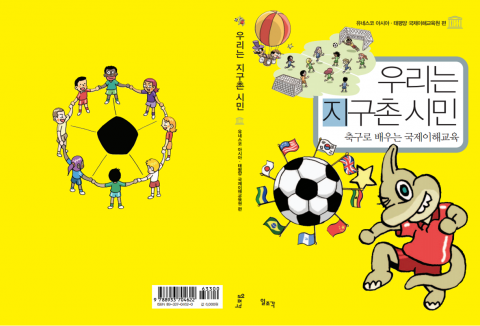 우리는 지구촌 시민: 축구로 배우는 국제이해교육 Год публикации: 2004 Организация-автор: 유네스코 아시아태평양 국제이해교육원 『우리는 지구촌 시민—축구로 배우는 국제이해교육』은 세계화 시대에 우리 학생들이 세계 이웃의 다른 모습을 이해하고, 함께 살아가는 가치관을 깨우칠 수 있도록 도움을 주기 위하여 만들어진 교재입니다.세계적인 석학들과 교육 전문가들로 구성된 유네스코 21세기 세계교육위원회는 「들로르 보고서」에서 ‘함께 살기 위한 교육’을 21세기 교육의 핵심 과제로 제시하였습니다. 점차 증가하고 있는 여러가지 갈등 문제를 교육을 통하여 해결해 나가기 위한 시도인 것입니다. 이러한 세계적인 흐름 속에서 우리나라도 이에 발맞추어 제 7차 교육과정에서 '국제이해교육'을 창의적 재량학습 과목의 하나로 채택하였습니다. 이제는 국제이해교육의 하나의 독립된 학습 과목으로 자리잡을 수 있게 되었고, 이에 걸맞은 전문 교재와 교육 자료들이 필요하게 되었습니다. 하지만 안타깝게도 이러한 시대적인 요구를 만족시켜 줄만한 교재나 교육 자료는 그다지 많지 않습니다. 또한 '국제이해교육'이라는 제목을 통해서도 알 수 있듯이, 그 범위가 아주 넓어 어디서부터 어떻게 시작해야 할 지 막막한 기분이 드는 것도 사실입니다.유네스코 아시아태평양 국제이해교육원은 이러한 교육 현장의 요구에 부응하기 위해 『우리는 지구촌 시민—축구로 배우는 국제이해교육』을 발간하게 되었습니다. 유네스코 아시아태평양 국제이해교육원은 아시아·태평양 지역의 45개 나라들과 함께 '국제이해교육'을 강화하고 발전시킬 책임을 완수하기 위해 학교와 시민사회에서 다양한 활동을 이어오고 있습니다. 이러한 활동의 일환으로 우리 교육원은 다양한 분야의 전문가들과 함께 국제이해교육의 교육과정을 연구하는 동시에, 교원들에 대한 연수와 교육자료 개발에 온 힘을 쏟고 있습니다. 이번에 발간된 『우리는 지구촌 시민—축구로 배우는 국제이해교육』은 일곱 개의 장으로 구성되어 있으며, 각 장은 학생들이 세계 여러 나라의 저마다 다른 문화에 대한 이해를 통해서 문화간 이해, 인권, 평화, 세계화, 지속가능한 발전 등의 범세계적인 가치관을 배울 수 있도록 짜여졌습니다. 학생들이 일상 생활에서 쉽게 접할 수 있는 '축구'라는 작고 친근한 소재를 통해 '나와 다른 모습에 대한 이해'와 '함께 만들어가는 세상'을 체험하고 배울 수 있도록 꾸몄으며, 각 단원마다 다양한 <함께해보기>를 수록하여 학생들이 직접 참여함으로써 자신들이 가지고 있던 편견과 선입견을 발견하고 스스로 깨우쳐 나갈 수 있도록 구성하였습니다. 이 교재를 통하여 학생들이 편견에서 벗어나 세계의 친구들과 함께 살아갈 수 있는 올바른 가치관과 태도를 배울 수 있게 되기를 바랍니다.
 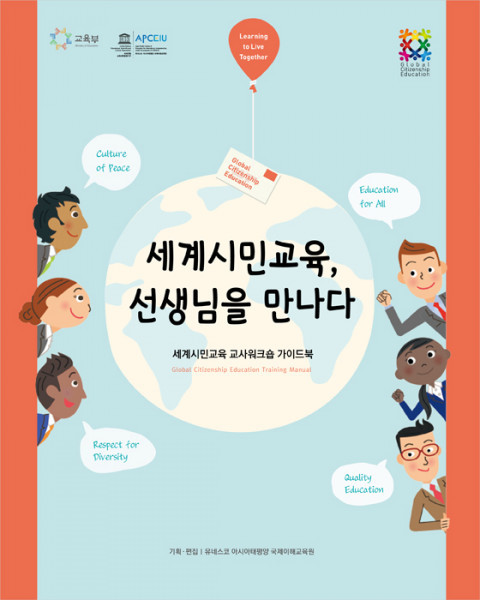 GCED Meets Teachers: GCED Teacher Workshop Guidebook Год публикации: 2015 Организация-автор: APCEIU APCEIU published the GCED teacher workshop guidebook “GCED meets teachers.” This guidebook will be used at GCED workshops for teachers of 17 metropolitan and provincial offices of education carried out by GCED Lead teachers. The contents include the concept and the background of GCED, main contents, implementing methods at school. This GCED workshop manual provides teachers with opportunities to search for the ways to implement GCED at the schools, experience learning methods, and understand the main issues and themes of GCED through workshops. This guidebook is composed of 7 workshop sessions(refer to list below). Teachers and teacher educators planning GCED workshop can use this guidebook which includes the contents of the sessions, consultation to help plan and implement workshops based on participation and communication of the participants. “Global Citizenship Education meets teachers” GuidebookSession 1. Importance of World Education Forum and Global Citizenship EducationSession 2. Concept of GCED and its backgroundSession 3. Learning the contents and the theme of GCEDSession 4. Understanding the complexity and interrelationship of the issuesSession 5. Discussion class for cooperative communicationSession 6. Implementing GCED through Project Based LearningSession 7. Setting GCED action plans Éducation à la citoyenneté mondiale, rencontrer l'enseignant Год публикации: 2015 Организация-автор: APCEIU APCECI publié le manuel de formation de l'ECM pour les enseignants intitulé «L’éducation à la citoyenneté mondiale: Guide de l'enseignant ».Ce guide est conçu comme un manuel pour les formateurs d'enseignants à planifier et à mettre en œuvre l'atelier d'ECM. Il comprend des informations de base sur ECM, thèmes clés, les concepts et les questions d'ECM et pédagogies transformatrices, les méthodes d'apprentissage, et la planification de l'action pour les classes d'ECM.Ce guide est composé de 7 séances de l'atelier comme ci-dessous. Les enseignants et les formateurs d'enseignants planifient des ateliers d'ECM peut concevoir et mettre en œuvre un atelier de 15 heures au niveau de base.«L'éducation à la citoyenneté mondiale: Guide des enseignants»Session 1. Forum mondial sur l'éducation (WEF) et L'éducation à la citoyenneté Mondiale (ECM) (ECM)Session 2. ECM: Concepts et Arrière-plansSession 3. thèmes et contenu ECM clésSession 4. Comprendre la complexité et de l'interdépendance des questionsSession 5. pédagogies: classe de discussion pour les communications coopérativesSession 6. pédagogies: ECM à travers (apprentissage axé sur les projets) PBLSession de planification 7. Action 세계시민교육, 선생님을 만나다 Год публикации: 2015 Организация-автор: 유네스코 아시아태평양 국제이해교육원 유네스코 아시아태평양 국제이해교육원(www.unescoapceiu.org) 은 세계시민교육 교사워크숍 가이드북 “세계시민교육, 선생님을 만나다”를 출간하였다. 이 가이드북은 세계시민교육 중앙선도교사들이 17개 시·도교육청에서 소속 교사들을 대상으로 실시할 세계시민교육 연수를 위한 자료로 개발되었으며, 세계시민교육의 개념과 배경, 주요 내용, 교실에서 실천할 수 있는 세계시민교육 방법론 등에 관한 내용을 담고 있다.이 가이드북은 총 15시간의 세계시민교육 워크숍 매뉴얼로서 세계시민교육을 처음 접하는 교사들이 워크숍을 통해 세계시민교육의 배경과 기본 개념을 이해하고, 주요 내용 및 주제, 교수학습방법을 경험하며, 세계시민교육을 학교 현장에서 실천할 수 있는 방법과 기회를 모색하는 것을 목적으로 한다.총 7개의 워크숍 세션(아래 참조)으로 구성되어 있는 이 가이드북은 워크숍 진행자들이 참여와 소통에 기반한 워크숍을 기획 및 실행할 수 있도록 돕는 도움말 등이 함께 실려 있어 세계시민교육 워크숍을 기획하는 교사 및 교사교육가들에게 도움이 될 것으로 기대된다. “세계시민교육, 선생님을 만나다” 가이드북 구성 세션 1. 세계교육포럼의 의의와 세계시민교육 세션 2. 세계시민교육의 개념과 배경 세션 3. 세계시민교육의 내용과 주제 알기 세션 4: 이슈의 복합성과 상호연계성 이해하기 세션 5: 협력적 소통을 위한 토론 수업 세션 6: 프로젝트기반 학습(PBL)을 통한 세계시민교육 실천 세션 7: 세계시민교육 실천계획 수립
 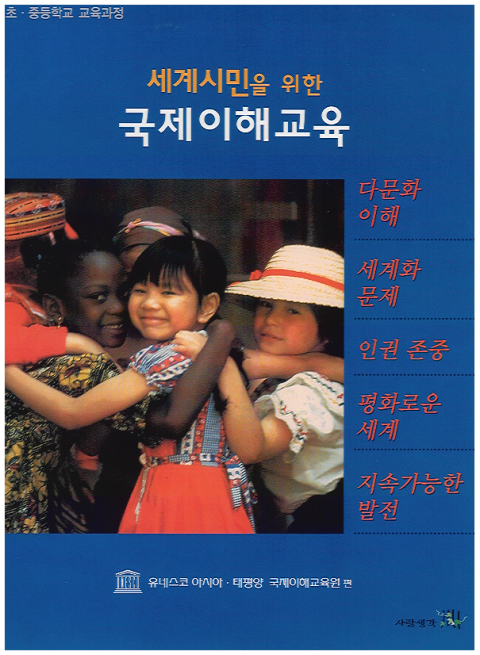 세계시민을 위한 국제이해교육 Год публикации: 2003 Организация-автор: APCEIU International Commission on Education for the Twenty-first Century of UNESCO proposed “Learning to Live Together” as the worldwide educational goal at the twenty-first century. Also, as many countries have become multiethnic or multicultural societies due to increasing interdependences, globalization and ICT, the necessity and importance of Education for International Understanding (EIU) on how to live in harmony with others is growing. In Korea, EIU was included as a selective subject for creative experience activities in the seventh national curriculum and the number of schools teaching EIU on the ground has been increasing since 2000. However, in many cases what to teach was left up to teachers’ discretion owing to the lack of clear guidelines or materials. This book is comprised of systematized educational goals and contents in accordance with primary and secondary school curricula, and was developed by Asia-Pacific Centre for Education for International Understanding (APCIEU) under the auspices of UNESCO for its first three years since its establishment in 2000. EIU as a school subject aims to provide students with knowledge, values and ethical attitudes needed for the people of global society to move beyond the borders of ethnicity, culture and religion into a life of peaceful coexistence. Within the frame of EIU, students learn about cultural relativity and universal values. Based on holistic perspective, this book is designed with the following five units - multicultural understanding, issues of globalization, respect for human rights, a peaceful world, and sustainable development - to be utilized for learning at the level of primary and secondary level students. 세계시민을 위한 국제이해교육 Год публикации: 2003 Организация-автор: Centre Asie-Pacifique d'éducation pour la compréhension internationale (APCEIU) Commission internationale sur l'éducation pour le XXIe siècle de l'UNESCO a proposé « Appredre à Vivre Ensemble» comme l'objectif de l'éducation dans le monde au XXIe siècle. En outre, comme de nombreux pays sont devenus des sociétés multiethniques ou multiculturelles en raison de l'augmentation des interdépendances, la mondialisation et les TIC, la nécessité et l'importance de l'Éducation pour la Compréhension Internationale (ECI) sur la façon de vivre en harmonie avec les autres. En Corée, ECI a été inclus en tant que sujet sélectif pour les activités d'expérience créatives dans le septième programme national et le nombre d'écoles d'enseignement ECI sur le terrain a augmenté depuis 2000. Cependant, dans de nombreux cas, ce qu'il faut enseigner a été laissé à la discrétion des enseignants en raison de l'absence de lignes directrices ou des matériaux transparents. Ce livre est composé de buts et contenus éducatifs systématisés en conformité avec les programmes de l'école primaire et secondaire, et a été développé par le Centre Asie-Pacifique d'éducation pour la compréhension internationale (APCEIU) sous les auspices de l'UNESCO pour ses trois premières années depuis sa création en 2000 . ECI en tant que matière scolaire vise à fournir aux étudiants des connaissances, des valeurs et des attitudes éthiques nécessaires pour les gens de la société mondiale pour se déplacer au-delà des frontières de l'ethnicité, la culture et la religion dans la vie de la coexistence pacifique. Dans le cadre de l'ECI, les élèves apprennent la relativité culturelle et des valeurs universelles. Sur la base de la perspective holistique, ce livre est conçu avec les cinq unités suivantes - la compréhension multiculturelle, les questions de la mondialisation, le respect des droits de l'homme, un monde pacifique, et le développement durable - pour être utilisé pour l'apprentissage au niveau des élèves de niveau primaire et secondaire. 세계시민을 위한 국제이해교육 Год публикации: 2003 Организация-автор: 유네스코 아시아태평양 국제이해교육원 21세기를 위한 유네스코 국제 교육위원회는 21세기 세계교육 목표로 “더불어 사는 학습(Learning to Live Together)”을 제안했다. 오늘날 많은 국가들이 상호 의존성 증가에 기인하는 다문화 혹은 다민족 사회가 되었고, 이에 따라 어떻게 타인과 함께 성장하며 어떻게 조화를 이루며 살아가는 가에 대한 국제이해교육(EIU)의 중요성과 필요성, 세계화와 정보통신 기술(ICT)도 대두되었다. 한국에서는 제 7차 국가 교육 과정에 창의적 체험 활동 과목에 국제이해교육을 포함시켰고, 이를 가르치는 학교의 수가 2000년 이후 꾸준히 증가하고 있다. 그러나 명확한 가이드 라인 또는 자료의 부족으로 많은 경우, 국제이해교육은 교사의 재량에 따라 그 학습이 달려있었다. 본서는 초등 및 중등 교육 과정에 따라 체계화된 교육 목표와 그 내용으로 구성되었고, 2000년도에 설립된 이래 첫 3년동안 유네스코의 후원 하에 국제이해교육을 위한 아시아-태평양 교육원(APCIEU)에 의해 개발되었다. 학과목으로서의 국제이해교육(EIU)은 인종, 문화와 종교의 경계를 넘어 평화롭게 공존할 글로벌 사회의 사람들을 위해 필요한 윤리적 태도 및 가치, 지식을 갖춘 학생을 배양하는 것을 그 목표로 삼고 있다. 국제이해교육의 프레임 안에서 학생들은 문화의 상대성과 보편적 가치에 대해 학습한다. 전인적 관점에 근거하여, 본서는 다음의 다섯 가지 단위-다문화의 이해, 세계화의 쟁점 사안들, 인권 존중, 평화로운 세계, 지속 가능한 계발-로 고안되었으며, 초등 및 중등 학생 수준의 교육을 위해 사용된다.
 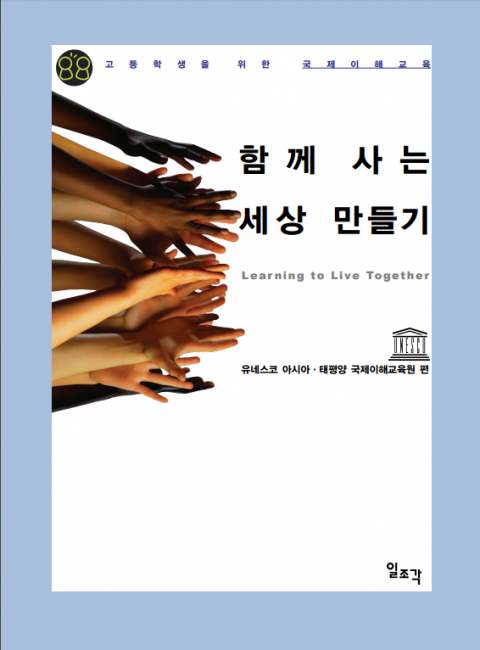 함께 사는 세상 만들기 Год публикации: 2004 Организация-автор: APCEIU This book, in essence, aims to introduce Education for International Understanding (EIU) to high school students, college students and teachers at all levels as well as the general public. The growing interconnectedness and interdependence compels all of us to understand the world beyond our immediate living space, to critically reflect on issues affecting us and others, and to work together to make our world a more peaceful and sustainable one. It requires values education that is transformative and participatory in nature to arouse genuine interests and passions to learn more and eventually to make positive changes. The book is comprised of five parts, organized by five thematic areas of EIU, namely, intercultural understanding, globalization, human rights, peace and Education for Sustainable Development (ESD). It introduces carefully chosen topics and discussions which may pique readers’ interest in some of the issues at stake, thus, encourage them to critically reflect on the complexities surrounding the issues and motivate them to engage further. Using an interdisciplinary lens, the book also borrows some ideas and approaches commonly practiced in critical anthropology.