
Ресурсы
Изучайте широкий спектр ценных ресурсов ВГГ, чтобы углубить своё понимание и повысить эффективность исследований, просветительской деятельности, преподавания и обучения.
Найдено: 2,668
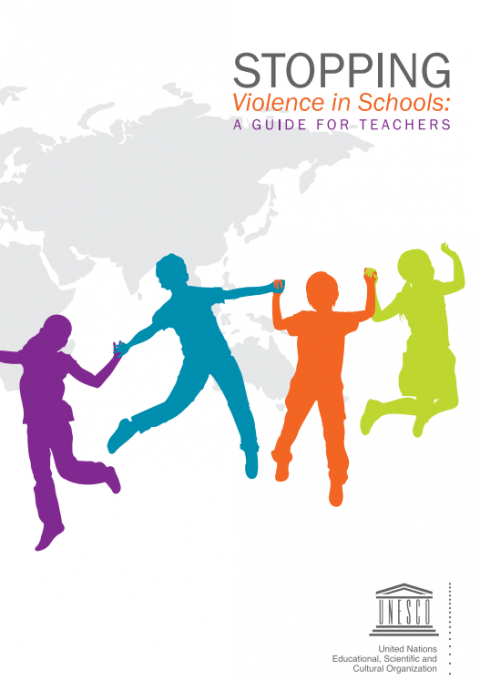 En finir avec la violence à l'école: guide à l'intention des enseignants Год публикации: 2014 Организация-автор: Organisation des Nations Unies pour l'éducation, la science et la culture (UNESCO) “Stopping Violence in Schools: A Guide for Teachers” examines various forms of violence that take place in schools, and offers practical suggestions as to what teachers can do to prevent them. Ten action areas are proposed, each with specific examples that teachers can adapt to address and prevent violence. Excerpts from relevant international normative instruments as well as a list of links to online resources for stopping violence in schools are annexed at the end of the book. Poner fin a la violencia en la escuela: guía para los docentes Год публикации: 2014 Организация-автор: Organización de las Naciones Unidas para la Educación, la Ciencia y la Cultura (UNESCO) “Stopping Violence in Schools: A Guide for Teachers” examines various forms of violence that take place in schools, and offers practical suggestions as to what teachers can do to prevent them. Ten action areas are proposed, each with specific examples that teachers can adapt to address and prevent violence. Excerpts from relevant international normative instruments as well as a list of links to online resources for stopping violence in schools are annexed at the end of the book. Как остановить насилие в школе. Пособие для учителей Год публикации: 2014 Организация-автор: Организация Объединенных Наций по вопросам образования, науки и культуры (UNESCO) Пособие для учителей «Как остановить насилие в школе» — это вклад ЮНЕСКО в поддержку программы «Образование для всех» и объявленного ООН Международного десятилетия культуры мира и ненасилия в интересах детей планеты (2001–2011). Педагоги и учащиеся могут использовать это пособие для противостояния насилию в школе и его предотвращения. Школьное насилие чрезвычайно сложная проблема, и при ее решении необходимо учитывать самые разные факторы. Такой комплексный подход предполагает участие самих школьников; привлечение родителей, преподавателей и местных жителей; взаимосвязь политики, законодательства и практики; определение индикаторов насилия и следование принципам соблюдения прав человека с учетом их универсального характера и культурных традиций.
  글로벌시민교육: 새로운 교육의제 Год публикации: 2014 Организация-автор: 유네스코 본 문서는 2013년 9월 9-10일 서울에서 개최된, 우리 정부(외교부, 교육부)와 유네스코가 공동 주최하고 유네스코 아시아태평양 국제이해교육원이 실행 기관으로 참여한 ‘글로벌 시민교육 전문가회의(Technical Consultation on Global Citizenship Education)에 기초하여 작성되었다. 본 문서에는 a) 사전 설문지에 대한 전문가들의 응답, b) 전문가들의 회의 발표(프레젠테이션) 내용, 3) 회의에서의 토론 내용 및 d) 참고 자료 및 레퍼런스가 수록되어 있다. 본 문서의 최종본은 파리 유네스코 본부의 ‘평화와 지속 가능 발전을 위한 교육(Education for Peace and Sustainable Development)’ 부서가 작성하였다.
 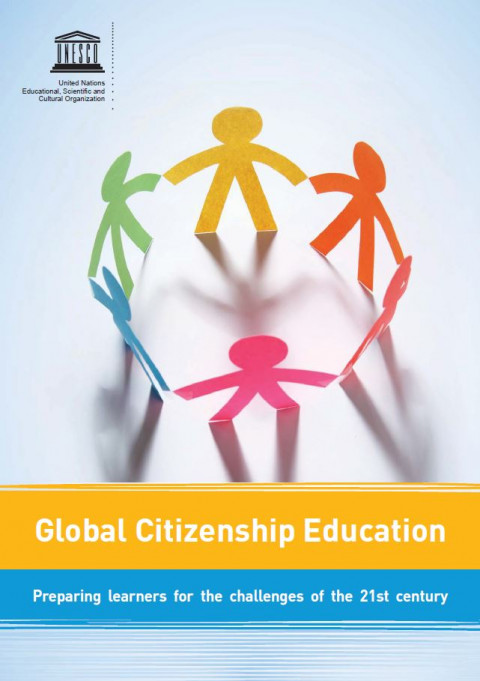 Global Citizenship Education: Preparing Learners for the Challenges of the 21st Century Год публикации: 2014 Организация-автор: UNESCO The United Nations Secretary-General’s Global Education First Initiative (GEFI) has established education as a means to ‘foster global citizenship’ – one of its three priority areas. To support this, UNESCO organized two landmark meetings on GCE in 2013. This publication aims to define the parameters of GCE by using the collective expertise, experience and wisdom of those participants who gathered at these landmark events, and to plan for future action in line with emerging thinking and other ongoing work. The review establishes that GCE has a critical role to play in equipping learners with competencies to deal with the dynamic and interdependent world of the twenty-first century. While GCE has been applied in different ways in different contexts, regions and communities, it has a number of common elements, which include fostering in learners. In formal settings, GCE can be delivered as an integral part of an existing subject (such as civic or citizenship education, social studies, environmental studies, geography or culture), or as an independent subject area. Integrated models appear to be more common. Some less traditional, but at least as effective, pathways for GCE have included the following: the use of information and communication technologies and social media, sport competitions and the use of art and music, and youth-led initiatives employing a wide variety of approaches. Both traditional and new horizons for GCE are profiled in this review. This publication also explores a number of enabling conditions for the promotion and implementation of GCE. These include: the existence of an open environment for universal values, the implementation of transformative pedagogy and support for youth-led initiatives.The review acknowledges that there are a number of ongoing tensions with the concepts of global citizenship and global citizenship education. While these tensions vary, they all point to the fundamental question of how to promote universality (e.g. common and collective identity, interest, participation, duty), while respecting singularity (e.g. individual rights, self-improvement). Some ways forward to resolve these tensions are suggested, whilst maintaining that challenges around theoretical elements of GCE should not undermine its practice. The processes documented in this publication have strengthened partnerships, built coalitions and contributed to improving the evidence base on the theory and practice of global citizenship education. While there are tasks that remain, this foundation bodes well for improving the enabling conditions and the practices highlighted in this review. By preparing learners to fulfil their potential in an increasingly globalized world, we are promoting transformed societies that are also better equipped to deal with the twenty-first century challenges and to seize twenty-first century opportunities. Éducation à la citoyenneté mondiale : Préparer les apprenants aux défis du XXIe siècle Год публикации: 2014 Организация-автор: Organisation des Nations Unies pour l'éducation, la science et la culture (UNESCO) Qu’est-ce que l’éducation à la citoyenneté mondiale ? Est-ce que nous l’apprenons à l’école ? Quels changements peut-elle générer ? Comment peut-elle être introduite dans les programmes scolaires et devenir une pratique courante ? Cette publication cherche à répondre à ces questions, ainsi qu’à d’autres encore.Pour l’UNESCO, l’éducation à la citoyenneté mondiale (ECM) renforce les connaissances, les compétences, les valeurs et les comportements dont les apprenants ont besoin pour construire un monde plus juste, pacifique et durable, et pour prospérer en tant que citoyens du monde au XXIe siècle.Dans un monde globalisé en rapide mutation, il est fondamental que les générations actuelles et futures développent la capacité d’agir dès aujourd’hui et de trouver des solutions aux problèmes mondiaux de demain.Le point de départ de l’ECM est la reconnaissance de l’apport de l’éducation dans la compréhension et la résolution de problèmes mondiaux complexes. C’est aussi la reconnaissance du rôle qu’elle a à jouer pour aller au-delà du simple développement de capacités cognitives – par exemple, lire, écrire et compter – en inculquant aux apprenants des valeurs et des compétences sociales et émotionnelles capables de promouvoir le changement social et la coopération entre les nations.Cette publication a pour objectif : d’améliorer la compréhension de l’ECM en tant qu’approche éducative et de ses implications sur les contenus éducatifs et les méthodes d’enseignement ; d’identifier des approches novatrices et de bonnes pratiques en matière d’ECM ; et de partager les enseignements tirés et les moyens de promouvoir davantage encore l’ECM. Cette publication a été préparée à l’intention des responsables des politiques chargés de l’éducation, des praticiens, des organisations de la société civile et des leaders de la jeunesse, à partir des conclusions de deux conférences internationales consacrées à l’ECM. Educación para la Ciudadanía Mundial: Preparar a los Educandos para los Retos del Siglo XXI Год публикации: 2014 Организация-автор: Organización de las Naciones Unidas para la Educación, la Ciencia y la Cultura (UNESCO) Esta publicación explora una serie de condiciones favorables para la promoción y la puesta en práctica de la ECM. Entre estos se incluyen: la existencia de un entorno abierto para los valores universales, la aplicación de pedagogía transformativa y el apoyo a las iniciativas dirigidas por los jóvenes. El estudio reconoce que hay una serie de tensiones vigentes para con los conceptos de ciudadanía mundial y educación para la ciudadanía mundial. Si bien estas tensiones varían, todas ellas apuntan a la cuestión fundamental de cómo promover la universalidad (p. ej. la identidad, el interés, la participación, el deber comunes y colectivos), respetando al mismo tiempo la singularidad (es decir, los derechos individuales, la superación personal). Se proponen algunas maneras de avanzar para resolver estas tensiones, a la vez que se mantiene que las dificultades que plantean los elementos teóricos de la ECM no deben socavar su práctica.
  Educación para la ciudadanía mundial: temas y objetivos de aprendizaje Год публикации: 2015 Организация-автор: Organización de las Naciones Unidas para la Educación, la Ciencia y la Cultura (UNESCO) This publication, titled Global Citizenship Education: Topics and learning objectives, is the first pedagogical guidance from UNESCO on global citizenship education. It is the result of an extensive research and consultation process with experts from different parts of the world. This guidance draws on the UNESCO publication Global Citizenship Education: Preparing learners for the challenges of the 21st century and the outcomes of three key UNESCO events on global citizenship education: the Technical Consultation on Global Citizenship Education (September 2013), as well as the First and Second UNESCO Fora on Global Citizenship Education, organized in December 2013 and January 2015 respectively. Before it was finalized, the guidance was field-tested by education stakeholders in selected countries in all regions to ensure its relevance in different geographical and socio-cultural contexts. Following the foundational work of UNESCO to clarify the conceptual underpinnings of global citizenship education and provide policy and programmatic directions, this document has been developed in response to the needs of Member States for overall guidance on integrating global citizenship education in their education systems. It presents suggestions for translating global citizenship education concepts into practical and age-specific topics and learning objectives in a way that allows for adaptation to local contexts. It is intended as a resource for educators, curriculum developers, trainers as well as policy-makers, but it will also be useful for other education stakeholders working in non-formal and informal settings.
  Educação para a cidadania global: preparando alunos para os desafios do século XXI Год публикации: 2014 Организация-автор: UNESCO The United Nations Secretary-General’s Global Education First Initiative (GEFI) has established education as a means to ‘foster global citizenship’ – one of its three priority areas. To support this, UNESCO organized two landmark meetings on GCE in 2013. This publication aims to define the parameters of GCE by using the collective expertise, experience and wisdom of those participants who gathered at these landmark events, and to plan for future action in line with emerging thinking and other ongoing work. The review establishes that GCE has a critical role to play in equipping learners with competencies to deal with the dynamic and interdependent world of the twenty-first century. While GCE has been applied in different ways in different contexts, regions and communities, it has a number of common elements, which include fostering in learners. In formal settings, GCE can be delivered as an integral part of an existing subject (such as civic or citizenship education, social studies, environmental studies, geography or culture), or as an independent subject area. Integrated models appear to be more common. Some less traditional, but at least as effective, pathways for GCE have included the following: the use of information and communication technologies and social media, sport competitions and the use of art and music, and youth-led initiatives employing a wide variety of approaches. Both traditional and new horizons for GCE are profiled in this review. This publication also explores a number of enabling conditions for the promotion and implementation of GCE. These include: the existence of an open environment for universal values, the implementation of transformative pedagogy and support for youth-led initiatives. The review acknowledges that there are a number of ongoing tensions with the concepts of global citizenship and global citizenship education. While these tensions vary, they all point to the fundamental question of how to promote universality (e.g. common and collective identity, interest, participation, duty), while respecting singularity (e.g. individual rights, self-improvement). Some ways forward to resolve these tensions are suggested, whilst maintaining that challenges around theoretical elements of GCE should not undermine its practice. The processes documented in this publication have strengthened partnerships, built coalitions and contributed to improving the evidence base on the theory and practice of global citizenship education. While there are tasks that remain, this foundation bodes well for improving the enabling conditions and the practices highlighted in this review. By preparing learners to fulfil their potential in an increasingly globalized world, we are promoting transformed societies that are also better equipped to deal with the twenty-first century challenges and to seize twenty-first century opportunities. Education à la citoyenneté mondiale: préparer les apprenants aux défis du XXIe siècle Год публикации: 2015 Организация-автор: Organisation des Nations Unies pour l'éducation, la science et la culture (UNESCO) The United Nations Secretary-General’s Global Education First Initiative (GEFI) has established education as a means to ‘foster global citizenship’ – one of its three priority areas. To support this, UNESCO organized two landmark meetings on GCE in 2013. This publication aims to define the parameters of GCE by using the collective expertise, experience and wisdom of those participants who gathered at these landmark events, and to plan for future action in line with emerging thinking and other ongoing work. The review establishes that GCE has a critical role to play in equipping learners with competencies to deal with the dynamic and interdependent world of the twenty-first century. While GCE has been applied in different ways in different contexts, regions and communities, it has a number of common elements, which include fostering in learners. In formal settings, GCE can be delivered as an integral part of an existing subject (such as civic or citizenship education, social studies, environmental studies, geography or culture), or as an independent subject area. Integrated models appear to be more common. Some less traditional, but at least as effective, pathways for GCE have included the following: the use of information and communication technologies and social media, sport competitions and the use of art and music, and youth-led initiatives employing a wide variety of approaches. Both traditional and new horizons for GCE are profiled in this review. This publication also explores a number of enabling conditions for the promotion and implementation of GCE. These include: the existence of an open environment for universal values, the implementation of transformative pedagogy and support for youth-led initiatives. The review acknowledges that there are a number of ongoing tensions with the concepts of global citizenship and global citizenship education. While these tensions vary, they all point to the fundamental question of how to promote universality (e.g. common and collective identity, interest, participation, duty), while respecting singularity (e.g. individual rights, self-improvement). Some ways forward to resolve these tensions are suggested, whilst maintaining that challenges around theoretical elements of GCE should not undermine its practice. The processes documented in this publication have strengthened partnerships, built coalitions and contributed to improving the evidence base on the theory and practice of global citizenship education. While there are tasks that remain, this foundation bodes well for improving the enabling conditions and the practices highlighted in this review. By preparing learners to fulfil their potential in an increasingly globalized world, we are promoting transformed societies that are also better equipped to deal with the twenty-first century challenges and to seize twenty-first century opportunities.