
Ресурсы
Изучайте широкий спектр ценных ресурсов ВГГ, чтобы углубить своё понимание и повысить эффективность исследований, просветительской деятельности, преподавания и обучения.
Найдено: 3,385
 Chaise UNESCO - UCLA dans l'apprentissage global et l'éducation à la citoyenneté mondiale Год публикации: 2016 Организация-автор: HFP | global media Documentaire Présentation du Dr. Carlos A. Torres comme Chaise UNESCO-UCLA dans l'apprentissage global et l'éducation à la citoyenneté mondiale.
 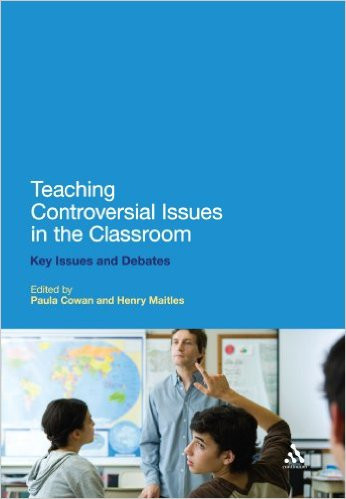 Teaching Controversial Issues in the Classroom: Key Issues and Debates Год публикации: 2012 Автор: Paula Cowan, Henry Maitles Организация-автор: Continuum The book provides an exploration of current debates and controversies relating to teaching controversial issues in primary and secondary schools. It investigates the changing nature of this type of learning experience and explore its contribution to the curriculum, particularly history and citizenship education. Topics covered include: - What is the 'right' age to discuss controversial issues? - The Citizenship Agenda - Discussing Iraq with school students - Teaching the Holocaust in the multicultural classroom – Islamophobia. International case studies provide fresh insights and valuable student and teacher feedback regarding the teaching of what many perceive as sensitive and difficult subjects. Teaching Controversial Issues in the Classroom: Key Issues and Debates Год публикации: 2012 Автор: Paula Cowan, Henry Maitles Организация-автор: Continuum Cet ouvrage propose un tour d'horizon des débats actuels que soulève la question de savoir s'il faut enseigner des sujets controversés à l’école primaire et au collège. L’auteur analyse également les changements engendrés par ce type d’expérience d’apprentissage et leur contribution aux programmes scolaires, particulièrement d’histoire et d’éducation civique.Les principaux thèmes abordés sont les suivants : A quel âge peut-on commencer à discuter de sujets controversés ? - L’agenda citoyen - Parler de l'Iraq avec les collégiens et lycéens - Enseigner l'Holocauste à une classe marquée par la diversité culturelle – L'islamophobie.
  Educating Against Extremism: Towards a Critical Politicisation of Young People Год публикации: 2009 Автор: Lynn Davis The paper examines the nature of extremism; identity formation and radicalization; religious belief, faith schools and the myth of equal value; justice, revenge and honour; and free speech, humour and satire. It argues that religious fundamentalism, as well as state terrorism, needs to be addressed in schools. Specific forms of citizenship education are needed, which provide skills to analyse the media and political or religious messages, but also enable critical idealism to be fostered. ÉDUQUER CONTRE L’EXTRÉMISME : VERS UNE POLITISATION CRITIQUE DES JEUNES Год публикации: 2009 Автор: Lynn Davis ÉDUQUER CONTRE L’EXTRÉMISME : VERS UNE POLITISATION CRITIQUE DES JEUNES—Cette Étude est basÉe sur un livre rÉcemment publiÉ, Educating against Extremism (Davies,Educating Against Extremism, 2008), qui explore le rôle potentiel des Écoles pour empêcher les formes plus nÉgatives et plus violentes d’extrÉmisme dans un pays. Elle examine la nature de l’extrÉmisme; la formation et la␣radicalisation de l’identitÉ; la croyance religieuse, les Écoles religieuses et le mythe de la valeur Égale; la justice, la vengeance et l’honneur; ainsi que la libre parole, l’humour et la satire. Cette Étude soutient que le fondamentalisme religieux doit être abordÉ dans les Écoles, aussi bien que le terrorisme d’État. L’argumentation de ce livre plaide pour une plus grande politisation des jeunes par le forgeage d’un (ir)respect critique et l’utilisation d’un fondement sÉculaire des droits de l’homme. On a besoin de formes spÉcifiques d’Éducation à la citoyennetÉ, qui fournissent des compÉtences pour analyser les mÉdias et les messages politiques ou religieux, mais qui permettent Également la stimulation d’un idÉalisme critique.
  The Concept, Values and Implementation Models of GCED Год публикации: 2013 Автор: Lu Lihua, Jiang Junhe “Global Citizenship education” aims to cultivate global citizens with an international perspective and global awareness. At present, there are more and more countries focusing on developing the core education value including” equity and justice”, “survival and development” and “democracy and rationality” and builds the global citizenship education network. “全球公民”教育基本内涵、价值诉求与实践模式 Год публикации: 2013 Автор: Lu Lihua, Jiang Junhe “全球公民”教育旨在培养具有国际视野和全球意识的世界公民。当前,世界各国逐渐确立了以“公平与正义”、“生存与发展”、“民主与理性”为核心的“全球公民”教育价值诉求,实施“全球公民”教育的立体化教育网络也正在一些国家和地区悄然形成。
  GCED towards Responsible villagers of the Global Village Год публикации: 2015 Автор: Teng Zhiyan, Chen Xiaoting Global citizenship education has attracted an increasing attention in global era. This essay briefly introduce the definition of global citizenship education and how to develop it in today's society. This article believe that cultivating global citizens not only is a trend, but also is an important result of globalization. “全球公民”教育做负责任的地球村村民 Год публикации: 2015 Автор: Teng Zhiyan, Chen Xiaoting 在全球化时代,全球公民教育得到了越来越多的关注。本文简单介绍了全球公民教育的定义以及当今社会如何发展全球公民教育。文章认为培养全球公民不仅是一种趋势,更是全球化的重要产物。
  The National Youth White Paper on Global Citizenship Год публикации: 2015 Организация-автор: Centre for Global Citizenship Education and Research (CGCER) On March 20, 2015, over 400 students from five high schools across Canada, in partnership with the Centre for Global Citizenship Education, The Centre for Global Education and TakingITGlobal, came together to collaborate, through the use of technology, in a Virtual Town Hall to discuss the youth’s vision for Global Citizenship Education. From Alberta to Ontario, downtown Toronto to Yellowknife, the youth of Canada exchanged ideas, debated alternatives, and ultimately created a document that represents their voice on the relationship Canadians should have with the rest of the world. The Virtual Town Hall, an “archetype of grassroots democracy,” (Senator Grant Mitchell) was the culmination of over a month of online teamwork, 2000 hours of student collaboration, over 100 hours of teacher facilitation, and the passion of over 1000 youth to engage in a national conversation and have their voices heard.In the month prior to the Virtual Town Hall, student leaders, systematically chosen from each school to represent Canada’s diverse geographic and demographic population, met on a weekly basis to exchange ideas, work with and listen to experts, and create a common framework. Concurrently, the students were trained to use an arsenal of Web 2.0 tools (YouTube, Twitter, cell phone voting, Google Docs, H.323 Video Conference, discussion boards, blogs, etc.) to collaborate, build consensus, and create community regardless of time or location.Equipped with this knowledge and empowered through online technology, the student leaders facilitated a full-day virtual town hall. In the morning, 400 youth peers engaged in a dialogue with local and international experts. Following this session, the youth participated in breakout groups to address three critical questions: What are our obligations as global citizens? What are the rights and responsibilities that we have? To what extent can well-intentioned global citizenship initiatives reinforce or resist power inequities? What types of policies/practices will enable/facilitate global citizenship? The National Youth White Paper on Global Citizenship, written collaboratively by Canadian students, is the direct result of this full-day, interactive event. The evolution of the document involved equipping leaders with knowledge and technology, having those leaders facilitate a larger conversation among their peers, taking the data generated to their community at large for feedback and direction, and then synthesizing the results in the student white paper. It represents the voices of over one thousand youth, introduced to the complexities of global citizenship education, unified through the power of 21st century technology, and sharing a passion to contribute to the dialogue taking place on the future of Canada and its relationship to the rest of the world.