
Ресурсы
Изучайте широкий спектр ценных ресурсов ВГГ, чтобы углубить своё понимание и повысить эффективность исследований, просветительской деятельности, преподавания и обучения.
Найдено: 3,385
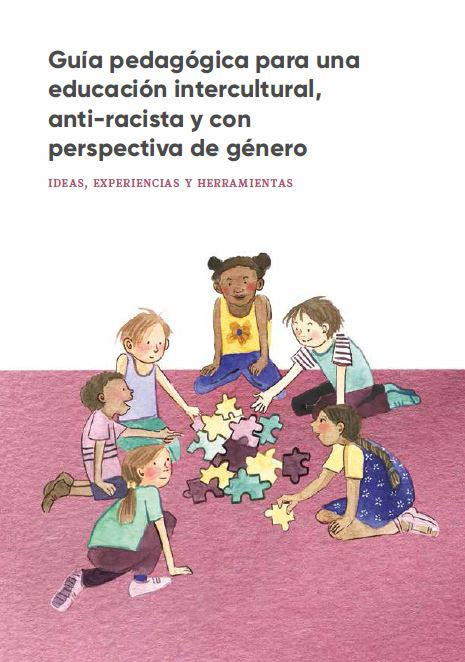 Guía pedagógica para una educación intercultural, anti-racista y con perspectiva de género: ideas, experiencias y herramientas Год публикации: 2017 Автор: Carolina Stefoni | Andrea Riedemann | Fernanda Stang | Andrea Guerrero | Antonia Garcés | Marta Camarena Организация-автор: Programa Interdisciplinario de Estudios Migratorios (PRIEM) | Universidad Alberto Hurtado | Fundación para la Superación de la Pobreza (FUSUPO) El propósito principal de esta Guía es, entonces, compartir algunas ideas, herramientas y experiencias que puedan ayudar a construir y andar el camino hacia una educación intercultural, anti-racista y con perspectiva de género en diversos espacios educativos. Está dirigida principalmente -aunque no de manera exclusiva, por supuesto- a todas aquellas personas que sean parte de procesos de enseñanza-aprendizaje formales e informales. Es importante enfatizar que la Guía no pretende ser un recetario para una aplicación mecánica, sino una caja de herramientas que cada comunidad educativa puede usar considerando su contexto específico, sus necesidades particulares y sus potencialidades.
  Multicultural Education between Theoretical Modeling and Problematic Practices: A Comparative Study between Egypt, France, and Japan Год публикации: 2006 Автор: Ahmed Aidrous | Mohammed Awad Организация-автор: Zagazig University This paper focuses on studying multiculturalism as a concept, theories, frameworks and associated applied models. The study reviews the experience of France, Japan and Egypt, and makes comparisons between them. The study ends with a proposed vision for multicultural education in light of the experiences presented.
 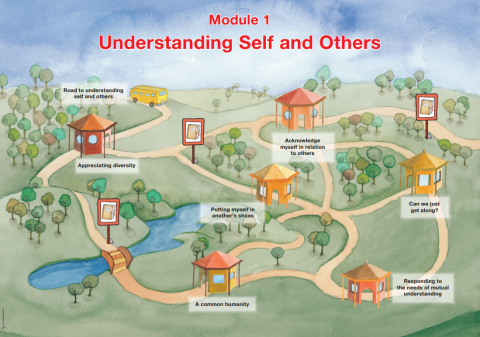 Learning to live together: poster Организация-автор: United Nations Children's Fund (UNICEF) | Interfaith Council on Ethics Education for Children | Arigatou Foundation The poster is for the Learning to Live Together programme. The Learning to Live Together programme is built on two complementary learning modules, ‘Understanding Self and Others’ and ‘Transforming the World Together,’ based on four core ethical values: respect, empathy, responsibility and reconciliation.
  The Role of UNESCO in the Search for Peace Год публикации: 2019 Автор: Inuk Kang | Sunghae Kim | Jihon KIM | Jieun Seong | Seongsang YOO | Dongjoon Jo | Dongju Choi | Kyungkoo Han Организация-автор: Korean National Commission for UNESCO UNESCO's international intellectual cooperation for peace has achieved substantive tangible results in education and culture. Though some problems have been politicized and have produced limitations along the way, UNESCO has played a leading role in education and culture while setting the direction of international cooperation and activities in this regard.UNESCO has regretfully not played an active role in fostering broader, more diverse, and more extensive new research and practices related to peace, even with the international Cold War realities. While UNESCO was an international organization created explicitly for peace, it has neither led to momentous peace-related academic discourse nor does it lead to theoretical development in this regard. The concept of a "Culture of Peace," for example, was first mentioned in the Ivory Coast (Cote d'Ivoire) in 1989. However, it was not until 1997 that UNESCO started its "Toward a Culture of Peace Program" and the U.N. General Assembly declaring 2000 as the "Year of Peace."UNESCO's situation provides an opportunity for South Korea to play a more active role. South Korea needs to break with its history of taking a passive stance focused on short-term national interests and its preoccupation with "situational tracking" responses aimed at fostering national prestige when such opportunities present themselves. Instead, while prioritizing a "global community" founded on world peace and the well-being of humanity-as long-term shared benefits to all nations-and by sharing the financial burdens involved, the country can increase its international status and become a moral leader raising a "global citizenship power."
  Conferencia mundial de la UNESCO sobre la educación para el desarrollo sostenible, 31 de Marzo-2 de Abril 2009, Bonn, Alemania: actas Год публикации: 2009 Организация-автор: German Federal Ministry of Education and Research (BMBF) | German Commission for UNESCO As the United Nations Decade of Education for Sustainable Development (DESD) approached its midpoint, the “UNESCO World Conference on Education for Sustainable Development – Moving into the Second Half of the UN Decade” was held from 31 March to 2 April 2009 in Bonn, Germany. It brought together 900 participants from 147 countries, among them 49 Ministers and Deputy-Ministers. Participants included representatives of UNESCO Member States, UN agencies, civil society organizations, education institutions, youth, and the private sector, as well as individual experts. The Conference was organized by UNESCO and the German Federal Ministry of Education and Research, in cooperation with the German Commission for UNESCO. The programme was developed in consultation with an international advisory group.
  Education for intercultural understanding Год публикации: 2010 Автор: Joy de Leo Организация-автор: UNESCO Bangkok The theme of intercultural understanding and respect for cultural diversity falls within the social dimension of peace, equality and human rights, underpinned by the cultural context, within and through which learning occurs, and which forms the basis for inter-linkages between the various sustainability dimensions (i.e., socio-political, environmental and economic). Within the International Implementation Scheme, the value of respect is seen as central to all aspects of sustainable development: respect for self, for others and for all life on earth. L'éducation pour la compréhension interculturelle Год публикации: 2010 Автор: Joy de Leo Организация-автор: UNESCO Bangkok Le thème de la compréhension interculturelle et le respect de la diversité culturelle relève de la dimension sociale de la paix, l'égalité et les droits de l'homme, sous-tendue par le contexte culturel, à l'intérieur et à travers lequel l'apprentissage se produit, et qui constitue la base des liens entre les différentes dimensions de la durabilité (ie, socio-politique, environnemental et économique). Dans le cadre du programme d'application international, la valeur du respect est considérée comme essentielle à tous les aspects du développement durable: le respect de soi, des autres et de toute vie sur terre. 상호 문화 간 이해 교육 Год публикации: 2010 Автор: Joy de Leo Организация-автор: UNESCO Bangkok 상호 문화 간 이해와 문화 다양성에 대한 존중이라는 주제는 문화적 맥락에 기반을 둔 인권과 평등 및 평화의 사회적 영역에 속하며 학습 안에서 또한, 그 과정을 통해 이루어지며, 다양한 지속가능한 영역내에서 다양한 문화 간 상호 연계의 기반(즉, 사회·정치적, 환경적, 경제적으로)을 구축한다. 국제 실행계획(International Implementation Scheme)내에서, 존중의 가치는 지속가능한 발전의 모든 측면에서 핵심적인 것으로 간주된다. 곧, 자기 존중, 타인과 지구상의 모든 삶에 대한 존중을 의미한다. مؤتمر اليونسكو العالمي للتعليم من أجل التنمية المستدامة: ٣١ آذار/مارس - ٢ نيسان/أبريل ٢٠٠٩ Год публикации: 2009 Организация-автор: German Federal Ministry of Education and Research (BMBF) | German Commission for UNESCO As the United Nations Decade of Education for Sustainable Development (DESD) approached its midpoint, the “UNESCO World Conference on Education for Sustainable Development – Moving into the Second Half of the UN Decade” was held from 31 March to 2 April 2009 in Bonn, Germany. It brought together 900 participants from 147 countries, among them 49 Ministers and Deputy-Ministers. Participants included representatives of UNESCO Member States, UN agencies, civil society organizations, education institutions, youth, and the private sector, as well as individual experts. The Conference was organized by UNESCO and the German Federal Ministry of Education and Research, in cooperation with the German Commission for UNESCO. The programme was developed in consultation with an international advisory group. Conférence mondiale de l'UNESCO sur l'éducation au développement durable: 31 mars-2 avril 2009, Bonn, Allemagne: procédure Год публикации: 2009 Организация-автор: German Federal Ministry of Education and Research (BMBF) | German Commission for UNESCO Alors que la Décennie des Nations Unies pour l'éducation en vue du développement durable (DEDD) approchait de son point médian, le «Worldconferenceon Education pour le développement durable de l'UNESCO - Passer à la deuxième moitié de la Décennie des Nations Unies» s'est tenu du 31 mars au 2 avril 2009 à Bonn. Elle a réuni 900 participants de 147 pays, dont 49 ministres et sous-ministres. Les participants comprenaient des représentants des États membres de l'UNESCO, des organismes des Nations Unies, des organisations de la société civile, des établissements d'enseignement, des jeunes et du secteur privé, ainsi que des experts individuels. La Conférence a été organisée par l'UNESCO et le Ministère fédéral allemand de l'éducation et de la recherche, en coopération avec la Commission allemande pour l'UNESCO. Le programme a été élaboré en consultation avec un groupe consultatif international.