
Ресурсы
Изучайте широкий спектр ценных ресурсов ВГГ, чтобы углубить своё понимание и повысить эффективность исследований, просветительской деятельности, преподавания и обучения.
Найдено: 18
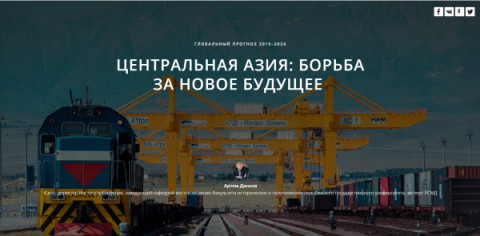 Центральная Азия: борьба за новое будущее Год публикации: 2018 Автор: A. Dankov В статье рассматриваются социальные, экономические и политические перспективы Центральной Азии (2019-2024). Прогноз также охватывает этнические изменения, миграцию, культурное и языковое разнообразие, урбанизацию, качество жизни.
  Language and education in post-Soviet Central Asia Год публикации: 2008 Автор: Monica Perotto In the article, the author tries to assess the dynamics of the changing role of Russian and the titular languages in the post-Soviet republics of Central Asia with reference to demographic and geopolitical data, as well as to determine the consequences of the language policy pursued in these countries. Язык и образование в постсоветской Центральной Азии Год публикации: 2008 Автор: Monica Perotto В статье автор пытается дать оценку динамике изменения роли русского и титульных языков в постсоветских республиках Центральной Азии со ссылкой на демографические, геополитические данные, а также определить последствия проводимой в этих странах языковой политики.
  Language Reforms in Central Asia: trends - goals - results Год публикации: 2008 Автор: Pavel I. Dyatlenko The article considers the evolution of language reforms in Central Asia from the beginning of the twentieth century to the end of the 2000s and their significance as a reflection of changing trends. The author analyzes the goals and interests of the political elites who initiated the language reforms, as well as the consequences of the reforms in different areas of public life. Языковые реформы в Центральной Азии: тренды — цели — итоги Год публикации: 2008 Автор: Pavel I. Dyatlenko Статья рассматривает эволюцию языковых реформ в Центральной Азии в период с начала ХХ века до конца 2000-х годов и их значение, как отражение менявшихся трендов. Автор анализирует цели и интересы политических элит, инициировавших языковые реформы, а также последствия проведенных преобразований в разных сферах общественной жизни.
  Ministerial Forum: Global Dialogue on ICT and Education Innovation – Towards Sustainable Development Goal for Education (SDG 4); Proceedings Год публикации: 2019 Организация-автор: UNESCO Institute for Information Technologies in Education (IITE) The present publication contains articles based on the outcomes of the Ministerial Forum “Global Dialogue on ICT and Education Innovation – Towards Sustainable Development Goal for Education (SDG 4)”, organized by UNESCO IITE in cooperation with the Ministry of Education and Science of the Russian Federation in Moscow (Russia) on 18-19 March, within the Moscow International Education Fair 2018 (MIEF 2018).The publication covers the flagship topics such as ICT potential for future teachers and future schools, digital pedagogy and OER, collaboration between public and private sectors in the use of ICT in education, digital technologies for quality and equity in education.
  Ответные меры системы образования на буллинг, вызванный гомофобией Год публикации: 2014 Организация-автор: UNESCO This publication is part of a Good Policy and Practice series that addresses key themes of UNESCO’s work with the education sector including HIV and AIDS and safe, healthy educational environments for all learners. This volume, on the theme of homophobic bullying in educational institutions, builds on UNESCO’s work on gender, discrimination and violence in schools.
  Media and Information Literacy for Building Culture of Open Government: Proceedings of the International Conference (Khanty-Mansiysk, Russian Federation, 7–10 June 2016) Год публикации: 2017 Организация-автор: Interregional Library Cooperation Centre | UNESCO The International Conference on Media and Information Literacy for Building a Culture of Open Government was convened in Khanty-Mansiysk, Russian Federation, on 6 to 10 June 2016. The objectives of this pioneering forum were as follows: define the conceptual framework of open government/open government culture exchange innovative and creative experiences and best practices in open government; (3) discuss how MIL competencies of different governance stakeholders can foster (or facilitate) open government practice promote the adoption of MIL educational programmes as a requirement in open government adoption.