
Ресурсы
Изучайте широкий спектр ценных ресурсов ВГГ, чтобы углубить своё понимание и повысить эффективность исследований, просветительской деятельности, преподавания и обучения.
Найдено: 1,451
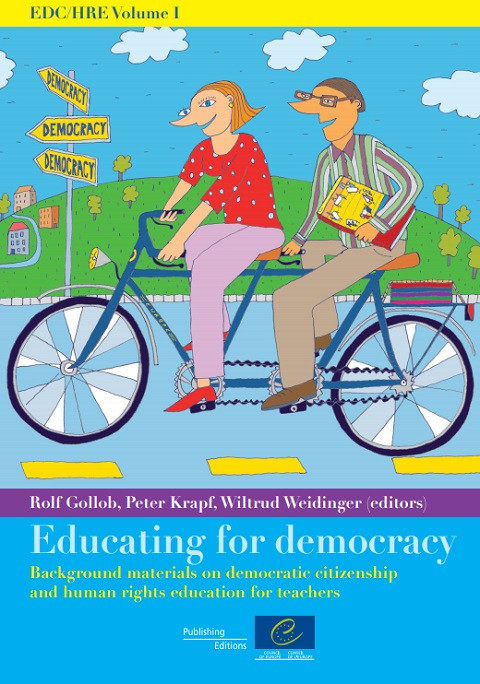 Eduquer à la démocratie: Matériaux de base sur l’éducation à la citoyenneté démocratique et aux droits de l’homme pour les enseignants Год публикации: 2010 Автор: Rolf Gollob | Peter Krapf | Ólöf Ólafsdóttir | Wiltrud Weidinger Организация-автор: Conseil de l'Europe Ce manuel a pour objectif d’accompagner les enseignants et les professionnels dans les domaines de l’éducation à la citoyenneté démocratique et de l’éducation aux droits de l’homme (ECD/EDH). Il aborde des questions clés au sujet de l’ECD et de l’EDH, y compris les compétences nécessaires à une citoyenneté démocratique, les objectifs et les principes fondamentaux de l’ECD/EDH ainsi qu’une approche scolaire globale de l’éducation à la démocratie et aux droits de l’homme. L’ouvrage est constitué de trois parties. La partie I expose les principes fondamentaux de l’ECD/EDH, dont l’utilité et l’intérêt pour les professionnels sont incontestables. La partie II présente des orientations et des outils pour concevoir, accompagner et évaluer les processus d’apprentissage constructif des élèves. La partie III contient des boîtes à outils, respectivement pour les enseignants et les élèves, dans le domaine de l’ECD/EDH. Les autres volumes de cette collection proposent des modèles ainsi que des supports d’apprentissage concrets pour l’ECD/EDH destinés aux élèves depuis le niveau élémentaire jusqu’au deuxième cycle du secondaire. Обучаем демократии: Базовые материалы для обучения демократической гражданственности и правам человека для учителей Год публикации: 2010 Автор: Rolf Gollob | Peter Krapf | Ólöf Ólafsdóttir | Wiltrud Weidinger Организация-автор: Council of Europe Цель данного пособия заключается в поддержке учителей и специалистов-практиков по образованию для демократического общества и образованию по правам человека (ОДГ/ОПЧ)– учителей, директоров школ, инспекторов, авторов учебников и редакторов.
  Democracy and Human Rights: Start with Us; Charter for All Год публикации: 2012 Организация-автор: Council of Europe The brochure for children explores the principles of human rights and democracy, what we can all do to make them possible, and how education can be of help. La democratie et les droits de l’homme; A nous de les faire vivre; La charte pour tous Год публикации: 2012 Организация-автор: Conseil de l'Europe La brochure pour les enfants explore les principes des droits de l'homme et de la démocratie, ce que nous pouvons tous faire pour que cela devienne une réalité, et comment l'éducation y contribue. Демократия и права человека: Начинаются с нас; Хартия для всех Год публикации: 2012 Организация-автор: Council of Europe Настоящий вариант Хартии ("Хартия для всех") ориентирован на всех тех, и прежде всего молодежь, кто хотел бы узнать о том, чему посвящен данный международный юридический документ, и как он может быть использован для содействия демократии и правам человека в классе, в молодежных организациях и в обществе в целом.
  Digital Citizenship Education Project (DCE): 10 Domains Год публикации: 2018 Организация-автор: Council of Europe The aim of the DCE project launched by the Council of Europe’s Education Policy Division is to empower children to participate actively in digital society. This involves providing them with an education that develops a sense of critical analysis and the effective use of digital technologies while fostering a notion of citizenship based on respect for human rights and democratic culture. Éducation à la citoyenneté numérique (ECN): Les 10 thématiques Год публикации: 2018 Организация-автор: Conseil de l'Europe Le projet ECN de la Division des Politiques Educatives du Conseil de l’Europe a pour objectif de permettre aux enfants de participer activement et de manière autonome à la société numérique. Ceci passe par une éducation qui développe un sens d’analyse critique et l’utilisation efficace des technologies numériques intégrant une notion de citoyenneté fondée sur le respect des droits de l’homme et la culture démocratique.
 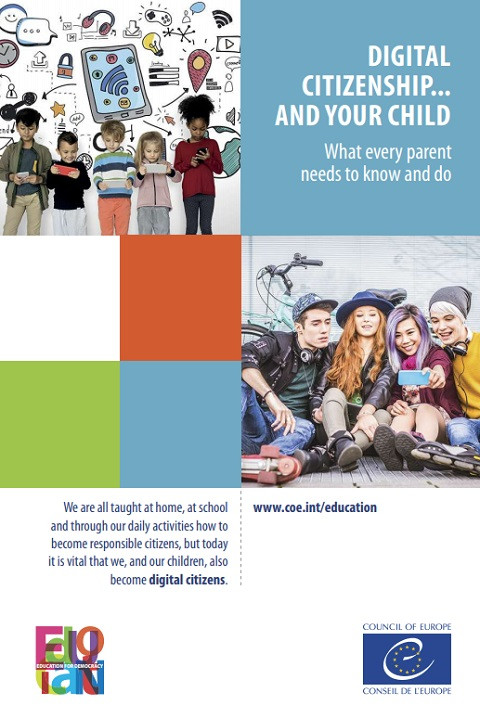 Digital Citizenship... and Your Child What Every Parent Needs to Know and Do Год публикации: 2019 Организация-автор: Council of Europe The Council of Europe has created this guide to help you: better understand digital citizenship, and how it shapes online behaviour discuss digital citizenship with your children take steps to help your children master the competences digital citizenship is built on encourage your children’s school to play its role in educating competent young digital citizens. La citoyenneté numérique... et votre enfant: Ce que tout parent a besoin de savoir et de faire Год публикации: 2019 Организация-автор: Conseil de l'Europe Le Conseil de l’Europe a préparé le présent guide pour vous aider : à mieux comprendre la citoyenneté numérique et ses effets sur les comportements en ligne; à parler de la citoyenneté numérique avec vos enfants; à agir pour aider vos enfants à maîtriser les compétences indispensables à la citoyenneté numérique; à encourager les établissements scolaires de vos enfants à s’associer avec compétence à l’éducation à la citoyenneté numérique.
  A Report on Education for Democratic Citizenship and Human Rights Education Policy and Practice in Six Eastern Partnership Countries: Promoting Human Rights Education and Democratic Citizenship in Eastern Partnership Countries Год публикации: 2017 Автор: Ralph Edward Huddleston | Karine Harutyunyan | Ulviyya Mikayilova | Irina Fursa | Shorena Gharibashvili | Cezar Gavriliuc | Polina Verbytska Организация-автор: Council of Europe This report has been produced within the framework of the EU/CoE Joint Programme “Supporting Education Policies in Democratic Citizenship and Human Rights Education in 6 Eastern Partnership countries”. The Programme embraces the six countries of the EU’s Eastern Partnership: Armenia, Azerbaijan, Belarus, Georgia, Moldova and Ukraine. Its aim is to support integration and/or further develop of education for democratic citizenship and human rights education in national education systems (including school curriculum) in Eastern Partnership countries, in accordance with the Council of Europe Charter on Education for Democratic Citizenship and Human Rights Education. The report draws on the results of a research exercise designed to map the most important initiatives and priorities in the area of Education for Democratic Citizenship and Human Rights Education (EDC/HRE) in the six countries. The research exercise was carried out 2015-16 by local experts within each country. It resulted in six individual country reports outlining the current situation in relation to the integration of the principles of EDC/HRE within the national education system, and identifying opportunities for further development.