
Ресурсы
Изучайте широкий спектр ценных ресурсов ВГГ, чтобы углубить своё понимание и повысить эффективность исследований, просветительской деятельности, преподавания и обучения.
Найдено: 3,385
 UNESCO world conference on education for sustainable development: 31 March-2 April 2009, Bonn, Germany: proceedings Год публикации: 2009 Организация-автор: German Federal Ministry of Education and Research (BMBF) | German Commission for UNESCO As the United Nations Decade of Education for Sustainable Development (DESD) approached its midpoint, the “UNESCO World Conference on Education for Sustainable Development – Moving into the Second Half of the UN Decade” was held from 31 March to 2 April 2009 in Bonn, Germany. It brought together 900 participants from 147 countries, among them 49 Ministers and Deputy-Ministers. Participants included representatives of UNESCO Member States, UN agencies, civil society organizations, education institutions, youth, and the private sector, as well as individual experts. The Conference was organized by UNESCO and the German Federal Ministry of Education and Research, in cooperation with the German Commission for UNESCO. The programme was developed in consultation with an international advisory group. Материалы Всемирной конференции ЮНЕСКО по образованию в интересах устойчивого развития (2009 г., Бонн, Германия) Год публикации: 2009 Организация-автор: German Federal Ministry of Education and Research (BMBF) | German Commission for UNESCO As the United Nations Decade of Education for Sustainable Development (DESD) approached its midpoint, the “UNESCO World Conference on Education for Sustainable Development – Moving into the Second Half of the UN Decade” was held from 31 March to 2 April 2009 in Bonn, Germany. It brought together 900 participants from 147 countries, among them 49 Ministers and Deputy-Ministers. Participants included representatives of UNESCO Member States, UN agencies, civil society organizations, education institutions, youth, and the private sector, as well as individual experts. The Conference was organized by UNESCO and the German Federal Ministry of Education and Research, in cooperation with the German Commission for UNESCO. The programme was developed in consultation with an international advisory group. Conférence mondiale de l'UNESCO sur l'éducation en vue du développement durable, 31 Mars-2 Avril 2009, Bonn, Allemagne: actes Год публикации: 2009 Организация-автор: German Federal Ministry of Education and Research (BMBF) | German Commission for UNESCO As the United Nations Decade of Education for Sustainable Development (DESD) approached its midpoint, the “UNESCO World Conference on Education for Sustainable Development – Moving into the Second Half of the UN Decade” was held from 31 March to 2 April 2009 in Bonn, Germany. It brought together 900 participants from 147 countries, among them 49 Ministers and Deputy-Ministers. Participants included representatives of UNESCO Member States, UN agencies, civil society organizations, education institutions, youth, and the private sector, as well as individual experts. The Conference was organized by UNESCO and the German Federal Ministry of Education and Research, in cooperation with the German Commission for UNESCO. The programme was developed in consultation with an international advisory group.
 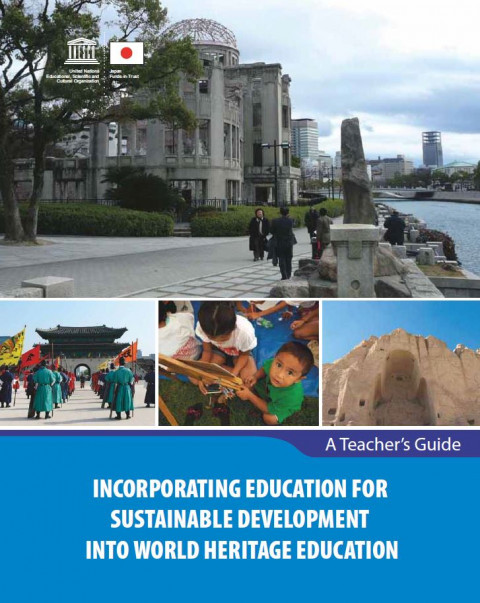 Incorporating education for sustainable development into world heritage education: a teacher's guide Год публикации: 2010 Организация-автор: UNESCO Bangkok This publication, A Teacher’s Guide: Incorporating Education for Sustainable Development into World Heritage Education, represents the collective efforts of workshop participants to produce a practical tool for teachers to modify available curricula and incorporate ESD concepts and principles into WHE. It has taken a long time for the guide to be available in print. Nonetheless, the content of the guide remains practical and relevant in incorporating Education for Sustainable Development into World Heritage Education. Intégrer l'éducation au développement durable dans l'éducation au patrimoine mondial: un guide pour l'enseignant Год публикации: 2010 Организация-автор: UNESCO Bangkok Cette publication, intitulée Un guide pour les enseignants: intégrer l'éducation au développement durable dans l'éducation au patrimoine mondial, représente les efforts collectifs des participants à l'atelier pour produire un outil pratique pour les enseignants afin de modifier les programmes disponibles. Le guide a mis du temps à être disponible en version imprimée. Néanmoins, le contenu du guide reste pratique et pertinent pour intégrer l'éducation au développement durable dans l'éducation au patrimoine mondial.
  Reimagining Life Skills and Citizenship Education in the Middle East and North Africa: A Four-Dimensional and Systems Approach to 21st Century Skills; Conceptual and Programmatic Framework Год публикации: 2017 Организация-автор: UNICEF Middle East and North Africa The situation of learning in MENA calls for a holistic, lifelong and rights-based vision of education that maximizes the potential of all children and youth in the region and better equips them to create meaning out of knowledge and to face the transitions from childhood to adulthood, from education to work, and from unreflective development to responsible and active citizenship. This is what drives the MENA Life Skills and Citizenship Education (LSCE) Initiative, kicked off in 2015 with the aim of supporting the countries of the region – conceptually, programmatically and technically – to improve learning and to better invest such learning in individual, social and economic development.The LSCE Conceptual and Programmatic Framework (CPF) puts forth a roadmap to guide policies, strategies and programmes on life skills and citizenship education supporting the region-wide efforts to provide children and youth with opportunities to learn, transition from childhood to adulthood, move from school to work settings, and become responsible and active citizens of their communities.A set of twelve core life skills for MENA has been identified using the four-dimensional learning model: ‘Learning to Know’ (Cognitive Dimension), ‘Learning to Do’ (Instrumental Dimension), ‘Learning to Be’ (Individual Dimension), and ‘Learning to Live Together’ (Social Dimension). The twelve core life skills are life-long, and they build on evidence that underlines the importance of skills acquisition from an early age. Furthermore, the twelve core life skills are acquired and sustained through all forms of learning in a systems approach that recognizes multiple pathways of learning, formal, non-formal and informal. Réimaginer l’éducation aux compétences de vie et à la citoyenneté au Moyen-Orient et en Afrique du Nord : Une approche à quatre dimensions et systémique des compétences pour le XXIe siècle ; Cadre programmatique et conceptuel Год публикации: 2017 Организация-автор: UNICEF Middle East and North Africa L’Initiative pour l’éducation aux compétences de vie et à la citoyenneté de la région MENA (LSCE) représente un effort de collaboration étatique et régional en faveur de la réalisation de l’objectif de développement durable (ODD) 4 – Assurer l’accès de tous à une éducation de qualité, sur un pied d’égalité, et promouvoir les possibilités d’apprentissage tout au long de la vie. Elle cherche à reformuler la compréhension traditionnelle de l’éducation aux compétences de vie et à la citoyenneté dans la région, tout en rappelant les questions fondamentales au sujet du but et du rôle de l’éducation dans le développement sociétal qui sont pertinentes dans le contexte actuel.L’Initiative LSCE se concentre sur trois défis interdépendants :Une société du savoir inaccessible, résultat de la mauvaise qualité de l’éducation, du bas niveau des résultats scolaires et d’une équité et inclusion limitées.Une croissance économique en déclin, résultat d’un manque d’aptitudes à l’employabilité, du haut taux de chômage chez les jeunes, de l’inégalité des sexes face à l’accès au marché du travail, du manque de création d’emplois, et d’un environnement économique faible.Une faible cohésion sociale, résultat de l’escalade de la violence et de la radicalisation tout autant que d’un faible engagement civique.
 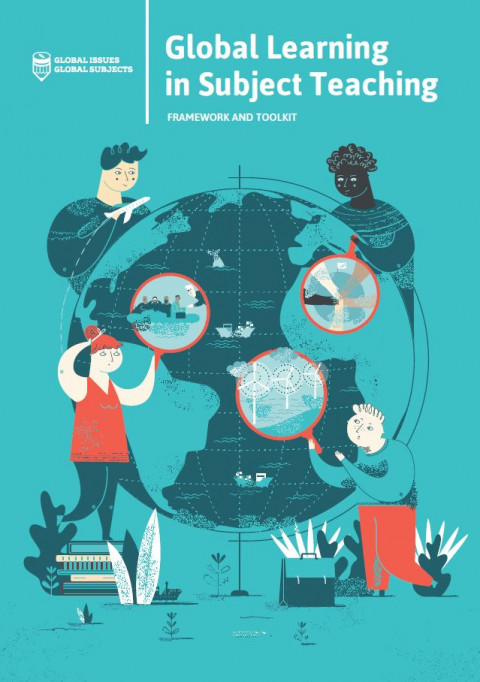 Global Learning in Subject Teaching: Framework and Toolkit Год публикации: 2020 Организация-автор: Center for Citizenship Education (CCE) | Global Issues, Global Subjects (GIGS) The brochure 'Global Learning in Subject Teaching: Framework and Toolkit' has been developed as a proposal for teachers, educators and educational institutions on how to reach pupils with Global Learning. In its practical part, the brochure provides the reader with a toolkit of 20 ready-to-use lesson plans for subject lessons where the subject curriculum topics are linked with global issues such as migration, climate change and gender equality.
 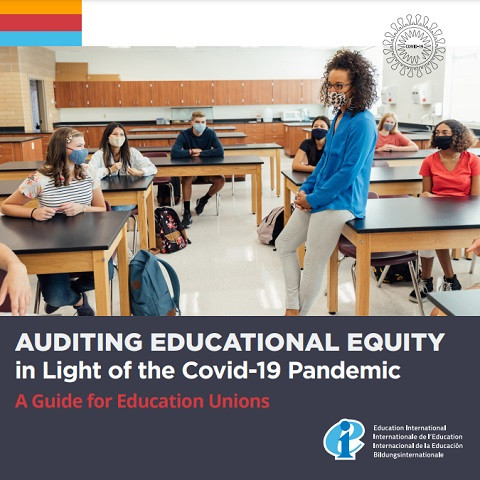 Auditing Educational Equity in Light of the COVID-19 Pandemic: A Guide for Education Unions Год публикации: 2020 Организация-автор: Education International (EI) The COVID-19 pandemic has led to unprecedented school closures that have affected over 1.5 billion students worldwide. However, the impact of the pandemic has not been equal, with vulnerable and disadvantaged students disproportionately affected by the resulting global crisis in teaching and learning."Auditing Educational Equity in Light of the COVID-19 Pandemic" is a guide to support education unions as they advocate for equity audits to be conducted at both education institution and systems levels.The guide stresses the importance of equity audits in enabling education institutions and systems to adapt more effectively to a COVID-19 ‘new normal’ and also address entrenched structures of inequality that have long prevented countries from realising the universal right to education.
 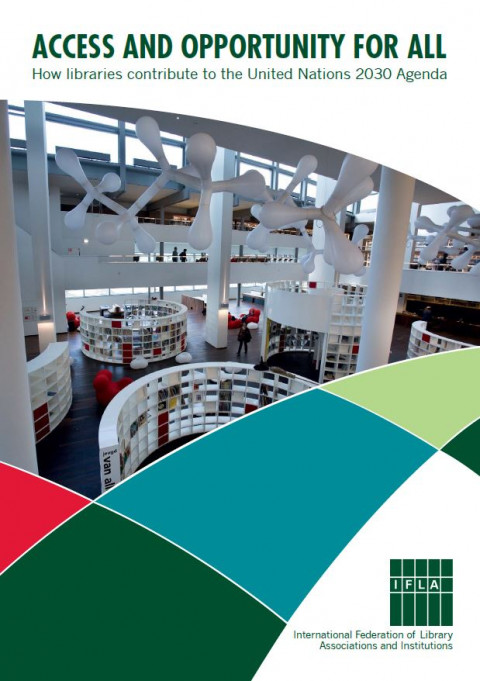 Access and Opportunity for All: How Libraries Contribute to the United Nations 2030 Agenda Год публикации: 2020 Организация-автор: International Federation of Library Associations and Institutions (IFLA) The inclusion of libraries and access to information in national and regional development plans will contribute to meeting the global United Nations 2030 Agenda for Sustainable Development.In support of this goal, IFLA has published a booklet of examples and recommendations for policymakers demonstrating the contribution of libraries to the UN Sustainable Development Goals (SDGs).The booklet includes stories from all types of libraries in many countries around the world.