
Ресурсы
Изучайте широкий спектр ценных ресурсов ВГГ, чтобы углубить своё понимание и повысить эффективность исследований, просветительской деятельности, преподавания и обучения.
Найдено: 3,385
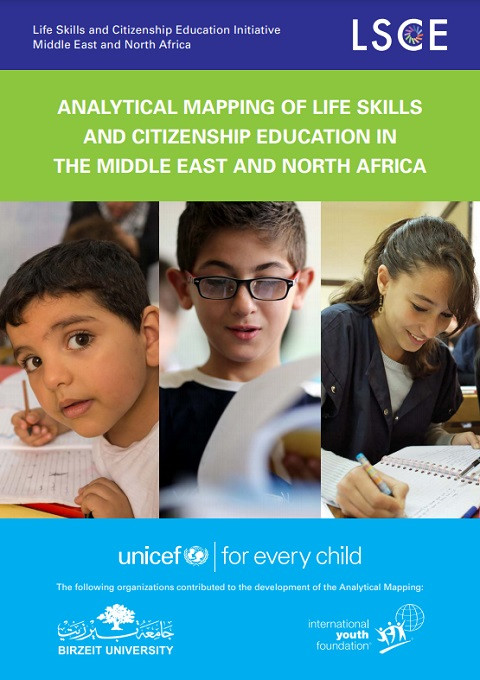 Analytical Mapping of Life Skills and Citizenship Education in the Middle East and North Africa Год публикации: 2017 Организация-автор: UNICEF Middle East and North Africa The Analytical Mapping of the Life Skills and Citizenship Education in MENA, published in October 2017, provides a multi-stakeholder view of the status of life skills and citizenship education in MENA and the corresponding vision for the region. It does not evaluate existing interventions, nor is it meant to generate an exhaustive list of all existing life skills programmes in MENA. It rather aims to provide an analytical overview of Life Skills and Citizenship Education (LSCE) related intervention in the region. Through analyzation, it also attempts to highlight general challenges encountered in the programming of LSCE, as well as focus on opportunities for LSCE in MENA national education systems.
 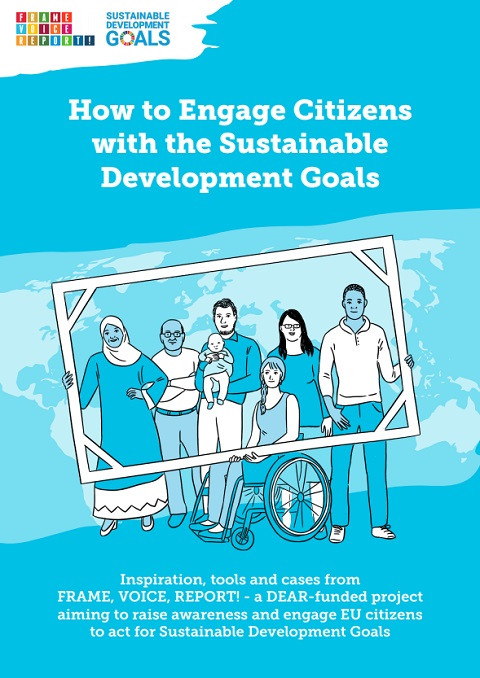 How to Engage Citizens with the Sustainable Development Goals Год публикации: 2020 Организация-автор: Finnish Development NGOs Fingo The purpose of this booklet is to share reflections, successes and learning outcomes from the FRAME, VOICE, REPORT! (FVR) project.It can be used to find inspiration from other civil society organisations (CSOs) working on the same topics and themes you do, but also as a source for ideas for new ways of looking at old issues.This booklet covers both the more theoretical approaches and concrete cases from CSOs across Europe. These cases are examples of the many projects funded by the FVR.The project had its roots in the previous successes and tried and tested approaches of the partner organisations. The aim of FVR! was to secure resources and develop the value-based, high quality work of civil society organisations. The second aim was to enable smaller organisations to learn about EU project funding and to build capacity on how to conduct high quality global citizenship education and development communications. Finally, the overarching aim of the project was to engage EU citizens with the SDGs.
  The Implications of the COVID-19 Pandemic on Fundamental Rights and Civic Space Год публикации: 2022 Автор: Filip Pazderski | Giada Negri | Chayma Khazzani | Ivana Rosenzweigova | Boglarka Szalma | Luben Panov | Carlotta Besozzi Организация-автор: European Economic and Social Committee (EESC) This report was compiled for the European Economic and Social Committee at the request of the Diversity Europe Group by a consortium of four partners - European Civic Forum, Civil Society Europe, European Center for Not-for-Profit Law and the Institute of Public Affairs. It examines how the COVID-19 pandemic has affected the work of civil society organisations (CSOs) across Europe. It also focuses on how solutions implemented in individual EU Member States have impacted CSOs' ability to exercise their fundamental rights and freedoms.The report is based on in-depth analysis of existing studies and reports, a survey, 29 expert interviews and three focus groups. It showcases a number of ways in which the pandemic has affected the functioning of civil society organisations in the EU. The observations emerging from the different stages of the research were characterised by a high degree of consistency, validating the picture depicted.
  Fostering safer and resilient communities: a natural disaster preparedness and climate change education program Год публикации: 2009 Организация-автор: UNESCO Jakarta The Asia and the Pacific region is vulnerable to many natural disaster and expected impacts from climate change. In 2006, 74% of people killed by natural disasters were in Asia, with Afghanistan, India, Indonesia, Pakistan, the Philippines, and Vietnam among the countries most badly affected. Natural disasters such as windstorms, floods, droughts, earthquakes in combination with human-induced conditions such as deforestation, pollution, soil erosion collectively contribute to serious challenges for communities and governments. Climate change impacts are imminent and inevitable. The consensus among natural and social scientists, economists, and policymakers is that climate change is the most important challenge that this planet faces. It is pervasive, touching on every facet of the environment and human life including the environment, economy, transportation, communication, food production, and health. The temporal and geographic scale is wide. The projected economic, health, and societal costs put forth by experts are extraordinary. For example, the total economic cost of climate change threats could be an annual loss of 6-7% of Southeast Asian countries’ GDP by the end of the century, and the Pacific sub-region will see a sea-level rise of 0.19-0.58 meter by 2100 severely changing the lives of more than 50% of the people that live within 1.5 km of the shoreline leading to relocation, water and power shortages, and submerged infrastructure. Climate change impacts in Asia and the Pacific is particularly serious because of the fact that: 1) over 60% of the global population reside in Asia and the Pacific; 2) it has the most extensive coastline of any geographic region; and, 3) many of the world’s largest cities are located along Asian coasts. The impact of climate change in sea level rise would impact small island states such as the Maldives and Kiribati, and many of Asia’s largest coastal cities, such as Jakarta, Bangkok, Manila, Shanghai, and Ho Chi Minh City. Tens of millions of people in Asia may have to be resettled. Further, the expected greater intensity of cyclones and typhoons could have a larger impact than before on Bangladesh, China, India, Vietnam, and the Philippines, whose coastal areas already encounter among the world’s worst weather-related disasters year after year. Parts of many countries in Asia, including Northwestern India, Western China, and almost all of Pakistan, are already suffering from shortages of water, as well as land degradation and desertification, which will be further exacerbated by climate change. The World Conference on Disaster Reduction held in January 2005 in Kobe, Japan, adopted the Framework for Action 2005-2015: Building the Resilience of Nations and Communities to Disasters (referred as the “Hyogo Framework for Action” – HFA). The framework emphasizes the need to understand the linkages between disaster risk reduction and climate change adaptation, and that stakeholders work toward reducing disaster vulnerabilities of communities by helping them build their capacity to deal with disasters. Favoriser des collectivités sûres et solides: un programme d'éducation à la préparation aux catastrophes naturelles et le changement climatique Год публикации: 2009 Организация-автор: UNESCO Jakarta L'Asie et la région du Pacifique est vulnérable à de nombreuses catastrophes naturelles et les impacts attendus du changement climatique. En 2006, 74% des personnes tuées par des catastrophes naturelles ont été en Asie, avec l'Afghanistan, l'Inde, l'Indonésie, le Pakistan, les Philippines et le Vietnam parmi les pays les plus durement touchés. Les catastrophes naturelles telles que les tempêtes, les inondations, les sécheresses, les tremblements de terre en combinaison avec des conditions d'origine humaine telles que la déforestation, la pollution, l'érosion des sols contribuent collectivement aux défis graves pour les communautés et les gouvernements. les impacts du changement climatique sont imminente et inévitable. Le consensus entre les sciences naturelles et sociales, les économistes et les décideurs est que le changement climatique est le défi le plus important que cette planète est confrontée. Il est omniprésent, touchant à toutes les facettes de l'environnement et de la vie humaine, y compris l'environnement, l'économie, le transport, la communication, la production de l'alimentation et de la santé. L'échelle temporelle et géographique est large. La projection économique, la santé et les coûts sociaux mis en avant par les experts sont extraordinaires. Par exemple, le coût économique total des menaces du changement climatique pourrait être une perte annuelle de 6-7% du PIB des pays d'Asie du Sud-Est de la fin du siècle, et la sous-région du Pacifique verra une élévation du niveau de la mer de 0.19- 0,58 mètre d'ici 2100 modifiant gravement la vie de plus de 50% des personnes qui vivent à moins de 1,5 km de la côte menant à des pénuries de réinstallation, de l'eau et d'énergie, et l'infrastructure submergée. les impacts du changement climatique en Asie et dans le Pacifique est particulièrement grave en raison du fait que: 1) plus de 60% de la population mondiale réside en Asie et dans le Pacifique; 2) il a le littoral le plus étendu de toute région géographique; et 3) plusieurs des plus grandes villes du monde sont situés le long des côtes d'Asie. L'impact du changement climatique en élévation du niveau marin aurait un impact sur les petits États insulaires comme les Maldives et Kiribati, et bon nombre des plus grandes villes côtières d'Asie, telles que Jakarta, Bangkok, Manille, Shanghai, et Ho Chi Minh-Ville. Des dizaines de millions de personnes en Asie peuvent être réinstallés. En outre, la plus grande intensité attendue des cyclones et typhons pourrait avoir un impact plus important que jamais sur le Bangladesh, la Chine, l'Inde, le Vietnam et les Philippines, dont les zones côtières déjà rencontrer parmi les plus liés aux conditions météorologiques catastrophes année du monde après année. Pièces de nombreux pays d'Asie, y compris le Nord-Ouest de l'Inde, la Chine occidentale, et la quasi-totalité du Pakistan, souffrent déjà d'une pénurie d'eau, ainsi que la dégradation des terres et la désertification, qui sera encore aggravé par le changement climatique. La conférence mondiale sur la prévention des catastrophes, tenue en Janvier 2005 à Kobe, au Japon, a adopté le Cadre d'action 2005-2015: Renforcer la résilience des nations et des collectivités face aux catastrophes (dénommé le «Cadre d'action de Hyogo» - HFA). Le cadre met l'aCECnt sur la nécessité de comprendre les liens entre la réduction des risques et adaptation au changement climatique, et que les parties prenantes travaillent en vue de réduire la vulnérabilité aux catastrophes des communautés en les aidant à renforcer leur capacité à faire face aux catastrophes. Address by Mr Koïchiro Matsuura, Director-General of UNESCO, on the occasion of the Valedictory session of the 4th International Conference on Environmental Education; Ahmedabad, India, 28 November 2007 Год публикации: 2007 Организация-автор: UNESCO. Director-General, 1999-2009 (Matsuura, K.) This address was given by Mr Koïchiro Matsuura, Director-General of UNESCO, on the occasion of the Valedictory Session of the 4th International Conference on Environmental Education. Discours de M. Koïchiro Matsuura, Directeur Général de l'UNESCO, à l'occasion de la session Valedictory de la 4e Conférence Internationale sur l'Éducation Environnementale; Ahmedabad, en Inde, le 28 Novembre 2007 Год публикации: 2007 Организация-автор: UNESCO. Director-General, 1999-2009 (Matsuura, K.) Cette adresse a été donnée par M. Koïchiro Matsuura, Directeur général de l'UNESCO, à l'occasion de la Valedictory session de la 4e Conférence Internationale sur l'Éducation Environnementale.
 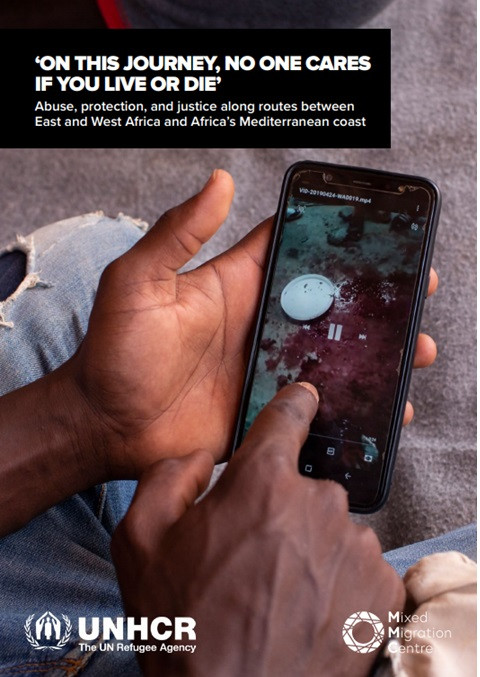 On This Journey, No One Cares If You Live or Die: Abuse, Protection, and Justice Along Routes Between East and West Africa and Africa’s Mediterranean Coast Год публикации: 2020 Организация-автор: UN. Office of the United Nations High Commissioner for Refugees (UNHCR) | Mixed Migration Centre This report draws on data collected by the Mixed Migration Centre’s 4Mi monitors along the route to map the places where refugees interviewed in 2018 and 2019 most frequently reported deaths, sexual and gender-based violence (SGBV), physical violence, and kidnappings occurred. It illustrates how refugees and migrants using the route face a series of risks including as they cross into eastern Sudan, and when crossing the Sahara Desert, and then again in multiple places in Libya. Similarly, those traveling through West Africa reported multiple incidents of physical violence, SGBV, as well as deaths at various points. Refugees and migrants have reported being subjected to brutal violence, including being burnt with hot oil, melted plastic, or heated metal objects, being electrocuted, tied in stress positions, and experiencing and witnessing repeated sexual violence, often in the context of ransom demands. UNHCR staff and partners continue to witness the severe impact these abuses have had on the mental health of many men, women, and children.
 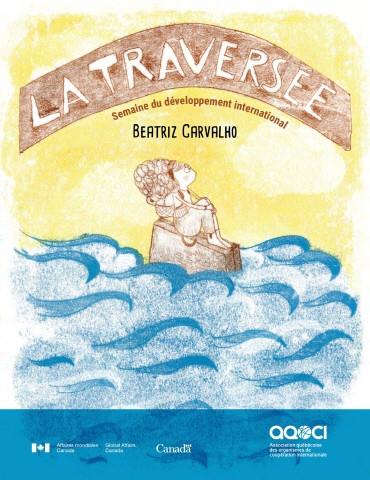 The Journey: International Development Week Год публикации: 2021 Автор: Beatriz Carvalho Организация-автор: Quebec Association of International Cooperation Organizations (AQOCI) Each year, International Development Week (IDW) highlights an international issue of concern to society. In Quebec, the Association québécoise des organismes de coopération internationale (AQOCI) organizes this public awareness week. CRÉDIL plays an active role in this campaign, and has participated in the production of comic strips as educational tools, such as "La Traversée" in 2021, that attempts to rehumanize our view of border issues and challenges, and offer questions and reflections that touch on the universal. What are we? What is our identity made of? Who gives us the right to have rights? La Traversée: Semaine du développement international Год публикации: 2021 Автор: Beatriz Carvalho Организация-автор: Association québécoise des organismes de coopération internationale (AQOCI) La Semaine du développement international (SDI) permet chaque année de souligner un enjeu international qui interpelle les sociétés. Au Québec, c’est l’Association québécoise des organismes de coopération internationale (AQOCI) qui organise cette semaine de sensibilisation auprès du public. Le CRÉDIL participe activement à cette campagne et a participé à la production de bandes dessinées comme outil pédagogique comme “La Traversée” en 2021 qui tente de réhumaniser nos regards sur les questions et enjeux de frontières; et offrir des questionnements et des réflexions qui touchent l’universel. Qui sommes-nous? De quoi est faite notre identité? Qui donne le droit d’avoir des droits?