
Ресурсы
Изучайте широкий спектр ценных ресурсов ВГГ, чтобы углубить своё понимание и повысить эффективность исследований, просветительской деятельности, преподавания и обучения.
Найдено: 3,436
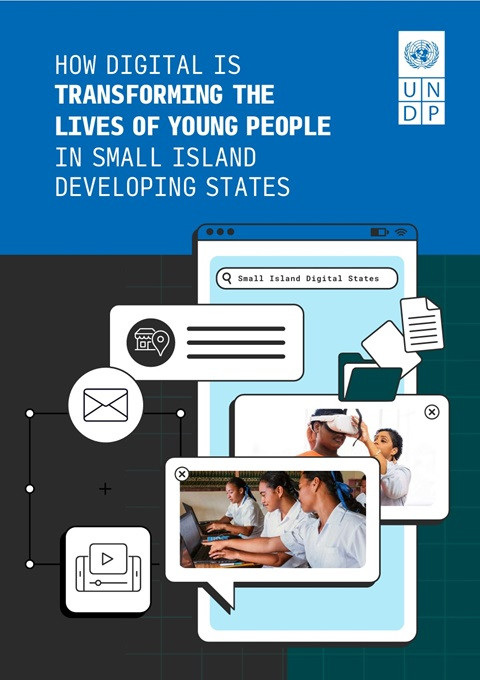 How Digital is Transforming the Lives of Young People in Small Island Developing States Год публикации: 2024 Организация-автор: United Nations Development Programme (UNDP) Young people represent a sizeable and vital population in Small Island Developing States (SIDS). For them, digital technologies are more than just tools; they are gateways to new horizons. Digital is creating fresh opportunities, opening doors to unconventional careers, and redefining how knowledge is acquired and shared. Young people are using digital to start new businesses, explore new opportunities, learn new knowledge and skills, and to build global connections. However, young people are also cautious about digital – and they recognise risks and issues posed by digital channels, tools, and technologies. ‘How Digital is Transforming the Lives of Young People in SIDS’ explores these opportunities and challenges by hearing from young people – in their own words. Through a bespoke survey chatbot, running on messaging platforms most used by young people living in SIDS, more than 5,000 respondents from over 30 countries discuss how they’re using digital to transform their lives and livelihoods. And the barriers and challenges that they are facing on their digital journeys.
  Emerging Horizons: Youth Insights on Climate Change and Breakthrough Solutions; 2024 Leading Minds on Climate Action Год публикации: 2024 Организация-автор: UNICEF Innocenti | United Nations Development Programme (UNDP) This paper shares insights from a participatory foresight workshop designed and facilitated by UNICEF Innocenti in the framework of the Youth4Climate: Sparking Solutions event co-hosted by UNDP and the Government of Italy. This convened 100 youth-led solutions in the areas of climate education, energy, food and agriculture, and urban sustainability. By using the Three Horizons foresight approach, a dialogue was created that delineated the patterns of change young people envisaged, their shared visions for the future, and the high potential innovations they felt could be leveraged to bring that future about. The paper identifies research and policy questions to be further explored by young climate leaders, UNDP, UNICEF, and their partners.
 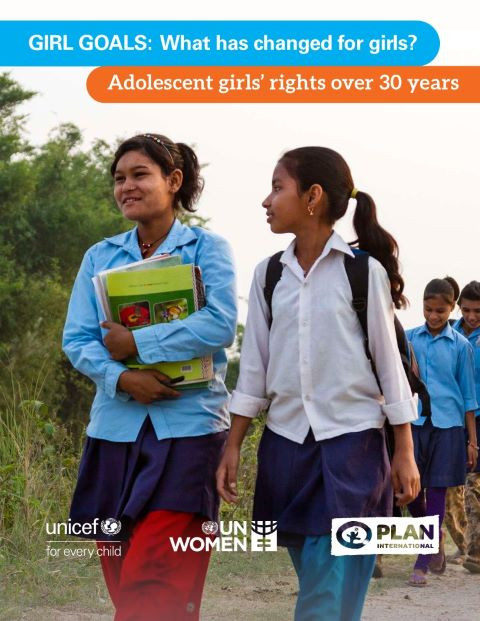 Girl Goals: What has Changed for Girls? Adolescent Girls’ Rights over 30 Years Год публикации: 2025 Организация-автор: United Nations Children's Fund (UNICEF) | United Nations Entity for Gender Equality and the Empowerment of Women (UN Women) | Plan International This report makes three key recommendations on action we can take now to advance adolescent girls’ rights at scale, in ways that account for fiscally constrained contexts and multiple competing priorities: 1. Ensure tangible and actionable support for adolescent girls’ voices, advocacy and action. The current generation of girls are raising their voices to be heard and are already at the forefront of making change around the world. With the right support, resources and seats at the table, adolescent girls can help transform the world for the better, shaping better policy outcomes for themselves and everyone. This is not about girls’ voices above all others, or endless consultation, but about specific, meaningful actions that ensure girls get the support they need and are heard on policy issues that matter to them. 2. Establish and track explicit targets for change for adolescent girls, who are too often invisible and sidelined Setting explicit targets to monitor outcomes for adolescent girls is key to making progress. Context-specific prioritization will be necessary, but there are some issues that stand out globally. Gaps in progress (such as child marriage gains accruing disproportionately to wealthier households) demonstrate the need forprogrammes that address poverty and economic realities alongside harmful social norms. The disproportionate number of adolescent girls not in education, employment or training, not entering the labour market as young women, and left behind when it comes to digital skills, is a threat to the gains made for girls and to economic growth that will benefit everyone. Stagnation on issues like underweight also stand out. Country- specific priorities supported by data- driven accountability mechanisms and investments are needed to translate policy commitments into change on the ground. 3. Resource and deliver smartly to unlock the social and economic dividend Governments and partners should invest in solutions proven to change outcomes across multiple SDGs at scale – for example, investing in education and skills, cash transfers and economic empowerment programmes designed to support girls. Existing systems, from maternal health care to school curricula, should be adapted to meet girls’ needs rather than creating small- scale, separate projects. Streamlined, evidence-based ‘add-ons’ – such as adding parenting support to existing maternal health-care programmes – can be cost effective and accelerate outcomes if well designed. Change is possible, and this report shows that great gains have been made. Smart investments now can transform the world for girls, families, communities and national economies. It is time to act.
 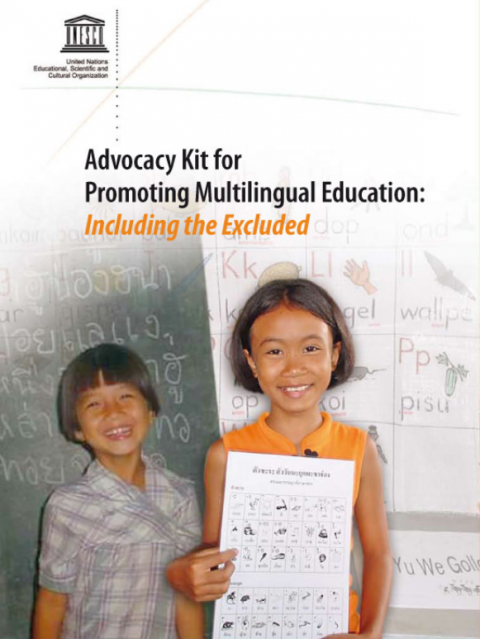 Advocacy kit for promoting multilingual education: including the excluded Год публикации: 2007 Организация-автор: UNESCO Bangkok Who Can Use This Kit? This kit was prepared for all of those who want to ensure that “Education for All” does, indeed, include everyone! The kit will be especially valuable for policy makers, education practitioners and specialists who want to improve access to and quality of education for those excluded by language. It will also be helpful for speakers of ethnic minority languages who want to improve the education situation in their own communities.This kit is designed to raise awareness on the importance of mother tongue-based multilingual education (MLE). It presents key arguments and facts about MLE and provides important insights about the value and benefits of providing education in learners’ mother tongue. The kit also presents ideas, research findings and concrete examples that you can use to think about your own situation and suggests steps for taking actions to make your school system more responsive to linguistic diversity.The kit is not a definitive textbook, and it will not have an answer for every problem that you might face. To help you as much as possible, at the end of each booklet we have included lists of references. In addition, each booklet contains a glossary of terms and, at the front of each booklet is a one-page summary of its contents.How Can You Use This Kit? This kit contains three main booklets. Each booklet has a designated audience: 1) policy makers, 2) education programme planners and practitioners and 3) community members. Please remember that developing MLE requires contributions from everyone at all levels. For that reason, we encourage you to use all three booklets along with other available resources as you work together to plan, implement and sustain your MLE programmes.This kit can be used in many different ways. For those who are already involved in MLE programmes, you might use these ideas to help you to promote mother tongue instruction and strengthen your programme. Those who are not familiar with multilingual education but want to improve educational access for minority language students might use these booklets to identify specific points that they can investigate and discuss in their own contexts.
 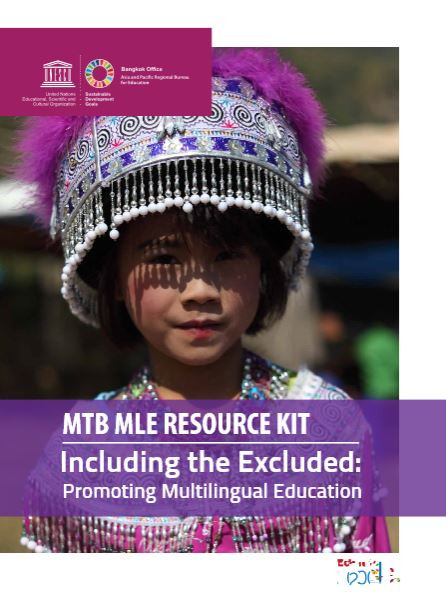 MTB MLE resource kit: Including the excluded: promoting multilingual education Год публикации: 2016 Автор: Susan Malone Организация-автор: UNESCO Bangkok Who Can Use this Resource Kit?This MTB MLE Resource Kit is for people who are committed to the idea that all children have the right to quality education in a language they speak and understand. MTB MLE programmes that are sustained within the formal education system require contributions from all stakeholders, working together and supporting one another. The next three booklets were developed for three specific stakeholder groups: policy makers, programme implementers and community members. These three booklets, with the case studies, provide a “big picture” of successful MTB MLE programmes and suggestions for the roles each group can take as they plan, implement and maintain their programmes. How Can You Use this Resource Kit?Each booklet is organized around key questions about MTB MLE that are frequently asked by policy makers, implementers and community members. Responses to each question include examples of specific activities that are part of successful MTB MLE programmes in a variety of contexts. Working together, stakeholders can identify the specific activities that are best suited for their own situation and make the best use of all available resources.
  Education for developing a global Omani citizen: current practices and challenges Год публикации: 2014 Автор: Saif Al-Maamari Организация-автор: Redfame Publishing Oman is a developing country which reformed its educational system in 1998 in order to meet the challenges of the 21st century, especially economic challenges. Strength of national identity and developing a sense of global citizenship were among the priorities of the new educational reform. This paper is based on a review of current practices regarding global citizenship education in educational system. The purpose of this theoretical study was to explore the current provision of the aspects of global citizenship education in Omani schools. Specifically, the study attempts to identify the current practices that are implemented by Omani schools to help Omani students to develop a sense of effective global citizenship. The study indicates that Omani education is not nationally centered as it aims to develop students who have global awareness. The study shows employing different approaches to develop a sense of global citizenship, namely, a separate school subject; integrated theme in social studies education, participation in some international initiatives in global citizenship education, and celebrating the international days and decades. L'éducation pour le Développement d'ONU Citoyen Omanais Mondiale: Pratiques et Défis Actuels Год публикации: 2014 Автор: Saif Al-Maamari Организация-автор: Redfame Publishing Oman est un pays en développement qui a réformé son système éducatif en 1998 dans le but de relever les défis du 21e siècle, en particulier les défis économiques. Force de l'identité nationale et de développer un sentiment de citoyenneté mondiale étaient parmi les priorités de la nouvelle réforme de l'éducation. Cet article est basé sur un examen des pratiques actuelles concernant L'éducation à la citoyenneté Mondiale (ECM) dans le système éducatif. Le but de cette étude théorique était d'explorer la disposition actuelle des aspects de L'éducation à la citoyenneté Mondiale (ECM) dans les écoles omanaises. Plus précisément, l'étude tente d'identifier les pratiques actuelles qui sont mises en œuvre par les écoles omanaises pour aider les étudiants omanais à développer un sentiment de citoyenneté mondiale efficace. L'étude indique que l'éducation omanaise est pas centrée à l'échelle nationale car elle vise à développer chez les élèves qui ont la conscience globale. L'étude montre en utilisant différentes approches pour développer le sens de la citoyenneté mondiale, à savoir, un sujet d'écoles séparées; thème intégré dans l'enseignement des études sociales, la participation à des initiatives internationales en matière d'éducation à la citoyenneté mondiale, et célébrant les jours et les décennies internationales.
  Schools for Conflict or for Peace in Afghanistan Год публикации: 2015 Автор: Dana Burde The publication provides a systematic analysis of the relationship between education and conflict, tracing how different approaches have been applied in Afghanistan as the rationale for aid has shifted from a policy of benign neglect, to an effort to support war, to an effort to mitigate conflict. Using this history as a case study, the book explores how foreign intervention in education can contribute either to conflict or to peace.. Schools for Conflict or for Peace in Afghanistan Год публикации: 2015 Автор: Dana Burde Cette publication est une analyse de la relation entre l'éducation et les conflits, retraçant l’évolution des motifs mobilisés pour justifier le recours à une aide extérieure en Afghanistan, et le passage d’une politique du laissez faire à celle de soutien à l’effort de guerre, puis aux tentatives d’apaisement du conflit. En s’appuyant sur cet exemple, cet ouvrage analyse comment l'intervention étrangère en matière d'éducation peut aussi bien contribuer à la guerre qu’à la paix. Education, Poverty and Terrorism: Is There a Causal Connection? Год публикации: 2003 Автор: Alan B. Krueger | Jitka Maleckova Организация-автор: American Economic Association In the authors' view, any connection between poverty, education and terrorism is indirect, complicated and probably quite weak. Instead of viewing terrorism as a direct response to low market opportunities or ignorance, the article suggests it is more accurately viewed as a response to political conditions and long-standing feelings of indignity and frustration that have little to do with economics.