
Ресурсы
Изучайте широкий спектр ценных ресурсов ВГГ, чтобы углубить своё понимание и повысить эффективность исследований, просветительской деятельности, преподавания и обучения.
Найдено: 684
 Technology and Values-Driven Transformation in Education (Journal of Southeast Asian Education: The Official Journal Of SEAMEO; Vol. 1, Special issue) Год публикации: 2023 Организация-автор: Southeast Asian Ministers of Education Organization (SEAMEO) The 11th SEAMEO-University of Tsukuba Symposium under the theme Technology and Values Driven Transformation in Education held on 20-22 February 2023 successfully engaged over 19,860 participants from 45 countries. With 30 speakers from 10 countries, the symposium provided the platform to share and exchange best practices carried out by schools and universities apart from identifying the challenges encountered by teachers, students and academicians. SEAMEO and UT have selected quality articles emerging from the symposium and put them together in the Journal of Southeast Asian Education. For example: - Lifelong Learning in the Digital Age- A Breakthrough of Values-Driven Strategies in Using Multimedia-Based Instruction (MMBI): A Course Towards Sustainable Transformative Education- Leave No One Behind: The Solution to an Inclusive Future- Unplugged Computational Thinking with Colouring Books
  L'éducation aux médias, à l'information et à la citoyenneté numérique - rapport sur l'exercice 2022-2023 Год публикации: 2023 Организация-автор: Autorité de Régulation de la Communication audiovisuelle et numérique Pour la troisième année consécutive, l'Arcom présente un bilan rendant compte des actions entreprises par les médias audiovisuels en matière d'éducation aux médias, à l'information et à la citoyenneté numérique, et mettant en lumière des initiatives innovantes à l’échelle nationale ou européenne.For the third year in a row, Arcom is presenting a review reporting on actions undertaken by audivisual media, in the field of media education, information literacy, and digital citizenship, and highligthing innovative initiative on nationale and european scale.
  The Transforming Education Summit: A Toolkit for Education Unions Год публикации: 2022 Организация-автор: Education International (EI) For the first time ever, the Heads of State of the world are meeting to discuss progress in education. Convened by the UN Secretary General, the Transforming Education Summit (TES) is taking place on 19 September 2022 in New York. It is a very important opportunity for us as education unions to make our voices heard.The Summit is a crisis response: it aims to reverse the downward trends that we currently see in education, with deepened and exacerbated inequity, and cuts to education budgets. Not only is the world off track to achieve Sustainable Development Goal 4 (SDG 4), the COVID-19 pandemic has wiped out 20 years of education gains. This is why the UN Secretary-General is calling for urgent action.The Summit is the biggest international education event since the adoption of SDG4 and a significant political opportunity for all EI member organisations. There are multiple ways that education unions can engage in the lead up to the Summit.This toolkit includes EI’s key policy messages for the Summit and aims to support EI member organisations in their advocacy efforts to ensure the Summit has concrete, tangible outcomes that advance teachers’ status and rights and the fulfilment of the right to education for all.
  Information Flows and Radicalization Leading to Violent Extremism in Central Asia Год публикации: 2019 Организация-автор: Search for Common Ground This study was carried out as part of the regional project “Promoting Stability and Peace in Central Asia through Media Literacy, Effective Lighting and Regional Cooperation”, implemented by the Internews office and funded by the European Union. The project aims to support national and regional initiatives that help prevent radicalization in Central Asia by increasing the capacity of journalists, civic activists and media professionals in the production of high-quality media content and the level of critical media consumption of representatives of civil society, decision-makers and active citizens. Информационные потоки и радикализация, ведущая к насильственному экстремизму в Центральной Азии Год публикации: 2019 Организация-автор: Search for Common Ground Данное исследование проведено в рамках регионального проекта «Содействие стабильности и миру в Центральной Азии посредством медиаграмотности, эффективного освещения и регионального сотрудничества», реализуемого офисом Интерньюс и финансируемого Европейским союзом. Проект нацелен на поддержку национальных и региональных инициатив, способствующих предотвращению радикализации в Центральной Азии через повышение потенциала журналистов, гражданских активистов и медиаспециалистов в вопросах производства качественного медиаконтента и уровня критического медиапотребления представителей гражданского общества, лиц, принимающих решения, и активных граждан.
 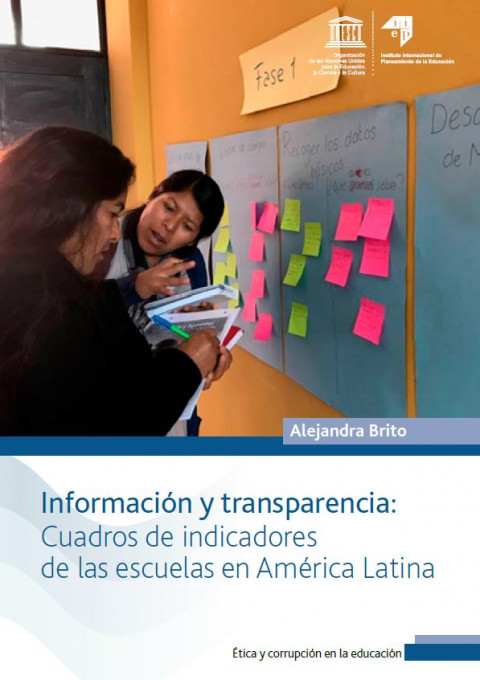 Información y transparencia: cuadros de indicadores de las escuelas en América Latina Год публикации: 2019 Автор: Alejandra Brito Организация-автор: UNESCO International Institute for Educational Planning (IIEP) ¿La publicación de indicadores sobre cada escuela y compartirlos con los actores escolares mejoran la transparencia y la rendición de cuentas y ayudan a combatir la corrupción de manera eficaz? Mientras que los cuadros de indicadores de las escuelas se están desarrollando en un número creciente de países de América Latina, esta pregunta aparece particularmente aguda; la información y las evaluaciones disponibles sobre el tema siguen siendo parcelarias.Este estudio muestra un panorama de la situación a nivel regional, revisando los sistemas de información e indicadores escolares de acceso público de 15 países de América Latina. Además, examina en profundidad siete cuadros de indicadores de información escolar en cuanto a su contenido, periodicidad, mecanismos de relevamiento y difusión de la información, diseño, uso e impacto en temas de transparencia, rendición de cuentas y lucha contra la corrupción.En conclusión, formula recomendaciones detalladas para los encargados de la toma de decisiones, entre las que se incluyen: considerar la utilidad, claridad y accesibilidad de los cuadros; mejorar la validez y vigencia de los datos; fomentar la comprensión y uso de la información; vincular los cuadros con los sistemas de rendición de cuentas actuales; incluirlos en los canales de comunicación en uso; proporcionar consecuencias o sanciones en caso de corrupción; asegurar la comprensión y difusión de los resultados por los padres de familias, así como su participación en los planes de mejora.
  Intersections – Politiques et pratiques pour l’enseignement des religions et des visions non religieuses du monde en éducation interculturelle Год публикации: 2015 Автор: Robert Jackson Que peut apporter l’étude des religions et des visions non religieuses du monde à l’éducation interculturelle des élèves européens ? Dans une importante recommandation, la Recommandation CM/Rec(2008)12 relative à la dimension des religions et des convictions non religieuses dans l’éducation interculturelle, le Comité des Ministres du Conseil de l’Europe explique la nature et les objectifs de cet enseignement.Intersections va beaucoup plus loin, car il s’agit ici d’aider les décideurs, les établissements scolaires (enseignants et équipe de direction) et les formateurs d’enseignants à relever au mieux les défis que soulève la recommandation. En tenant dûment compte de l’avis de responsables pédagogiques, d’enseignants et de formateurs d’enseignants des États membres du Conseil de l’Europe, Intersections fournit des conseils pour, par exemple, comprendre la terminologie employée dans cette forme d’enseignement; développer des compétences d’enseignement et d’apprentissage, et adopter différentes approches pédagogiques; créer en classe un « espace sécurisant » propice au dialogue entre élèves; aider les élèves à analyser les représentations des religions dans les médias; parler à la fois des visions non religieuses du monde et des points de vue religieux ; aborder les questions de religions et de convictions sous l’angle des droits de l’homme ; et tisser des liens entre établissements scolaires (de différents types) et entre l’école et son environnement.Intersections n’est ni un programme à suivre ni un manifeste politique. L’ouvrage vise à donner aux décideurs, aux établissements scolaires et aux formateurs d’enseignants des États membres du Conseil de l’Europe, ainsi qu’à toutes les personnes intéressées, les outils nécessaires pour résoudre les problèmes d’interprétation de la recommandation et adapter son message aux besoins propres à chaque pays. Intersections est le fruit du travail d’un groupe international d’experts réunis sous les auspices du Conseil de l’Europe et du Centre européen Wergeland. Il a été rédigé au nom du groupe par le professeur Robert Jackson.
  Violent extremism in Central Asia 2018: A preliminary survey of groups, digital dimensions and state responses Год публикации: 2018 Организация-автор: Civil Initiative on Internet Policy | SecDev This research has been produced within the framework of the “Contributing to stability and peace in Central Asia through media literacy, improved reporting and regional cooperation” Project implemented by Internews and funded by the European Union. The contents of this research are the sole responsibility of The SecDev Group, and Public Foundation Civil Initiative on Internet Policy and can not be regarded as reflecting the position of the European Union and Internews under any circumstances. Насильственный экстремизм в Центральной Азии, 2018: обзор террористических групп, законодательства стран ЦА и правоприменительной практики по противодействию насильственному экстремизму онлайн Год публикации: 2018 Организация-автор: Civil Initiative on Internet Policy | SecDev Исследование проведено совместно с общественным фондом «Гражданская инициатива интернет - политики» и организацией The SecDev Group в рамках проекта «Содействие стабильности и миру в Центральной Азии посредством повышения медиа-грамотности, эффективного освещения и регионального сотрудничества», финансируемого Европейским союзом и реализуемого Интерньюс. Содержание этого исследования является исключительной ответственностью организации The SecDev Group и общественного фонда «Гражданская инициатива интернет-политики» и ни при каких обстоятельствах не отражает позицию Европейского Союза и Интерньюс.
  المواطنة في العصر الرقمي: نموذج مملكة البحرين Год публикации: 2017 Автор: ندى علي حسن بن شمس Организация-автор: معهد البحرين للتنمية السياسية البحث يجيب عن التساؤل الرئيس التالي: ما فعالية برنامج مقترح قائم على الشبكة العالمية لتنمية قيم المواطنة لطالب جامعة البحرين في ضوء متطلبات العصر الرقمي؟ ويتفرع من التساؤل الرئيس للبحث التساؤلات الفرعية الآتية: 1 -ما قائمة قيم المواطنة اللازمة لطالب جامعة البحرين في ضوء متطلبات العصر الرقمي؟ 2 -ما صورة البرنامج المقترح القائم على الشبكة العالمية) بالأنشطة الحوارية – بدون الأنشطة الحوارية( لتنمية قيم المواطنة لطالب جامعة البحرين في ضوء متطلبات العصر الرقمي؟ 3 –ما فعالية البرنامج المقترح القائم على الشبكة العالمية بصورتيه )بالأنشطة الحوارية – بدون الأنشطة الحوارية( لتنمية قيم المواطنة لطالب جامعة البحرين في ضوء متطلبات العصر الرقمي؟