
Ресурсы
Изучайте широкий спектр ценных ресурсов ВГГ, чтобы углубить своё понимание и повысить эффективность исследований, просветительской деятельности, преподавания и обучения.
Найдено: 3,451
 التعلّم: ذلك الكنز المكنون؛ تقرير قدمته الى اليونسكو اللجنة الدولية المعنية بالتربية للقرن الحادي والعشرين (مقتطفات) Год публикации: 1996 Автор: Jacques Delors Организация-автор: International Commission on Education for the Twenty-first Century Learning: The Treasure Within, commonly referred to as the 'Delors Report', proposes a holistic and integrated vision of education based on the paradigms of lifelong learning, and the four pillars of learning to be, to know, to do, and to live together.
  ASPnet strategy for 2014-2021 global network of schools addressing global challenges: building global citizenship and promoting sustainable development Год публикации: 2014 Организация-автор: UNESCO Associated Schools Project Network (ASPnet) Over the next 8 years (2014-2021), ASPnet needs to respond to the needs of education in a rapidly changing and increasingly complex world. The following strategy, therefore, has to remain flexible and requires regular re-evaluation in the light of a changing environment. Globalization and growing interconnectedness ask for increased networking and cooperation. ASPnet has proven to have a great potential for global school networking and educational innovations, which remain largely untapped. UNESCO can make much fuller use of ASPnet in its quest for and implementation of a successful Post-2015 Global Education Agenda. Stratégie du réSEAU pour 2014-2021 Un réseau mondial d’Ecoles pour répondre aux défis mondiaux : renforcer la citoyenneté mondiale et promouvoir le développement durable Год публикации: 2014 Организация-автор: UNESCO Associated Schools Project Network (ASPnet) Au cours des huit prochaines années, le réSEAU devra répondre aux besoins de l'éducation dans un monde en évolution rapide et de plus en plus complexe. C’est pourquoi, la stratégie ci-après doit rester flexible et nécessite une réévaluation régulière à la lumière des changements de l'environnement. La mondialisation et l’interdépendance croissante requièrent le renforcement des réseaux et de la coopération. Le réSEAU a démontré un potentiel important pour la mise en réseau mondiale d’écoles et d’innovations éducatives, qui demeurent largement inexploitées. L’UNESCO peut tirer beaucoup plus parti du réSEAU dans sa quête d’un agenda mondialperformant pour l’éducation après-2015 et lors de la mise en œuvre de celui-ci.
  The right to higher education and gender equality: briefing note compendium Год публикации: 2023 Организация-автор: UNESCO International Institute for Higher Education in Latin America and the Caribbean (IESALC) The right to higher education and gender equality Table of ContentsForeword ................................................................................................................................................................................4Introduction ..........................................................................................................................................................................5UNESCO and the right to higher education ..............................................................................................................5Aim of this compendium..................................................................................................................................................6Key findings...........................................................................................................................................................................7Gender equality in Higher Education - Maximising impacts– Gillian Cowell................................................8Gender equality and higher education: The Afghan case – Aisha Khurram............................................... 12An analysis of gender equality policies and practices in higher education institutions and their effectiveness in promoting gender equity – Angel Mbuthia........................................................ 14Gender identity and access to higher education – Martin Perea.................................................................... 16What can be done to ensure the right to higher education? – Bhavani Rao.............................................. 18Gender equality in higher education still a pending issue in Peru – Patricia Ruiz Bravo ....................... 22Gender equality in higher education: state of play and implications across OECD countries, and reflections on potential responses for policy and practice – François Staring.................................. 24
 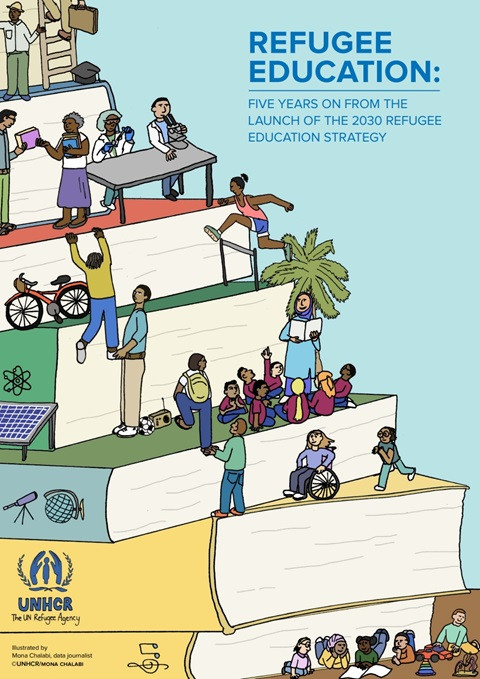 Refugee Education; Five Years on from the Launch of the 2030 Refugee Education Strategy Год публикации: 2024 Автор: Cirenia Chavez Villegas | Kate Bond Организация-автор: UN. Office of the United Nations High Commissioner for Refugees (UNHCR) The 2024 UNHCR Refugee Education Report draws on data from more than 65 countries worldwide to provide the most detailed picture yet of the state of refugee education and enrolment. The report reflects on the 2030 Refugee Education Strategy (launched in 2019) and where notable progress has been made as well as areas where greater investment and enhanced collaboration are needed to meet the strategic objectives of the Strategy.
  Safe Schools Declaration Год публикации: 2015 Организация-автор: Global Coalition to Protect Education from Attack (GCPEA) The Safe Schools Declaration is an intergovernmental political commitment that was developed at an international conference held in Oslo, Norway, on 28-29 May 2015. The Declaration allows countries the opportunity to express their political support for the protection of students, teachers and schools during times of armed conflict; the importance of the continuation of education during armed conflict; and the implementation of the Guidelines for Protecting Schools and Universities from Military Use during Armed Conflict. Declaración sobre escuelas seguras Год публикации: 2015 Организация-автор: Global Coalition to Protect Education from Attack (GCPEA) La Declaración sobre Escuelas Seguras es un compromiso político intergubernamental que se construyó en el marco de una conferencia internacional celebrada en Oslo, Noruega, el 28-29 de mayo de 2015.La Declaración permite a los países la oportunidad de expresar su apoyo político para la protección de los estudiantes, maestros y escuelas durante tiempos de conflicto armado; la importancia de la continuación de la educación durante los conflictos armados y la aplicación de las Directrices para Proteger Escuelas y Universidades de Uso Militar durante Conflicto Armado.
 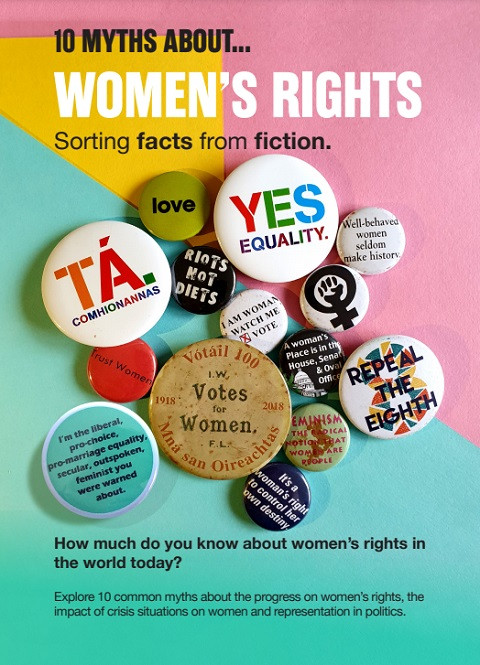 10 Myths About Women’s Rights: Sorting Facts From Fiction Год публикации: 2020 Автор: Toni Pyke | Colm Regan Организация-автор: DevelopmentEducation.ie Gender-based inequality is one of the most enduring and deep-seated discriminations. It affects all regions, classes and sectors. In most countries, it is maintained and defended in most of the same ways. One key component of that maintenance is a set of myths that are repeated time and time again.This pocket-size booklet includes:Why thinking about women’s rights matters10 short myths about progress on equality, who benefits from feminism, the realities of women’s health and the impact of COVID-19.Links to the Sustainable Development GoalsReferences per each myth following a fact or fiction approach and an explainerThe 10 Myths About…. series looks to sort facts from fiction on key global development, human rights and justice issues.Download 10 Myths About Women’s Rights PDFTest your knowledge and take the 10 Myths About Women’s Rights quiz or share with your group / class / friends For the latest fact checks and factsheets more on the fact checking project and development ideas, issues and debates, visit our What The Fact? project.
  Gender-Based Hate Crime Год публикации: 2021 Организация-автор: Organization for Security and Co-operation in Europe (OSCE) Gender-based hate crimes are a consequence of gender inequalities and disproportionately affect women, as well as anyone perceived as not complying with prevailing gender norms. Gender-based hate crimes often seek to intimidate and suppress ways of life or expressions of identity that are perceived as not complying with traditional gender norms. They have a significant, long-lasting impact on the victims, and undermine security and social cohesion by perpetuating gender inequalities. The existence of such crimes also underscores wider trends of intolerance towards other groups. Everyone has a role to play in countering this and all forms of intolerance.
  Education in a Post-COVID World: Additional Considerations (In-Progress Reflection; No.43, 2021) Год публикации: 2021 Автор: Renato Opertti Организация-автор: UNESCO International Bureau of Education (IBE) This discussion document analyses some implications of the ideas proposed in the seminal UNESCO document “Education in a post-COVID world: Nine ideas for public action” (2020). Based on the work of the International Commission on the Futures of Education, the documents’ contributors included prominent figures with a wide range of professional and policy experience who hail from various regions of the world. The set of nine interconnected ideas illuminates the way forward toward the transformation of education and education systems and a reimagined future seen through a progressive lens. On one hand, it reaffirms basic principles, understandings, and commitments with regard to education as a global common good and universal human right; it also articulates the need to both reinvent multilateralism for a new global order and, crucially, to mobilize ideas and funding for transforming education. On the other hand, the document advocates for a comprehensive educational agenda, including the following critical issues: (i) visualizing educators as decision-makers in educational systems; (ii) appreciating students as active actors with rights; (iii) recognizing the value and specificity of the school space; (iv) addressing the dilemmas around technology’s ability to serve as an equalizer of opportunities; and (v) revisiting educational content for the sustainability of younger generations.