
Ресурсы
Изучайте широкий спектр ценных ресурсов ВГГ, чтобы углубить своё понимание и повысить эффективность исследований, просветительской деятельности, преподавания и обучения.
Найдено: 3,436
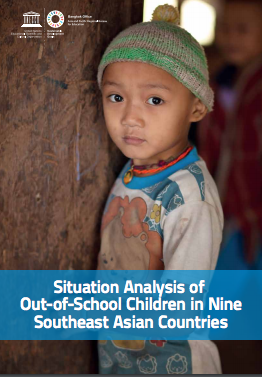 Situation analysis of out-of-school children in nine southeast Asian countries Год публикации: 2017 Организация-автор: UNESCO Bangkok In a world that continually aspires for every child and youth to have access to education, there are still large numbers of out-of-school children (OOSC) who are yet to claim their right to basic education. In 2013, the number of children who are not in school, who have dropped out, and who have never been to school have risen to 124 million after seeing the numbers continuously drop for much of the first decade of the 21st century. In much of Southeast Asia, close to seven million children of both primary and lower secondary school-age find themselves in the same situation. In an effort to assist the countries in Southeast Asia to develop more robust policies and programmes for OOSC in their respective countries, this report was commissioned to map out the current legislations, policies, characteristics, and interventions on out-of-school children in nine countries across the region, which include Cambodia, Indonesia, Lao PDR, Malaysia, Myanmar, the Philippines, Thailand, Timor-Leste and Vietnam. Using a desk review of available and relevant secondary data, the study covered OOSC of primary and lower secondary school-age. Situation analysis of out-of-school children in nine southeast Asian countries Год публикации: 2017 Организация-автор: UNESCO Bangkok In a world that continually aspires for every child and youth to have access to education, there are still large numbers of out-of-school children (OOSC) who are yet to claim their right to basic education. In 2013, the number of children who are not in school, who have dropped out, and who have never been to school have risen to 124 million after seeing the numbers continuously drop for much of the first decade of the 21st century. In much of Southeast Asia, close to seven million children of both primary and lower secondary school-age find themselves in the same situation. In an effort to assist the countries in Southeast Asia to develop more robust policies and programmes for OOSC in their respective countries, this report was commissioned to map out the current legislations, policies, characteristics, and interventions on out-of-school children in nine countries across the region, which include Cambodia, Indonesia, Lao PDR, Malaysia, Myanmar, the Philippines, Thailand, Timor-Leste and Vietnam. Using a desk review of available and relevant secondary data, the study covered OOSC of primary and lower secondary school-age.
  LEARNING to Realize Education’s Promise Организация-автор: World Bank The World Development Report 2018 (WDR 2018)—LEARNING to Realize Education’s Promise—is the first ever devoted entirely to education. And the timing is excellent: education has long been critical to human welfare, but it is even more so in a time of rapid economic and social change. The best way to equip children and youth for the future is to place their learning at the center. The 2018 WDR explores four main themes: 1) education’s promise; 2) the need to shine a light on learning; 3) how to make schools work for learners; and 4) how to make systems work for learning.
 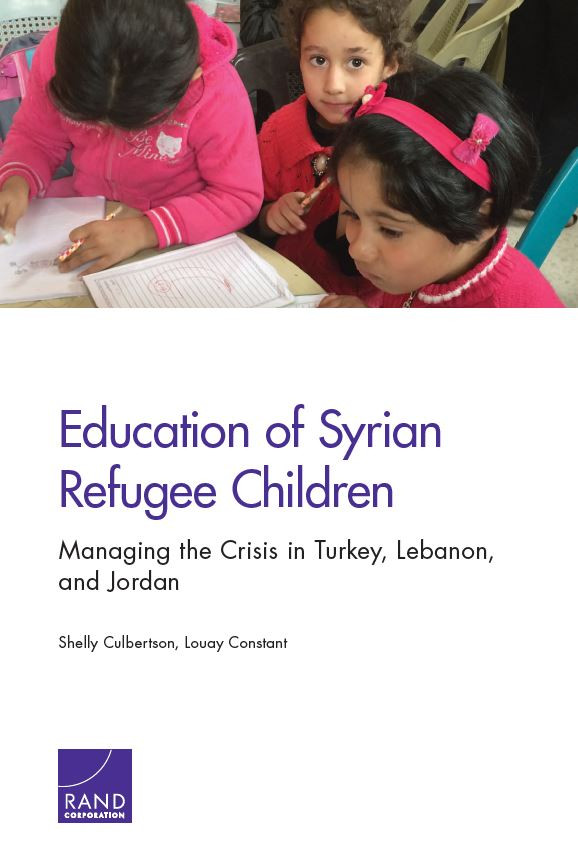 تعليم اللاجئين السوريين: إدارة الازمة في تركيا ولبنان والأردن Год публикации: 2015 Автор: Shelly Culbertson | Louay Constant Организация-автор: RAND Corporation مع وجود أربعة ملايين لاجئ سوري اعتبارًا من سبتمبر 2015 ، هناك حاجة ملحة لتطوير مناهج قصيرة وطويلة الأجل لتوفير التعليم لأطفال هذه الفئة من السكان. يستعرض هذا التقرير تعليم اللاجئين السوريين للأطفال في البلدان الثلاثة المجاورة التي تضم أكبر عدد من اللاجئين - تركيا ولبنان والأردن - ويحلل أربعة مجالات: الوصول والإدارة والمجتمع والجودة. وتشمل آثار السياسة إعطاء الأولوية للحاجة الملحة لزيادة فرص الحصول على التعليم بين اللاجئين ؛ الانتقال من استجابة إنسانية قصيرة المدى إلى استجابة إنمائية طويلة المدى ؛ الاستثمار في كل من قدرة الحكومة على توفير التعليم وفي البدائل الرسمية عالية الجودة لأنظمة المدارس العامة ؛ تحسين البيانات لدعم صنع القرار ؛ تطوير استراتيجية تداولية حول كيفية دمج أو فصل الأطفال السوريين وأطفال الدول المضيفة في المدارس لتعزيز التماسك الاجتماعي ؛ الحد من عمالة الأطفال وتمكين التعليم من خلال وضع سياسات توظيف للبالغين ؛ وتنفيذ خطوات معينة لتحسين جودة التعليم لكل من اللاجئين والمواطنين.
 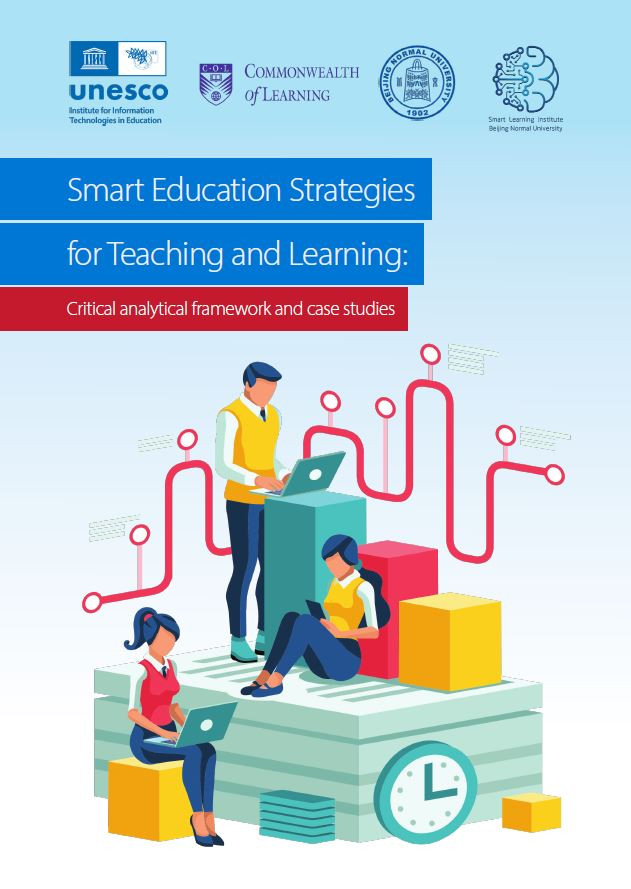 Smart Education Strategies for Teaching and Learning: Critical Analytical Framework and Case Studies Год публикации: 2022 Автор: Shafika Isaacs | Sanjaya Mishra Организация-автор: UNESCO Institute for Information Technologies in Education (IITE) | Beijing Normal University This electronic publication about smart education strategies for building the resilience of education and training systems in the postpandemic environment provides a framework to develop appropriate policy and strategy in existing and emerging forms of schooling, higher education, technical and vocational education, and training (TVET), adult education and lifelong learning, including formal, nonformal and informal educational environments. The publication reviews the status of smart education policies in 10 countries. It includes 15 case studies within the six policy themes: infrastructure, curriculum and pedagogy, digital education resources and platforms, skills and competencies, governance, management and administration, and partnership.
  Languages in adult literacy: policies and practices during the 15 years of EFA (2000-2015) Год публикации: 2015 Автор: Clinton Robinson Linguistic diversity characterises many countries with large literacy needs. Meeting these needs will require a multilingual approach based on learning initial literacy in the learner’s mother tongue, with other languages used subsequently. This paper identifies five major challenges in implementing multilingual programmes, and traces the international policy developments over the 15 years of the EFA period. Four case studies – Mexico, Morocco, Papua New Guinea and Senegal – illustrate a range of policies, showing differing approaches and levels of commitment in providing literacy acquisition based on the mother tongue. The paper concludes with six policy orientations to guide action as part of the post- 2015 agenda.
  Переосмысление школьного обучения ДЛЯ XXI ВЕКА Состояние образования ради мира, устойчивого развития и глобальной гражданственности в Азии Год публикации: 2017 Организация-автор: Mahatma Gandhi Institute of Education for Peace and Sustainable Development (MGIEP) В публикации «Переосмысление школьного образования в XXI веке: состояние образования в интересах мира, устойчивого развития и в духе глобальной гражданственности в Азии» Института ЮНЕСКО Махатмы Ганди по образованию в интересах мира и устойчивого развития (МГИЭП) обсуждается о необходимости изменения фундаментальных целей школьного образования, включая идеалы образования в интересах устойчивого развития, в духе глобальной гражданственности и мира и (ЦУР 4.7). Кроме того, в исследовании рассматривается разработка сравнительных показателей – так называемые «бенчмарки», позволяющие оценить будущий прогресс в этой области.В этом отчете приняли участие более 60 исследователей из 22 стран Азии и он также основан на анализе ключевой образовательной политики и образовательных стандартов этих стран. Отчет также включает обширный обзор литературы по школьному образованию в Азии. В шестой главе публикации можно найти анализ текущего состояния и вопросов, стоящих по внедрению образования в интересах мира, устойчивого развития и в духе глобальной гражданственности в различных субрегионах Азии, включая Центральной Азии. Во-первых, глава раскрывает реформы в школьном образовании в постсоветской Центральной Азии, которые проводились в целях удовлетворения потребности в быстром создании собственной государственности в странах региона, которые не были готовы к независимости при распаде СССР. Во-вторых, в главе подчеркивается трансформация понимания советского восприятия образования как «общего блага» и его вытеснение, по крайней мере, на уровне политического дискурса, с неустанным акцентом на образование как инструмента развития «человеческих ресурсов» с учетом спроса рынка на компетенции.Глобальное сообщество обязалось достичь целей устойчивого развития (ЦУР), включая ЦУР4 по образованию, к 2030 году. Задача ЦУР4.7 направлена на предоставление учащимся знаний и компетенций, необходимых им для реализации всех целей устойчивого развития. Основное внимание уделяется когнитивным, социально-эмоциональным и поведенческим результатам обучения, которые помогают учащимся решать конкретные задачи, рассматриваемые ЦУР. Поскольку государства-члены Организации Объединенных Наций работают над достижением ЦУР, им предлагается переосмыслить образование для внесения вклада в ЦУР. В то время как ЦУР4.7 обеспечивает необходимую структуру в этом отношении.
  Toward one world or many? A comparative analysis of OECD and UNESCO global education policy documents Год публикации: 2019 Автор: Vaccari, Victoria | Gardinier, Meg P. Education policymaking has gone global. The 2030 Agenda for Sustainable Development aims to galvanize efforts to promote sustainable development, decrease global inequalities, and realize universal quality education. Supporting these efforts, two leading international organizations, UNESCO and the OECD, have set out normative frameworks for their vision of global education. This paper examines the policy discourses of these organizations in light of SDG 4–Education. Specifically, through a comparative analysis of selected terms and underlying concepts in key policy documents, the paper distinguishes between UNESCO's notion of global citizenship and the OECD's framework for global competence. Ultimately, the authors discuss whether the organizations' agendas are aimed at a common global vision, or, alternatively, towards two distinct and divergent conceptualizations of an imagined future.
 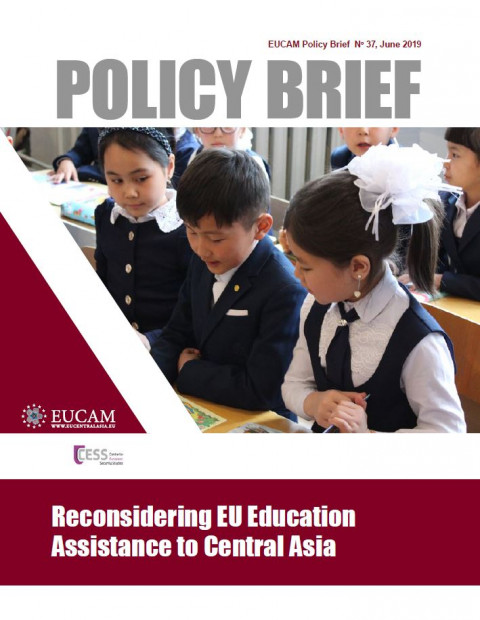 Reconsidering EU Education Assistance to Central Asia (EUCAM Policy Brief No. 37, June 2019) Год публикации: 2019 Автор: Sebastien Peyrouse Организация-автор: Europe-Central Asia Monitoring (EUCAM) This paper is based on broader research on education in Central Asia that includes interviews with local stakeholders (teachers, parents and students) in Kazakhstan, Kyrgyzstan and Uzbekistan. Some views were taken from Sebastien Peyrouse, ‘How to Strengthen Western Engagement in Central Asia: Spotlight on EU Education Assistance in Uzbekistan’, PONARS Policy Memo, no. 524, April 2018,http://www.ponarseurasia.org/memo/strengthen-western-engagement-central-asia-spotlight-eu-education-assistance-uzbekistan. Новый взгляд на содействие ЕС образовательному сектору в Центральной Азии (Брифинг EUCAM No. 37, сентябрь 2019) Год публикации: 2019 Автор: Sebastien Peyrouse Организация-автор: Europe-Central Asia Monitoring (EUCAM) Этот брифинг основан на более углубленном исследовании системы образования в Центральной Азии, которое включает интервью в регионе (с учителями, родителями и учащимися) в Казахстане, Кыргызстане и Узбекистане.Ряд выводов позаимствованы из работы Себастьяна Пейруза ‘How to Strengthen Western Engagement in Central Asia: Spotlight on EU Education Assistance in Uzbekistan’, PONARS Policy Memo, no. 524, апрель 2018,http://www.ponarseurasia.org/memo/strengthen-western-engagement-central-asia-spotlight-eu-education-assistance-uzbekistan.