
Ресурсы
Изучайте широкий спектр ценных ресурсов ВГГ, чтобы углубить своё понимание и повысить эффективность исследований, просветительской деятельности, преподавания и обучения.
Найдено: 3,385
 Las intersecciones entre educación, migración y desplazamiento no son género-neutrales (Informe de Seguimiento de la Educación en el Mundo, 2019) Год публикации: 2019 Организация-автор: Organización de las Naciones Unidas para la Educación, la Ciencia y la Cultura (UNESCO) El Informe de Seguimiento de la Educación en el Mundo de 2019 enfatizaba la necesidad de incluir a migrantes y refugiados en los sistemas educativos mundiales, y también marcaba la necesidad de aumentar las planificaciones que busquen dar respuestas a las necesidades de estas poblaciones. Como desarrolla este corto informe, muchas de estas necesidades tienen dimensiones vinculadas al género. Estas van desde las vulnerabilidades de niñas migrantes de contextos tanto rurales como urbanos que terminan como trabajadoras domésticas siendo privadas de oportunidades educativas, hasta las vulnerabilidades de niños varones refugiados, muchas veces sin acompañantes, que tienen limitadas oportunidades de desarrollar sus habilidades. Ellas abarcan tanto la falta de cualificación de las mujeres migrantes en la ‘cadena global de cuidado’ como el incremento de la carga de trabajos que recae sobre niñas que han sido dejadas de lado cuando el padre o la madre migra. Más allá de esto, investigaciones sobre las experiencias de mujeres y niñas o de hombres y niños en contextos de migración y desplazamiento – y cómo estos pueden ser afectados por la educación – continúan siendo limitadas. Es preciso ahondar en el análisis de la intersección entre género, educación, migración y desplazamiento en una gran variedad de asuntos, incluyendo las dimensiones género-específicas de uso de remesas, repuestas a prácticas educativas en base a género y el impacto que tienen sobre el empoderamiento las oportunidades de educación no formal. Para cumplir con el potencial de instalar resiliencia, los sistemas educativos precisan reconocer todas estas necesidades y responder a ellas.
 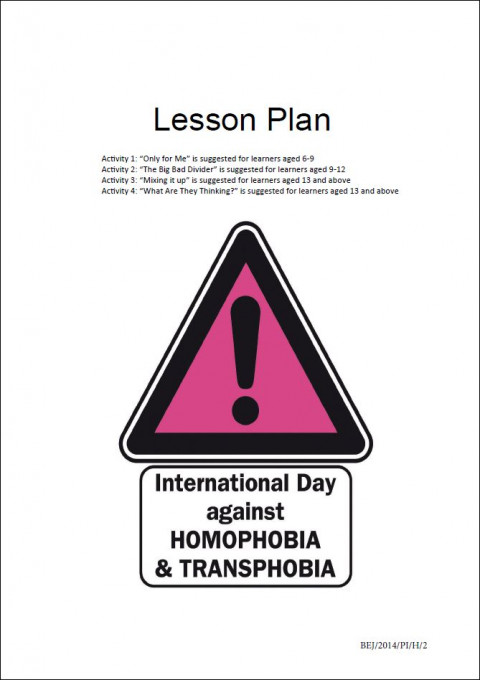 International Day against Homophobia & Transphobia: Lesson Plan Год публикации: 2014 Организация-автор: UNESCO Each year, the world celebrates the International Day Against Homophobia and Transphobia (IDAHO) on May 17th. During the days surrounding IDAHO, private and public actors, ranging from the United Nations agencies, to city councils, police stations, human rights organiza-tions, individual citizens, schools and others, implement activities to mark the day. The theme of this year’s IDAHO is “Fighting homophobia and transphobia IN and THROUGH education”. This theme was selected in response to a growing awareness that homophobic and transphobic bullying in schools which are manifestations of homophobia and transphobia, are serious issues that students and educational staff face every day across the world.Over the years, teachers around the world have been developing activities in their classrooms, with the help of various organizations working on efforts to address and homophobia and transphobia in educational institutions. Building on the success of these experiences, UNESCO and the IDAHO Committee propose teachers take advantage of the International Day Against Homophobia and Transphobia to conduct an ‘IDAHO Lesson’. The four activities proposed below are aimed at both primary and secondary level classes. A list of resources from other organizations for teachers, for all subjects and all grades is included below to enable greater choice of possible activities. By conducting an “IDAHO Lesson”, you can create safer learning environments, address discrimination and encourage respect and tolerance between and amongst learners.(Title: International Day against Homophobia and Transphobia: Lesson Plan) Combattre l’homophobie et la transphobie : Propositions pédagogiques Год публикации: 2014 Организация-автор: Organisation des Nations Unies pour l'éducation, la science et la culture (UNESCO) Le présent programme pédagogique a été élaboré à l’occasion de l’IDAHO 2012, autour du thème « Combattre l’homophobie et la transphobie DANS et PAR l’éducation », en réponse à la prise de conscience que le harcèlement homophobe ou transphobe dans les écoles sont des manifestations de l’homophobie et de la transphobie auxquelles étudiants et membres du corps enseignant du monde entier doivent faire face au quotidien. Un problème sérieux qui ne peut être ignoré.Diverses études démontrent que le harcèlement homophobe ou transphobe peut avoir de graves répercussions sur la santé physique et mentale des jeunes gens et jeunes filles qui le subissent à un moment crucial de leur vie. Le harcèlement homophobe peut entraîner une baisse des performances d’apprentissage, voire, parfois, le décrochage scolaire. Les jeunes personnes lesbiennes, gays, bisexuelles, transgenres ou intersexes (LGBTI) victimes de harcèlement homophobe sont plus enclines à l’automutilation, et on dénombre parmi cette population beaucoup plus de cas de suicide que chez les autres jeunes. Les recherches révèlent aussi que les jeunes LGBTI ont tendance à adopter des comportements à haut risque tels que les rapports sexuels non protégés et la consommation de stupéfiants.
 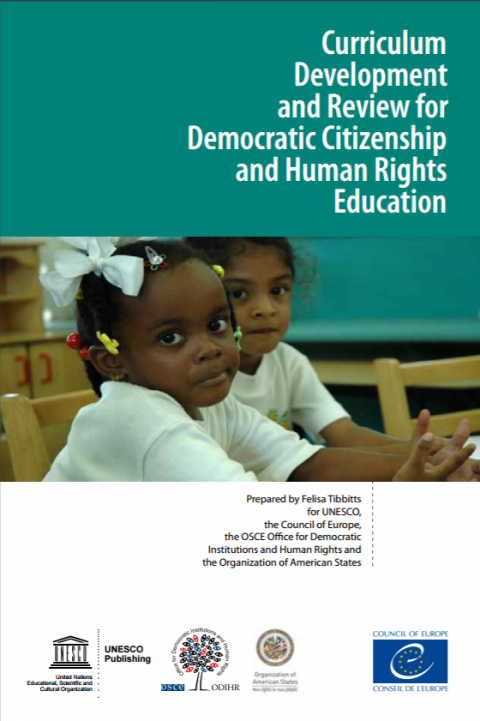 Curriculum Development and Review for Democratic Citizenship and Human Rights Education Год публикации: 2016 Организация-автор: UNESCO | Council of Europe | Organization of American States (OAS) | OSCE. Office for Democratic Institutions and Human Rights (ODIHR) Education for democratic citizenship and human rights education are vital for peaceful, sustainable and inclusive societies based on respect for the human rights of every person. Effective teaching and learning processes require well-trained teachers, positive learning environments and high-quality learning materials. This is underpinned by education policy, including curriculum development and review, which is the main focus of this book. The strengthening of education policies in the fields of education for democratic citizenship and human rights lies at the very heart of the efforts of the Council of Europe, the United Nations Educational, Scientific and Cultural Organization, the Office for Democratic Institutions and Human Rights of the Organization for Security and Co-operation in Europe, and the Organization of American States. These organisations have jointly produced this publication in order to support states’ commitment to fostering citizenship and human rights education and improving access to quality education for all. Élaboration et révision des programmes d'enseignement pour l'éducation à la citoyenneté démocratique et aux droits de l'homme Год публикации: 2016 Организация-автор: Organisation des Nations Unies pour l'éducation, la science et la culture (UNESCO) | Conseil de l'Europe | Organization of American States (OAS) | OSCE. Office for Democratic Institutions and Human Rights (ODIHR) Education for democratic citizenship and human rights education are vital for peaceful, sustainable and inclusive societies based on respect for the human rights of every person. Effective teaching and learning processes require well-trained teachers, positive learning environments and high-quality learning materials. This is underpinned by education policy, including curriculum development and review, which is the main focus of this book. The strengthening of education policies in the fields of education for democratic citizenship and human rights lies at the very heart of the efforts of the Council of Europe, the United Nations Educational, Scientific and Cultural Organization, the Office for Democratic Institutions and Human Rights of the Organization for Security and Co-operation in Europe, and the Organization of American States. These organisations have jointly produced this publication in order to support states’ commitment to fostering citizenship and human rights education and improving access to quality education for all. Разработка и пересмотр учебных программ по воспитанию демократической гражданственности и образованию в области прав человека Год публикации: 2016 Организация-автор: Организация Объединенных Наций по вопросам образования, науки и культуры (UNESCO) | Council of Europe | Organization of American States (OAS) | OSCE. Office for Democratic Institutions and Human Rights (ODIHR) Education for democratic citizenship and human rights education are vital for peaceful, sustainable and inclusive societies based on respect for the human rights of every person. Effective teaching and learning processes require well-trained teachers, positive learning environments and high-quality learning materials. This is underpinned by education policy, including curriculum development and review, which is the main focus of this book. The strengthening of education policies in the fields of education for democratic citizenship and human rights lies at the very heart of the efforts of the Council of Europe, the United Nations Educational, Scientific and Cultural Organization, the Office for Democratic Institutions and Human Rights of the Organization for Security and Co-operation in Europe, and the Organization of American States. These organisations have jointly produced this publication in order to support states’ commitment to fostering citizenship and human rights education and improving access to quality education for all.
  Rapport de synthèse sur l'application par les États membres de la Recommandation de 1974 sur l'éducation pour la compréhension, la coopération et la paix internationales et l'éducation relative aux droits de l'homme et aux libertés fondamentales Год публикации: 2013 Организация-автор: Organisation des Nations Unies pour l'éducation, la science et la culture (UNESCO) Background: In accordance with 34 C/Resolution 87, 177 EX/Decision 35 (I) and 184 EX/Decision 20, the Executive Board has monitored the implementation of the 1974 Recommendation concerning Education for International Understanding, Cooperation and Peace and Education relating to Human Rights and Fundamental Freedoms. Pursuant to 192 EX/Decision 20 (III), the Director-General hereby submits the consolidated report on the implementation by Member States of the Recommendation.Purpose: This document reports on the results of the Fifth Consultation on the Implementation of the Recommendation concerning Education for International Understanding, Cooperation and Peace and Education relating to Human Rights and Fundamental Freedoms (covering the period 2009-2012). The analysis was prepared on the basis of 55 national reports from Member States received by the Secretariat. Informe de síntesis sobre la aplicación por los Estados Miembros de la Recomendación de 1974 sobre la Educación para la Comprensión, la Cooperación y la Paz Internacionales y la Educación relativa a los Derechos Humanos y las Libertades Fundamentales Год публикации: 2013 Организация-автор: Organización de las Naciones Unidas para la Educación, la Ciencia y la Cultura (UNESCO) Background: In accordance with 34 C/Resolution 87, 177 EX/Decision 35 (I) and 184 EX/Decision 20, the Executive Board has monitored the implementation of the 1974 Recommendation concerning Education for International Understanding, Cooperation and Peace and Education relating to Human Rights and Fundamental Freedoms. Pursuant to 192 EX/Decision 20 (III), the Director-General hereby submits the consolidated report on the implementation by Member States of the Recommendation.Purpose: This document reports on the results of the Fifth Consultation on the Implementation of the Recommendation concerning Education for International Understanding, Cooperation and Peace and Education relating to Human Rights and Fundamental Freedoms (covering the period 2009-2012). The analysis was prepared on the basis of 55 national reports from Member States received by the Secretariat. Сводный доклад о выполнении Рекомендации 1974 г. о воспитании в духе международного взаимопонимания, сотрудничества и мира и о воспитании в духе уважения прав человека и основных свобод Год публикации: 2013 Организация-автор: Организация Объединенных Наций по вопросам образования, науки и культуры (UNESCO) Background: In accordance with 34 C/Resolution 87, 177 EX/Decision 35 (I) and 184 EX/Decision 20, the Executive Board has monitored the implementation of the 1974 Recommendation concerning Education for International Understanding, Cooperation and Peace and Education relating to Human Rights and Fundamental Freedoms. Pursuant to 192 EX/Decision 20 (III), the Director-General hereby submits the consolidated report on the implementation by Member States of the Recommendation.Purpose: This document reports on the results of the Fifth Consultation on the Implementation of the Recommendation concerning Education for International Understanding, Cooperation and Peace and Education relating to Human Rights and Fundamental Freedoms (covering the period 2009-2012). The analysis was prepared on the basis of 55 national reports from Member States received by the Secretariat. التقرير الجامع عن تنفيذ توصية عام ١٩٧٤ بشأن التربية من أجل التفاهم والتعاون والسلام على الصعيد الدولي والتربية في مجال حقوق الإنسان وحرياته الأساسية Год публикации: 2013 Организация-автор: منظمة الأمم المتحدة للتربية والعلم والثقافة (UNESCO) Background: In accordance with 34 C/Resolution 87, 177 EX/Decision 35 (I) and 184 EX/Decision 20, the Executive Board has monitored the implementation of the 1974 Recommendation concerning Education for International Understanding, Cooperation and Peace and Education relating to Human Rights and Fundamental Freedoms. Pursuant to 192 EX/Decision 20 (III), the Director-General hereby submits the consolidated report on the implementation by Member States of the Recommendation.Purpose: This document reports on the results of the Fifth Consultation on the Implementation of the Recommendation concerning Education for International Understanding, Cooperation and Peace and Education relating to Human Rights and Fundamental Freedoms (covering the period 2009-2012). The analysis was prepared on the basis of 55 national reports from Member States received by the Secretariat.