
Ресурсы
Изучайте широкий спектр ценных ресурсов ВГГ, чтобы углубить своё понимание и повысить эффективность исследований, просветительской деятельности, преподавания и обучения.
Найдено: 518
 Fostering national and global citizenship: an example from South Africa (Social Studies and the Young Learner, vol 21, no. 1, september/october 2008) Год публикации: 2008 Автор: Omiunota Nelly Ukpokodu Организация-автор: National Council for the Social Studies Multicultural and global scholars urge that we prepare the young for national and global democratic citizenship given the increasing interdependence and challenging realities for today. Young people desire to be a part of the solution to global problems, but they must be educated about what those problems are and how solutions can be arrived at. As has been seen in the U.S. presidential campaign, young people care about their communities, country, and planet, and they are volunteering and voting at record rates. We must take responsibility to plant the seeds of critical citizenship if we are to foster a more sustainable, peaceful, just, and prosperous world. Educator Sheldon Berman sums it up by writing: It is important for teachers to tell young people about the success stories of others, students who have reclaimed forests, cleaned up rivers, improved their school environment, helped the homeless. They need to hear about the Mother Teresas and the Martin Luther Kings, of course, but also about the people who live down the street who are doing what they can to improve the neighbourhood and about the many organizations that make a difference in our communities. We must put students in touch with these people and organizations so that they can see how deeply people care about their world and how worthwhile it is to participate in creating change.
 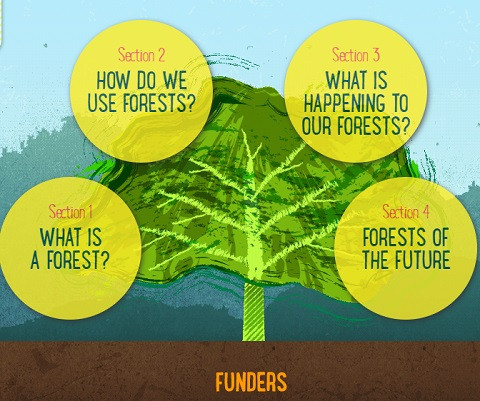 Our Forest, Our Future Организация-автор: Scotdec This material helps teachers and pupils to explore the interdependence of people and forests and the vital role forests play in sustaining our environment – in the past, the present and hopefully the future. The Scots Pine forests in Scotland and the Congo Basin rainforest in Africa provide case studies through which pupils will begin to understand why our forests are under threat and the implications for our planet.In making connections between consumerism, people and the environment, pupils will be encouraged to see how they and their actions have an impact on the lives of others globally. It encourages reflection on the possible futures of the world's forests and ways of taking positive actions for a future where people and forests co-exist in a sustainable way. The resource is structured around a global citizenship framework devised by Oxfam.
  Formation pilote sur la paix et la citoyenneté mondiale Год публикации: 2020 Организация-автор: UNESCO Dakar Du 6 au 8 décembre 2019, une formation sur l'éducation pour la paix et la citoyenneté mondiale des adolescents s’est tenue à Guédiawaye, dans la banlieue de Dakar, à destination des jeunes du Sénégal et de la sous-région.
  One Youth Can: Changing Gender Norms and Promoting Gender Equality Год публикации: 2017 Автор: Tapiwa Manyati | Remmy Shawa Организация-автор: Sonke Gender Justice This manual is intended to be a resource for those working with youth on issues of citizenship, human rights, gender, health, sexuality and violence. The content is informed by a commitment to social justice, gender equality and engaged citizen activism. The activities encourage all youth to reflect on their own experiences, attitudes and values regarding sexuality; gender; what it means to be a boy/man or girl/woman; domestic and sexual violence; HIV/AIDS, democracy and human rights. They encourage all youth to take action to help prevent domestic and sexual violence, reduce the spread and impact of HIV and AIDS, and promote gender equality.
  Ensuring High Quality Primary Education for Children from Mobile Populations: A Desk Study Год публикации: 2017 Автор: Stephanie Bengtsson | Caroline Dyer Организация-автор: Educate A Child (EAC) | German Federal Ministry for Economic Cooperation and Development (GIZ) This study focuses on provision for primary school-aged children amongst communities of refugees and Internally Displaced People (IDPs), mobile pastoralists and seasonally migrating workers. For refugee and IDP children, policy, coordination and implementation challenges include: inconsistent ratification and enforcement of conventions and agreements protecting refugees and IDPs; the disproportionate impact of forced displacement on low and middle income countries (LMICs); the lack of a shared agenda among a wide range of stakeholders with differing mandates; and inadequate forced displacement terminology. Promising and emerging policy, coordination and implementation strategies include: expanding existing rights documents and agreements and building policy from the ground up; enshrining forcibly displaced people’s rights to education in national laws and policy; genuine engagement with affected communities; utilising the Education Cluster and other existing multi-stakeholder networks for knowledge sharing and collaboration; and collaborating across sectors to address the needs of the whole child. Financing challenges include: unpredictable and low funding for refugee and IDP education; weak capacity to absorb funds at the national and local level; an over-reliance on short-term financing mechanisms; donor dependence and a lack of funding sustainability; and inappropriate distribution of funds within education programming.
 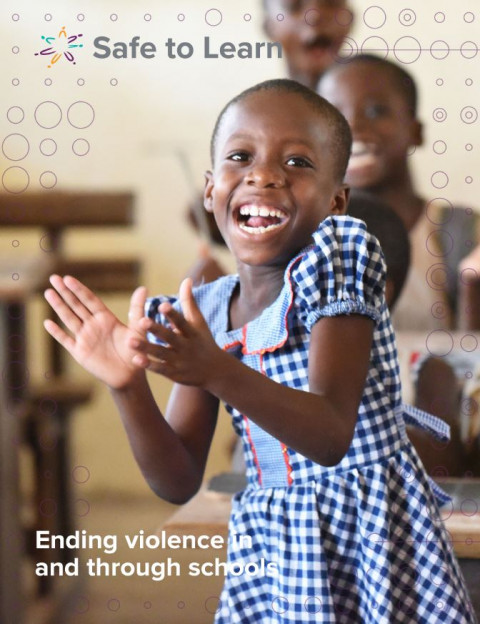 Safe to Learn: Ending Violence in and Through Schools Год публикации: 2019 Организация-автор: End Violence Against Children Safe to Learn – is an initiative dedicated to ending violence in and through schools so children are free to learn, thrive and pursue their dreams. Safe to Learn presents an opportunity to unlock the multiple win of ending violence in schools, improving learning outcomes, better leveraging investments in education, and raising awareness and change attitudes towards violence against children. To date, 11 countries have endorsed Safe to Learn’s Call to Action, which sets out in high-level terms what needs to happen to end violence in schools. These countries include Cambodia, Georgia, Ghana, Honduras, Mexico, Moldova, Nepal, Sierra Leone, South Africa, South Sudan, Uganda and El Salvador.
 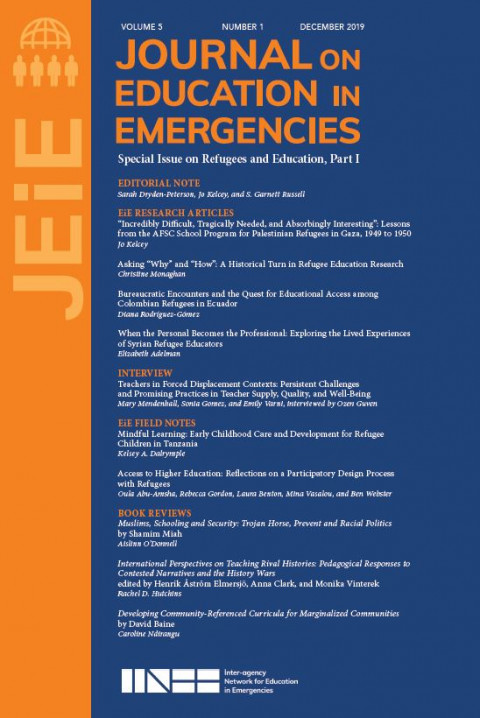 Journal on Education in Emergencies: Special Issue on Refugees and Education, Part I (Vol. 5, No.1 December 2019) Год публикации: 2019 Автор: Sarah Dryden-Peterson | Jo Kelcey | S. Garnett Russell Организация-автор: Inter-agency Network for Education in Emergencies (INEE) This special issue of JEiE—the first of two parts—showcases research on important developments in the field of refugee education across several regions, including the Middle East, Latin America, and Africa. The issue includes four research articles, one interview, two field notes, and three book reviews.The contributing authors describe and analyze how international agencies, state bureaucracies, local organizations and their partners, and refugees shape the structures that influence the education of refugees, both historically and in the present, and how these actors imagine their roles. In so doing, the authors help to untangle key questions about how responsibility for meeting refugees’ educational needs and aspiration is taken up and shared. The articles in this issue include immediate and long-term lessons for how refugee education is designed and experienced.
 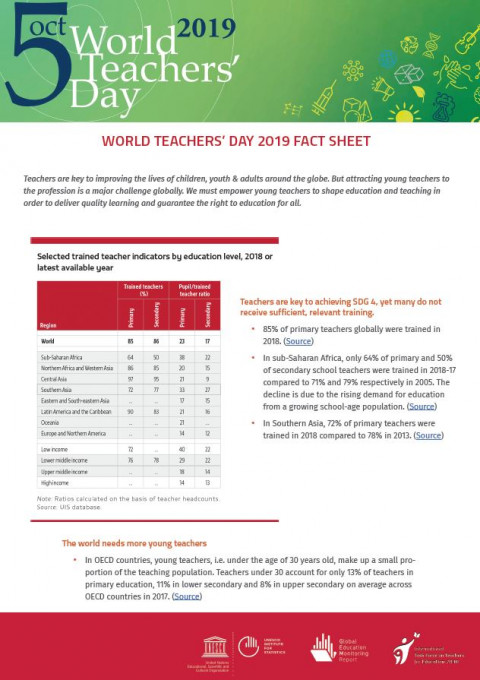 World Teachers' Day 2019: Fact sheet Год публикации: 2019 Организация-автор: UNESCO Institute for Statistics (UIS) | International Task Force on Teachers for Education 2030 To mark World Teachers’ Day, GEM(Global education monitoring) report partnered with the UNESCO Institute for Statistics (UIS) and the International Task Force on Teachers for Education 2030 to pull together key facts and statistics on challenges for teachers around the world.The new factsheet provides the latest UIS data on trained teachers, the global indicator for SDG target 4.c. Globally, 85% of primary teachers were trained in 2018 but only 64% in sub-Saharan Africa. The proportion of teachers that are trained in sub-Saharan Africa is falling, mostly due to the rising demand for education from a growing school-age population.
  Référentiel de compétences harmonisé: Deuxième phase de la recherche-action sur la mesure des apprentissages des bénéfi ciaires des programmes d'alphabétisation Год публикации: 2020 Автор: Madina Bolly | Hakima Megherbi Организация-автор: Institut de l’UNESCO pour l’apprentissage tout au long de la vie (UIL) Le Référentiel de compétences harmonisé constitue un guide pour l’élaboration des programmes d’alphabétisation et un outil formatif novateur destiné aux 12 pays de la Recherche-action sur la mesure des apprentissages des bénéficiaires des programmes d’alphabétisation (RAMAA). Résultant d’une mise en commun des compétences (littératie et numératie), des connaissances, et de leurs niveaux de maitrise, éléments pris en compte dans les différents programmes d’alphabétisation, il a été développé et validé par l’ensemble des pays de la RAMAA et est aujourd’hui utilisé dans ces derniers par les directions chargées de l’alphabétisation des ministères de l’Éducation et par les organisations de la société civile. Moyennant des adaptations, le référentiel de la RAMAA peut servir de point de départ pour d’autres pays qui ne sont pas encore dotés d’un tel instrument mais souhaitent cependant standardiser leurs offres de formation et en améliorer la qualité.
  Practices of Citizenship in East Africa: Perspectives from Philosophical Pragmatism Год публикации: 2020 Автор: Katariina Holma | Tiina Kontinen Организация-автор: Routledge Practices of Citizenship in East Africa uses insights from philosophical pragmatism to explore how to strengthen citizenship within developing countries. Using a bottom-up approach, the book investigates the various everyday practices in which citizenship habits are formed and reformulated. In particular, the book reflects on the challenges of implementing the ideals of transformative and critical learning in the attempts to promote active citizenship. Drawing on extensive empirical research from rural Uganda and Tanzania and bringing forward the voices of African researchers and academics, the book highlights the importance of context in defining how habits and practices of citizenship are constructed and understood within communities. The book demonstrates how conceptualizations derived from philosophical pragmatism facilitate identification of the dynamics of incremental change in citizenship. It also provides a definition of learning as reformulation of habits, which helps to understand the difficulties in promoting change. This book will be of interest to scholars within the fields of development, governance, and educational philosophy. Practitioners and policy-makers working on inclusive citizenship and interventions to strengthen civil society will also find the concepts explored in this book useful to their work.