
Ресурсы
Изучайте широкий спектр ценных ресурсов ВГГ, чтобы углубить своё понимание и повысить эффективность исследований, просветительской деятельности, преподавания и обучения.
Найдено: 27
 Interrupting Extremism by Creating Educative Turbulence Год публикации: 2014 Автор: Lynn Davies Организация-автор: Curriculum Inquiry Cet article développe l'idée qu'il est important d'analyser les processus de désapprentissage, autant que d'apprentissage, qui conduisent un individu à adopter des attitudes extrémistes ou violentes. Des exemples tirés de trois pays sont mobilisés pour montrer comment des rencontres intergroupes conduisent à infléchir des comportements rigides : le travail entre groupes ethniques au Sri Lanka, la lutte contre les divisions religieuses en Irlande du Nord à l'aide de classes mixtes, et des initiatives visant à prévenir l'extrémisme violent au Royaume-Uni. Les implications pédagogiques d'une approche par le "désapprentissage" nécessitent de mobiliser les quatre "D": déradicalisation, désubjectivation, désengagement et désistance.
 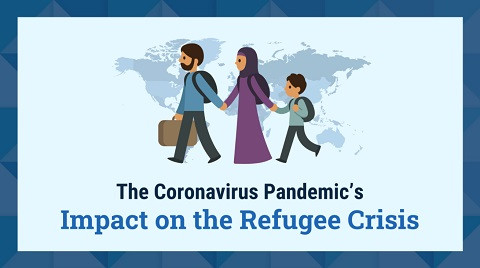 The Coronavirus Pandemic and the Refugee Crisis Год публикации: 2020 Автор: Alice Corner Организация-автор: Venngage Inc. One group of people most impacted by the Coronavirus Pandemic is the world’s population of refugees and displaced people. There are approximately 25 million refugees in the world, facing unique struggles in access to healthcare, government assistance, and sanitation. Venngage analyzed the data and created this collection of infographics to help paint a fuller picture of COVID-19’s impact on the refugee crisis. This resource includes clear infographics detailing how the conronavirus crisis and refugee crisis relate to each other globally
  Good practices in education for sustainable development: teacher education institutions Год публикации: 2007 Автор: Rosalyn McKeown Организация-автор: UNESCO Chair in Reorienting Teacher Education towards Sustainability | International Network of Teacher Education Institutions The case studies in this document reflect individual and institutional efforts to reorient curriculum, programs, practices, and policies to address sustainability at institutions of teacher education. The studies come from Africa, Asia, the Caribbean, Europe, and North America. The case studies deal with professional development for in-service teachers, curriculum revision at the pre-service level, research with students in a local school, greening of a building and its garden, creating a network of universities, starting a journal, and creating new undergraduate and graduate programs. The diversity of efforts is broad; the impact is deep. The dedication of teacher educators around the world is evident on every page of this document. Les bonnes pratiques en matière d'éducation pour le développement durable: institutions de formation des enseignants Год публикации: 2007 Автор: Rosalyn McKeown Организация-автор: UNESCO Chair in Reorienting Teacher Education towards Sustainability | International Network of Teacher Education Institutions Les études de cas présentées dans ce document reflètent les efforts individuels et institutionnels pour réorienter le curriculum, les programmes, les pratiques et les politiques de lutte contre le développement durable dans les établissements de formation des enseignants. Les études viennent d'Afrique, d'Asie, des Caraïbes, en Europe et en Amérique du Nord. Les études de cas portent sur le développement professionnel des enseignants en service, la révision des programmes au niveau pré-services, la recherche avec les étudiants dans une école locale, l'écologisation d'un bâtiment et son jardin, la création d'un réseau d'universités, à partir d'un journal, et la création de nouveaux programmes de premier cycle et des cycles supérieurs. La diversité des efforts est large; l'impact est profond. Le dévouement des formateurs d'enseignants à travers le monde est évident sur chaque page de ce document.
  Educating for global citizenship: an ETFO curriculum development inquiry initiative Год публикации: 2010 Автор: Alice Assor-Chandler | Mali Bickley | Jim Carleton | Antonino Giambrone | Janice Gregg | Jennifer Hunter | Laura Inglis | Leigh-Anne Ingram | Angela MacDonald | Miyuki (Erica) Moizumi | Carol Peterson | Carrie Schoemer | Nadya Weber | Tonia Wojciechowski Организация-автор: Elementary Teachers’ Federation of Ontario (ETFO) Attention to educating for citizenship continues to expand and deepen worldwide. Many countries now include citizenship education as an important feature of their official curriculum, albeit in variant forms. Numerous research studies, policy reforms, and curriculum initiatives have been undertaken, as teachers, policy makers and researchers attempt to understand the intricate processes by which young people learn about democratic citizenship, and where and how citizenship education should be located and represented in school curricula.Educating for global citizenship has been a critical dimension of these discussions and investigations. Recent shifts in the speed and global reach of information and communication technologies, an increasingly interdependent global economy, challenges in human rights and social justice, and the impact of international tragedies and emergencies have, for example, created tensions and conditions that require more integrated, worldwide responses. Not surprisingly, understandings of global citizenship are being explored with increased intensity and, as might be expected, there has been a corresponding – and growing - interest among educators in various parts of the world to strengthen the global dimension of citizenship education in school curricula at all levels.In Canada, there has been increasing attention to what it means to educate for the global citizenship and provincial curriculum policy developments in recent years. A host of useful ideas in the form of new resource materials and websites to inform and guide teachers’ work have also emerged. The Canadian International Development Agency’s (CIDA) in the global classroom initiative, Classroom Connections’ Cultivating Peace in the 21st Century and Taking Action, Larsen’s ACT! Active Citizens Today: Global Citizenship for Local Schools, and UNICEF Canada’s Global Schoolhouse are a few examples of the many resources that have recently been developed. Despite this growing interest, there has been less attention devoted to examining practices of global citizenship education within Canadian classrooms, leaving a limited understanding of how it is applied in schools.A wide range of perspectives and practices has emerged, reflecting a considerable growth of interest in this dimension of education. In an effort to clarify the multiple dimensions of global citizenship education, below are two “working” frameworks that provide an overview of core learning goals and key teaching and learning practices associated with global citizenship education from the literature. They reveal both complexity and multidimensionality and provide a lens to analyse and reflect upon the breadth and depth of what it means to educate for global dimension of citizenship. Global citizenship education and its implications for curriculum goals at the age of globalization Год публикации: 2010 Автор: Shahla Zahabioun | Alireza Yousefy | Mohammad H Yarmohammadian | Narges Keshtiaray Организация-автор: Canadian Center of Science and Education As the inevitable process of the 21st century, globalization has affected and altered all aspects of human life including education. Therefore, one of the main tasks of any education system is to identify the features and impacts of such process. Thus, the present study was conducted aiming to discuss and examine global citizenship education and its implications for curriculum goals.This study is firstly defining global citizenship education concept as well as its significance and necessity and then it is going to explain global citizenship education concept and its purposes and implications for curriculum goals. This is an analytical research. The results indicate that global citizen holds peculiar features and requires special education in global aspects. Accordingly, the citizenship education compatible with global standards requires an overview of curriculum goals as one of the most important components of education system Global citizenship education and its implications for curriculum goals at the age of globalization Год публикации: 2010 Автор: Shahla Zahabioun | Alireza Yousefy | Mohammad H Yarmohammadian | Narges Keshtiaray Организация-автор: Canadian Center of Science and Education Comme le processus inévitable du 21e siècle, la mondialisation a affecté et changé tous les aspects de la vie humaine, y compris l'éducation. Par conséquent, l'une des principales tâches de tout système éducatif est d'identifier les caractéristiques et les impacts d'un tel processus. Ainsi, la présente étude a été menée en vue de discuter et d'examiner l'éducation à la citoyenneté mondiale et ses implications pour les objectifs du programme d'études.Cette étude est tout d'abord de définir la citoyenneté mondiale concept de l'éducation, ainsi que son importance et de la nécessité, et il va expliquer le concept d'éducation à la citoyenneté mondiale et de ses objectifs et implications pour les objectifs du programme d'études. Ceci est une recherche analytique. Les résultats indiquent que citoyen du monde détient des caractéristiques particulières et nécessite une éducation spéciale dans les aspects mondiaux. En conséquence, l'éducation à la citoyenneté compatibles avec les normes mondiales exige un aperçu des objectifs du curriculum comme l'un des éléments les plus importants du système d'éducation.