
Ресурсы
Изучайте широкий спектр ценных ресурсов ВГГ, чтобы углубить своё понимание и повысить эффективность исследований, просветительской деятельности, преподавания и обучения.
Найдено: 3,229
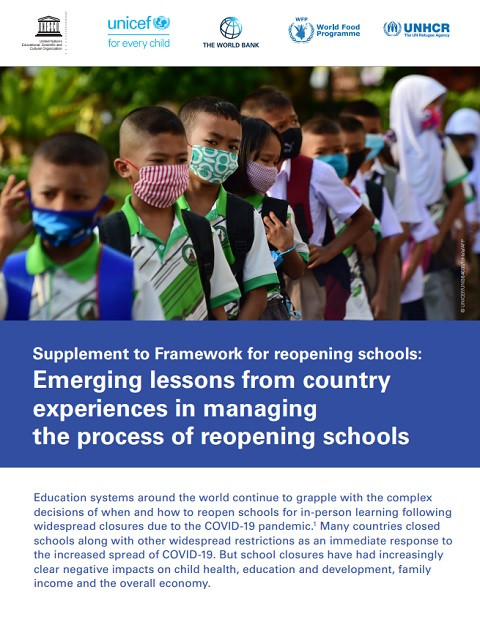 Supplement to Framework for Reopening Schools: Emerging Lessons From Country Experiences in Managing the Process of Reopening Schools Год публикации: 2020 Организация-автор: UNESCO | United Nations Children's Fund (UNICEF) | World Bank | World Food Programme | UN. Office of the United Nations High Commissioner for Refugees (UNHCR) Education systems around the world continue to grapple with the complex decisions of when and how to reopen schools for in-person learning following widespread closures due to the COVID 19 pandemic. This supplement to the Framework for reopening schools, originally published jointly by UNICEF, UNESCO, the World Bank, the World Food Programme, and the UN Refugee Agency (UNHCR) in April 2020, summarizes emerging lessons learnt over the past months.The supplement follows the four main dimensions of the Framework (safe operations, focus on learning, wellbeing & protection, and reaching the most marginalized) and highlighting a number of country examples.
  Realizing the Future of Learning: From Learning Poverty to Learning for Everyone, Everywhere Год публикации: 2020 Автор: Jaime Saavedra | Cristian Aedo | Omar Arias | Adelle Pushparatnam | Halsey Rogers | Marcela Gutierrez Bernal Организация-автор: World Bank Education is a right with immense inherent value. As an essential building block for a country’s human capital, it is also a key driver of growth, competitiveness, and economic development. For societies to be inclusive and fair, they need to prepare all their children to succeed as citizens and give them the tools to participate in their countries’ development. This has become increasingly challenging, because students must have the skills and competencies to adapt and be successful in a rapidly changing, uncertain world, especially as the world grapples with the effects of the COVID19 pandemic. At the same time, our understanding of how children best learn and what the most effective education delivery mechanisms are has grown. Armed with this knowledge, countries that are serious about living up to this challenge will invest in their people to build their human capital; take action to show that learning really matters to them; and commit not only the financial, but also the political and managerial resources necessary to build an education system that serves all with quality. Urgent action is needed to realize a new vision for education: one in which learning happens for everyone, everywhere. Too many education systems are not delivering even basic skills for all children, let alone preparing them for the demanding world they will live in as adults. As the World Bank expands its support for countries to invest more, and more effectively, in education, it has developed a renewed policy approach to address the educational challenges of today while helping countries lay the groundwork to seize tomorrow’s opportunities. The Bank’s 2018 World Development Report urged action to address the global learning crisis and examined the policies needed to tackle it (World Bank 2018a). To support efforts to improve foundational learning, last year the Bank launched a global target: to cut the Learning Poverty rate—the fraction of 10-year-olds in low- and middle-income countries who cannot read and understand an age-appropriate text—at least in half by 2030 (World Bank 2019a). It was also a recognition of the severity of the learning crisis that we are living through: that more than half of children lack these fundamental skills at the end-of-primary age shows that their future is at stake. And now the pandemic has generated a crisis within a crisis.
  Acting Now to Protect the Human Capital of Our Children: The Costs of and Response to COVID-19 Pandemic’s Impact on the Education Sector in Latin America and the Caribbean Год публикации: 2021 Организация-автор: World Bank The sanitary and economic shocks caused by the COVID-19 pandemic brought about the most significant disruption in the history of the education sector in Latin America and the Caribbean region, leading to school closures at all levels and affecting over 170 million students throughout the region. Despite the tremendous efforts made by countries to mitigate the lack of in-person education through remote learning, education is taking a serious hit and outcomes are plummeting in the region. Learning poverty by the end of primary education could increase by more than 20 percent. Over 2 in 3 lower secondary education students could fall below minimum proficiency levels, and learning losses will be substantially larger for the most disadvantaged students. There is no time to lose. All countries must act now to make sure schools are ready to reopen safely and effectively country-wide so as to speed up the recovery process from the dramatic effects of the pandemic. They can leverage many emerging lessons and evidence, and must protect public funding for education, to enable this reopening process. While education systems face a challenge like no other, this exceptionally difficult situation also opens a window of opportunity to build back better their education systems to become more effective, equitable and resilient. Actuemos ya para proteger el capital human de nuestros ninos: Los costos y la respuesta ante el impacto de la pandemia de COVID-19 en el sector educativo de América Latina y el Caribe Год публикации: 2021 Организация-автор: World Bank El doble shock, sanitario y económico, generado por la pandemia COVID-19 provocó, sin duda alguna, la mayor disrupción en la historia del sector educativo en la región de América Latina y el Caribe, llevando al cierre masivo de escuelas en todos los niveles educativos y afectando a más de 170 millones de estudiantes en toda la región. A pesar de los enormes esfuerzos realizados por los países para tratar de mitigar la falta de educación presencial a través de sistemas de educación a distancia, el impacto sobre la educación está siendo demasiado alto y los aprendizajes se están desplomando en la región. La “pobreza de aprendizaje” al final de la educación primaria podría aumentar en más del 20 por ciento. Más de 2 de cada 3 estudiantes de educación secundaria podrían caer por debajo de los niveles mínimos de rendimiento esperados, y las pérdidas de aprendizaje serán sustancialmente mayores para los estudiantes más desfavorecidos. Realmente no hay tiempo que perder. Todos los países deberían actuar ya mismo para asegurarse que las escuelas estén listas para reabrir de manera segura y eficaz en todo el país a fin de acelerar el proceso de recuperación de los dramáticos efectos de la pandemia. Hay muchas lecciones y evidencias de experiencias positivas que van emergiendo y que pueden ser aprovechadas por los países, los cuales también deben asegurarse de proteger el financiamiento público de la educación, para facilitar este proceso de reapertura. Aun cuando los sistemas educativos de toda la región enfrentan un desafío jamás experimentado, esta situación excepcionalmente difícil también abre una ventana de oportunidad para poder ayudar a reconstruir los sistemas educativos para lograr que sean más efectivos, más equitativos y más resilientes.
 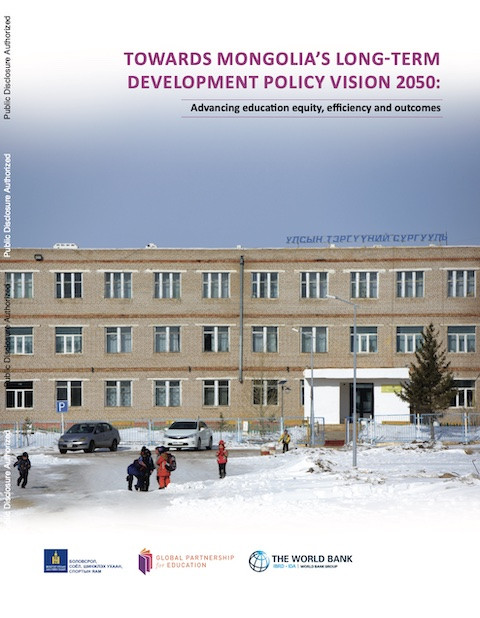 Towards Mongolia’s Long-Term Development Policy Vision 2050: Advancing Education Equity, Efficiency and Outcomes Год публикации: 2020 Организация-автор: Mongolia Ministry of Education, Culture, Science and Sports | World Bank This report seeks to synthesize and analyze education outcomes with a view of identifying the main priorities for strengthening the education sector in support of Mongolia’s Sustainable Development Vision 2050. The report highlights data and findings generated from a series of source reports (see bibliography) related to the goals and targets set out in the Vision 2050. The report is composed of six thematic chapters: Access; Equity; Internal Efficiency, Education Cost and Finance; External Efficiency; Management. Each chapter will include an overview of the current situation and recent development with a focus on, key achievements and persistent challenges. As a synthesis report, the information on each topic is not exhaustive but rather seeks to present key findings. Specific activities highlighted in the Vision 2050 have been included at the beginning of each chapter and a complete mapping by activity is annexed (Annex 1. Vision 2050 Chapter mapping). This synthesis report draws on conclusions, finding, data and surveys produced in collaboration with MECSS by the Asian Development Bank, the Global Partnership for Education and the World Bank. The synthesis also draws from key UNESCO reports. The scope, research, and focus of the source reports differ, and precise findings are, on occasions, incongruent however the overall conclusions are fundamentally compatible. Whereas most of the source reports focus on one or two key stages, the synthesis report seeks to extract cross-cutting and/or recurring challenges that have an impact, positive or negative, on equity, efficiency and outcomes which ultimately may contribute to the implementation of Vision 2050. Mongolia’s State Education Policy (2014-2024) states: ‘Education is the main key factor of each citizen’s lifelong support and guarantee of life quality, and of the State’s societal and economical, science and technological development, and guarantee of national independence and security. Mongolian State shall develop education as a leading sector in society’.
 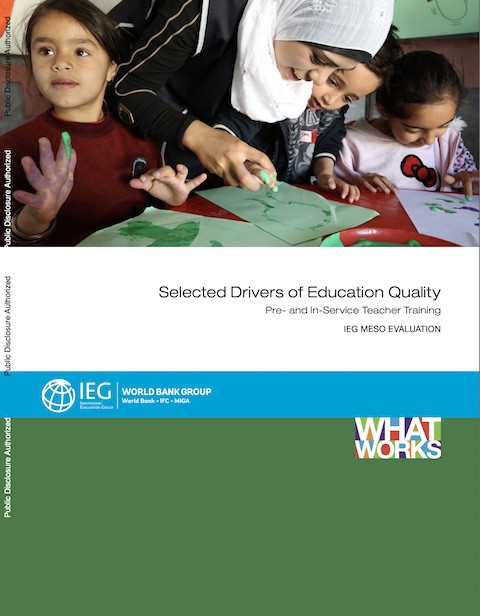 Selected Drivers of Education Quality: Pre- and In-Service Teacher Training Год публикации: 2019 Организация-автор: World Bank This evaluation examines how the World Bank has supported two types of professional development to improve teacher capacity—preservice and in-service training—and identifies how these drivers of education quality can be better designed, implemented, and scaled up.
  Achieving SDG4 Through a Human Rights Based Approach to Education: World Development Report 2018 Background Paper Год публикации: 2018 Автор: Kate Moriarty Организация-автор: World Bank Quality education is a critical dimension for the achievement of sustainable development. The renewed political commitment set out in sustainable development goal 4 (SDG4) is an opportunity to ensure strong coherence between education policy and the right to education first articulated more than 70 years ago. This paper presents the results of a desk-based study on a human rights-based approach to education (HRBAE) in the context of SDG4. It explores the ways in which such an approach can guide policy, planning, and the delivery of education in observance with agreed international frameworks providing for the right to education. The paper argues that the human rights conventions on the right to education are not passive instruments designed to remain only at the level of discourse but, as legal obligations, require action from the state and should be central in the development of education services, including in the context of large scale displacement and crisis. This paper outlines the legally binding commitments of the right to education. It considers how these can be applied practically through a HRBA-E to address the continuing barriers to access and completion of quality education and learning.
 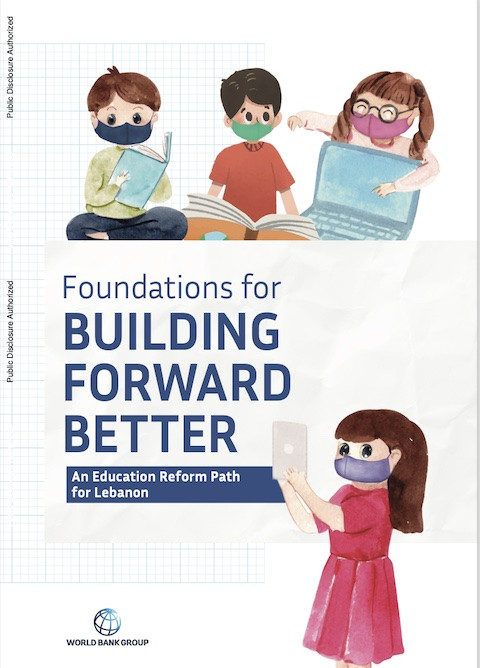 Foundations for Building Forward Better: An Education Reform Path for Lebanon Год публикации: 2021 Организация-автор: World Bank Human capital development is a critical determinant of economic growth, equity, and prosperity, but outcomes in this domain are worryingly low inLebanon, risking the future of generations of children. Lebanese children lag behind their peers in human capital development—measured accordingto the World Bank (2020c) Human Capital Index—suggesting that the future productivity of the labor force and the country’s trajectory for equitablegrowth is at risk (World Bank 2020b). The Human Capital Index indicates that children born in Lebanon today will reach, on average, only 52 percentof their potential productivity when they grow up. This is lower than the average estimates for the Middle East and North Africa (MENA) region(57 percent) and upper-middle-income countries (56 percent). Lebanon’s poor performance on the Human Capital Index is largely attributed to theeducation outcomes calculated for the index. If actual years of schooling, which average approximately 10.2 years in Lebanon, are adjusted for actual learning, effective years of schooling are 40 percent less—on average, only 6.3 years of actual learning (World Bank 2020b). The most recent school closures were due to the COVID-19 pandemic, with schools being closed over 75 percent of the school year between January 2020 and February 2021.1 This will likely lead to a further and significant decrease in learning: effectively, students are facing a lost year of learning (Azevedo et al. 2021).
  Segundo compendio de prácticas ejemplares en materia de educación para el desarrollo sostenible Год публикации: 2009 Организация-автор: UNESCO Associated Schools Project Network (ASPnet) This second collection of ASPnet good practices for quality education takes stock of some of the contributions being made by UNESCO Associated Schools in support of the United Nations Decade of Education for Sustainable Development (DESD). Second recueil de bonnes pratiques: l'éducation pour le développement durable Год публикации: 2009 Организация-автор: UNESCO Associated Schools Project Network (ASPnet) This second collection of ASPnet good practices for quality education takes stock of some of the contributions being made by UNESCO Associated Schools in support of the United Nations Decade of Education for Sustainable Development (DESD).