
Ресурсы
Изучайте широкий спектр ценных ресурсов ВГГ, чтобы углубить своё понимание и повысить эффективность исследований, просветительской деятельности, преподавания и обучения.
Найдено: 3,435
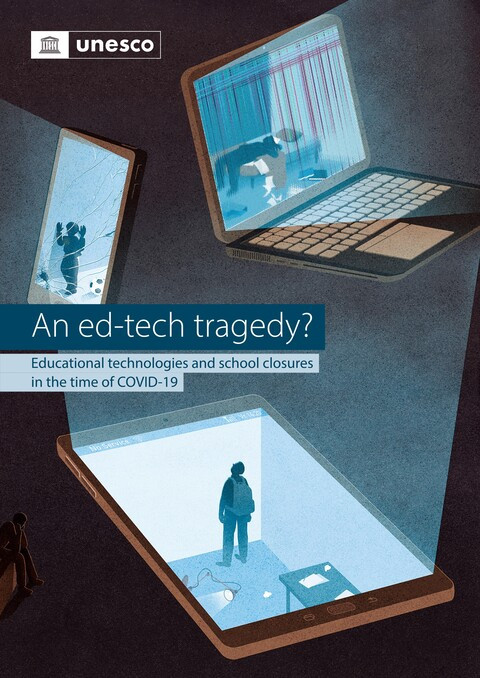 An Ed-Tech Tragedy? Educational Technologies and School Closures in the Time of COVID-19 Год публикации: 2023 Организация-автор: UNESCO Charting a new course for the transformation of education in a digital age An Ed-Tech Tragedy? is a detailed analysis of what happened when education became largely reliant on connected technology during school closures stemming from the COVID-19 pandemic, the largest global disruption to education in history.Many claim that this experience was chiefly one of forced progress and transformations that have, however haltingly, helped propel education into desirable digital futures. Others underline an experience of imperfect salvation – technology saving the day in an emergency and preserving learning continuity for significant numbers of students, even if not all students were helped. But the global evidence reveals a more sombre picture. It exposes the ways unprecedented educational dependence on technology often resulted in unchecked exclusion, staggering inequality, inadvertent harm and the elevation of learning models that place machines and profit before people. This publication examines the promises of educational technologies against the reality of what was delivered during periods of pandemic school closures, which stretched for various durations from early 2020 to the end of 2022. Dedicated sections consider alternate possibilities that had the potential to be more inclusive and equitable.The analysis extracts lessons and recommendations to chart new and more humanistic directions for the development, integration and use of technology in education.
 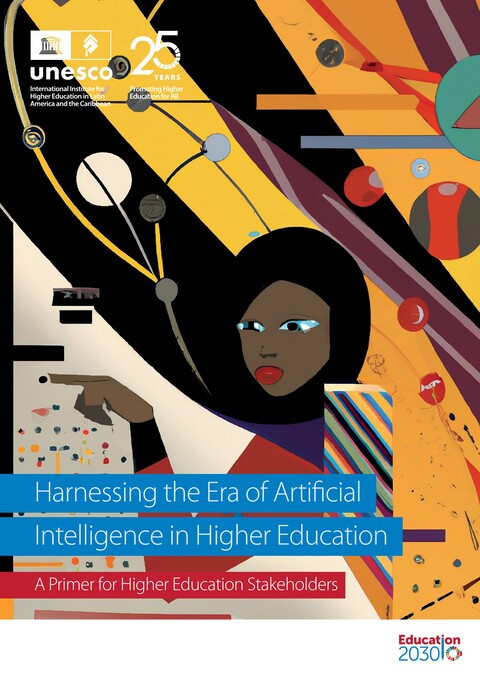 Harnessing the Era of Artificial Intelligence in Higher Education: A Primer for Higher Education Stakeholders Год публикации: 2023 Автор: Bosen Lily Liu | Diana Morales | Jaime Roser-Chinchilla | Emma Sabzalieva | Arianna Valentini | Daniele Vieira do Nascimento | Clarisa Yerovi Организация-автор: UNESCO | UNESCO International Institute for Higher Education in Latin America and the Caribbean (IESALC) The International Institute for Higher Education in Latin America and the Caribbean (UNESCO IESALC) is one of UNESCO’s key education-focused institutes and is the only institute in the United Nations with a specific mandate for higher education. Taking a holistic and integrated intersectoral and cross-sectoral approach to higher education, UNESCO IESALC provides support to Member States through policy-driven and action-oriented research and publications, capacity development, training, advocacy and networking. Following the release of a Quick Start Guide on using ChatGPT and Artificial Intelligence (AI) in higher education, UNESCO IESALC is pleased to offer to the wider community of higher education stakeholders worldwide this Primer on AI and higher education. Providing information and tips for developing further thinking and policies related to the use of AI processes and outcomes in higher education institutions, the Primer is a comprehensive and comprehensible introduction to AI. It also serves as a practical tool for guidance and reference with recommendations for its use in higher education. Oportunidades y desafíos de la era de la inteligencia artificial para la educación superior: Una introducción para los actores de la educación superior Год публикации: 2023 Автор: Bosen Lily Liu | Diana Morales | Jaime Roser-Chinchilla | Emma Sabzalieva | Arianna Valentini | Daniele Vieira do Nascimento | Clarisa Yerovi Организация-автор: UNESCO | UNESCO International Institute for Higher Education in Latin America and the Caribbean (IESALC) El Instituto Internacional de la UNESCO para la Educación Superior en América Latina y el Caribe (UNESCO IESALC) es uno de los institutos clave de la UNESCO centrado en la educación y es el único instituto de las Naciones Unidas con un mandato específico para la educación superior. Adoptando un enfoque holístico e integrado de manera intersectorial y transectorial de la educación superior, el IESALC presta apoyo a los Estados miembros mediante investigaciones y publicaciones orientadas a la formulación de políticas y a la acción, al desarrollo de capacidades, la formación, la abogacía y la creación de redes. Tras la publicación de una Guía de inicio rápido sobre el uso de ChatGPT y la Inteligencia Artificial (IA) en la educación superior, UNESCO IESALC se complace en ofrecer a la comunidad en general interesada en la educación superior global este Manual en IA y educación superior. Proporcionando información y consejos para el desarrollo de pensamiento y de políticas relacionadas con el uso de la IA en las instituciones de educación superior, este Manual es una introducción comprensible y exhaustiva a la IA. También sirve como herramienta práctica de orientación y referencia con recomendaciones para su uso en la enseñanza superior.
  Arts Education: An Investment in Quality Learning Год публикации: 2023 Автор: Vivek Venkatesh | Lydia Ruprecht | Martha K. Ferede Организация-автор: UNESCO This paper reviews key research on the impact and outcomes of Arts Education (AE), with the objective of demonstrating how AE and its conceptualizations, methodological approaches, theoretical foundations and applications are closely aligned with the objectives and expectations of quality education as notably envisioned by Sustainable Development Goal 4 (SDG 4) on education. For UNESCO (2006), AE is understood to include two different approaches: o the teaching of art as an individual study subject and AE as developing learners’ artistic skills, abilities and sensibilities; o the mobilization of the arts, its tools, methods and stakeholders as a pedagogical approach, also referred to as 'arts in education' or 'learning through the arts.”The evidence gathered in this paper points to six main conclusions. • Arts education contributes to the humanistic outcomes associated with quality education as captured in Target 4.7 of SDG 4 on education, namely the promotion of values grounded in global peace, sustainability, justice and respect for cultural diversity and the development of social and emotional skills such as empathic concern and perspective-taking, all of which support personal and collective well-being and indices associated with increased societal happiness1 such as healthy life expectancy, freedom and generosity. • The evidence demonstrates that the “learning of the arts” positively impacts learning in ways that are relevant to broader academic and non-academic outcomes(see Tables 1 and 2).It has been associated with improvements in mathematics performance, writing skills, reading achievements, creativity, student engagement and attendance, as well as perseverance in pursuit of educational goals and classroom behaviours. • Arts education fosters teacher innovation and collaboration, positively impacting school culture and can help students gain a sense of mastery and accomplishment and engage with their communities. • By linking formal and non-formal learning settings, including both in-person and digital cultural spaces such as museums, festivals, performance venues and cultural centres, AE supports the capacity-building of artists and cultural bearers, while expanding the pedagogical role of cultural institutions and spaces. • Considering the nature of local and Indigenous knowledge in spanning language, cultural practices, land use practices, social interactions, ritual and spirituality, AE holds the potential to support knowledge revitalization for Indigenous peoples, which have been historically compromised or delegitimized within traditional education settings. • Last but not least, by building on the economic potential of the arts and creative industries, AE creates opportunities for employment and economic growth, which cannot be underestimated. • On a methodological note, the review of existing research highlights the limitations of quantitative methods and the absence of evaluation mechanisms to assess the contribution and impact of AE to learning.
  Draft Text of the Revised 1974 Recommendation Concerning Education for International Understanding, Co-Operation and Peace and Education Relating to Human Rights and Fundamental Freedoms Год публикации: 2023 Организация-автор: UNESCO In accordance with the UNESCO Constitution and the Rules of Procedure concerning Recommendations to Member States and international conventions covered by the terms of Article IV, paragraph 4, of the Constitution, the draft text of the revised Recommendation concerning education for international understanding, co-operation and peace and education relating to human rights and fundamental freedoms, and the related preliminary report, were sent to UNESCO Member States through the circular letter CL/4401 (September 2022) for their written commentsand observations. On the basis of their comments, a second draft of the text was prepared. In circular letter CL/4433 (April 2023), the second draft together with the Definitive Report were submitted to Member States. The Special Committee meeting of experts designated by Member States took place from 30 May to 2 June 2023, as per the circular letter CL/4417 (November 2022), and from 10 to 12 July 2023, as per circular letter CL/4442 (June 2023).
  Addressing Hate Speech Through Education: A Guide for Policy-Makers Год публикации: 2023 Организация-автор: UNESCO | UN. Office on Genocide Prevention and the Responsibility to Protect Hate speech is spreading faster and further than ever before as a result of social media user growth and the rise of populism. Both online and offline, hate speech targets people and groups based on who they are. It has the potential to ignite and fuel violence, spawn violent extremist ideologies, including atrocity crimes and genocide. It discriminates and infringes on individual and collective human rights, and undermines social cohesion. Education can play a central role in countering hateful narratives and the emergence of group-targeted violence. Educational responses to hate speech and all forms of hateful communication include:• Training teachers and learners on the values and practices related to being respectful global and digital citizens;• Adopting pedagogical and whole-school approaches to strengthening social and emotional learning;• Revising and reviewing curricula and educational materials to make them culturally responsive and to include content that identifies hate speech and promotes the right to freedom of expression;This policy guide developed by UNESCO and the United Nations’ Office on Genocide Prevention and the Responsibility to Protect explores these educational responses and provides guidance and recommendations to policy-makers on how to strengthen education systems to counter hate speech.
  Combatir el discurso de odio a través de la educación: una guía para los responsables de la formulación de políticas Год публикации: 2024 Организация-автор: UNESCO | UN. Office on Genocide Prevention and the Responsibility to Protect Como producto de las redes sociales y del aumento del populismo, el discurso de odio se está difundiendo más rápido y con mayor alcance que nunca. Ya sea en línea o no, se dirige a las personas sobre la base de quiénes son y tiene el potencial de incitar a la violencia, así como engendrar ideologías extremistas y violentas, crímenes atroces e incluso el genocidio. Además, discrimina, infringe derechos humanos individuales y colectivos y socava la cohesión social.La educación puede cumplir un papel fundamental en la lucha contra los discursos de odio y el surgimiento de la violencia dirigida a grupos específicos. Las respuestas educativas al discurso de odio y a todas las formas de comunicación relacionadas incluyen:• La capacitación de docentes y estudiantes sobre los valores y las prácticas que necesitan para ser ciudadanos y ciudadanas respetuosos a nivel global y en el ámbito digital;• La adopción de pedagogías y enfoques escolares integrales para el fortalecimiento del aprendizaje social y emocional;• La adopción y revisión del currículo y de los materiales educativos para que sean culturalmente sensibles e incluyan contenido que identifique la presencia del discurso de odio y promueva el derecho a la libertad de expresión.Esta guía para la formulación de políticas, elaborada por la Oficina de las Naciones Unidas para la Prevención del Genocidio y la Responsabilidad de Proteger (OSAPG) y la UNESCO, analiza en detalle estas y otras respuestas educativas con la intención de brindar a las y los formuladores de políticas las orientaciones y recomendaciones sobre cómo fortalecer los sistemas educativos para combatir el discurso de odio.
  Lutter contre les discours de haine par l’éducation Год публикации: 2025 Организация-автор: UNESCO | United Nations Office on Genocide Prevention and the Responsibility to Protect Lutter contre les discours de haine par l’éducationLes discours de haine se propagent plus vite et plus loin que jamais du fait de l’augmentation du nombre d’utilisateurs des médias sociaux et de la montée du populisme. En ligne comme hors ligne, les discours de haine ciblent des personnes et des groupes sur la base de ce qu’ils sont. Ces discours sont susceptibles d'inciter et d’attiser la violence et d’engendrer des idéologies extrémistes violentes, pouvant mener à des atrocités criminelles et des génocides. Ils sont discriminatoires, portent atteinte aux droits humains individuels et collectifs et menacent la cohésion sociale.L’éducation peut jouer un rôle essentiel dans la lutte contre les discours de haine et l’émergence de violences visant des groupes particuliers. Les réponses éducatives aux discours de haine et à toutes les formes de communication haineuse comprennent :• la formation des enseignants et des apprenants aux valeurs et aux pratiques permettant d’être des citoyens du monde et des citoyens numériques respectueux ;• l'adoption d'approches scolaires globales et pédagogiques pour renforcer l’apprentissage social et émotionnel ;• l'examen et la révision des programmes scolaires et des supports pédagogiques pour les rendre culturellement adaptés et inclure des contenus qui permettent d'identifier les discours de haine et promeuvent le droit à la liberté d’expression.Ce guide stratégique, élaboré par l’UNESCO et le Bureau de la prévention du génocide et de la responsabilité de protéger des Nations Unies, analyse ces réponses éducatives et fournit des conseils et des recommandations aux décideurs politiques sur la manière de renforcer les systèmes éducatifs pour lutter contre les discours de haine.
  We Need to Talk: Measuring Intercultural Dialogue for Peace and Inclusion Год публикации: 2022 Организация-автор: UNESCO | Institute for Economics and Peace An analysis into the power of intercultural dialogue and the new UNESCO Framework for Enabling Intercultural Dialogue, We Need to Talk presents the first evidence of the link between intercultural dialogue and peace, conflict prevention and non-fragility, and human rights. Using data covering over 160 countries in all regions, the report presents a framework of the structures, processes and values needed to support intercultural dialogue, examining the dynamics and interlinkages between them to reveal substantial policy opportunities with broad spanning benefits. Providing policy support and guidance, the report also includes information on regional trends as well as deep diving case studies.The data, case studies, and think pieces contained in this report highlight key policy and intervention opportunities for intercultural dialogue as an instrument for inclusion, peace and wider societal benefits. Policy makers, development workers, peace and security actors, academics and more are invited to leverage the analysis in this report and findings of the Framework to strengthen intercultural dialogue around the world. Parlons-en : mesurer le dialogue interculturel pour la paix et l’inclusion Год публикации: 2022 Организация-автор: Organisation des Nations Unies pour l'éducation, la science et la culture (UNESCO) | Institute for Economics and Peace Parlons-en ! Alors que le monde devient de plus en plus interconnecté, l’amélioration des capacités à engager et à mener un dialogue efficace est nécessaire afin de relever les défis mondiaux. Actuellement, 1,5 milliard de personnes vivent dans des pays où le dialogue interculturel est faible et où les enjeux mondiaux tels que la pauvreté absolue, le terrorisme et les déplacements forcés de population sont plus répandus. Pour forger une coopération efficace et maintenir la paix, le renforcement du dialogue interculturel doit être une priorité.Pour la première fois, Parlons-en présente des preuves empiriques du lien entre le dialogue interculturel et la paix, la prévention de conflits, la non-fragilité, ainsi que les droits de l'Homme. En s'appuyant sur les données innovantes du nouveau Cadre de l'UNESCO pour favoriser le dialogue interculturel, ce rapport met en évidence les principales politiques et opportunités d'intervention pour le dialogue interculturel en tant qu'instrument d'inclusion et de paix.À l'aide de données couvrant plus de 160 pays dans toutes les régions, le rapport présente un cadre des structures, des processus et des valeurs nécessaires pour soutenir le dialogue interculturel, en examinant les dynamiques et les liens entre eux pour révéler des opportunités politiques substantielles aux avantages étendus.Les décideurs politiques, les agents de développement, les acteurs de la paix et de la sécurité, les universitaires et bien d'autres sont invités à tirer parti de l'analyse de ce rapport et des conclusions du Cadre pour renforcer le dialogue interculturel à travers le monde.Ensemble, parlons-en !