
Ресурсы
Изучайте широкий спектр ценных ресурсов ВГГ, чтобы углубить своё понимание и повысить эффективность исследований, просветительской деятельности, преподавания и обучения.
Найдено: 3,376
 Mapping the Mainstreaming of Education for Sustainable Development Across SDG 4.7: A Comparative Analysis of the Mainstreaming of ESD in Cyprus, Greece, Malta and Turkey Год публикации: 2020 Автор: Devonne Goad Организация-автор: UNESCO The objective of the present report is to summarize the state of ESD implementation in Cyprus, Greece, Malta and Turkey. This report summarizes and shares the successes and challenges highlighted within National Implementation Reports, as such a summary could be an important contribution to UNESCO, as the organization is currently facilitating dialogues to establish the direction of the new global programme for ESD. For that reason, these four countries within the regional scope of the UNESCO Regional Bureau in Venice, Italy, were chosen for the preliminary study. For the purpose of this study, the binary data contained within the National Implementation reports of Cyprus, Greece, Malta and Turkey were extracted to summarize the state of ESD implementation.
  COVID 19, Technology-Based Education and Disability: The Case of Bangladesh; Emerging Practices in Inclusive Digital Learning for Students With Disabilities Год публикации: 2021 Автор: Vashkar Bhattacharjee | Shahriar Mohammad Shiblee Организация-автор: UNESCO This study sheds light on Bangladesh’s initiatives in the area of disability-inclusive education. The particu- lar focus is on the role of its Accessible Reading Materials (ARM) initiative and how this has contributed to ensuring disability-inclusive and accessible education during the COVID-19 pandemic in Bangladesh. ARM is a government-led initiative that was launched in 2014 by the then Access to Information (a2i) programme of the Prime Minister’s Office, now the Aspire to Innovate Programme of the Information and Communica- tion Technology (ICT) Division of the Government of Bangladesh. It was launched in recognition of the need for solutions to ensure virtual, as well as regular reading access for all students, including children and young people with barriers to reading. ARM is aimed at satisfying the educational needs of all students including students with print and learning disabilities.
  Women in Higher Education: Has the Female Advantage Put an End to Gender Inequalities? Год публикации: 2021 Автор: Daniele Vieira do Nascimento | Takudzwa Mutize | Jaime Felix Roser Chinchilla Организация-автор: UNESCO Regardless of encouraging statistics on women access to higher education, women still encounter obstacles when seeking to occupy key academic positions in universities, to be involved with relevant research, and to take leadership roles.Women are overrepresented among teaching staff at lower education levels, while their presence is markedly lower in tertiary education (vertical segregation). The same is true in school management and education policymaking. Women are also still underrepresented as senior faculty and in higher education decision-making bodies in many countries.In the area of research, men publish on average more articles than women showing there is a gender publication gap. Differences in men ́s and women ́s academic publication persist and are most pronounced for publications in top journals.STEM (science, technology, engineering, and mathematics) areas of study show a heavy underrepresentation of female students in most countries. This underrepresentation of female students is closely linked to the underrepresentation of female researchers in those areas. Globally, the percentage of females studying engineering, manufacturing and construction or ICT (information and communications technology) is below 25% in over two- thirds of countries.During the first wave of the COVID-19 pandemic, although submission of academic papers for publication increased in all months during the lockdown period, the rate of increase in submissions by female researchers was significantly less than those by male researchers. This deficit was also found to be especially pronounced among younger cohorts of female academics. Mujeres en la educación superior: ¿la ventaja femenina ha puesto fin a las desigualdades de género? Год публикации: 2021 Автор: Daniele Vieira do Nascimento | Takudzwa Mutize | Jaime Felix Roser Chinchilla Организация-автор: UNESCO Aunque son alentadoras las estadísticas sobre el acceso de las mujeres a la enseñanza superior, las mujeres siguen topándose con obstáculos cuando intentan ejercer puestos académicos clave en las universidades, participar en investigaciones relevantes y asumir funciones de liderazgo.Las mujeres están sobrerrepresentadas entre el personal docente de los niveles educativos inferiores, mientras que su presencia es notablemente menor en la enseñanza superior (segregación vertical). Lo mismo ocurre en los puestos de dirección de centros educativos y en la elaboración de las políticas educativas. En muchos países, las mujeres siguen estando infrarrepresentadas en los niveles superiores del profesorado y en los órganos de decisión de la enseñanza superior.En el ámbito de la investigación, los hombres publican en promedio más artículos que las mujeres, lo que demuestra que existe una brecha de publicación entre ambos sexos. Las diferencias entre la cantidad de publicaciones académicas de hombres y la de mujeres persisten y son más acentuadas cuando se trata de publicaciones en las revistas más destacadas. En las áreas de estudio STEM (ciencia, tecnología, ingeniería y matemáticas) se observa una fuerte infrarrepresentación de las estudiantes en la mayoría de los países. Esta infrarrepresentación de las estudiantes guarda estrecha relación con la infrarrepresentación de las investigadoras en esas áreas. A escala mundial, el porcentaje de mujeres que estudian ingeniería, industria y construcción o tecnologías de la información y la comunicación (TIC) se ubica por debajo del 25 % en más de dos tercios de los países.
 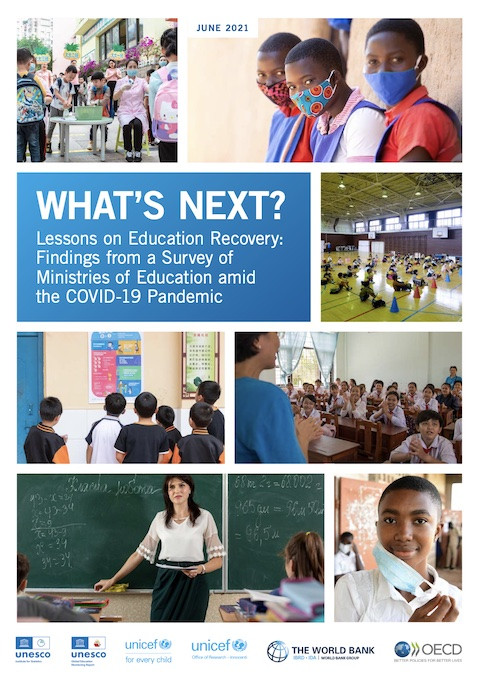 What’s Next? Lessons on Education Recovery: Findings From a Survey of Ministries of Education Amid the COVID-19 Pandemic Год публикации: 2021 Организация-автор: UNESCO | United Nations Children's Fund (UNICEF) | World Bank | Organisation for Economic Co-operation and Development (OECD) United Nations Educational, Scientific and Cultural Organization (UNESCO), the United Nations Children’s Fund (UNICEF), the World Bank and the Organisation for Economic Co-operation and Development (OECD) have collaborated in the third round of the Survey on National Education Responses to COVID-19 School Closures, administered by the UNESCO Institute for Statistics (UIS) and OECD to Ministry of Education officials. The questions covered four levels of education: preprimary, primary, lower secondary and upper secondary. While the first two rounds of the survey were implemented during the periods May–June and July–October 2020, respectively, the third round was implemented during the period February–June 2021. In total, 143 countries responded to the questionnaire. Thirty-one countries submitted responses to the OECD (“OECD survey”) and 112 countries responded to the UIS (“UIS survey”). Seven countries responded to both surveys. In these instances, the more complete set responses were used in analysis.
  Caribbean Sheroes Initiative: Civil Society Organizations Advancing Gender Equality; Methods & Tools Год публикации: 2021 Автор: Joan Andrea Hutchinson Организация-автор: Institute for Gender and Development Studies (IGDS) | UNESCO This Toolkit recognizes the achievements and commitment of women activists that engage in Civil Society Organizations (CSOs). It documents the practice and lessons learned of twelve Jamaican Civil Society Organizations that have worked relentlessly to advance women’s rights and social justice, fostering a less violent society and more equal gender relations grounded on human rights.
 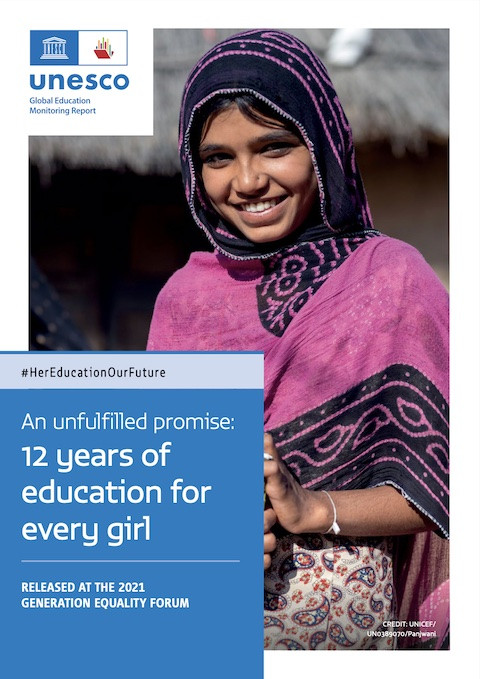 An Unfulfilled Promise: 12 Years of Education for Every Girl Год публикации: 2021 Организация-автор: Global Education Monitoring Report Team | UNESCO Just over 25 years ago in 1995, 189 governments adopted the Beijing Declaration and Platform for Action – a visionary agenda for women’s empowerment and the most comprehensive global policy framework to advance gender equality to date. Girls’ and women’s education and training featured in the document as one of 12 key areas where urgent action was needed to ensure greater equality.Since Beijing, the international community has emphasized the transformative power of girls’ and women’s education and its benefits – not only for girls and women, but for entire societies and even future generations. Under the 2030 Agenda for Sustainable Development, Sustainable Development Goal (SDG) 4 on inclusive, equitable quality education and lifelong learning sets ambitious targets to ensure equality of opportunity – including a target aiming to ensure that all girls and boys complete 12 years of education by 2030.This short paper explores the evolution of girls’ and boys’ completion rates in primary and secondary education since 1995 – and calls for action to deliver on our commitments to leaving no one behind.
 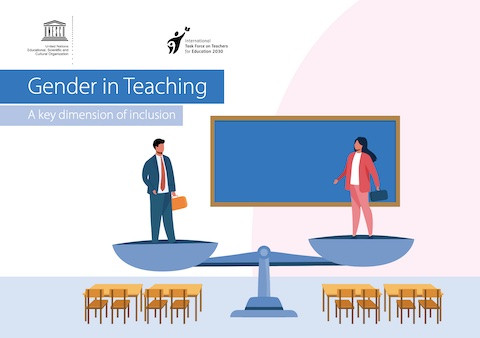 Gender in Teaching: A Key Dimension of Inclusion Год публикации: 2020 Организация-автор: UNESCO | International Task Force on Teachers for Education 2030 Without teachers, Sustainable Development Goal 4 to ensure inclusive and equitable, quality education for all by 2030 will not be achieved.Since teachers act as role models for students, inclusion in education means that the teaching workforce mirror the diversity of the classroom. As countries look to recruit more teachers to meet SDGs, one significant factor important to creating inclusive classrooms is gender.This document has been prepared for the 2020 World Teachers’ Day celebrated by UNESCO and the Teacher Task Force with the theme Teachers: Leading in crisis, reimagining the future. Le genre dans l’enseignement: Un élément essentiel de l’inclusion Год публикации: 2020 Организация-автор: Organisation des Nations Unies pour l'éducation, la science et la culture (UNESCO) | International Task Force on Teachers for Education 2030 Sans enseignant(e)s, il sera impossible d’atteindre l’objectif de développement durable 4 qui vise à assurer l’accès de tous à une éducation inclusive de qualité, sur un pied d’égalité, d’ici à 2030.Les enseignant(e)s sont des exemples pour les élèves ; à ce titre, l’inclusion dans l’éducation signifie que la composition ducorps enseignant doit refléter la diversité des élèves. À l’heure où les pays cherchent à recruter davantage d’enseignant(e)s pour atteindre les ODD, le genre constitue l’un des facteurs les plus importants pour créer des classes inclusives.Le présent document a été préparé en vue de la Journée mondiale des enseignant(e)s 2020, célébrée par l’UNESCO et l’Équipe spéciale sur les enseignants autour du thème Enseignants : leaders en temps de crise et façonneurs d’avenir.
  Communication and Information Programme Год публикации: 2021 Организация-автор: UNESCO UNESCO is the UN specialized agency building peace in the minds of people through education, the sciences, culture, communication and information. Our mission is to foster intercultural dialogue and sustainable development, by promoting the free flow of ideas.By adopting a multi-disciplinary and inclusive approach, UNESCO works with both duty-bearers and rights-holders across the world to develop and implement targeted actions that are born out of local needs, which ensures a holistic and results-based approach for sustainable change.In the field of communication and information, UNESCO defends and promotes freedom of expression, media independence and pluralism, and the building of inclusive knowledge societies underpinned by universal access to information and the innovative use of digital technologies.Through capacity-building, policy advice, international cooperation, monitoring and foresight in the fields of freedom of expression, access to information, and digital transformation, UNESCO will continue to empower key actors with a view to ensuring that fundamental freedoms are guaranteed online and offline, in line with international standards.This is all the more relevant to ensure the ethical development and use of emerging technologies, which have a growing impact on all aspects of the world’s societies. Citizens will also be empowered to enjoy these fundamental freedoms through the development of 21st century skills and the fostering of enabling environments for media pluralism and diversity.