
Ресурсы
Изучайте широкий спектр ценных ресурсов ВГГ, чтобы углубить своё понимание и повысить эффективность исследований, просветительской деятельности, преподавания и обучения.
Найдено: 1,180
 Global Citizenship Education and the Police: An Opportunity For Partnership? Год публикации: 2021 Автор: Robin Young Организация-автор: Bridge 47 This publication aims to provide some reflective questions and practicalities to consider before embarking on a partnership with the police sector and to contribute to a wider reflection, dialogue and knowledge sharing within the GCE sector globally about the opportunities and challenges for advancing the mission of GCE through engagement with the police sector.
  Transformative Education: Bridging Education for Change Год публикации: 2021 Автор: Jana Arbeiter | Maja Bučar Организация-автор: Bridge 47 This publication suggests that improvements in the areas of coordination, cooperation, awareness raising and capability development are needed, as outlined in the recommendations below. Policies and strategies at national, regional and global level should adopt overarching visions for transformative education in the form of overarching strategies for SDG Target 4.7. Mechanisms for coordination and collaboration between the different components of SDG Target 4.7 should be established at national, regional and global levels. Awareness of the role of transformative education and SDG Target 4.7 in contributing to more just and sustainable futures should be raised jointly between the different components of SDG Target 4.7. Opportunities for capacity building and upskilling of practitioners and learners linked to transformative education should be enabled and created at national, regional and global levels.
  Transformative Competencies: How to Define and Implement Competencies for SDG Target 4.7 Год публикации: 2021 Автор: Johanna Helin Организация-автор: Bridge 47 This paper was commissioned to support advocacy for SDG Target 4.7 in European and global policies by exploring the concept of ‘Competencies for SDG Target 4.7’. This advocacy paper draws from a desk review of existing global and regional competency frameworks at national, regional and global levels. The aim is to get a clearer understanding of these transformative competencies and how they help the implementation and assessment of Target 4.7.This paper is divided in three sections. The first section provides background to the different world views that frame the discussion on competencies, before turning to presenting some of the competency frameworks for Target 4.7. The second section gives some examples of how these competencies are being introduced into national education policies, professional skills training and lifelong learning. The paper finishes with conclusions and policy recommendations.
  Indicators: The Need and Challenges of Tracking Implementation of Target 4.7 Год публикации: 2021 Автор: Johanna Helin Организация-автор: Bridge 47 This paper investigates the existing and proposed indicators and monitoring frame- works for 4.7. Examining efforts at national, regional, and global levels will identify the main challenges in measurement initiatives. The paper will start by looking at the context of SDGs and the special character of Target 4.7. Thereafter, it will discuss the process and limitations of defining the indicators at the global level. It will also review regional developments, tools, and ideas for national and local level assessment frameworks in Asia-Pacific and Europe. The paper ends with conclusions and policy recommendations.
  Resources: For SDG Target 4.7 Год публикации: 2021 Автор: Sandra Oliveira Организация-автор: Bridge 47 This paper is part of a series of publications commissioned to support advocacy for more space for SDG Target 4.7 of Agenda 2030 in European and global policies. In November 2019, Bridge 47 organised an event called Envision 4.7, which brought together civil society organisations, national governments, MEPs, European and global organisations, and together wrote a Roadmap for SDG Target 4.7 for Europe.Focusing on the key themes of this Envision 4.7 Roadmap and drawing on the Envision 4.7. policy papers as key references, this paper focuses on providing a global overview and identification of the types of resources re- quired to achieve this target.\
 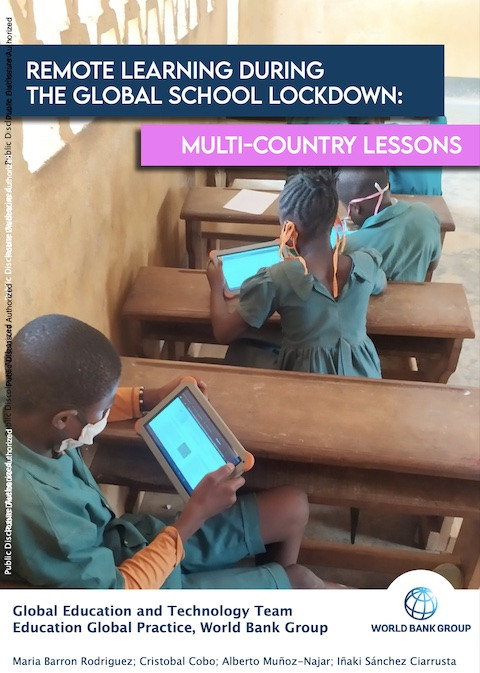 Remote Learning During the Global School Lockdown: Multi-Country Lessons Год публикации: 2020 Автор: Maria Barron Rodriguez | Cristobal Cobo | Alberto Muñoz-Najar | Iñaki Sánchez Ciarrusta Организация-автор: World Bank This study includes three main sections that have been organized in a chronological order within this report: the first one, “What can we learn from education emergency responses in low- and middle-income countries?” analyzes the emergency education responses to the COVID-19 pandemic of over 120 governments from April until May, 2020. The second section, “Is remote learning perceived as effective? An in-depth analysis across five countries” discusses the main national education responses deployed by Brazil, Kenya, Nigeria, Sierra Leone, and Peru, as well as the perceived effectiveness of these strategies conducted from May until August, 2020. The third section, “What works with remote and remedial strategies? an analysis across 13 countries” builds on key lessons learned during the analysis of the five multi-country experiences and presents global trends of remote learning implemented during school closures and the actions governments adopted to get ready for remedial learning, conducted from August until December 2020. The countries prioritized for the third section are IDA borrowing countries of which six are low-income countries: Afghanistan, Haiti, Malawi, Mozambique, Niger, and Rwanda; and five are lower-middle-income countries: Cambodia, Cameroon, Kenya, Nepal, and Pakistan. Additionally, two high-income countries, Estonia and Uruguay, have been included in the report. The main trends across this report are discussed below and have been grouped in five themes: (1) Adopt delivery systems with an inclusive approach; (2) Adjust the curriculum to ensure effectiveness; (3) Secure sustained teacher training and in-service support; (4) Leverage institutional capacities while ensuring sustained monitoring and evaluation; and (5) Consolidate national strategies to remediate learning losses.
  Virtual Conference: Positive Discipline; Tools to Connect and Guide Год публикации: 2021 Организация-автор: Red Papaz In this virtual conference, Gigliola Nuñez made an explanation about what positive discipline is and shared tools for loving accompaniment in the upbringing of children, children and adolescents. The history of positive discipline began in the 1920s and was consolidated with greater force in the 1980s with Jane Nelsen and Lyn Lott, who supported the entire program in the research of Alfred Adler and Rudolph Dreikurs, ideas now supported by neuroscience. Conferencia virtual: Disciplina positiv; Herramientas para conectar y guiar Год публикации: 2021 Организация-автор: Red Papaz En esta conferencia virtual, Gigliola Nuñez realizó una explicación sobre que es la disciplina positiva y comapartió herramientas para el acompañamiento amoroso en la crianza de los niños, niñas y adolescentes. La historia de la disciplina positiva inicia en los años 20 y se consilida con mayor fuerza en los años 80 con Jane Nelsen y Lyn Lott, quienes sustentaron todo el programa en las investgaciones de Alfred Adler y Rudolph Dreikurs, ideas hoy avaladas por la neurociencia.
 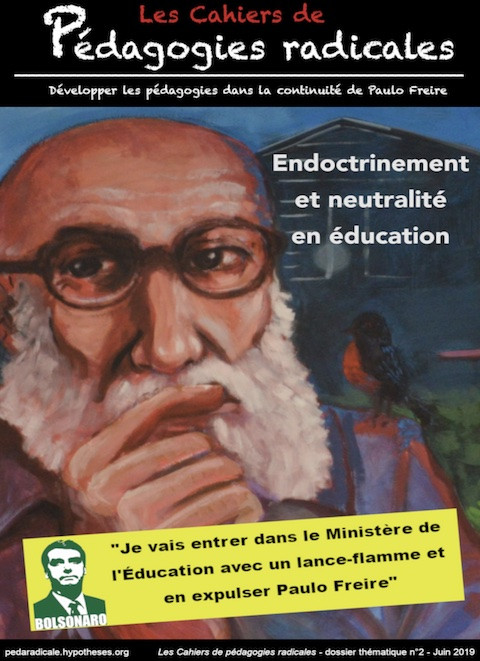 Les Cahiers de pédagogies radicales : Développer les pédagogies inspirées par l'œuvre de Paulo Freire; Endoctrinement et neutralité en éducation Год публикации: 2019 Автор: Irène Pereira | Gauthier Tolini Организация-автор: École supérieure du professorat et de l'éducation (ESPE) de Livry Garga Ce deuxième numéro des Cahiers de pédagogies radicales part dans unpremier temps de la volonté de faire connaître la situation au Brésil et lesdébats concernant le « Mouvement de l’école sans parti » qui s’attaque à laliberté pédagogique des enseignants en essayant de leur interdire d’aborderles questions de genre et et les questions économiques et sociales en classe.Pour cela, ce mouvement veut faire passer une loi sur la neutralité desenseignants qui n’existe pas au Brésil : ceux-ci étant tenu actuellementuniquement à une obligation de favoriser le pluralisme des idées. JairBolsonaro, qui est président du Brésil depuis janvier 2019, soutient cemouvement réactionnaire. Il accuse en particulier l’oeuvre de Paulo Freired’endoctrinement marxiste et veut éradiquer sa pensée de l’éducationbrésilienne.Cette situation au Brésil pose des problèmes qui sont centraux pour tous lespédagogues critiques. Quelle est la différence entre pédagogie critique etendoctrinement ? Pour Paulo Freire, c’est parce que la pédagogie critiquefavorise le pluralisme des idées et le dialogue critique qu’il n’y a pasendoctrinement. C’est d’ailleurs sans doute pourquoi l’approche de PauloFreire ne se trouve pas en contradiction avec le projet démocratique, mais aucontraire est insupportable aux régimes dictatoriaux. Mais ce qui est le plusinquiétant au Brésil, c’est qu’il semble tout simplement qu’un enseignant quidéfend dans sa classe les droits de l’homme et la lutte contre lesdiscriminations pourrait être considéré comme portant atteinte à la neutralité.
  دور البيئة المدرسية في تحفيز الإبداع لدى الطلبة في مدارس شمال فلسطين من وجهة المعلمين والمعلمات فيها Год публикации: 2017 Автор: Khalid Qarwani | Husam HarzAllah Организация-автор: World Islamic Sciences and Education University تهدف هذه الدراسة إلى التعرف على دور البيئة المدرسية في تحفيز الابتكار لدى طلاب المرحلة الثانوية في شمال فلسطين من وجهة نظر المعلمين. ولتحقيق أهداف الدراسة واختبار فرضية الدراسة استخدم الباحث المنهج الوصفي التحليلي مع استبانة وزعت على عينة الدراسة المكونة من (250) معلماً. تشكل (20٪) من مجتمع الدراسة. بعد تحليل البيانات التي تم جمعها ، كشفت الدراسة ما يلي. أولاً ، تلعب بيئة المدرسة دورًا كبيرًا على المستوى الإحصائي (α = 0.05) في تحفيز الابتكار لدى طلاب ذلك المستوى في المكان المحدد على الرغم من متغيرات مكان الإقامة. ثانيًا ، لا يوجد دور لبيئة المدرسة على المستوى الإحصائي (α = 0.05) في تحفيز الابتكار لدى طلاب ذلك المستوى في المكان المحدد من وجهة نظر المعلمين بسبب متغيرات الجنس ، والتخصص في درجة البكالوريوس ، والخبرة ، والحالة الاجتماعية.